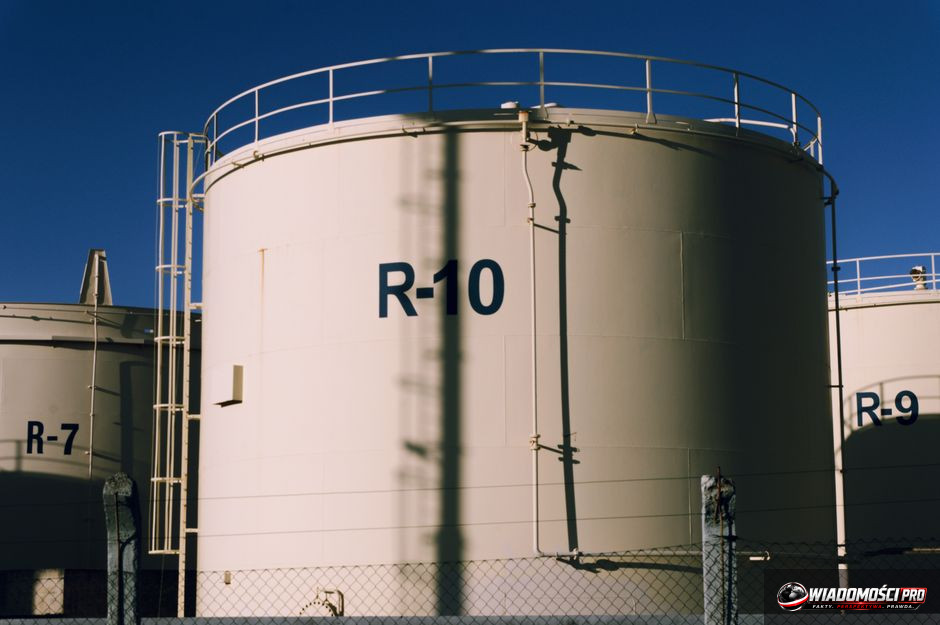
ABW officers, acting on the orders of the National Prosecutor's Office, have arrested 5 Orlen managers (including a former board member), and according to Żurek, the company's losses reach PLN 4.1 billion. The case concerns the artificial lowering of fuel prices before the 2023 elections and the draining of fuel from a storage facility near Inowrocław. This refers to Judge Waldemar Żurek, who publicly addressed the loss estimates calculated during the procedural activities.
In brief
- The Internal Security Agency has arrested 5 Orlen managers, including a former member of the Płock-based company's board.
- The company's losses were estimated at PLN 4.1 billion, a figure publicly disclosed by Judge Waldemar Żurek, citing investigation findings.
- The National Prosecutor's Office is investigating two threads: manual fuel price reduction before the 2023 parliamentary elections and the draining of stocks from a storage base near Inowrocław.
- The detained individuals include both former and current employees of the fuel group's management division.
Dawn ABW operation: 5 Orlen managers arrested
Internal Security Agency officers entered several addresses simultaneously early in the morning. Five people associated with Orlen's management and operational structures were arrested. Investigators from the National Prosecutor's Office identified staff who, in 2023, were directly responsible for petroleum product trading, logistics, and the implementation of the Płock company's commercial guidelines.
Among those detained is a former member of the oil giant's board. This is a high-level figure from the company's previous administration. The other four suspects are managers, with the prosecutor's office noting that the group includes both people who have already left the company and those who retained managerial functions within the group's structures after recent personnel changes. Names have not been disclosed at this stage. It is only known that agents secured data storage devices, mobile phones, and documentation at the suspects' residences.
The basis for the ABW's actions is material gathered by the National Prosecutor's Office regarding fuel market manipulation before the parliamentary elections in the autumn of 2023. The company's pricing policy at the time led to a phenomenon widely known as the pre-election "miracle at the pumps." In parallel, the thread concerning the storage base located near Inowrocław is being investigated, from which, according to investigators, fuel was intentionally drained to supply stations amid growing raw material shortages.
Investigators claim these actions bear the hallmarks of a crime to the detriment of a publicly traded company with significant State Treasury participation. The cost of these operations was publicly valued by Judge Waldemar Żurek. According to the data he presented, Orlen's losses reach PLN 4.1 billion. This amount defines the full gravity of the initiated proceedings.
Bringing members of the company's top management before a prosecutor is a step that concludes the phase of covert verification of call logs and internal commercial instructions. ABW officers transported the detainees directly to the regional branch of the National Prosecutor's Office, where hours of interrogations as suspects were scheduled.
PLN 4.1 billion in company losses: investigators' findings
The figure of PLN 4.1 billion was stated by Judge Waldemar Żurek, who revealed estimates regarding the damage caused to the Płock company's assets. For comparison: this amount corresponds to the value of a massive investment program in wind energy or petrochemistry. A capital loss of this scale shook Orlen's balance sheet in the retail and refining segments, causing massive accounting turbulence.
The National Prosecutor's Office, which is supervising the ABW operation, is examining accounting mechanisms and operations involving the physical sale of fuel below actual replacement costs. Lowering wholesale and retail rates between August and October 2023 generated losses with every subsequent liter sold to drivers. The money did not vanish into thin air. The company sold refined fuels at prices lower than the cost of importing and processing crude oil at the time, ignoring valuations based on international ARA (Amsterdam-Rotterdam-Antwerp) quotes.
Investigators face the task of accounting for every component of this gigantic sum. Until now, the PLN 4.1 billion has been discussed in terms of market losses and macroeconomic analyses by stock market analysts. The prosecutor's office must translate this bill into the language of the penal code, indicating a direct link between the signatures of board members and managers and the void in the company's coffers. The defense will undoubtedly raise arguments about flexible marketing policy, defending market share, or countering inflation.
However, the economic calculation proves ruthless. If a state giant sold off warehouse stocks and lowered refining margins to nearly zero at a time when raw materials were becoming more expensive globally, someone had to sanction these decisions in writing. The National Prosecutor's Office is focusing on establishing what the chain of command looked like: who approved the unrealistic price tables for the station network and who issued the order to empty the tanks near Inowrocław.
The public disclosure of estimates by Judge Waldemar Żurek caused a shock in business circles. The company listed on the Warsaw Stock Exchange was treated as a tool for electoral social engineering. Charges of causing large-scale property damage, reaching billions of zlotys, mean the risk of multi-year prison sentences and civil compensation claims for the suspected managers.
Fuel prices at the pumps before the 2023 elections
The pre-election "miracle at the pumps" from the autumn of 2023 has ceased to be a journalistic jab. It has become the main criminal charge. The National Prosecutor's Office accuses five Orlen managers, including a former board member, of intentionally and unlawfully lowering the prices of PB95 gasoline and diesel during the parliamentary campaign. At gas stations across Poland, a liter of fuel cost about PLN 5.99 at the time, while prices in neighboring countries exceeded the equivalent of PLN 7.50, and Brent crude barrel valuations on global markets were rising dynamically.
Drivers from Germany, the Czech Republic, and Slovakia crossed the Polish border en masse to refuel in border towns, not only into tanks but also into canisters and IBC containers. Polish Orlen stations began to face physical fuel shortages. In response to the rapidly disappearing product, the infamous stickers informing of a "pump failure" appeared on dispensers. The ABW investigation indicates that these were planned masking actions intended to hide the actual supply crisis caused by manual price control.
Managers responsible for pricing and logistics at the company ignored basic stock market indicators. Orlen's retail margin at the time was negative, meaning the company subsidized every liter sold. The cost of this operation, included in the overall losses estimated at PLN 4.1 billion, burdened the finances of the state entity. Investigators are examining what pressure was exerted on employees of the market analysis division who warned against draining stocks and the collapse of logistical liquidity.
The price-lowering case also hit small, independent gas stations in Poland. Private entrepreneurs had to purchase from Orlen wholesale at rates that did not allow them to make a profit if they wanted to keep customers fleeing to the state giant's lowered rates. Many of them stood on the brink of bankruptcy. The company's board at the time ignored these voices, pushing a narrative of market stabilization and protecting Poles from high prices.
Today, investigators from the National Prosecutor's Office have access to electronic correspondence and risk analyses that managers received on their desks in August and September 2023. They clearly show that the management staff was aware of the inevitability of gigantic losses. Despite this, price lists were artificially lowered until the day of the parliamentary elections. Only after the polling stations closed was there a return to market realities, and prices at the pumps rose within a few weeks to levels dictated by global stock exchanges.
The Inowrocław warehouse thread: intentional fuel draining
The second pillar of the investigation is the fuel base located near Inowrocław in the Kujawy region. Information gathered by the National Prosecutor's Office and the ABW shows that fuel was intentionally drained from the warehouses there to fill a gigantic supply gap at stations in central and northern Poland. This was not routine stock circulation or periodic refreshing of commercial reserves, but an operation to save the market in the face of fuel panic.
The Kujawian base has underground caverns and surface tanks serving as the state's strategic logistical buffer. When fuel prices dropped to PLN 5.99 per liter, consumer demand shot beyond any standard sales models. Regular deliveries from refineries in Płock and Gdańsk ceased to be enough, especially since tankers were stuck in traffic jams at border stations. That was when the decision was made to activate reserves from the warehouse near Inowrocław.
Investigators are examining on what legal and technical basis the raw material was drained. State energy security procedures precisely define the conditions under which strategic and commercial reserves can be breached. Draining fuel for the purpose of maintaining an artificially lowered retail price does not fall under any of the statutory exceptions. The former board member and the logistics directors reporting to him are suspected of issuing orders to empty the Inowrocław tanks without the required administrative approvals and bypassing the rules for balancing mandatory reserves.
The consequence of this practice was a physical threat to the continuity of supply in the region. Empty tanks in Inowrocław meant no security in the event of a sudden failure of transmission infrastructure or an external oil crisis. Fuel transports left the base in emergency mode, under the cover of night, going directly to distribution terminals and gas stations.
The operational documentation lacked economic justification for these transfers. Fuel was removed from the base to prevent a situation where hundreds of stations in the country would run out of gasoline just before the election Sunday. This collision of hard logistics with a political order currently constitutes one of the strongest pieces of procedural evidence gathered by the ABW. The costs of emergency transport, supply chain disruptions, and the necessity of later replenishing tanks with raw material at significantly higher prices were directly included in the losses calculated at PLN 4.1 billion.
Who is in the crosshairs of the ABW and the National Prosecutor's Office
The five detainees are people who pulled the strings in Orlen's operational machinery for years. Their names appeared under the minutes of commercial committee meetings, logistics contracts, and decisions on raw material allocation. The National Prosecutor's Office struck precisely, arresting individuals representing both the old and current management setup.
The structure of the detained group is as follows:
- A former Orlen board member who was responsible for key segments of trade, refining, or logistics, representing a direct decision-making link at the intersection of company policy and government guidelines.
- Four directors and high-level managers, including people who remained in positions within the company's structures after the change of authorities in early 2024, which proves the continuity of certain operational mechanisms.
- Individuals directly supervising fuel trading on the domestic market, including retail supply planning and discount policy for wholesale customers.
- Specialists responsible for managing fuel bases, including the warehouse near Inowrocław, who signed orders for the physical transfer of raw material.
Investigators did not focus on station employees, tanker drivers, or regional managers. Responsibility is to fall on people who had knowledge of the company's balance sheet status and had the authority to issue orders on a nationwide scale. The fact that current managers are also among the suspects shows that Orlen's new leadership did not conduct a full purge of operational divisions or deemed these employees necessary to maintain the refinery's current work.
The detained former board member must face the most serious charges. He was responsible for implementing the strategy that led to a loss of PLN 4.1 billion. In Polish economic law, failure to perform duties or abuse of power by a person managing large-scale assets is a crime punishable by up to 10, and in certain cases even up to 25 years of imprisonment, if the damage reaches such catastrophic proportions.
ABW agents secured phones, laptops, hard drives, and private notes in the detainees' homes. The prosecutor's office is investigating whether there was an informal line of communication bypassing the official corporate document flow. In State Treasury companies, orders regarding price control rarely take the form of open board resolutions; more often, they are confidential emails or verbal instructions passed to executive directors. Now, these connections are being reconstructed by forensic IT experts.
The role of the National Prosecutor's Office and the course of the investigation
The case of the arrests is the result of months of work by an investigative team appointed at the National Prosecutor's Office, which is analyzing irregularities in the management of Orlen's assets from 2018–2023. The investigation did not take place in the spotlight. ABW officers analyzed hundreds of thousands of pages of shipping documents, fuel invoices, reports from SAP systems, and protocols of tank level measurements across the country.
Investigators examined market anomalies from the autumn of 2023. The standard investigative procedure required examining the links between the board's public statements at the time and actual commercial decisions. Orlen claimed then that low prices resulted from purchasing optimization and diversification of supply sources. Documentation secured by the ABW contradicts these claims. The company bought raw material at market prices and sold it at a loss, subsidizing fuel from its own capital.
The Internal Security Agency was involved in the case due to the classification of the act regarding the energy security of the Republic. Emptying strategic warehouses near Inowrocław and causing raw material shortages at hundreds of gas stations is not just an economic matter. It is a real threat to the mobility of the military, emergency services, and public transport. For this reason, the case was taken over by the department for organized crime and corruption, not a local district prosecutor's office.
Coordinating the dawn operations required logistical precision. The arrests were carried out simultaneously in several provinces to prevent the suspects from agreeing on a common line of defense or destroying electronic media. The suspects' assets were also secured against potential future penalties and damages. Although the managers' personal assets will not cover PLN 4.1 billion, prosecutors applied bank account freezes and compulsory mortgages on real estate.
The National Prosecutor's Office does not intend to close the investigation with five people. The interrogations of the detainees are intended to provide evidence incriminating further people from the former top management of the company, including former CEO Daniel Obajtek, whose name appears directly in the context of the "miracle at the pumps." Officers are checking whether the detained managers will decide to cooperate with investigators in exchange for mitigating criminal liability.
Summary of key parameters of the Orlen investigation
The investigation into Orlen's market manipulation reveals a scale that has no precedent in Polish economic judiciary. The balance of losses and the nature of the actions show how much public wealth was involved in ad-hoc political fighting.
For clarity of the situation, the most important procedural and operational data that form the foundation of current investigative actions are summarized below:
- Number of people arrested by the ABW: 5 managers, including 1 former board member and 4 operational directors (former and current employees).
- Estimated value of property damage: PLN 4.1 billion, publicly disclosed by Judge Waldemar Żurek based on data from the proceedings.
- Timeline covered by charges: August – October 2023, with particular emphasis on the weeks immediately preceding the parliamentary elections.
- Main areas of irregularity: artificial lowering of fuel rates in retail and wholesale ("miracle at the pumps") and unlawful draining of raw material from the warehouse near Inowrocław.
- Involved institutions: National Prosecutor's Office (conducting the proceedings) and Internal Security Agency (carrying out arrests and operational activities).
- Classification of acts: acting to the detriment of the company on a large scale, abuse of power, violation of procedures for managing the country's fuel reserves.
The disclosed amount of PLN 4.1 billion is not a virtual accounting entry. It is a loss of cash that could have funded infrastructure investments or been paid out to shareholders as profit. The base in Inowrocław, a key element of Poland's logistical map, was treated like a handy reservoir from which fuel was drawn without regard for regulations on strategic reserves.
In the course of the investigation, dozens of shipping orders from that period are being analyzed. Prosecutors have lists of tanker routes that urgently distributed raw material from Kujawian warehouses to stations across the country. The scale of these transports confirms that the company was struggling with a massive shortage of diesel and gasoline, caused by excessive demand at a lowered price. The detained managers had to patch holes in supply on an ongoing basis, breaking the company's internal instructions.
For the National Prosecutor's Office, the case of the Inowrocław warehouses is proof that managers were aware of the impending disaster. Instead of making fuel prices realistic, which would have stopped the buying up of stocks by foreign drivers, the decision was made to drain their own reserve infrastructure. The managers are only now feeling the consequences of these decisions, sitting in prosecutor's interrogation rooms.
What's next for the charges and market consequences of the case
Interrogations of the detainees at the National Prosecutor's Office are ongoing, and prosecutors must make decisions about preventive measures. In the case of the former board member and key managers, motions for temporary arrest for a period of three months are on the table. The prosecution fears tampering, especially in the context of the possibility of influencing witnesses from the logistics and finance divisions who still work at the Płock company. For others, record-breaking bail amounts, police supervision, and bans on leaving the country combined with passport seizure may be applied.
The case is of great importance for the Warsaw trading floor. Stock market investors who own Orlen shares have received final confirmation that the company was steered in a manner contrary to the Commercial Companies Code. Acting to the detriment of minority shareholders by lowering margins and generating billions in losses may open the way for class-action lawsuits against former board members. Pension and investment funds that invested in the oil giant's shares lost part of their portfolio value as a result of artificially depressing the company's profits in the third and fourth quarters of 2023.
The investigation also casts a shadow over audits conducted at Orlen by international consulting firms. How is it possible that a loss of PLN 4.1 billion was not immediately blocked by internal audit and risk committees? Prosecutors are checking whether compliance staff were silenced or whether they were given direct orders to ignore red flags generated by financial systems. The testimony of the detained managers may reveal the mechanisms of paralysis of control bodies within the State Treasury company.
For Orlen's current management, the ABW's actions are, on one hand, an opportunity to finally cut ties with the methods of their predecessors, and on the other, a massive operational problem. The company must cooperate with investigators, provide access to servers and databases, while ensuring stable fuel supplies to the market. The stigma of a criminal affair affects relationships with foreign partners, especially when negotiating oil and gas supply contracts. Financial institutions will look at the Płock company with increased caution, demanding additional guarantees of operational transparency.
The key question is how far criminal liability will reach. Will the defense line of the detained managers boil down to the claim that they were only following the orders of former CEO Daniel Obajtek and the ministers at the time? Polish criminal law does not know the concept of "acting on orders" in commercial companies. A board member and director have a legal obligation to refuse to carry out an order that causes harm to the company. The detained managers are therefore facing a dramatic choice: take responsibility themselves or provide testimony incriminating their political and business promoters.
What this means for you
For the Polish driver and every consumer, the loss of PLN 4.1 billion in the national company's coffers is not an abstraction, but a hard bill to pay. Artificial refueling for PLN 5.99 in the autumn of 2023 is still causing hiccups today. Orlen, to fill that capital hole and rebuild the warehouse reserves drained in Inowrocław, must maintain higher retail margins in subsequent settlement periods. Instead of market price cuts when oil prices fall, drivers today see rates at the pumps burdened with an invisible tax to pay off past losses.
Another dimension hits millions of Poles saving in pension and investment funds directly. Orlen is the largest dividend payer on the WSE. The loss of PLN 4.1 billion limited the base for profit payouts to shareholders, among whom are OFE and PPK. A smaller dividend means lower rates of return on the retirement accounts of future pensioners. At the same time, the State Treasury received lower revenues from its share in the company's profits, which directly increases the state budget deficit, financed from the taxes of all citizens, regardless of whether they own a car.
Questions and answers
How many people did the ABW arrest in the Orlen case?
Internal Security Agency officers arrested 5 people. Among the suspects is a former Orlen board member and four high-level managers, including both former and current company employees.
Who is Żurek and what company losses did he indicate?
This refers to Judge Waldemar Żurek, who publicly revealed estimates resulting from the proceedings, indicating that the total losses of the Orlen group caused by the investigated practice reach PLN 4.1 billion.
What does the National Prosecutor's Office investigation concern?
The proceedings focus on two related threads: intentional, artificial lowering of fuel prices at stations before the parliamentary elections in the autumn of 2023 (the so-called "miracle at the pumps") and the unlawful draining of fuel from a strategic warehouse located near Inowrocław.
What consequences do the detained managers face?
The detainees face charges of acting to the detriment of the company on a large scale and failure to perform duties and abuse of power. Due to the scale of property damage, exceeding PLN 4.1 billion, the suspects face multi-year prison sentences, and the prosecutor's office is considering motions for temporary arrest.
Sources
- ABW arrested five Orlen managers. Żurek: Company losses reach PLN 4.1 billion - Bankier.pl
- Arrests at Orlen. Five managers in ABW custody - WP Wiadomości
- ABW arrested Orlen managers. It's about fuel prices - Interia Biznes
- Was fuel intentionally drained from the warehouse near Inowrocław? Orlen manager arrests in National Prosecutor's Office investigation - TVP Bydgoszcz
- 5 Orlen managers in ABW custody. Investigators go after Obajtek's "miracle" at the pumps - naTemat.pl
- ABW arrested five former and current Orlen managers. It's about fuel prices before the elections - Kresy.pl
- Arrests at Orlen at dawn. Among them a former board member of the company - Zero.pl
- ABW arrested five Orlen managers. It's about lowering fuel prices before the 2023 elections - Radio Zachód
Article prepared with the help of artificial intelligence. Facts come from the sources listed above. The Wiadomości PRO newsroom is responsible for this publication.



Comments (0)
Loading comments...