In brief
- Price in Poland: from PLN 6,999; in Europe 1,800 euros, in the UK 1,500 pounds — for the only variant with 512 GB.
- 7,150 mAh battery in Europe, 8,000 mAh in China; 10–12 hours of screen-on time under normal use.
- Hasselblad Teleconverter Kit: 3.28x optical zoom added to the 3x telephoto lens, for a total of 10x optical and up to 40x digital.
Price in Poland and incentives in the West
The Oppo Find X10 Pro Max costs from PLN 6,999 in Poland. That is the price of the only available variant with 512 GB of storage, priced at 1,800 euros in Europe and 1,500 pounds in the UK.
In the UK, buyers get an accessory bundle worth up to 500 pounds to choose from: the Hasselblad teleconverter, the Watch X3 or the Pad 5 tablet. In Germany the same choice is valued at 550 euros. On top of that there is a 100-pound or 100-euro discount and a 250-pound or 250-euro bonus for trading in old Oppo or OnePlus gear.
The Find X9 in the 512 GB version costs 1,000 euros, the Find X9 Pro 1,300 euros and the Find X9 Ultra 1,700 euros in France, i.e. 100 euros less than the new X10 Pro Max. For that money you get a phone with a MediaTek Dimensity 9600 Pro chip, which according to the manufacturer offers 61 percent better energy efficiency in multi-core tests compared with its predecessor.
Real-world battery life
The battery in the European version of the Find X10 Pro Max has 7,150 mAh. In China the same model got an 8,000 mAh cell, because different limits on battery capacity in air transport apply outside the EU. The difference is structural, not marketing.
In Spider's Web's tests, with normal use of 5G, listening to music through wireless headphones, car navigation and messaging apps, the phone achieves 10 to 12 hours of screen-on time. Draining it within a single day is close to a miracle. With calmer use, you plug in the charger only halfway through the second day.
Topping up the energy with an 80 W cable takes about 55 minutes from zero to full, and a short stop at a socket gives you a reserve for many hours. Wirelessly the phone charges at 50 W, but that requires an Oppo docking station. On universal Power Delivery chargers the power drops to 27 W, so full speed is only available with the factory power supply. In Europe the phone goes on sale without it.
The problem lies elsewhere. The previous Find X9 Pro had a 7,500 mAh cell in all market versions. This year's model in Europe is therefore a step back in this respect. The unit tested by GSMArena had an 8,000 mAh cell, so the declared 10–12 hours applies to the global variant, not the European one.
The difference the Hasselblad Teleconverter Kit makes
The teleconverter adds 3.28x optical zoom to the 3x telephoto lens, giving a total of 10x optical zoom. In teleconverter mode the phone saves photos only at 12.6 MP. At 10x they are very sharp; at 20x and 40x they remain usable.
- The complete kit with the lens cover attached weighs 216 g, 3 g more than the same configuration on the Find X9 Pro.
- The metal plate covers the other two cameras. To go back to the ultrawide and main cameras you have to take it off, and that requires considerable force.
- In the dark the teleconverter significantly improves close-ups compared with photos taken without it. On distant facades you can count bricks and assess the quality of the mortar joints.
- The minimum focusing distance is about 116 cm from the phone, i.e. 105 cm from the front lens. You can use it to take tightly framed close-ups with a shallow depth of field.
The kit is not part of the standard box. In the UK it is priced at 500 pounds, in Germany at 550 euros. When buying the phone you can get it as an optional add-on, alongside the watch and tablet.
The problem is ergonomics. The lens cover still requires squeezing from the outside, and the phone cannot be stably placed on the lens itself. You also cannot enter Pro mode with the teleconverter without fiddling with an inverted image in the viewfinder. GSMArena points out something else too: the competing vivo has two lenses compatible with more phones, simpler mounting and better software.
Camera, screen and what's beyond the spec sheet
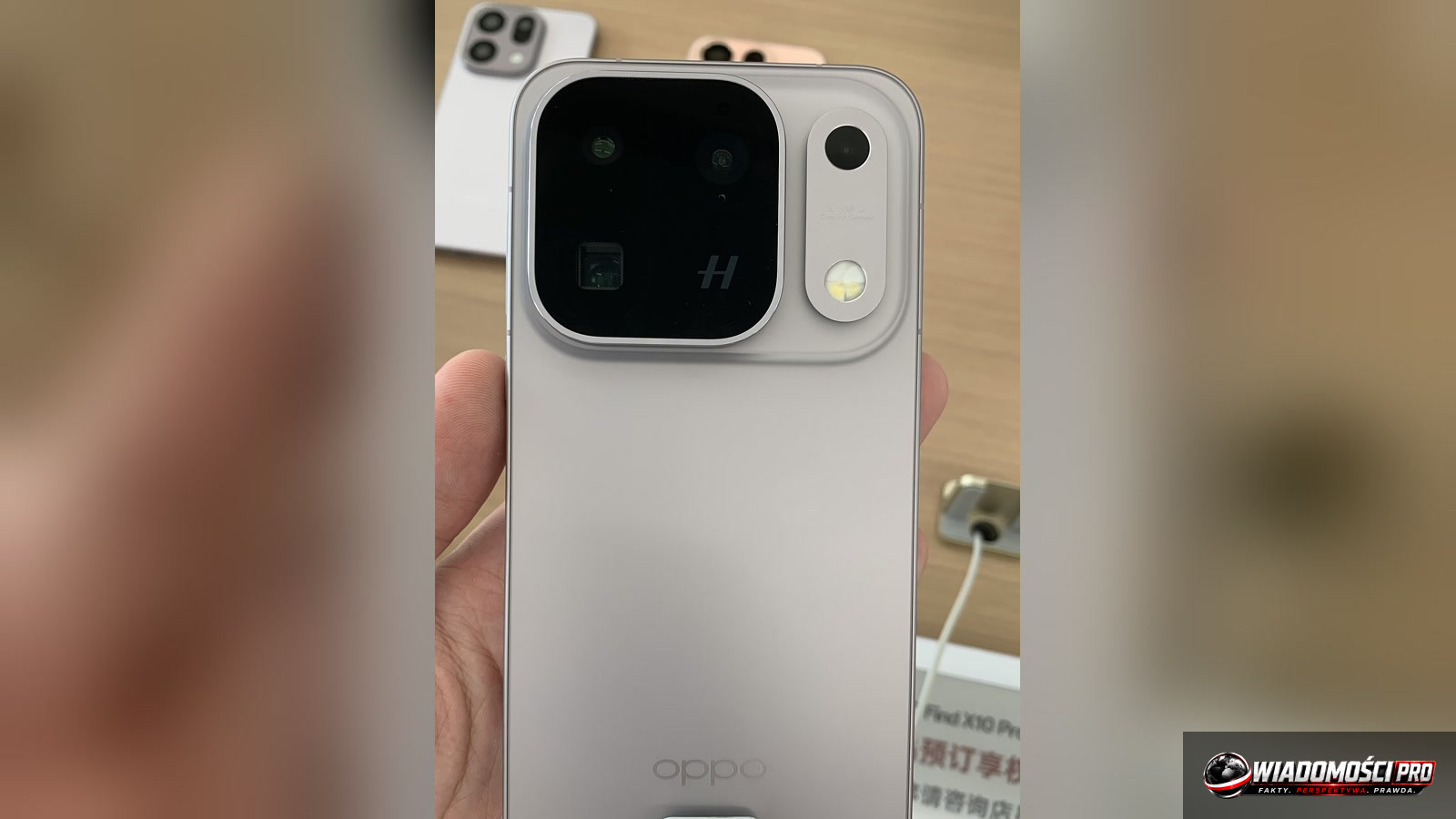
Three 200 MP cameras make this the first such setup in a smartphone. The main sensor is the Samsung ISOCELL HPC with DeepPix technology, which according to the manufacturer delivers up to 17 stops of dynamic range, a level close to cinema cameras. The telephoto and ultrawide are the familiar ISOCELL HP5, and the selfie camera has an 18 mm focal length, so framing is wider than on its predecessor.
In practice, opinions are mixed. CNET praises the natural colors and detail, but notes that some photos look over-processed, with brightened shadows and a haze around bright areas. Engadget compared the phone directly with the Find X9 Ultra and it came out worse in low light, because the Samsung main sensor is 1/1.3 inches while the Sony in the Ultra is 1/1.12 inches, i.e. about 25 percent more surface area.
The screen is a flat 6.78-inch AMOLED at 1.5K resolution. The refresh rate jumps from 1 Hz when reading to 144 Hz in games, brightness in sunlight reaches 1,800 nits, and peak brightness is 4,500 nits. At night the minimum brightness drops to 1 nit, and 2160 Hz PWM dimming is meant to reduce eye strain. The 228 g weight and 8.2 mm thickness mean you feel every gram in your pocket, and the LUMO camera island protrudes more than on the iPhone 18 Pro Max.
IP66, IP68 and IP69 certifications, Wi-Fi 7, Bluetooth 6.2, eSIM, a USB-C 3.2 port with video output and an infrared emitter. There is no headphone jack.
Sources
- GSMArena: Oppo Find X10 Pro Max Hasselblad teleconverter kit samples
- Spider's Web: Potężny aparat, ogromna bateria i jest pro. Oto Oppo Find X10 Pro Max
- CNET Tech: I’m Baffled by Oppo’s Find X10 Pro Max, but I Love It Anyway
- Engadget: Oppo Find X10 Pro Max hands-on: Triple 200-megapixel cameras but few surprises
- GSMArena: Oppo Find X10 Pro Max review
- GSMArena: Oppo Find X10 and Find X10 Pro Max go global
Article prepared with the help of artificial intelligence based on: GSMArena, Spider's Web, CNET Tech, Engadget. Facts checked automatically against these sources. The Wiadomości PRO newsroom is responsible for this publication.


Comments (0)
Loading comments...