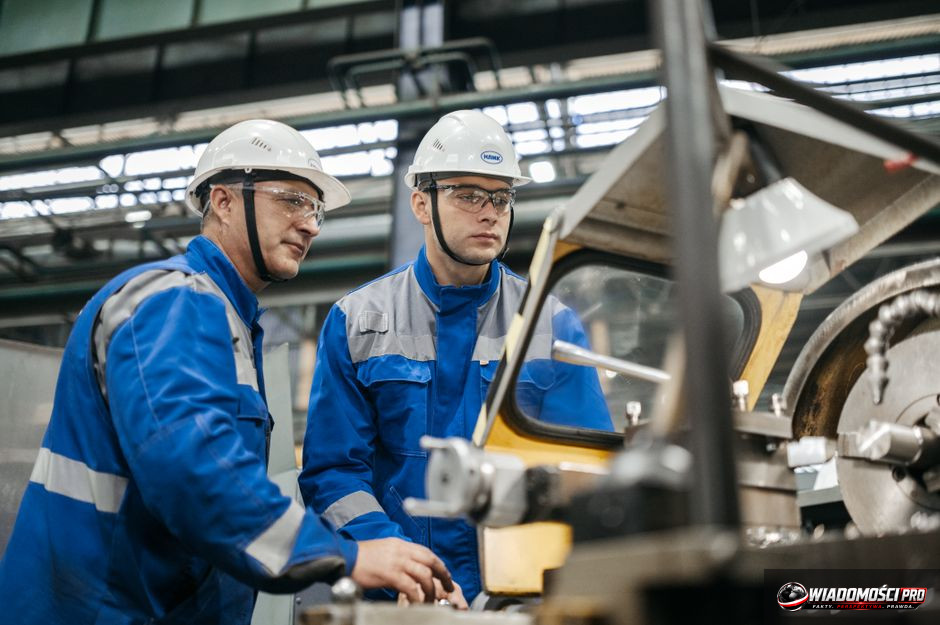
The termination of wage agreements marks a direct dispute over working conditions covering 100,000 positions at the German giant's plants. This step drastically escalates the conflict with the IG Metall trade union and paves the way for a wave of strikes. In practice, the company's management has scrapped employment guarantees that had been in place for three decades, casting doubt on the future of factories in Germany and opening up a real prospect of their closure.
This move upends the established order in the European automotive industry. For thirty years, workers in Germany lived with a sense of almost absolute social security. Now, those rules no longer apply, and managers at headquarters have stopped treating the issue of staff reductions or closing production lines as a taboo subject.
In brief
- The termination of employment pacts affects 100,000 employees across six major factories in Germany.
- The group is seeking between 4 and 5 billion euros in savings for the Volkswagen brand alone, with factories in Osnabrück and Dresden in the crosshairs.
- From December 1, 2024, IG Metall union members gain the formal right to organize legal warning strikes.
- On the employer's side, CEO Oliver Blume is pushing the hardline approach, while the labor barricade is being built by Daniela Cavallo and IG Metall chair Christiane Benner.
- Turmoil in Germany will have a ricochet effect on Polish plants in Poznań and Września, domestic parts manufacturers, and waiting times for new cars at dealerships.
Breaking agreements: Volkswagen and IG Metall on a collision course
The end of the long-standing collective bargaining agreement in Germany has become a reality. The company's leadership has officially put an end to the "Zukunft pact" employment security program, which had protected workers from layoffs for reasons attributable to the employer since 1994. Oliver Blume, head of the group's board, concluded that the existing rules were too costly to maintain competitiveness against Asian manufacturers and the growing pressure from Tesla. From the perspective of factory corridors in Lower Saxony, this decision means one thing: a mandate for restructuring the likes of which this company has not seen since the post-war era.
The previous model was based on an agreement with the powerful IG Metall union and works councils. In exchange for social peace and flexible working hours, workers received job stability and high salaries. That balance has ceased to exist. Works council head Daniela Cavallo explicitly called the management's actions a historic mistake and announced resistance that will move from negotiation rooms directly to production halls. Meanwhile, IG Metall chair Christiane Benner warned that ignoring the workers' voices would lead to the most severe industrial dispute in Germany's post-war history.
The lack of an agreement by the end of November 2024 definitively ends the so-called "social peace" obligation. In practice, this means that from December 1, 2024, IG Metall can legally announce warning strikes at all subordinate factories. The union has a massive strike fund capable of covering the costs of multi-day shutdowns. If the protest machinery starts, the company's losses will be counted in tens of millions of euros for every day of paralysis.
100,000 positions at the center of the labor dispute
The direct threat affects employees covered by the internal tariff agreement, the so-called "Haustarifvertrag." This is a massive army of 100,000 workers, engineers, and logistics personnel from the main production centers: Wolfsburg, Hanover, Brunswick, Salzgitter, Emden, and Kassel. In these locations, existing wage regulations and clauses protecting against layoffs are losing their legal force.
For the crews, this means not only uncertainty about tomorrow but also the prospect of wage cuts. The board has demanded a 10 percent reduction in tariff wages, combined with the elimination of various seniority bonuses, annual bonuses, and a wage freeze for the next two years. In this way, personnel costs would fall to a level acceptable to the group's financial management. From the perspective of a worker on the assembly line in Wolfsburg, this means a loss in the household budget of up to several hundred euros per month.
Employees also fear the loss of social privileges that have been the foundation of recruitment for automotive plants for years. Severance packages, employment guarantees for apprentices, or subsidies for early retirement are hanging by a thread. Inside the factories, the atmosphere is tense. Daniela Cavallo regularly organizes staff meetings, gathering tens of thousands of people on production floors, which is already forcing temporary technological shutdowns. If management does not change its tone, the coming months will be marked by organizational paralysis.
Background to the decision: pressure for drastic cost-cutting
Why did Oliver Blume decide on such a drastic step? The answer lies in the spreadsheets. The entire capital group is struggling with declining operating profitability, especially in the core passenger car brand, where the profit margin has fallen below safe levels. The board is looking for savings of 4 to 5 billion euros in German operations alone, aiming to save the investment liquidity necessary to develop battery technologies and software.
A topic that seemed impossible until recently has appeared on the table: closing factories within Germany. Among the plants mentioned as most at risk of liquidation is the manufactory in Dresden, where the electric ID.3 model was assembled, and the factory in Osnabrück, which specializes in short series of niche cars and convertibles. Dresden has generated high fixed costs for years with a symbolic scale of production, and the Osnabrück plant is losing orders following the withdrawal of combustion models assembled for other group brands.
An additional burden remains the drastically higher energy prices in the German market after the cutoff of cheap raw material supplies from the East, as well as the high costs of technological transformation. Electric models from the ID family are not selling in Europe at the pace originally assumed in forecasts from 2019–2021. Demand in Germany collapsed after the sudden end of government subsidies for electric car purchases, leaving the company with unused production capacity and a growing stock of unsold vehicles on factory lots.
IG Metall's position: unionists ready for resistance
The reaction from the union headquarters in Frankfurt am Main was immediate. Christiane Benner emphasized that IG Metall will not allow the strategic mistakes of board members to be fixed at the expense of employees' wallets. The union has powerful strength in Germany, bringing together over two million members across the entire industrial sector, with automotive plants forming the backbone of the organization. If the conflict is not extinguished through negotiations, IG Metall has the means to organize protest action on a scale unseen since the early 1990s.
Unionists argue that Volkswagen's management ignored warnings about faulty software in the new generation of cars for years and raised vehicle prices to levels unacceptable to the average customer. Daniela Cavallo regularly points out the managers' misguided decisions in her speeches to workers, accusing them of lacking a long-term market vision and wasting billions on projects that did not bring the expected returns. Employees do not want to be held responsible for the company management's failed model policy.
Instead of wage cuts, the union is demanding a new agreement that would maintain production at threatened plants by shortening the work week to four days, similar to what was done during the 1993 crisis. At that time, the crew agreed to a 28.8-hour work week with a proportional reduction in wages, which saved the factories from mass layoffs. However, Blume's board rejects this scenario, arguing that the current market situation requires a permanent reduction in the cost base, not a temporary masking of surplus employment.
Threat of strikes: what awaits German factories?
The calendar of the collective dispute sets precise time frames. According to German labor law, after the expiration of the tariff agreement, the parties enter a negotiation phase, which in this case ends in November 2024. If a compromise document is not created by then, from December 1, 2024, IG Metall can order so-called "Warnstreiks," or warning strikes lasting from several dozen minutes to several hours on each production shift. This paralyzes factory logistics and stops precisely synchronized component deliveries.
If warning strikes do not change the course of the authorities in Wolfsburg, the union can hold a strike referendum and announce an indefinite strike. A shutdown at the Wolfsburg plants, where the Golf and Tiguan models are produced, generates massive operating losses. The German industry operates under a just-in-time regime, meaning factories do not maintain buffer stocks, and the lack of a single element immediately stops assembly lines throughout the entire cooperative chain.
Consequences of a potential work stoppage:
- Stopping assembly lines at key plants in Lower Saxony and Saxony, resulting in the non-production of thousands of cars per day.
- Immediate freezing of component intake from external contractors, leading to warehouse congestion at suppliers across Central Europe.
- Drastic increase in delays in fulfilling orders for fleet and individual customers who are already waiting several months for selected models.
Consequences for the German automotive giant
The brand's image, built for years on the foundation of German reliability and inviolable social peace, has suffered deep damage. For decades, the company functioned as a symbol of the social market economy, where employee representatives hold half the seats on the supervisory board, and the state of Lower Saxony holds a 20 percent voting stake, blocking socially unfavorable decisions. This unique power structure has now been put to its toughest test since the company's privatization in 1960.
Stock market investors view Blume's actions with mixed feelings. On one hand, financial markets have long demanded a realistic approach to fixed costs and limiting union influence on business decisions. On the other hand, the prospect of long-term production shutdowns and an open war with the IG Metall union threatens to collapse financial results for the fourth quarter of 2024 and the beginning of 2025. Every day of a strike is not only lost revenue from car sales but also the risk of losing market share to competitors who have free production capacity.
Another problem is the erosion of trust within the company itself. Work in German automotive plants is based on complex quality procedures, the implementation of which requires the commitment of personnel. A demotivated crew, fearing the liquidation of their own jobs, rarely shows concern for technological discipline. In the long run, this conflict could affect the failure rates of vehicles leaving the factories, which would be a devastating blow for a brand aspiring to the premium segment.
What this means for you
The crisis in Wolfsburg is not just an internal matter for the German industry. For the Polish driver and the domestic economy, it means real and tangible consequences.
First and foremost, the dispute translates to the consumer market. Stopping lines in Germany as a result of strikes from December 2024 will cause delays in the delivery of ordered cars. If you have placed an order for a new Golf, Tiguan, or electric models produced across the border, you must count on the car's delivery date being pushed back by several weeks, or in extreme cases, even months. Dealers in Poland will not be able to guarantee rigid delivery dates, which will also affect leasing costs and fleet renewal schedules for domestic companies.
The other side of the coin is the situation of Polish employees. Volkswagen is one of the largest employers in our country. Several thousand people are employed in the Greater Poland plants in Poznań and Września, assembling commercial models such as the Caddy and Crafter. Additionally, there is the engine factory in Polkowice. Although Polish factories are not covered by the German tariff agreement and the direct dispute over 100,000 jobs, a shutdown of assembly plants in Germany will immediately hit Polish cooperating plants.
Our automotive parts industry is a powerful export branch. Thousands of small and medium-sized enterprises in Lower Silesia, Silesia, and Greater Poland produce electrical harnesses, seats, plastic elements, and suspension components that go straight to assembly lines in Wolfsburg or Emden. When factories across the border stop production due to IG Metall strikes, orders to Polish suppliers will be frozen overnight. This, in turn, may force mandatory leave or production downtime in hundreds of Polish cooperative plants. The convergence of these factors means that the fate of German wage negotiations directly affects the wallets of Polish workers and the stability of the domestic automotive sector.
Questions and answers
How many employees are affected by the dispute over working conditions and the employment pact?
The conflict directly involves 100,000 employees from six major Volkswagen brand factories in Germany covered by the internal "Haustarifvertrag" tariff agreement.
Who is leading the opposing sides in this conflict?
On the management side, CEO Oliver Blume is pushing for cuts, while on the employee side, the interests of the crew are defended by works council chair Daniela Cavallo and IG Metall union chair Christiane Benner.
When can legal strikes begin in German plants?
The IG Metall union gains the full right to legally organize warning strikes as of December 1, 2024, when the obligation to maintain social peace expires irrevocably.
Which factories in Germany are most at risk of closure?
The main candidates for potential liquidation or radical limitation of operations are the Dresden plant and the Osnabrück factory, which are struggling with high unit costs and a lack of prospective production orders.
How much money does Volkswagen management plan to save in the German market?
The group's leadership aims to generate savings of 4 to 5 billion euros for the Volkswagen brand alone, mainly by lowering the wage base by 10 percent and eliminating selected social benefits.
Sources
Article prepared with the help of artificial intelligence. The Wiadomości PRO newsroom is responsible for this publication.

Comments (0)
Loading comments...