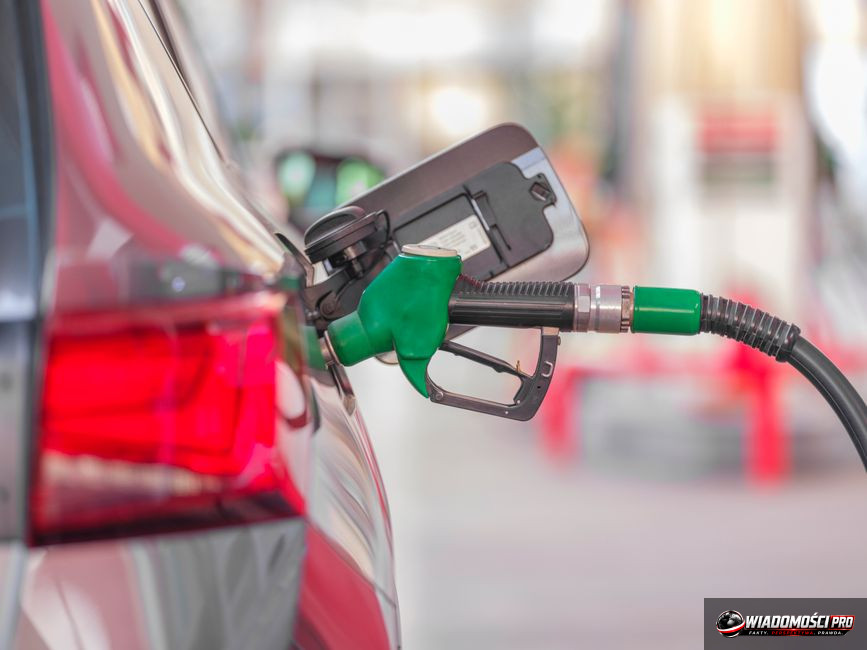
In brief
- The government announces strict price caps for the weekend: a liter of 95 gasoline will cost a maximum of 6.73 PLN, and a liter of 98 gasoline will not exceed 7.59 PLN.
- Official announcements did not provide a specific price rate for diesel (ON), even though headlines declare that the regulations cover the entire fuel market.
- The price cuts are being launched as part of the returning "Lower Fuel Prices" (CPN) program, and media reports link this decision directly to the actions of Karol Nawrocki.
Starting Saturday, the maximum price for a liter of 95 gasoline will be 6.73 PLN, and we will pay a maximum of 7.59 PLN for a liter of 98 gasoline. The new rates are the result of government regulations announced for the weekend. On Friday, October 2, the government put an end to media speculation and imposed strict margin restrictions on distributors. For owners of cars with gasoline engines, the matter is clear, but drivers refueling with diesel must be patient. Contrary to the general headline announcing the regulation of the entire market, the administration did not present any specific maximum price for diesel.
Instead of a complete data package, the market received partial guidelines. Two hard limits apply only to gasoline. Those who drive on diesel do not yet know exactly how much they will pay on Saturday morning. The announcements speak generally about this segment also being covered by the regulation, but without providing figures.
Here are the price parameters that will come into effect on Saturday:
- Unleaded 95 gasoline: maximum 6.73 PLN per liter.
- Unleaded 98 gasoline: maximum 7.59 PLN per liter.
- Diesel (ON): no price limit disclosed in the government table.
Maximum prices for 95 and 98 gasoline: hard government limits
The cabinet's decision comes into effect on Saturday, October 3. Setting the caps at 6.73 PLN for Pb95 and 7.59 PLN for Pb98 forces a correction of price lists across all fuel networks in the country. Until now, stations operated with margins dependent on location, driving up rates along highways and expressways. The new ordinance eliminates this freedom. Exceeding the indicated thresholds by even a penny will be a direct violation of economic law.
However, the introduction of top-down price brackets creates immediate market consequences. The government ordinance defines an upper barrier, which creates a risk that some sales points will start pulling their previously lower rates up to the official cap. Sellers may consider the maximum amount as a suggested retail price. The executive documentation also lacks provisions for a compensation mechanism for private stations for fuel purchased earlier at higher wholesale prices.
The most serious flaw in the government's information remains the silence regarding diesel. Although official agencies speak of relief for all motorists, Friday's documents did not contain a single amount defining a limit for diesel. Owners of heavy vehicles, farmers, and millions of drivers of diesel cars see strict rules for gasoline, while rates for diesel remain dependent on the current policy of wholesalers and retail margins.
Farmers and transport entrepreneurs point to this dissonance. Diesel fuels logistics, agriculture, and public transport. The lack of a hard limit for this fuel means that freight costs in the coming weekend will not be covered by the government shield. Such selectivity raises suspicions that the intervention package was prepared primarily with weekend passenger car travel in mind.
The CPN program returns: cheaper fuel across Poland
The official operation has been named "Lower Fuel Prices" (Ceny Paliw Niżej), creating the acronym CPN. This is a direct reference to the former brand of state-owned gas stations. The government is using this marketing label to communicate to the mass audience a return to state control over the fuel market. The mechanism is intended to stop the price fluctuations that have hit drivers during periods of increased tourist traffic.
The idea is based on an administrative freeze on prices across the country. Regardless of whether a station is located on a national road in the Subcarpathian region or at an A2 motorway junction, no operator can issue a bill higher than 6.73 PLN for 95 gasoline. The goal of the program is to eliminate geographical disparities. In recent weeks, price differences for the same fuel could amount to more than 50 groszy per liter depending on the region.
However, the short time horizon of the intervention raises doubts among economists. The program's formula was announced as a temporary solution, created specifically for the upcoming weekend. Instead of permanent changes to the tax system, such as a reduction in excise duty or VAT, a decree mechanism was used. This type of intervention protects consumer wallets for a few dozen hours but does not remove the structural causes of expensive fuel in international markets.
Fuel distributors are concerned about the liquidity of supplies. When the state forces sales below market calculations, there is a temptation to limit sales. The fuel industry recalls situations from previous years where artificial price cuts ended in fuel shortages at the pumps and the shutting down of dispensers due to alleged breakdowns.
The role of Karol Nawrocki and the official government decision
In media reports regarding the implementation of the new rates, the name of Karol Nawrocki appears constantly. According to agency information from Friday morning, it was his decision that decided to accelerate legislative work and announce the maximum rates. Such a message sparked a wave of questions about the formal and legal status of the entire process.
In the Polish legal order, Karol Nawrocki does not hold a position in the Council of Ministers, nor does he head the Ministry of State Assets or the Office of Competition and Consumer Protection. Institutionally, he has no authority to issue price regulations or decree rates at private gas stations. Decisions on introducing regulated prices belong to state administration bodies, not individuals outside the constitutional composition of the government.
Connecting these facts, it becomes clear that Karol Nawrocki's role is political in nature, not formal-administrative. His involvement and public stance provided the impulse under which the government decided to launch the "Lower Fuel Prices" program. It was political pressure or a political agreement within the ruling camp that translated into the decision of the Prime Minister and ministers.
The very act of citing the name of a person without executive authority in fuel price matters in the announcements shows the specificity of this decision. It is a move calculated for image effect. Instead of a standard legislative procedure with public consultations, citizens received a Friday decree motivated by a political agreement. For gas station owners, this creates significant legal difficulties. They must adapt their cash register systems to strict price caps under threat of penalties, based on regulations implemented in an emergency mode.
The lack of competence clarity also complicates the subsequent settlement of losses. If smaller stations incur costs from selling with a negative margin, the process of claiming damages from the State Treasury will require a precise indication of the legal basis. Pointing to the declarations of individual political figures will not replace hard economic laws.
Ministry of Finance declarations vs. market situation
The Ministry of Finance, in its official statements, supports the weekend cuts, presenting them as a necessary element of protecting households from inflationary pressure. The ministry points out that the top-down reduction of margins is intended to immediately translate into lower expenses for families traveling around the country. However, government optimism diverges from the financial balance sheet of companies running gas stations.
Introducing strict caps without coordination with wholesale price levels calls into question the profitability of the retail sector. Wholesale refinery price lists are subject to global commodity trends and dollar exchange rate fluctuations. If the wholesale price, including taxes, approaches 6.73 PLN per liter of 95 gasoline, the station's retail margin will drop to zero or become negative.
The finance ministry did not present budget calculations showing the impact of the CPN program on state revenue from the goods and services tax (VAT). A lower retail price means a proportionally lower VAT revenue from every liter sold. The government is cutting operator margins without simultaneously giving up its own fiscal burdens included in the fuel price. The fuel fee, emission fee, and excise duty remain unchanged.
In this arrangement, the entire burden of the weekend relief for drivers has been shifted to distribution links. Large corporate networks, linked by capital to fuel producers, will cope with the temporary reduction in profit. For them, fuel sales are also turnover in station shops, where they generate high margins. Independent owners of individual facilities do not have such a buffer. Fuel sales are their main source of income, and an official margin cut overnight hits their liquidity directly.
The situation is worsened by the lack of clear control instructions. Entrepreneurs are asking whether inspections by the Trade Inspection and tax offices will begin immediately at midnight on Friday. Implementing new cash register software and changing pylons in hundreds of points in a few hours is a logistical operation that requires time. The ministry's haste increases organizational chaos across the entire industry.
Summary of changes: what the driver gains from Saturday
Saturday morning will bring clear relief to owners of gasoline-powered cars. Anyone who held off on refueling until the weekend will pay noticeably less for fuel than in the middle of the week. The bill for filling a standard 50-liter tank with 95 gasoline will not exceed 336.50 PLN. In the case of 98 gasoline, the total cost of the same refueling will close at 379.50 PLN.
Comparison of benefits and risks for gas station customers:
- Lower cost of refueling 95 and 98 gasoline from Saturday morning.
- Official guarantee that the price of gasoline will not exceed 6.73 PLN and 7.59 PLN, respectively.
- Slowing down price hikes at stations along expressways and motorways.
- No price guarantee for diesel engine owners, which forces checking rates at every pylon.
- Threat of fuel shortages at smaller stations that will not want to trade with a minimal margin.
The differentiation of the situation of consumers depending on the type of engine under the hood is unprecedented. Gasoline car drivers gain hard state guarantees. Diesel users must rely on the goodwill of individual station owners or look for points that voluntarily cut the margin on diesel.
This disproportion also hits the small business sector. Hundreds of thousands of delivery vehicles used by construction, courier, or service companies run on diesel. These entrepreneurs will not feel the government's price cut in the same way as tourists refueling gasoline before a weekend trip out of town.
New rates for gasoline and diesel: what awaits the market after the weekend
The government's weekend intervention creates a dangerous regulatory precedent. When the announced limits expire on Monday morning or the market returns to standard pricing rules, drivers may face a sharp price jump. Manually suppressing rates rarely brings lasting stabilization. Most often, it accumulates cost pressure, which explodes the moment the price muzzle is removed.
Gas stations that worked on minimal or zero margins for two days will strive to make up for losses. The first working day of the week may bring price hikes exceeding the standard volatility of the wholesale market. Station owners will have to compensate for the weekend profit restrictions, which will hit people commuting to work every day.
The biggest unknown remains the diesel market. The lack of a strict price for diesel in Friday's announcements suggests that the government was unable to negotiate an acceptable cap with refineries. Demand for diesel in Europe remains high, and stocks of this fuel are much tighter than gasoline reserves. Imposing a price that is too low on diesel could lead to an immediate draining of stocks by international transport.
Drivers must remember that administrative decrees do not replace the raw material. If wholesale crude oil costs in global markets rise and the zloty weakens against foreign currencies, no CPN-type programs will stop price hikes in the long term. State intervention only postpones the inevitable confrontation with market realities.
For the fuel industry, the coming days will be a test of endurance. We will learn the true costs of Friday's decision not on Saturday at the dispenser, but in the following weeks, when stations begin to summarize their trade margins.
What this means for you
If you have a gasoline car, hold off on refueling until Saturday. You will pay a maximum of 6.73 PLN per liter of 95 gasoline and no more than 7.59 PLN for 98 gasoline, which will provide real savings on a full tank. If you drive a diesel, the government program does not give you any price guarantee because no strict limit has been set for diesel. You must hunt for cheaper stations on your own, and after the weekend, expect the risk of a general price rebound upwards.
Questions and answers
How much will we pay for 95 gasoline from Saturday?
The maximum permissible price for a liter of 95 gasoline will be 6.73 PLN. Gas stations cannot sell this fuel for more throughout the weekend.
What is the price limit for 98 gasoline?
For a liter of 98 gasoline, the government has set an upper limit of 7.59 PLN. Any higher rate at the dispenser means breaking the regulations.
What is the official maximum price for diesel (ON)?
The government did not provide a price limit for diesel. Official announcements lacked a specific maximum rate for diesel.
What is the CPN program that the media is reporting on?
CPN is an abbreviation for the "Lower Fuel Prices" (Ceny Paliw Niżej) program. It is an administrative mechanism introduced by the authorities to immediately cut retail margins at gas stations across Poland.
Why does Karol Nawrocki appear in the context of price decisions?
Karol Nawrocki has no formal, legal authority to regulate fuel prices in Poland. His role has a strictly political dimension. Agency reports indicate that it was his public stance and pressure that decided to accelerate the cabinet's decision to impose price limits.
Will the new fuel prices be in effect permanently?
The government limits were announced as a temporary measure for the weekend starting October 3. The authorities did not present long-term price guarantees for subsequent weeks, which means that after the weekend, pricing rules may return to standard market mechanisms.
Sources
- New rates for gasoline and diesel. Government announced maximum prices - Rzeczpospolita
- Breakthrough in fuel prices. Changes at stations after Karol Nawrocki's decision - businessinsider.com.pl
- It's official. These will be the fuel prices. Government announced - Money.pl
- End of high prices? Government cuts fuel prices. How much will you save this weekend? - Super Biznes
- Maximum fuel prices for the weekend announced. If you have gasoline, you can rejoice - Interia Motoryzacja
- Government announced maximum fuel prices. New rates from Saturday - e-sadownictwo.pl
- We already know the new, lower fuel prices. They come into effect tomorrow. The difference is large - Auto Świat
- Return of the "Lower Fuel Prices" (CPN) program. Cheaper fuel at stations across Poland from this moment - Forsal.pl
Article prepared by the Wiadomości PRO editorial team with the support of artificial intelligence. Facts come from the sources listed above.


Komentarze (0)
Ładowanie komentarzy...