In Brief
- Particle capture efficiency reaches 90 percent under laboratory conditions.
- The design relies on 3D printing technology featuring micrometric channels.
- The Canadian institutions have not disclosed the names of the authors, university names, or the journal title.
- There is a lack of data regarding microplastic particle size fractions in micrometers and liquid flow rates.
- Implementation costs remain unknown; the industrial market operates at rates of hundreds of zlotys per kilogram of specialized resins.
Canadian Breakthrough: Up to 90% of Microplastics Removed from Water Circulation
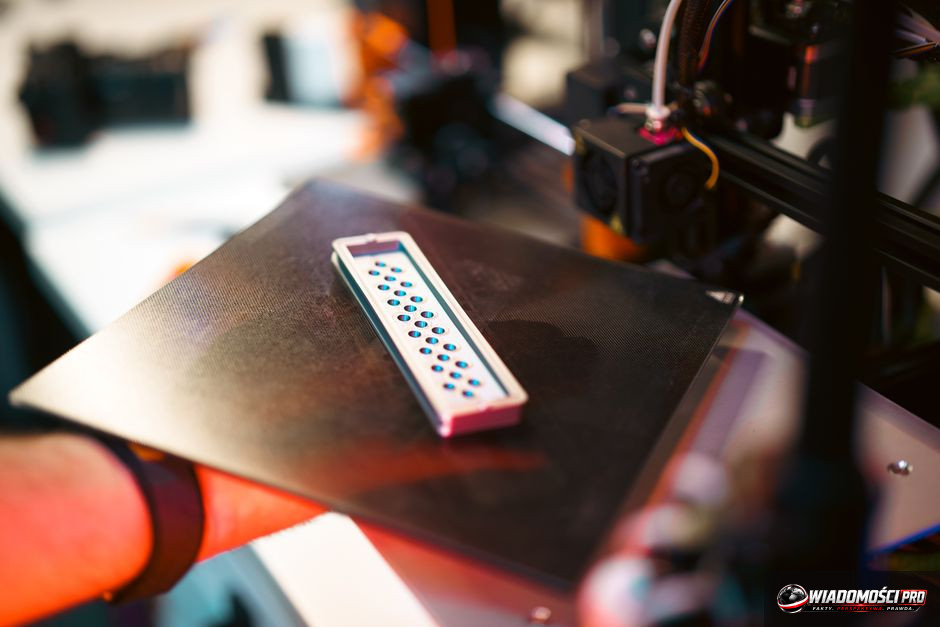
Canadian researchers have designed 3D-printed filters that retain up to 90% of microplastics thanks to precise pores with a micrometric structure. Although the technology is intended to be inexpensive in mass production, the authors have not yet revealed the exact commercialization costs or the market price list for installations. The mechanism involves directing a contaminated stream of liquid deep into a three-dimensional spatial network, where synthetic particles become trapped in narrow constrictions, allowing filtered water to flow onward without the need for chemical coagulants.
However, considerable mystery of a formal nature surrounds the project. The provided source material does not mention the institutions responsible for this experiment. It remains unknown whether the development comes from the University of Toronto, McGill University, the University of British Columbia, or the state agency National Research Council Canada. The names of the project leads and the engineers themselves have been kept equally concealed. Furthermore, the announcement does not specify in which peer-reviewed scientific journal the complete test results were published, omitting even mentions of titles such as “Nature Communications” or “Environmental Science & Technology”.
Instead of a solid technical report, the reader receives only a preliminary outline of the prototype. The experiment confirmed the claimed efficiency of around 90 percent exclusively on the laboratory bench. The designers did not disclose which specific plastics were used to manufacture the filter cartridges themselves, making it difficult to assess their resistance to mechanical degradation.
This lack of transparency also extends to the raw material itself. Additive manufacturing relies on polymers that can themselves undergo erosion under high pressure. The authors have not yet presented expert evidence demonstrating that the filter walls do not become a secondary source of microparticles entering the pipes.
Another unknown is the durability of the microscopic geometry when in contact with liquids of varying pH. Water flowing through municipal systems carries mineral compounds and aggressive sediments. If the channels become distorted under the influence of the chemical environment, the initial efficiency will immediately drop.
Operating Principle: Micropore Geometry from a 3D Printer
The physical separation mechanism is based on forcing a multi-stage flow through a network of microscopic branches. Synthetic particles do not strike a flat sieve surface; instead, they enter a labyrinth of channels where they become wedged in constrictions on the order of micrometers.
However, the project creators omitted critical physical parameters of the study. The documentation lacks information regarding the exact size range of the particles captured by the device. Standard microplastics encompass particles ranging from 1 micrometer to 5 millimeters, yet the Canadian team did not specify the lower retention limit for submicron fractions or nanoplastics. Neither the liquid flow rate expressed in liters per minute nor the operating pressure values at which the prototype maintains its claimed efficiency were provided.
The water maintains its natural composition because the engineers eliminated the iron and aluminum salts traditionally used for flocculating suspensions. This technological gain, however, comes at the risk of a rapid loss of throughput. Without knowing the allowable pressure drop across the filtration barrier, it is impossible to calculate the energy requirements of the supply pumps.
The distribution of hydraulic stress within the printed cartridge requires precise balancing. As contaminants fill the micrometric chambers, the active cross-sectional area decreases drastically. If fluid pressure rises above the strength threshold of the plastic, the filter will mechanically rupture or push the accumulated sediment straight into the filtered stream.
The matter is further complicated by the authors' silence regarding the regeneration of clogged channels. Trapped microplastics will not dissolve spontaneously inside the pores. High-pressure backwashing could destroy the delicate walls of the labyrinth, while the use of chemical solvents would defeat the waste-free nature of the entire process.
The angle of inclination of the individual capture chambers is also of crucial importance. Without accurate data on the microstructure, it is impossible to verify whether the liquid creates dead zones inside, where organic sediment could decompose. The authors have provided no answers to these questions.
Implementation Costs: The Promise of Inexpensive Production Without Hard Figures
Claims of low costs are based solely on the general nature of additive manufacturing, which minimizes material losses during the prototyping stage. The research team has not published a market estimate for the installation, remaining silent on the capital expenditure necessary to launch a mass-production line. Industry does not operate on conjecture; therefore, the real cost of the technology must be measured against current raw material rates.
Professional photopolymer resins for precision stereolithography (SLA) printing cost between 300 and over 1,200 PLN per kilogram on the market, depending on the chemical resistance class and sanitary certification. By comparison, standard polypropylene granulate used to mold traditional melt-blown foam cartridges costs around 5 to 8 PLN per kilogram. The difference in raw material pricing is colossal.
Conventional ultrafiltration membranes made of polyethersulfone (PES) or polyvinylidene fluoride (PVDF) fetch wholesale prices from several dozen to several hundred zlotys per square meter of active surface. Engineering resins capable of replicating micrometric structures using additive manufacturing are many times more expensive. If the Canadian filter requires high-resolution photocurable materials, the unit cost of a cartridge could exceed the price of traditional capillary modules.
Another cost-generating factor is machine operating time. Industrial additive manufacturing equipment cures or sinters micrometric layers at a rate of several to a dozen millimeters in height per hour. Mass-producing millions of filters per year would require the construction of massive 3D printer farms, entailing enormous capital expenditures for equipment depreciation and servicing of lasers or UV projectors.
Water utility companies care about the total cost of ownership (TCO) of an installation over a ten-year cycle. This balance includes not only the cartridges themselves, but also the frequency of technical downtime, pump electricity consumption, and the disposal cost of spent modules. The researchers' declaration of "low cost" without specifying the chemical formulation of the resin remains unsupported by facts.
The absence of certifications approving the material for contact with drinking water is another market barrier. Certification processes in testing facilities take months and swallow hundreds of thousands of euros. Until the prototype's authors present a calculation accounting for these expenses, large-scale deployment will remain blocked by investors' spreadsheets.
Technology Parameters Compared with Traditional Filtration
Comparing this academic project with wastewater treatment plant infrastructure reveals the technological gulf separating a laboratory module from a continuously operating facility. Conventional technological trains rely on multi-stage separation, combining primary settling tanks, chemical coagulation, and filtration through cast polymer membranes.
The new Canadian module offers a precise, micrometric pore architecture produced via 3D printing, achieving microplastic capture rates of around 90 percent in laboratory tests. Standard solutions exhibit variable separation efficiency, heavily dependent on mesh wear and the thickness of the filter cake formed on them.
Differences are also apparent in the manufacturing process itself. Additive manufacturing enables the creation of custom forms without injection molds, but it is characterized by low series throughput. Conversely, traditional polymer membranes are mass-cast in rolls spanning thousands of square meters, drastically reducing the unit cost of the product.
In terms of implementation status, the Canadian project remains in the early prototype testing phase, completely lacking industrial certification. Traditional PES or PVDF membranes come with comprehensive technical documentation, hygienic approvals, and clearly defined chemical cleaning cycles.
The hydraulic capacity of the Canadian prototype has not been measured under large-scale conditions. A typical membrane bioreactor in a municipal wastewater treatment plant processes tens of thousands of cubic meters of effluent per day. To meet such demands, an additive installation would have to operate under pressure levels that have not been verified for this prototype.
The transmembrane pressure drop also raises concerns. In classic capillary modules, flow resistance increases linearly with the accumulation of suspended matter. In a printed labyrinth of micrometric channels, hydraulic resistance could spike abruptly, leading to sudden overloads on the feed pumps.
From Treatment Plants to Washing Machines: Where Will the New Modules Go?
The concept's authors envision two avenues of application for the developed technology. The dimensional flexibility of 3D printing allows the scale of the modules to be altered without overhauling machinery, theoretically paving the way for integrating cartridges into vastly different working environments.
The first scenario involves municipal wastewater treatment plants and water purification facilities. In these locations, the modules would act as a final barrier before treated wastewater is discharged into natural receiving waters, such as rivers and lakes. The scale of the issue is immense, as municipal effluent is the primary migration route for plastics into marine ecosystems.
The second direction is source prevention, namely mounting miniature filters onto the drain lines of domestic washing machines and industrial laundry facilities. The wash cycle for synthetic fabrics, such as polyester, acrylic, or polyamide, releases thousands of microfibers in a single program. Catching them inside the washing machine drum prevents the introduction of pollutants into the sewer network.
Household appliance manufacturers, however, are guided by strict margin calculations. Embedding an extra component raises the price of the washing machine, which, in the absence of regulatory mandates, will encounter resistance from appliance assembly plants. The device must be maintenance-free from the consumer's perspective. If the Canadian filter requires manual cleaning of its micrometric channels every five wash cycles, users will simply start removing it.
Installing it in a washing machine drain also poses thermal and chemical challenges. Laundry wastewater is an aggressive cocktail of hot water, detergents, bleaching agents, and softeners. The 3D print must maintain its mechanical stability at temperatures of 60 or 90 degrees Celsius in the presence of strong surfactants. The Canadian researchers have not yet presented any thermal degradation test results for the material used.
Large commercial laundries serving hospitals and hotels, on the other hand, generate effluent with high concentrations of fibrous suspensions. Implementing a miniature cartridge in such conditions without an automated blow-back system will lead to an immediate blockage of wastewater flow and line failure.
Research Barriers: What Scientists Have Yet to Confirm
A laboratory setting is characterized by a sterility virtually non-existent in municipal installations. The main threat to the Canadian micropores is the phenomenon of biofouling—the colonization of internal surfaces by a bacterial biofilm. The sticky extracellular matrix produced by microorganisms can colonize micro-crevices in just a few dozen hours.
The prototype's narrow channels provide an ideal substrate for the proliferation of bacterial colonies. Once the labyrinth is infected with biological slime, the cross-sectional area of the pores shrinks, and hydraulic resistance climbs exponentially. The Canadian engineers have not conducted long-term trials with raw wastewater and have not outlined any method for removing biofilm from the interior of the printed part.
The design also presents an environmental paradox. If insoluble UV-cured acrylic or epoxy resins were used for printing, the spent module cannot be processed in standard thermoplastic recycling facilities. We are left with a filter that, after capturing microplastics, itself becomes non-recyclable composite waste. The research team has not revealed the material composition or an ecological life cycle assessment (LCA).
The lack of a commercialization roadmap raises further technical questions. The Canadian institutions have not indicated an industrial partner capable of financing the scale-up of production. No date has been set for testing at a technical scale (TRL 5–7), remaining limited to a laboratory-scale proof of concept on a test bench (TRL 3–4).
The dimensions and geometric tolerances of micropores in 3D printing are subject to processing shrinkage. Depending on the additive manufacturing technology, dimensional deviations can range from several to tens of micrometers. This means that individual units from the same production run could exhibit drastically different filtration efficiencies, an aspect that has not been statistically verified in the released publications.
Finally, verification is lacking regarding how the structure behaves in sub-zero temperatures. Water and sewage systems operate across diverse climatic conditions. Freezing water trapped inside micrometric channels would cause the polymer resin walls to burst immediately. These issues have been overlooked by the developers.
What This Means for You
The lack of concrete data on cartridge service life and raw material pricing means this technology will not be coming to our homes anytime soon. For now, individual consumers and treatment plant operators must rely on proven cast membranes while awaiting independent verification of the Canadian prototype by external research institutes.
Frequently Asked Questions
How much does the Canadian 3D filter actually cost?
Neither the unit price nor the total system cost has been disclosed. Technical resins used to print precision structures cost between 300 and over 1,200 PLN per kilogram on the open market, representing a significant financial barrier compared to traditional polypropylene.
What particle size range does the prototype capture?
The researchers have not specified the exact microplastic particle size fraction in micrometers. It is only known that the overall particle capture efficiency in laboratory tests reaches up to 90 percent.
How fast does water flow through the filter?
The released source material does not contain data regarding the liquid flow rate or the allowable operating pressure of the installation.
Who exactly is responsible for this project?
Source information does not specify the names of the Canadian universities, the names of the engineers leading the research, or the title of the scientific journal in which the technology was described.
Article prepared with the help of artificial intelligence. The Wiadomości PRO newsroom is responsible for this publication.



Comments (0)
Loading comments...