The Federal Reserve has lowered interest rates by 50 basis points to a range of 4.75-5.00 percent. Reduce exposure to the American currency in favor of medium-term treasury bonds and precious metals, which serve as a natural hedge in an environment of falling money costs. This decision radically changes the risk profile in investment portfolios, forcing an exit from positions overly concentrated in short-term dollar instruments.
FOMC decision mechanics: Why 50 basis points?
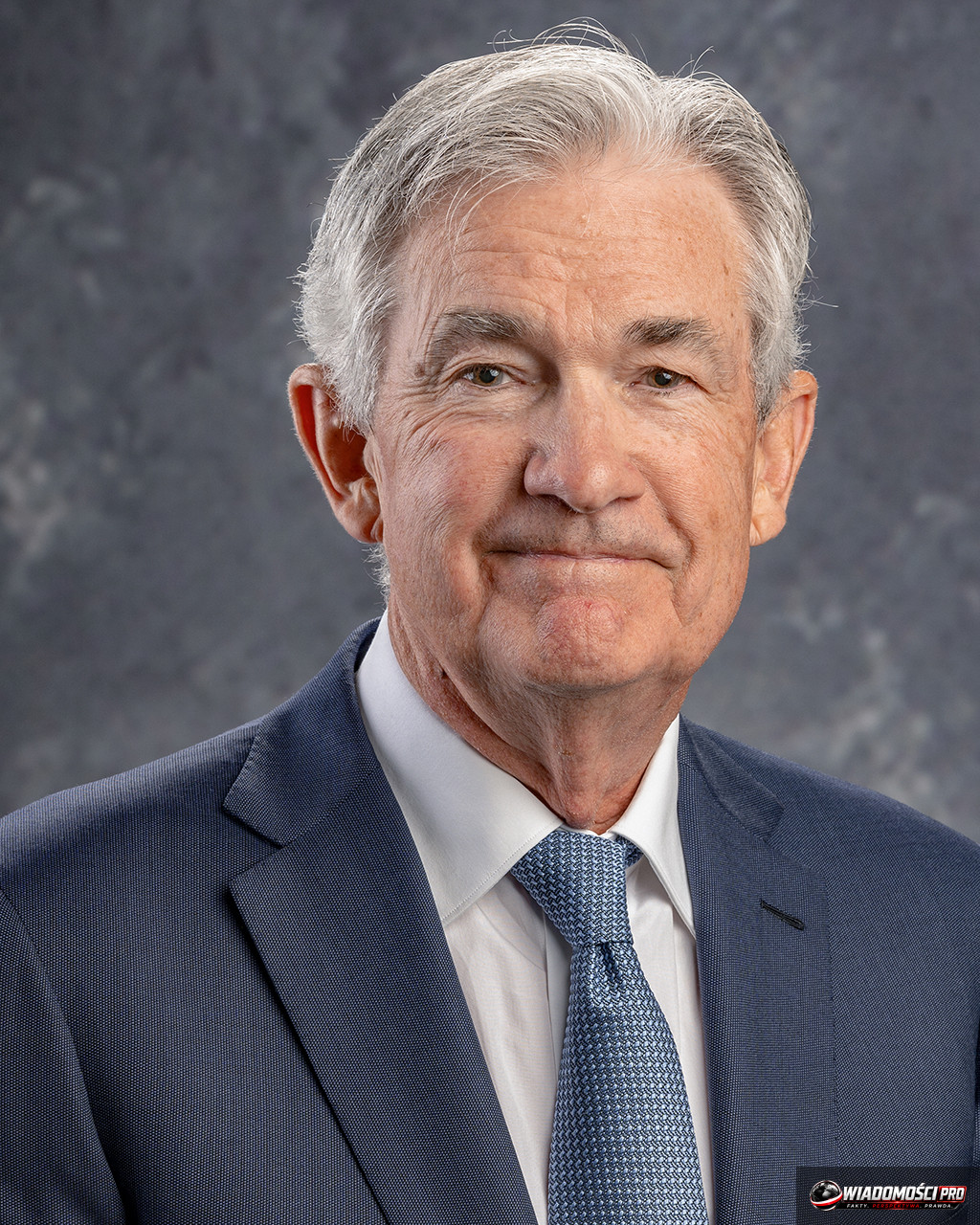
September 2026 will go down in history as the moment the US central bank decided on an aggressive move that exceeded standard market expectations. A 0.50 percentage point cut is not merely a technical adjustment of credit costs. It is a signal that Jerome Powell and the members of the Federal Open Market Committee (FOMC) have deemed the existing restrictions a threat to employment stability and the pace of US economic growth.
For the stock market investor, the most important consequence is the immediate update of discount models. Technology companies, whose valuations are based on cash flows distant in time, benefit from lower rates. The rise in the cost of capital had been the main barrier for the growth sector for years, but now the situation has reversed. Investors should pay attention to software and semiconductor companies, which show a high correlation with the downward movement of rates.
At the same time, it is worth remembering that the Fed's rapid reaction raises justified concerns about the condition of the US economy. The market no longer prices in a soft landing as the only scenario. The question of whether the Fed was late with its reaction remains open. If the US economy slows down faster than forecasts assume, even lower money costs will not protect indices from a correction resulting from weakening corporate profits. Investors must therefore balance the optimism resulting from cheaper debt against recessionary risks.
Market reaction: Stock market and currencies facing changes
Global capital reacted to the FOMC decision with great nervousness. US stock indices, after an initial rise, began to show increased volatility, which indicates a lack of consensus on the future path of inflation. Speculative capital, which for months had been profiting from a strong dollar, is now looking for new directions.
The US dollar is under clear supply pressure, which is a natural effect of the narrowing yield spreads between US bonds and debt securities of other developed economies. For a Polish investor, this means that every position in dollar assets without currency hedging is now becoming riskier. It is worth considering increasing engagement in assets denominated in euros or directly in Polish treasury bonds, which, in the face of changes in US policy, may gain attractiveness as an alternative to long-term American bonds.
The commodities sector, especially gold, reacted to the announcement in accordance with textbook theory. When the cost of holding the dollar falls, the precious metal becomes relatively cheaper for foreign buyers, which drives up its price. Individual investors should treat gold not as a speculative instrument, but as a foundation of a portfolio designed to protect capital against the effects of a possible "transitory" rise in inflation caused by the Fed loosening policy too quickly.
The perspective of the Polish zloty: Are we in for a currency rollercoaster?
The Polish currency does not function in a vacuum, and the US central bank's decision has a direct impact on the USD/PLN pair. Historically, the zloty shows high sensitivity to every change in US monetary policy, and the current rate cut intensifies tension in the currency market. Foreign investors, withdrawing from the dollar, often also reduce their engagement in emerging markets, which may temporarily weaken the zloty.
This mechanism is well known: capital outflow from emerging markets during periods of global uncertainty hits currencies with lower liquidity. Nevertheless, if the Fed's decision ultimately stabilizes global sentiment, the zloty may gain on a wave of return to risk (risk-on). For holders of investment portfolios, this means the necessity of monitoring currency spreads. The predictability of the zloty exchange rate, which we were counting on just a few weeks ago, has been replaced by waiting for further data from the American labor market.
For a Polish investor, it is crucial to divide the portfolio into a dollar part and a zloty part. In the current situation, it is not recommended to increase exposure to debt instruments in dollars. It is better to focus on domestic assets that offer higher yields with relatively stable credit risk. Volatility on the USD/PLN pair will be a permanent element of the investment landscape in the coming months, which forces more frequent portfolio rebalancing.
End of QT: What next for the Federal Reserve's balance sheet?
The real "hidden" element of the Fed's decision is the announcement of the end of the QT (quantitative tightening) program. Over the last few months, the Fed has methodically wound down its balance sheet, which meant removing liquidity from the financial system by not renewing maturing bonds. The decision to stop this process is just as important as the 50 basis point rate cut.
Liquidity is fuel for financial markets. The end of QT means that the banking system will stop being "drained" of cash, which should improve financing conditions in the corporate sector. Investors should pay attention to companies with high short-term debt, for whom access to cheap refinancing is key. Stopping the balance sheet reduction gives capital markets a necessary breather, but it does not mean a return to the era of zero interest rates.
The risk is that the Fed may lose control over liquidity if inflation starts to rise again. In that case, the need to tighten the course again would require drastic moves, which could trigger a shock in the bond markets. Investors should therefore avoid excessive exposure to very long-term bonds, which are the most sensitive to changes in long-term inflation expectations. Focusing on medium-term bonds seems to be the most rational compromise between profit and safety in this context.
Investment strategies in the era of policy loosening
We are entering a phase of the cycle where old investment patterns may fail. A 50 bps rate cut forces the abandonment of "buy and hold" strategies in favor of active exposure management. The market did not accept this decision with uncritical enthusiasm, which is visible in the high VIX volatility index.
The right approach requires focusing on a few specific assets:
- TIPS (Treasury Inflation-Protected Securities). These are a direct response to the risk of returning inflation while simultaneously loosening monetary policy. They protect capital against the loss of purchasing power while benefiting from the fall in nominal interest rates.
- Infrastructure sector companies. These firms generate predictable cash flows that, in an environment of falling rates, gain attractiveness as an alternative to dividend-paying bank stocks, whose interest margins may be under pressure.
- Precious metals. Gold, as an asset with a negative correlation to real interest rates, is an essential element of a portfolio in this scenario. It should not constitute more than 10-15 percent of the portfolio, but its presence is crucial in the face of uncertainty regarding the credibility of central banks.
- Short-term investment-grade corporate bonds. These allow for maintaining portfolio liquidity while avoiding the risk associated with long maturities.
One should avoid "growth" companies with a high debt-to-equity ratio if they do not possess a durable competitive advantage. The fall in rates improves their situation but does not solve fundamental problems with operational profitability.
Expert opinions: Is the Fed risking its credibility?
The Fed's decision has divided the community of analysts. Some economists, referring to Kevin Warsh's stance, point out that defending the institution's credibility should be a priority over temporarily supporting the economy. If the market begins to perceive the Fed as an entity yielding to political pressure, inflation expectations may become unanchored, which will force the bank to make much more painful hikes in the future.
Skeptics note that a 50 bps cut at a time when inflation has not yet stabilized around 2 percent is a risky maneuver. On the other hand, proponents of the "dovish" turn argue that in the face of macroeconomic data from September 2026, a delay could have led to an unnecessary recession. This debate is not merely academic – it translates into market valuations.
For the investor, there is one conclusion: do not assume that the downward path of rates will be linear. The market will react violently to every CPI (Consumer Price Index) reading and labor market data. The added value for your portfolio today is flexibility. If inflation data starts to surprise negatively, the Fed will be forced to pause, which will immediately hit growth assets.
What this means for you
A 50 basis point interest rate cut means that the era of cheap money in the dollar is slowly returning, but it is happening in the shadow of inflation risk. For your portfolio, this means the end of the era of "safely" holding cash in dollar deposits. You must look for real assets and bonds that will protect you against currency volatility. The catch is time – the market prices the Fed's decision as a desperate attempt to avoid a slowdown, which means that the coming months will be a period of testing the resilience of American companies to new economic realities. If you are looking for peace of mind, the stock market will not provide it in the near future.
Questions and answers
How does the Fed's rate cut affect borrowers?
A 50 bps cut reduces the costs of servicing dollar-denominated debt. For companies, this means cheaper access to capital, which theoretically increases their margins, provided they do not have to struggle with a drastic drop in demand for their products.
Will interest rates in the US continue to fall in 2026?
Further FOMC decisions will be entirely dependent on the dynamics of macroeconomic data. If inflation does not show a downward trend, the Fed may be forced to halt cuts, despite earlier announcements.
Why did the markets react so nervously to the Fed's decision?
The scale of 50 basis points was read as a signal that the economic situation in the US is more serious than earlier communications suggested. Uncertainty about the pace of further monetary policy loosening means that investors are pricing in a higher risk of central bank decision-making errors.
Is investing in treasury bonds safe now?
Treasury bonds become more attractive when rates fall because the value of existing series with higher interest rates rises. However, one must remember the inflation risk, which in the long term can eat away at the real profitability of these instruments.
What impact does the end of the QT program have on a Polish investor?
The end of QT means greater liquidity in the global financial system. For the Polish capital market, this could mean an inflow of capital to emerging markets, provided that global risk sentiment remains positive.
Is gold the best asset now?
Gold acts as a safe haven in times of monetary policy uncertainty. It is not an investment that pays dividends, but in the current environment, where the Fed is balancing between fighting inflation and recession, it is an important element stabilizing the portfolio.
How to hedge against USD/PLN exchange rate volatility?
The most effective method is using derivatives or investing in zloty-based assets that show a low correlation with the dollar. Avoiding excessive leveraging of the portfolio in foreign currencies is key in the current cycle.
Are technology companies a sure choice now?
Lower interest rates favor the valuations of technology companies, but they do not guarantee growth if the financial results of these firms start to disappoint. Quality selection – choosing market leaders with solid balance sheets – remains more important than the macroeconomic environment itself.
What do "hawkish" and "dovish" approaches mean in the context of the Fed's decision?
A "hawkish" approach focuses on fighting inflation through high rates, while a "dovish" one focuses on supporting the economy through lowering them. The current 50 bps decision suggests a shift toward a dovish stance, which, however, raises questions about long-term price control.
Is it worth increasing debt in dollars now?
Despite the rate cut, the dollar still remains a high-cost currency compared to the years 2020-2021. Taking on debt in this currency requires a thorough analysis of cash flows and currency risk hedging.
Sources
- Fed raises interest rates. Kevin Warsh bets on defending credibility against analysts' warnings - Strefa Inwestorów
- FED meeting September 2026: FOMC calendar and forecasts - Rankia Polska
- Fed raises rates, and the zloty falls on its face! Euro most expensive since the end of 2024 - FXMAG
- Fluctuations hit the markets after the Federal Reserve's decision to raise interest rates. - Vietnam.vn
- Fed cut rates and announces the end of QT - Bankier.pl
- How will markets react if the Fed returns to rate cuts - Analizy.pl
- Risky FED maneuver: Interest rate cut amid high inflation - Super Biznes
- MPC did not change interest rates in September '24 - Miesięcznik Finansowy BANK
Article prepared by the Wiadomości PRO editorial team with the support of artificial intelligence. Facts come from the sources listed above.


Komentarze (0)
Ładowanie komentarzy...