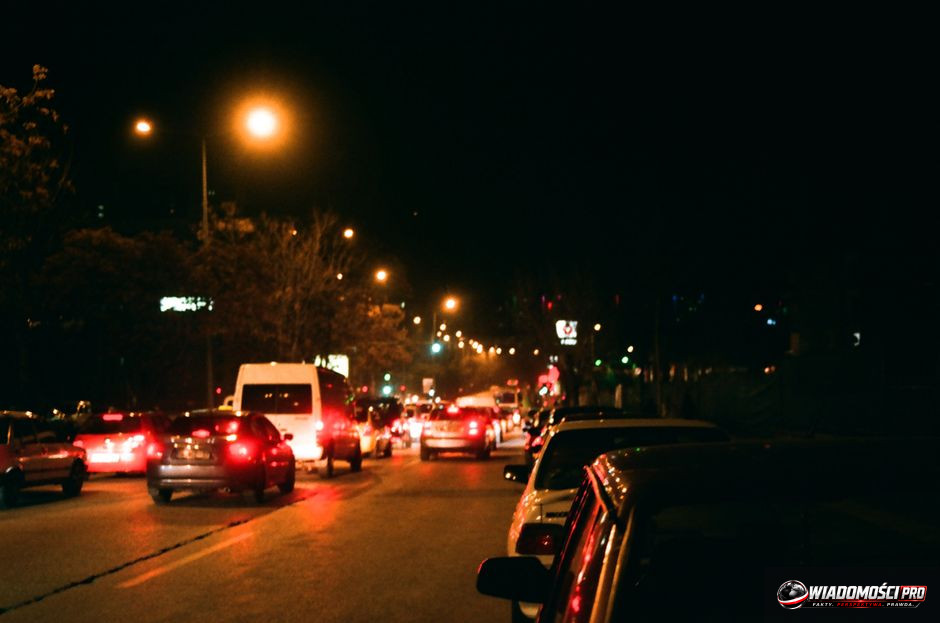
From January 1, 2027, drivers in Kraków will pay triple the current rates to enter the Clean Transport Zone, a result of tightened emission requirements. This radical price adjustment is a direct consequence of the city's adopted transport policy, which aims to completely eliminate the most polluting vehicles from the city center. This change will hit thousands of residents who use older cars, for whom the cost of entry will become an insurmountable barrier.
The triple hike mechanism: The mathematics of exclusion
After months of discussion and internal analysis, the Kraków city hall has decided on a drastic move. Information published on September 9, 2026, by the portal Autocentrum.pl leaves no room for doubt. Car owners who previously planned their commuting budget based on current rates must prepare for a threefold increase in expenses. For example, if the previous entry fee was 50 PLN per month, it will rise to 150 PLN starting in the new year. On an annual basis, this means an expenditure of 1,800 PLN for the average driver instead of the previous 600 PLN. This is an amount that represents a real burden for many households in the Kraków metropolitan area.
The increase in rates is not accidental. Officials, operating within the framework of tightened emission requirements, have deliberately raised costs to force drivers to accelerate fleet replacement. In practice, this means that Kraków is becoming inaccessible to owners of cars that do not meet the latest Euro standards. The entry verification system, which was extensively reported on by the GlobEnergia service back in January 2026, has become tighter, and every attempt to enter with an "older" car without the appropriate certificate or payment now ends with a high bill.
This policy is controversial because the city does not offer an adequate alternative in return. People commuting from neighboring municipalities, where public transport is lacking, are being backed into a corner. On one hand, they hear about the necessity of protecting the air, and on the other – about the necessity of paying a subscription three times higher for the ability to drive to work. This is financial pressure that is selective in nature. It mainly affects those who cannot afford to buy a modern, low-emission car.
The evolution of regulations: From declarations to hard facts
The road to the current shape of the Clean Transport Zone was long and bumpy. An official announcement from the city hall on December 22, 2025, set the foundations, which were modified over the following months under social pressure. Officials, initially rigid in their assumptions, had to react to the growing dissatisfaction of residents. In March 2026, the Mayor of Kraków announced a broad package of adjustments, which was widely reported by the Bankier.pl service.
In reality, these actions only papered over the problem without changing the essence of the matter. As noted by "Rzeczpospolita" on March 5, 2026, the city decided on certain concessions regarding entry rules, but the rigorous emission standards remained untouched. A day later, on March 6, 2026, TVP Kraków clarified that despite the modifications, the zone remains a "hard" traffic control tool. This entire process resembled a political game in which concessions were merely a postponement of the inevitable.
Drivers, looking at the series of announcements from 2026, felt lost. The rules changed almost every quarter, making it impossible to plan long-term expenses. As a result, when the final decision on a triple rate hike from 2027 arrived, many residents accepted it with resignation. It became clear that all previous negotiations with the city hall concerned only technical details, not the fundamental issue: the costs, which in 2027 became a real tax on owning an older car.
Financial pressure: The SCT and the A4 motorway
The situation of drivers in Kraków is further complicated by external factors. The increase in fees for entering the zone is compounded by the rising costs of traveling on the A4 motorway. Information from March 26, 2026, regarding the hikes introduced by Stalexport just before the end of the concession, echoed widely in the local press, including the LoveKraków.pl service. For a person commuting to work from the vicinity of Chrzanów or Katowice, every kilometer of the route is becoming increasingly expensive.
Drivers in the region feel cornered. On one hand, they have to pay more for the motorway just to reach the borders of Kraków. On the other hand, after crossing the city limits, they are hit with a triple cost for entering the zone. This is a accumulation of burdens that drastically limits professional mobility. Entrepreneurs running businesses in the center of Kraków are already reporting supply problems and difficulties in retaining employees who cannot afford to switch to public transport under current conditions.
The mathematics of this exclusion is simple. If a driver has to cover a toll section of the motorway and then pay a fee in the SCT, their daily cost of commuting to work increases by a dozen or so zlotys. On a monthly scale, this is hundreds of zlotys that disappear from the household budget. The city argues that this is a necessary cost of ecological transformation, but for many families, it is simply the price for the right to work in a city that is becoming increasingly elite in terms of the cost of living.
The voice of opposition: Why do residents feel cheated?
The frustration of Kraków drivers has been growing since Forsal.pl announced the definitive end of free movement for internal combustion cars on August 9, 2026. At that point, it became clear that this is not just a technical issue, but an ideological fight against car owners. Residents who invested in their vehicles feel punished today for decisions made years ago, when no one was talking about such drastic restrictions.
The main flashpoints in discussions are primarily the lack of alternatives. Kraków is investing heavily in the zone, but investments in park-and-ride facilities or the development of the tram network to the outskirts are not keeping pace with the restrictions. Drivers raise the argument that the SCT is a blow to the middle class, which most often uses a few-year-old but technically sound combustion cars. For this group, a triple hike is a signal that the car is to become a luxury good.
The opinions of residents are unambiguous. In the comments under reports about the hikes, the theme of social injustice appears frequently. "If I have no other way to get to work than by car, why should I pay a penalty for it?" asks one Kraków entrepreneur rhetorically. The city hall remains deaf to these questions, focusing on air quality indicators, which are supposed to be the main justification for introducing such high fees.
Official argumentation: Is it really ecology?
The authorities of Kraków consistently defend their decision, citing the necessity of meeting emission standards. During a conference on March 6, 2026, officials emphasized that the SCT is not a fiscal tool, but an environmental one. According to them, the triple increase in fees is intended to be an impulse that will finally convince the resistant to switch to public transport or purchase an electric vehicle.
However, from an economic perspective, such argumentation is questionable. The increase in fees hits people who do not have the capital to buy an electric car, which often costs over 150,000 PLN. Instead of an incentive, drivers receive a financial penalty. Officials seem not to notice that for many families in Kraków, replacing a car is a decision for years, not a matter of choosing between a "clean" and a "dirty" vehicle.
It is worth noting that the city has not presented any data indicating that such a drastic increase in rates will translate into an immediate improvement in air quality. There is a risk that the only measurable effect will be an increase in revenue to the city budget from entry fees. This calls into question the reliability of the city hall's declarations. Is the goal clean air, or patching a budget hole at the expense of drivers? The answer to this question remains the subject of a sharp political dispute in the city council.
The automotive market in the face of restrictions
The introduction of triple-higher rates from 2027 has caused an earthquake in the Kraków secondary market. Cars that were still popular in 2026 are suddenly losing value. No one wants to buy a car for which one has to pay hefty sums to enter the center. The trade in used vehicles in the region is entering a phase of stagnation.
Sellers point to the phenomenon of "car flight" from Kraków. Residents are massively selling off older combustion models, taking them to smaller towns where the SCT does not apply. This leads to a paradoxical situation: Kraków gains the reputation of a "clean" city, but at the same time, it exports its environmental problems to neighboring municipalities, where the same cars will continue to drive, just in less controlled conditions.
Automotive market experts warn against deepening transport exclusion. Owners of cars who cannot afford newer models are left with vehicles that are almost useless within the city limits. This creates a new category of "poor drivers" who are forced to use expensive public transport, even though they own their own means of transport. The secondary market in Kraków is becoming increasingly hermetic, focused on hybrid and electric cars, while traditional combustion engines are becoming a scarce commodity for people with limited financial means.
The future of transport: What awaits residents after 2027?
The upcoming year 2027 will be a test year for Kraków. A triple rate hike is just the tip of the iceberg. If the system works, the city will likely introduce further restrictions, further narrowing access to the center. This is a trend we are observing in many European metropolises, but in Polish realities, it evokes exceptionally strong emotions due to the state of the infrastructure.
Key to the future will be how residents react to the new costs. Will they accept the role of "payers" and switch to trams, or will there be mass protests and attempts to bypass the system? Experiences from 2026 show that Kraków residents can be determined in defending their rights to mobility. If the city hall does not present reliable calculations regarding the impact of the SCT on air quality, social pressure will grow.
The city is at a turning point. On one hand, we have ambitious ecological plans, on the other – the real needs of thousands of people who have to get to work. A triple hike is a forceful solution that may bring temporary peace in emission statistics, but in the long run, it may deepen social divisions in the capital of Małopolska. Kraków faces the challenge of finding a compromise between ecology and economy, although for now, everything indicates that the scales are tipping decisively in favor of the former.
Editorial commentary: Who wins, who loses?
From the editorial perspective, the situation is unambiguous. Introducing triple-higher fees is a "shortcut" method. The city, instead of building infrastructure that would make public transport unbeatable, chooses the path of punishing drivers. The only winners are those who can afford the latest, expensive car models – for them, an additional 100 or 200 PLN per month is no problem at all.
The losers are everyone else. Employees, families with children, small entrepreneurs. For them, every trip to the center becomes a financial operation that must be carefully thought through. Kraków, striving for the title of a "green metropolis," risks transforming into a city accessible only to the wealthy, which is a dangerous precedent in Polish urban policy. The lack of real relief for the most affected groups of drivers is the biggest mistake of the current city hall strategy. This is not a pro-ecological policy, it is a policy of exclusion.
Questions and answers
Exactly when will the new, higher fees start to apply?
The new, triple-higher rates for entering the Clean Transport Zone in Kraków will come into effect on January 1, 2027.
What is the main reason for such drastic changes in the SCT?
The main reason is the tightening of emission requirements, which the city is implementing to limit the traffic of combustion cars in the zone and force the replacement of the fleet with newer ones.
Has the city previously attempted to modify the zone?
Yes, in March 2026, the Mayor of Kraków announced a correction to the zone, easing some rules, although the main emission standards remained untouched, as confirmed by media reports from that period.
What is the real cost for the average driver?
Assuming the current fee is 50 PLN, from 2027 the driver will pay 150 PLN per month, which on an annual scale means a cost of 1,800 PLN instead of the previous 600 PLN.
What other costs currently burden drivers in Kraków?
In addition to rising fees in the SCT, drivers have to face price hikes for traveling on the A4 motorway, which together creates a significant burden on the household budgets of people commuting to work.
Does the city provide relief for the poorest?
Currently, the city hall has not presented any concrete protective solutions for people who cannot afford to replace their car with a low-emission one, which causes the most controversy among residents.
Will the change in rates affect the used car market?
Yes, a decline in the value of older combustion cars in the region is forecast, as well as their outflow to smaller towns where the SCT does not apply, which is already visible in local vehicle trade.
Sources
- Kraków's SCT raises fees. Drivers will pay three times more for entry - Autocentrum.pl
- End of free movement for combustion cars. New restrictions have entered into force - Forsal.pl
- SCT in Kraków to be corrected. The Mayor announces major changes - Bankier.pl
- More expensive again on the A4 motorway. Stalexport raises rates before the end of the concession - LoveKraków.pl
- Kraków eases SCT rules, but the zone and standards remain unchanged - Rzeczpospolita
- The Mayor of Kraków provided details of the Clean Transport Zone correction - TVP Kraków
- Clean Transport Zone in Kraków. New announcement from the city hall - RMF24
- Clean Transport Zone in Kraków – price list and controls in 2026 - GlobEnergia
Article prepared with the help of artificial intelligence. Facts come from the sources listed above. The Wiadomości PRO newsroom is responsible for this publication.

Comments (0)
Loading comments...