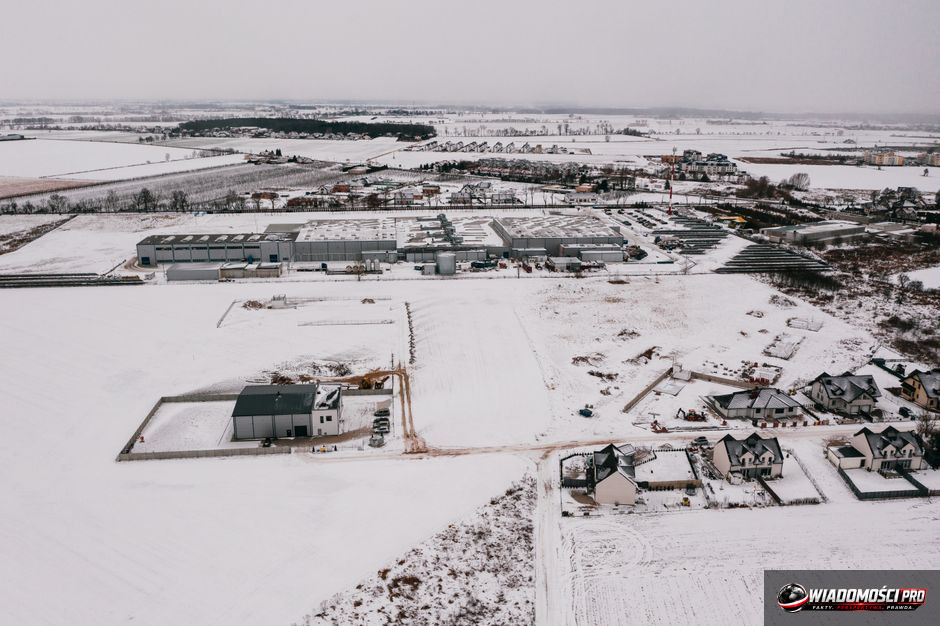
A growth of 11.1 percent indicates a strong recovery in exports and European demand, but it does not mean the end of problems, as the construction sector is still struggling with a clear slowdown. The Polish economy has entered a phase of uneven growth, in which factory successes mask the weakness of domestic investments. It is difficult to speak of a definitive breakthrough as long as the market foundations remain so shaky.
Facts: Industry in numbers
Data from Statistics Poland (GUS) on August 20, 2026, caused a stir in the analytical community. The 11.1 percent result is a leap that at first glance suggests a return to times of prosperity. However, an analysis of the structure of this result points to the selective nature of the recovery. Production was driven primarily by export-oriented plants that filled gaps in European supply chains. Factories working for customers in Germany, France, and the Benelux countries recorded the highest capacity utilization rates since the beginning of the year.
It is worth looking at this result through the prism of previous months. Already on June 19, 2026, reports on industrial production suggested that the sector was beginning to emerge from a slump, despite persistent global geopolitical tensions. July data, mentioned by Business Insider, confirmed that the upward trend is not a one-off deviation but a repeatable tendency. Production in August is therefore the culmination of several months of fighting to maintain order liquidity under conditions of high energy costs and unstable raw material prices.
Despite such an optimistic indicator, this statistic does not translate into improved sentiment across the entire economy. "Rzeczpospolita" aptly diagnoses this situation as a state of "not bad and disastrous." The manufacturing industry, which forms the backbone of exports, shows a momentum we haven't seen in a long time. At the same time, however, the construction industry remains in a deep stagnation. Investments in this sector have not recorded even a similar rebound, which makes the overall picture of the Polish economy resemble a structure based on two different foundations. One is concrete and cracking, the other – steel – is starting to shine.
Causes: Why did factories shoot up?
The direct fuel for Polish industry is demand flowing from European markets. Western economies, after a period of downtime, have begun to replenish warehouse stocks again. Polish factories, thanks to a relatively favorable price-to-quality ratio, have become the first choice for contractors looking for stable suppliers within the European Union. The wGospodarce service pointed out that Polish industry reacted instantly to the first signs of recovery in Europe, which allowed for the utilization of spare production capacities that were standing idle as recently as spring.
A significant factor is also the adaptation of enterprises to new logistical realities. Companies that survived the energy crisis have optimized costs, which has increased their competitiveness in foreign markets. Export is no longer just a matter of volume, but also of margins, which have started to grow in many industrial segments. This does not mean, however, that the situation is stable. Dependence on external demand is a double-edged sword. Any escalation of conflicts in the region or a change in the trade policy of major partners could instantly reduce this 11.1 percent growth to zero.
We cannot ignore the technological issue. Investments in automation, carried out over the last two years, are beginning to bear fruit. Factories are more efficient today than they were in 2025. Production is growing even though the labor market in many regions is struggling with staff shortages. Automation has allowed the focus to shift from manual labor to machine operation, which in the face of rising wage costs has proven to be the only way to maintain profitability. However, this is a process that does not apply to construction – there, human labor remains the main cost, which, combined with a decline in investment orders, creates an insurmountable barrier.
Effects for the wallet: Where is the catch?
The average consumer asks themselves: if industry is growing at such a pace, why don't I feel it in my wallet? The answer lies in the structure of this growth. Profits from exports go to large industrial plants, often with foreign capital. They do not automatically translate into higher wages in the service or construction sectors. Moreover, double-digit production growth in industry does not go hand in hand with lowering the cost of living, which is still under inflationary pressure.
The situation in the regions is even more diverse. Data cited by TVP Kielce on August 11, 2026, show that unemployment is rising in some districts, even though nationwide production reports paint a picture of success. This is a classic example of stratification. In cities with a strongly developed industrial base, the situation is stable, and wages may rise. In centers where construction or trade based on local demand dominated, a slowdown is being felt. A construction worker will not find employment in an electronics factory in a neighboring province, and the local economy will not adapt overnight to the needs of industry.
For an individual investor, the current situation is a signal for caution. Stock market companies in the industrial sector may record great results, but the construction sector will weigh on the results of investment funds and banks involved in financing housing investments. The reader's portfolio should therefore be diversified. Allocating funds solely to a sector that seems "hot" is risky, especially when the foundations – like construction – show signs of material fatigue.
Imbalance as the new norm
The rift between industry and construction is not a temporary anomaly. It is the result of a structural change in the Polish economy. Industry has become more resilient to shocks thanks to digitalization and integration with the European market. Construction, on the other hand, is a hostage to local credit policy, the lack of public infrastructure investments, and high material prices. Until these two spheres begin to overlap, we will be dealing with a two-speed economy.
While industry has shown that it can react to external stimuli, construction needs an internal impulse. Without government investment support programs or interest rate cuts that would realistically affect the availability of capital for developers, this industry will remain in stagnation. This, in turn, will limit the pace of GDP growth in the fourth quarter of 2026. Industrial production may grow by even 15 percent, but if construction falls, we will feel it as a stagnation of the entire country.
Challenges for autumn: What's next?
The coming months will be a test for the durability of this growth. Autumn is a period when energy costs traditionally rise, which will hit factory profitability. If European buyers do not accept higher final prices, Polish companies will face a choice: either reduce production or fight for margins at the expense of wages. Each of these scenarios is a threat to the optimism that has prevailed since the publication of the GUS data.
The situation in construction also requires attention. Winter is a period when activity in this industry always falls, but the current slowdown is much deeper than would result from seasonal causes. If in March 2027 we do not see a return to activity on construction sites, we will have to conclude that this sector is undergoing a permanent restructuring, which means mass layoffs and the need to retrain thousands of workers.
It is worth paying attention to retail trade, which – as reports indicate – shows some resilience. Consumers are still spending money, but they are increasingly choosing cheaper products, which puts pressure on producers. Industry must therefore not only produce more but also cheaper, which in the face of rising labor costs is a daunting challenge. The internal market is becoming increasingly price-sensitive, which contrasts with export successes.
We cannot ignore the threats coming from the international environment. Gazeta Prawna already in June 2026 pointed out that global tensions could limit access to raw materials. If supply chains are broken again, even the strongest demand from Europe will not save the results of Polish production. We are part of a global system of connected vessels. Today's 11.1 percent is a result to be celebrated, but one must remember its fragility.
Risk analysis for the manufacturing sector
Is the success of industry just a matter of luck in choosing contractors? No. It is the result of long-term actions by Polish companies that understood that the future lies in technology. However, every stick has two ends. Too much concentration on exports makes us hostages to the economic situation of our neighbors. If Germany falls into a deep recession, Polish industry will feel it more severely than any other sector in the country.
A threat is also the lack of innovation in small and medium-sized enterprises. While industrial giants are doing great, subcontractors operating in their shadow are often balancing on the edge of profitability. They are the ones most exposed to currency exchange rate fluctuations and energy price increases. If these entities begin to fall out of the market, even record GUS results will not be able to maintain the pace of production growth.
Summary of the situation
The Polish economy is at a turning point. The industrial production results for August 2026 are impressive, but they must not be treated as proof of the end of the crisis. We are dealing with the success of one branch of the economy that is paid for by the weakness of another. This is a state that requires precise actions from political and economic decision-makers. Instead of rejoicing over one indicator, one should focus on how to revive construction and level out regional disparities.
The reader should look at this data with distance. Industry is not a lonely island. If construction does not start to grow, the effects on the labor market will be felt by us all. A production growth of 11.1 percent is a great result, but it is only the beginning of the road to the stabilization that the Polish economy needs more than short-term statistical records.
Questions and answers
Does the 11.1 percent production growth apply to the entire country?
GUS data for August 2026 cover the entire country, however, this result is an average, which means that in highly industrialized regions the growth was much higher, while in areas with a weaker industrial base the result was well below the average.
Why is construction slowing down if industry is growing?
Construction reacts to local conditions: interest rates, availability of mortgage loans, costs of building materials, and the lack of large infrastructure investments. Industry, on the other hand, is driven by European demand, which has no direct impact on the domestic construction market.
Does rising unemployment in the regions threaten industrial results?
Yes, there is a risk. The lack of qualified workers in regions where industry is trying to increase capacity may limit further production growth. If factories do not find hands to work, they will be forced to further automation, which in the short term will increase operating costs.
Does retail trade data conflict with production data?
Not necessarily. Retail trade is recording turnover growth, which shows that consumers are buying goods, but these are often cheaper or imported goods. Industrial production, on the other hand, focuses on advanced goods, often intended for export, which creates two different economic circuits.
What is the biggest threat to industrial growth in the fourth quarter?
The biggest threat remains geopolitical instability, which could affect energy and raw material prices and a possible collapse in demand from major trading partners in Western Europe.
Sources
- We have new GUS data on the condition of Polish industry. Not bad and disastrous - Rzeczpospolita
- Our industry reacted to the recovery in Europe - wGospodarce
- Polish factories have started up. This 11.1 percent tells me more than the main GUS result - Bizblog.pl
- We have new GUS data on the condition of Polish industry. Not bad and disastrous - Rzeczpospolita
- Polish industry accelerates despite global tensions. Production clearly above expectations - edgp.gazetaprawna.pl
- Better results from a key sector of the Polish economy - Business Insider Polska
- Disturbing data from the region. Unemployment is rising, although trade is recording double-digit growth - TVP Kielce
- Industry in Poland is rebounding. Latest GUS data for May 2026 - Money.pl
Article prepared by the Wiadomości PRO editorial team with the support of artificial intelligence. Facts come from the sources provided above.


Komentarze (0)
Ładowanie komentarzy...