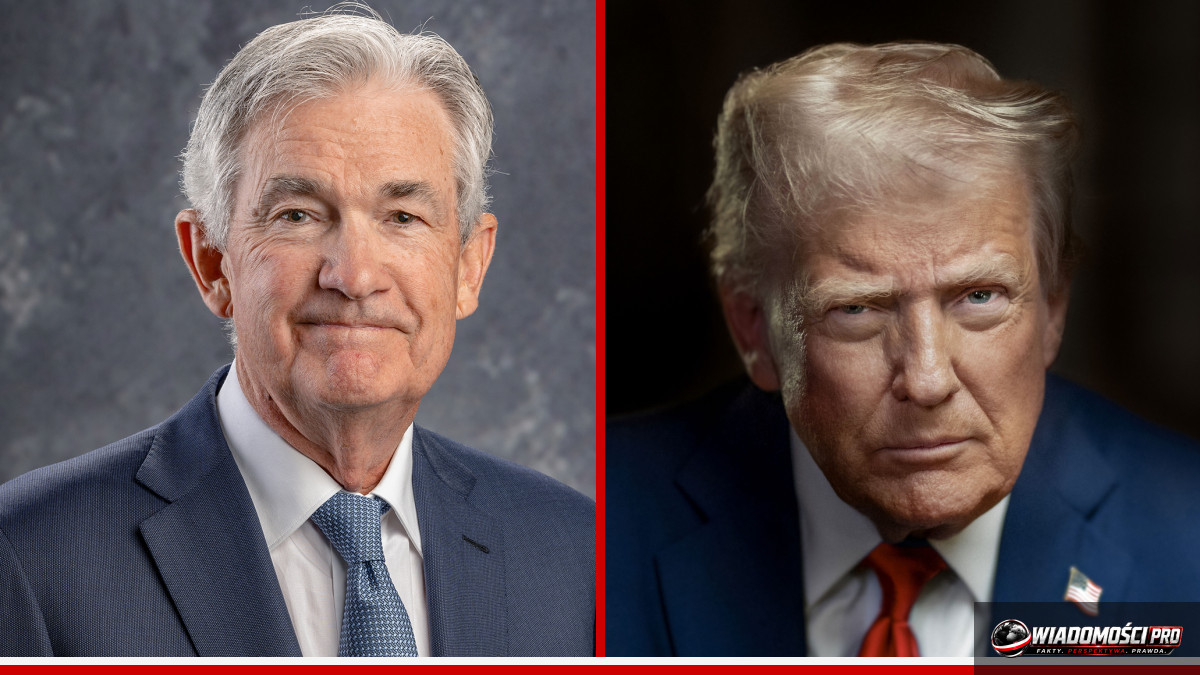
The Federal Reserve has lowered interest rates to the 4.75-5.00% range, which means a decrease in the cost of dollar-denominated financing and a potential weakening of the American currency against the zloty. For holders of mortgages taken out in the American currency, this means an immediate reduction in the principal and interest installment, which translates into tangible savings in the wallet. Stock market investors, however, must revise their strategies, as this trend shift in the USA directly affects the attractiveness of USD-denominated assets in relation to the Polish capital market.
Fed decision: A new chapter in US monetary policy
The American central bank has abandoned its wait-and-see strategy. The rate cut to 4.75-5.00% is a signal that the Fed considers current market conditions sufficient to loosen monetary policy. This decision ends a period of uncertainty that had paralyzed stock market valuations since September 2024, when the market expected radical moves but received only conservative commentary. Today's meeting is the result of a long-term debate in which two camps clashed: proponents of rapid economic stimulus and defenders of a hard anti-inflationary course.
From a borrower's perspective, every basis point of a rate drop in the USA is a real gain. With debt on the order of 100,000 dollars, a 25-basis-point rate cut means a theoretical interest saving of approximately 250 dollars per year, assuming full transmission to variable interest rates. This is an amount that provides a noticeable relief for a household budget. However, this mechanism works in two directions. The drop in the cost of money in the USA weakens demand for the dollar as a high-yield currency, which in practice means an appreciation of the zloty. A Polish importer gains on goods purchased in the USA, but a Polish exporter must reckon with a decline in the price competitiveness of their products on the American market.
Fed policy has ceased to be confined to Jerome Powell's sealed office. It has become part of a broader political landscape. The institution, which theoretically should be guided solely by labor market data and CPI readings, had to confront the expectations of the government administration. This is a qualitative change that means investors no longer look only at inflation charts, but also at the political calendar in Washington.
Political pressure vs. institutional independence
Donald Trump has not hidden his expectations of the Federal Reserve for months. Business Insider Polska pointed out the growing tension between the White House and the American central bank as early as July 30, 2025. Today's cut is the direct finale of these pressures. Political expectations to stimulate the economy before elections or to maintain the economic cycle have ceased to be mere corridor gossip, becoming a hard element of investment strategy.
The independence of the central bank in American realities has been put to a severe test. We remember September 2025, when the resumption of the interest rate cut cycle by the Fed was interpreted by analysts as a political success for Trump. The institution that was supposed to be a pillar of stability was drawn into the vortex of current politics. The market in January 2026, holding its breath before every decision, had to come to terms with the fact that the Fed does not operate in isolation.
For an investment portfolio, this means that the predictability of monetary policy has dropped drastically. If interest rate decisions are the result of external pressure, traditional bond valuation models become less reliable. Investors must now price in political risk, which is visible in the volatility of the futures market. Trust in the impartiality of American central bankers has been shaken, forcing the diversification of assets beyond standard dollar-denominated debt instruments.
How do markets react to a cheap dollar?
A cheap dollar is an opportunity for American corporations to access cheaper debt. The drop in rates to 4.75-5.00% lowers the cost of debt servicing, which in theory should improve the financial results of technology and industrial companies. However, the market has already learned that a rate cut does not always mean a bull market. In September 2024, when the market expected radical cuts, the stock market reaction was disappointing. Economists often missed their forecasts, which showed that stock market valuations are more sensitive to the central bank's rhetoric than to the level of the interest rate itself.
An investor from Poland who holds assets in the USA must face currency risk. Even if the American stock market rises after a rate cut, the profit may be consumed by the strengthening of the zloty. If the dollar loses value against the Polish currency, the return on investment in American stocks converted to PLN decreases. This is a classic trap where stock market gains are negated by exchange rate mechanisms.
Historically, markets reacted to Fed policy with a significant delay. In September 2025, according to reports from Bankier.pl, markets reacted by nervously checking data, remembering the constant pressure exerted on the Federal Reserve. Today, the situation is clearer, but that does not mean less risk. Investors who counted on a quick return to the days of cheap capital from years ago must collide with hard data on inflation, which still remains a "fuse" for Powell.
Comparison of cycles: 2024, 2025, and 2026
A comparison of Fed decisions from the last two years shows an evolution from defense to active management of the economic course. This history is a record of the fight against inflation that would not let up, and against market expectations that often outpaced the actual moves of central bankers.
- September 2024: No changes to interest rates in the USA with simultaneous stabilization of MPC policy in Poland. This was a time of waiting, when Strefa Inwestorów and Miesięcznik Finansowy BANK analyzed the discrepancies between analyst expectations and Fed decisions.
- September 2025: Resumption of the rate cut cycle by the Fed. Bankier.pl and Subiektywnie o finansach reported at the time on the political pressure that forced the Fed to move away from restrictive policy despite disturbing inflation readings.
- August 2026: Consolidation of the downward trend in interest rates in the USA. The market stopped debating whether rates would fall and focused on the pace of this decline.
These three points in time define the path the American economy has traveled. From the fear of stagflation, through the period of "suspension" in January 2026, to the current phase of cuts. Back then, a year earlier, the market analyzed every communication from Washington like an oracle. Today, with rates at 4.75-5.00%, investors show greater calm, although uncertainty about the pace of future moves remains. The stability we observe in 2026, however, is more predictable than the information chaos that accompanied meetings twelve months ago.
The Polish MPC remains in the shadow of Fed decisions. If the NBP decides on a similar move toward easing monetary policy, the zloty may stop gaining value, which would be beneficial for Polish exporters. The question of whether the Polish central bank will dare to pursue such a policy remains open.
Impact on Poles' portfolios
The rate cut to the 4.75-5.00% range is a signal for anyone who has savings in dollars or is in debt in that currency. The mechanism is simple: lower rates in the USA mean a drop in the yield of American treasury bonds. Capital that previously flowed across the ocean in search of a safe haven is starting to look for alternatives. Historically, this favors emerging markets, including Poland, although this process is not immediate.
People with dollar loans gain real breathing room. The drop in interest directly lowers the monthly budget burden. However, it is worth remembering the currency risk. If the zloty strengthens too quickly, the benefit of a lower installment may be negated by the cost of currency conversion. Investors who held dollars "for a rainy day" must, in turn, consider whether holding cash in the American currency is still optimal given the falling interest on deposits in the USA.
Excessive optimism is risky, however. Polish monetary policy, as shown by data from September 2024, maintains its own pace, and the NBP does not always follow the path set by Washington. The final impact on the USD/PLN exchange rate depends on how quickly the market prices in the scale of the Federal Reserve's next moves. The stability of rates, which was fought for so long, has passed into history, and we are entering a phase where volatility will be the new norm.
Forecasts for the end of 2026
Today's Fed decision is only the beginning of a longer process. Financing costs in dollars are falling, but the American economy still shows signs of overheating in some sectors. The financial market is already pricing in Jerome Powell's next moves for the end of 2026. Analysts are not unanimous, but a clear consensus is emerging regarding the path of further monetary policy easing.
Most strategists expect at least one additional cut in the fourth quarter of 2026, assuming the American economy maintains its current cooling pace. Inflation remains the only real fuse that can slow this process down. Consumer price readings in the coming months will be more important to the central bank than any political pressure or Wall Street expectations.
History teaches that optimism can be premature. Remembering earlier debates in which the market expected stabilization and reality verified these assumptions with brutal precision, today's Fed move should be treated as a prelude to a longer game. Investors who counted on aggressive cuts may feel unsatisfied, seeing that the central bank still shows far-reaching caution, balancing between the desire to stimulate growth and the risk of inflation returning.
Forecasts for the end of the year assume that the Fed will very carefully observe data from the American labor market. If unemployment starts to rise faster than projections assumed, the central bank will be forced to cut at a faster pace, which could lead to an even deeper weakening of the dollar. If, however, inflation proves more persistent, the Fed may refrain from further cuts, which in turn will cause nervousness in stock markets.
For the individual investor, the most important conclusion from this situation is the need to maintain liquidity. In conditions where Fed policy becomes reactive to political pressure and variable macroeconomic data, sticking rigidly to one scenario is dangerous. One should observe not only interest rates, but primarily the spread between American and Polish bond yields. This will determine capital flows in the coming quarters.
What this means for you
The Fed's rate cut is a relief for debtors and companies using dollar loans, but at the same time a signal of the American economy cooling, which may lead to volatility in stock markets. Investors must reckon with currency risk, as the dollar may lose value against emerging market currencies. For a person saving in dollars, this means the need to look for alternative forms of capital allocation, because the era of high interest on deposits in the USA is coming to an end. In turn, a borrower should check whether current conditions allow for debt refinancing or a change in the repayment structure to fully take advantage of the drop in the cost of money.
Questions and answers
Will the Fed rate cut affect mortgages in Poland?
The Fed decision mainly affects the dollar market, but it can indirectly weaken the American currency, which affects global market sentiment and indirectly the valuation of the zloty. There is no direct impact on interest rates for zloty loans, but the indirect impact through exchange rates is felt by the economy.
Why did the Fed decide to move to the 4.75-5.00% level?
The decision is the result of an analysis of macroeconomic data and pressure to support the economy in the face of a slowdown that has been speculated about since the beginning of 2026. The Fed decided that the risk of maintaining high rates outweighs the risk associated with inflation in the short term.
Does this mean the end of high inflation in the USA?
The cut suggests that the Fed assesses inflation as being under control to a degree that allows for loosening policy, but further decisions will depend on monthly CPI indicators. Inflation in the USA remains an uncertain factor, and its possible return would force the central bank to change course.
What is the main difference between the current decision and September 2024?
In September 2024, the market was in a phase of waiting for a move that did not happen, which caused disappointment. Currently, the Fed has moved from rhetoric to concrete actions, which means the market no longer has to speculate about the direction of changes, only about their scale.
Will the dollar continue to lose value?
This depends on the policy of other central banks, including the NBP and the ECB. If the Fed continues its cut cycle and other banks remain at high rates, the dollar will be under downward pressure. However, this is a process dependent on global capital flows and investor sentiment.
What risk does investing in American stocks carry at this moment?
The main risk is currency volatility. Even if American companies improve their financial results thanks to cheaper credit, the strengthening of the zloty may reduce the investor's profit from Poland. Additionally, there is a risk that the rate cut will be poorly received by the market as a signal of a deeper economic slowdown in the USA.
Will Trump's political pressure continue?
Everything indicates that relations between the government administration and the Fed will remain tense. If the US economy starts to show signs of weakness in the second half of 2026, pressure for further rate cuts from politicians will likely increase, which will be another challenge for the independence of the Federal Reserve.
What should a holder of dollar savings do?
It is worth considering portfolio diversification. If interest rates in the USA are falling and the zloty is strengthening, holding a large portion of savings in dollars may be less profitable than in previous years. One should analyze current exchange rates and compare interest on dollar deposits with investment opportunities in the zloty market.
Does a Polish importer have reason to be satisfied?
Yes, a cheaper dollar means lower costs for purchasing goods from the USA. For importers, this is an opportunity to improve margins or lower the prices of final products, which may increase their competitiveness on the Polish market. This is one of the few groups that actually gains from the current Fed decision in the short term.
Can the Fed return to hikes in 2026?
Although a downward trend currently dominates, the Fed does not rule out any scenario. If inflation accelerates sharply, the central bank could be forced to pause the cut cycle or even adjust rates upward. However, this is a scenario currently considered unlikely by most analysts, given the priority of stimulating the economy.
The Fed's decision to cut interest rates to 4.75-5.00% opens a new stage in the global economy. For the average investor, this means the need to be more flexible and attentive to signals flowing not only from charts, but also from the political environment. A portfolio that was optimal in 2024 may require a complete overhaul today. The market no longer forgives sentiment, and the answer to the question about the future of the dollar lies in balancing political expectations with hard inflation data. The coming months will verify whether the current monetary policy easing was the right move or merely an attempt to postpone inevitable economic problems. Every move by Powell will now be analyzed in terms of his independence, which adds a new, political dimension of risk to investing in dollar assets.
Sources
- Trump got his way. The Fed has resumed the interest rate cut cycle - Bankier.pl
- The Fed holds its breath. The market expects interest rate stabilization in the USA - Money.pl
- The September Fed decision may disappoint stock markets. Debate around a possible interest rate cut in the USA - Strefa Inwestorów
- Fed cuts rates for the first time this year. What will be the effects? - Subiektywnie o finansach
- The MPC did not change interest rates in September '24 - Miesięcznik Finansowy BANK
- Half the world was waiting for this decision. The Fed indicated interest rates in the USA - Money.pl
- Fed cuts interest rates sharply. Economists, however, were wrong - Bankier.pl
- Federal Reserve under pressure from Donald Trump. Time for a key decision - Business Insider Polska
Article prepared by the Wiadomości PRO editorial team with the support of artificial intelligence. Facts are derived from the sources listed above.



Komentarze (0)
Ładowanie komentarzy...