The Supreme Court of Russia has definitively excluded the Yabloko party from participating in the State Duma elections, and a leading activist of the group, Lev Shlosberg, has been sentenced to over 11 years in a penal colony. This decision, announced on August 17, 2026, marks the formal conclusion of a long-term process of removing the last remnants of legal opposition to the Kremlin's policies. This verdict not only eliminates a specific political entity from the ballot but also defines a new standard for treating individuals who openly question the invasion of Ukraine.
Legal mechanism as a tool for elimination
The proceedings before the Supreme Court were not an open debate on electoral standards, but a technological closing of the system. This body upheld an earlier ruling from August 12, which laid the foundation for the final elimination. In the Russian architecture of power, the Supreme Court currently acts as a "fuse" that, at the appropriate moment, cuts off access to the electoral process for entities deemed undesirable. In this case, the legal argumentation became merely a smokescreen for a political decision.
In practice, this means that any attempt to register electoral lists by an anti-war group has been classified as a breach of public order. The court did not analyze procedural issues in isolation from the context of the war. For the panel of judges, the key factor was not the correctness of the documentation submitted by the party, but the very fact that this organization served as a platform for people opposing the official state line. In this way, an institution that should stand guard over the electoral rights of citizens has become a tool for their systemic deprivation.
Lev Shlosberg: A portrait of an oppositionist sentenced to isolation
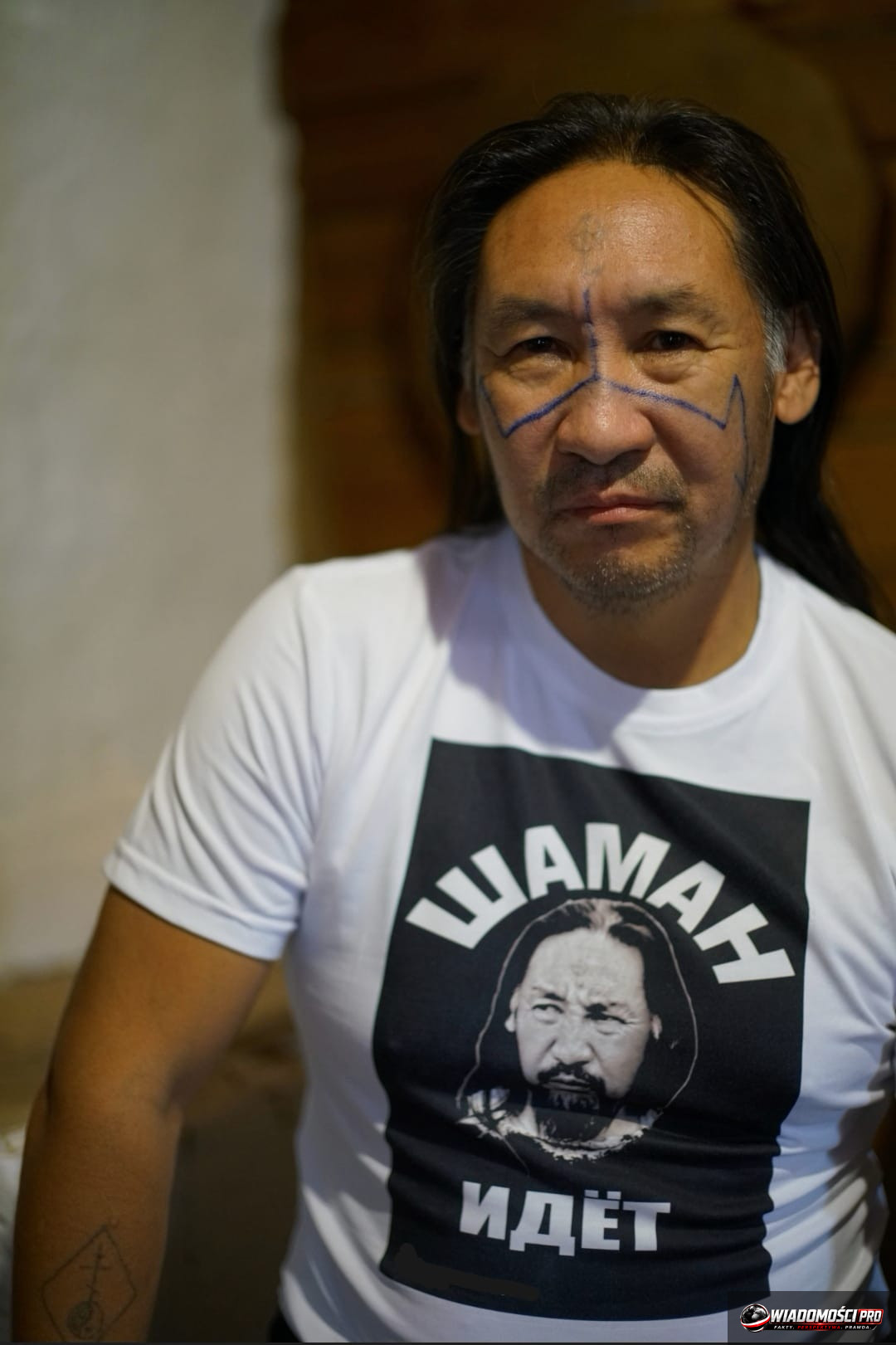
Lev Shlosberg, a figure associated with Yabloko for years, became the primary target of the prosecutor's office. His sentencing to over 11 years in a penal colony is a signal sent to the entire political class. Shlosberg was not just an administrator of party structures. He was one of the few people in the Russian public sphere who consistently formulated demands for a ceasefire and criticized the social costs of the conflict.
For the security apparatus, such activity became an existential threat. The sentence of over 11 years in a penal colony is not accidental. It is a punishment intended to completely exclude an individual from public life for over a decade, which, in the realities of the Russian political system, means practical elimination from politics forever. The court ruled that public calls for peace go beyond the boundaries of public debate and exhaust the hallmarks of actions against state security. In this way, anti-war discourse has been delegitimized not only at the party level but also at the individual level.
The end of the era of parliamentary pluralism
The exclusion of Yabloko from the upcoming State Duma elections changes the foundations of Russian parliamentarism. For years, Yabloko served as a "safety valve," allowing for the presence of critical voices in the debate that still fell within the framework of legal activity. Now, this valve has been welded shut. In the elections to be held following this decision, the ballots will only feature formations loyal to the Kremlin or those that avoid any topic related to the war.
Such a solution leads to the creation of a monolith. A voter who would like to express their opposition to the current course of the authorities loses their only legal instrument. There is no one left to vote for, which makes the electoral process a plebiscite of support for decisions already made, rather than a competition of visions for the state. The absence of Yabloko means that in the new composition of the Duma, there will not be a single deputy who openly opposes the aggression. This is an unprecedented situation in the modern history of Russian parliamentarism, where even during periods of the most authoritarian rule, the appearances of multi-partyism were maintained.
The social cost of the verdict
The Supreme Court's decision strikes not only at party structures but, above all, at civil society. Everyone who identified with Yabloko's postulates received a clear message: belonging to this environment or identifying with its ideas is synonymous with entering into conflict with the law. The scale of the repression against Shlosberg shows that it is no longer about fighting a party as an organization, but about intimidating all citizens.
In a society where the fear of repression becomes the main regulator of behavior, the lack of parliamentary opposition means a political desert. People who previously counted on their vote being recorded at the polls now feel alone. For many of them, the elections have ceased to be an event worth participating in. Voter turnout in such conditions becomes merely an indicator of the mobilization of the state apparatus, not of real citizen engagement. Russia is entering a phase of political sterility, where all differences of opinion are nipped in the bud by law enforcement agencies.
Kremlin strategy: From marginalization to elimination
The actions taken in August 2026 are not the result of a sudden impulse. This is the finale of a long-term strategy that has been observable since the beginning of the invasion of Ukraine. First, the ability to fund the opposition was restricted, then restrictions on media access were introduced, and finally, the judicial apparatus was used to legally eliminate opponents. The Supreme Court, by issuing the verdict on August 17, completed the work that began with the gradual restriction of civil liberties.
The role of the court in this process is crucial. It provides the appearance of legality to brutal political moves. Thanks to this, the authorities can claim that everything is happening according to the letter of the law, and the exclusion of Yabloko is the result of "formal errors" or "statute violations." This is a classic example of using procedures for purposes that have nothing to do with democracy. Every step against the opposition was carefully planned to minimize the risk of open rebellion while maximizing the effect of intimidation.
No alternative: What does this mean for the future Duma?
The future parliament, elected in such an organized process, will have significantly less social legitimacy, even if the election results indicate high support for the current authorities. The lack of any opposition means that there will be no debates in the Duma on the consequences of the war, the economic crisis, or the future of the country. It will be a facade body, approving laws prepared in the offices of the presidential administration.
For citizens, this means complete disconnection from the decision-making process. Problems that affect people in their daily lives will be solved from the top down, without taking critical voices into account. This leads to growing frustration, which, however, finds no outlet in legal political channels. This state of affairs, although it stabilizes the position of the authorities in the short term, creates a threat to the stability of the state in the long term, as the lack of communication channels between the ruled and the rulers always ends in the erosion of trust in institutions.
Questions and answers
Why was the Yabloko party excluded from the elections?
The Supreme Court of Russia upheld the decision to remove the group from the register of participants in the State Duma elections, ruling that the party did not meet legal requirements, which in reality was the elimination of the only political force openly opposing the war.
What sentence did Lev Shlosberg receive?
Lev Shlosberg, a leading Yabloko activist, was sentenced to over 11 years in a penal colony for publicly calling for a ceasefire and criticizing the Kremlin's war policy.
Is any other opposition running in the Russian elections?
After the exclusion of Yabloko, there is no significant political force left in the Russian electoral system that openly and legally opposes the war, which makes the upcoming elections a plebiscite without a real alternative.
Perspective for observers
The situation in Russia after August 17, 2026, is becoming clear in its brutality. The elimination of Yabloko is not a single act of repression, but the closing of a certain historical stage. For decades, there was hope in Russia that one could influence the shape of the state through state institutions. Today, that hope has been officially buried by the court's verdict.
For external observers, this verdict is confirmation that the Russian political system has undergone a final transformation toward a model in which political competition is not permissible even in trace amounts. Shlosberg in a penal colony becomes a symbol of the fate of anyone who decides to think independently in the current realities. Will such an electoral scene, devoid of any pluralism, be able to stand the test of time? The answer to this question depends not on the election results, but on how society reacts to the complete lack of choice in crisis situations. Currently, the margin for any action has been almost completely eliminated, which puts Russia at a turning point where politics has been replaced by police control over public life.
It is worth noting that the elimination of Yabloko is also a signal to the elites within the system. The Kremlin shows that it does not tolerate any deviations from the line, even within the theoretically permissible party spectrum. Anyone who would like to attempt to build an alternative in the future must count on the risk of losing their freedom. This acts as an effective brake on any political ambitions that are not authorized by the center of power. The Russian political scene has become a one-man theater, where even the extras must possess a certificate of loyalty. In this context, the Supreme Court's verdict not only closes the door on Yabloko but bolts it against anyone who might want to engage in dialogue with the authorities in the future on terms other than unconditional obedience.
The question remains about the future of the Yabloko activists themselves who avoided direct penal colony sentences. Many of them will likely choose emigration, seeing that legal activity in the country is already impossible. This means a brain drain and the loss of valuable intellectual capital that could serve the country's reforms in the future. Russia, by removing the opposition, is cutting out its own future, betting on short-term stability at the expense of long-term development.
In summary, the decision of August 17, 2026, is not just a matter of Duma elections. It is a profound change in the way the Russian state functions, which has finally abandoned the appearances of a democratic game in favor of open autocracy. The upcoming elections will be merely a formal completion of this process, and their result is predetermined not at the ballot box, but in courtrooms and prison cells. The Russian electoral system has ceased to be a tool of choice, becoming a tool for legitimizing decisions already made, which for society means complete exclusion from influencing the direction in which the state is heading. In this scenario, the history of the Yabloko party and the fate of Lev Shlosberg constitute a dark warning for those who believed in the possibility of regime change using available legal means. Today, those means have been taken away, and politics in Russia has been reduced to managing fear and enforcing obedience.
Sources
- Russian elections without anti-war opposition. Kremlin court made it clear - Interia Wydarzenia
- Russia eliminates opposition from elections. Court decision is in - Rzeczpospolita
- Russia: Opposition anti-war party Yabloko banned from running in elections - TVP Wilno
- He called for a ceasefire. He will spend over 11 years in a penal colony - PolsatNews.pl
- Russian Supreme Court deprived the Yabloko party of the right to participate in State Duma elections - TVN24
- Russian Supreme Court upheld the removal of liberals from State Duma elections - Kresy.pl
- Kremlin excluded the only party opposing the war from the elections - Fakt
- Russia tightens the noose around the opposition. Yabloko excluded from elections, Shlosberg sentenced - Polskie Radio 24
Article prepared by the Wiadomości PRO editorial team with the support of artificial intelligence. Facts are derived from the sources listed above.

Komentarze (0)
Ładowanie komentarzy...