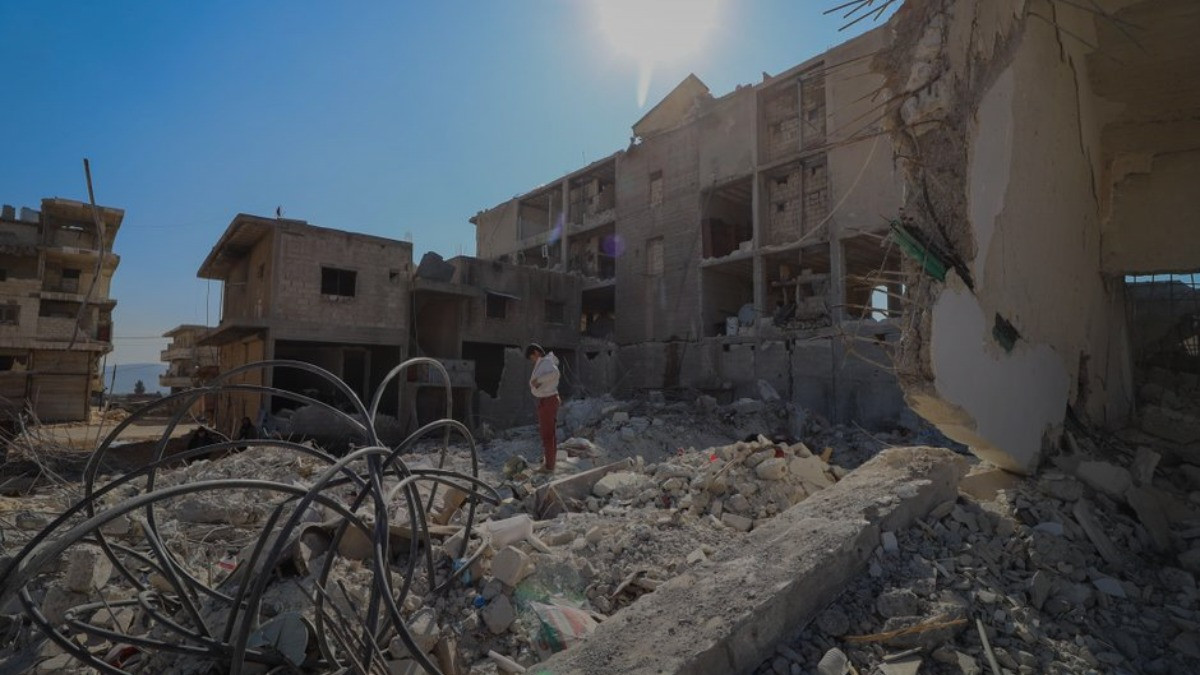
According to UN (OCHA) data, more than 2,500 structures, including residential homes, were demolished in the West Bank and East Jerusalem between 2023 and 2024. Exact data for 2026 is currently being verified by humanitarian organizations. This stark statistic documents the scale of a phenomenon that represents a daily struggle for tens of thousands of Palestinians to keep a roof over their heads. Behind each of these numbers is a specific family that loses their life's work overnight as a result of administrative decisions made by the Israeli Civil Administration.
Scale of destruction: Data from the UN and human rights organizations
Reports from the United Nations Office for the Coordination of Humanitarian Affairs (OCHA) leave no doubt about the direction in which spatial policy in the occupied territories is heading. The organization regularly monitors the pace of demolitions, which in the last two years has become one of the main factors destabilizing civilian life. The Israeli human rights organization B'Tselem emphasizes in its analyses that these actions are not isolated cases of unauthorized construction. Instead, we are dealing with a systemic mechanism that limits the development of Palestinian communities, especially in Area C. This area, which makes up 60 percent of the West Bank, remains under full Israeli control, giving authorities almost unlimited freedom in planning and enforcing building regulations.
B'Tselem experts point out that this system is based on legal dualism. While Jewish settlements in Area C develop based on central planning, Palestinian applications for building permits are systematically rejected. These actions are part of a broader strategy of territorial control aimed at marginalizing the Palestinian presence in strategic points of the region. For families who receive a demolition order, the difference between "security" and "politics" is irrelevant. The result remains the same: forced displacement and the need to seek shelter in often overcrowded urban centers located in Areas A and B, where Palestinian control is greater, but living space is drastically limited.
Bureaucracy as a tool of dispossession
The administrative mechanism by which thousands of buildings have been razed to the ground is based on a rigorous permit system. In Area C, every new investment – whether it is a single-family home, a barn, or a small animal shed – requires the consent of the Israeli Civil Administration. Data from human rights monitoring organizations, such as Bimkom, indicate that the approval rate for building permit applications submitted by Palestinians hovers between 1 and 2 percent. Such a low level of positive decisions creates a situation where almost every new structure erected by a Palestinian becomes, by definition, unauthorized construction.
In practice, this means that Israeli building law serves as a tool of political pressure. When officials determine that a building was constructed without the required document, a demolition order is issued. Owners have the theoretical possibility of appealing to the courts, but these processes take years and rarely end favorably for the plaintiffs. The costs of legal representation and the uncertainty of whether the building will be demolished during the proceedings force many Palestinians to build in secret or abandon investments in improving their housing conditions.
In addition to administrative demolitions, the military uses so-called punitive demolitions. This method is aimed directly at the homes of families of individuals suspected of or convicted for attacks on Israeli citizens or military personnel. Unlike demolitions for lack of permits, punitive demolitions are carried out almost immediately. Buildings are destroyed regardless of whether they have a full set of permits or not. This form of collective punishment strikes at families who are often unaware of their relatives' actions, leaving them without a roof over their heads within just a few hours of the bulldozers' arrival.
Social impact: Housing crisis and displacement
The loss of a home is the beginning of a long-term social crisis. Families affected by this phenomenon not only lose their place to live but often also their only source of income if the home was connected to a workshop or a farm. In East Jerusalem, the situation is particularly tense. The city, divided between Israeli interests and Palestinian aspirations, has become a testing ground where every demolition triggers local protests and clashes with security forces.
The consequences of infrastructure devastation are felt by entire communities. The destruction of a building often involves damage to water and sewage connections, which cuts off neighbors from utility supplies. In a climate where access to water is already a challenge in itself, such action brings local communities closer to a humanitarian disaster. Aid organizations, such as the International Committee of the Red Cross, have repeatedly warned that resources intended to help displaced families are running out. Emergency aid in the form of tents or residential containers is only a temporary solution to a problem that is structural in nature.
It is impossible to ignore the psychological aspect. Children growing up in the shadow of uncertainty, where every sound of heavy equipment triggers fear of losing their home, struggle with the trauma of long-term insecurity. Stability, which is a fundamental right of every family, becomes a privilege that many Palestinians cannot afford. The lack of long-term housing prospects leads to the emigration of young people, which in turn weakens the social fabric of Palestinian towns and villages in the West Bank.
The situation in 2026: What do we know today?
The lack of full, verified statistics for 2026 stems from difficulties in accessing areas covered by military operations and bureaucratic delays in the publication of official reports by the Civil Administration. Humanitarian organizations, including local OCHA branches, are still gathering data from the field to create a complete picture of the actions taken over the last few months. At the current stage, it is impossible to state definitively whether the pace of demolitions has accelerated compared to 2023–2024 or has stabilized at a similar level.
Unofficial reports from the field indicate that despite ongoing tensions in the region, the policy of issuing demolition orders remains unchanged. Israeli authorities argue that each of these actions is legal, citing planning regulations and security considerations. Meanwhile, international observers point out that the lack of transparency in the data verification process for 2026 makes it impossible for the international community to assess the situation reliably. We are waiting for the final summaries that will allow us to answer the question of whether 2026 will bring a change in the dynamics of dispossession or will merely be a continuation of the trend that has drastically changed the map of settlement in the West Bank over the last decade. Until these reports are published, all figures provided in the public sphere remain estimates that must be treated with great caution.
What this means for you
Home demolitions in the occupied territories are not just a local construction problem. They are a tool of territorial control that directly affects the balance of power in the region. From a geopolitical perspective, every destroyed structure reduces the chance of maintaining the territorial continuity of a future Palestinian state. Settlement groups benefit from this, as they often plan to expand existing settlements or road infrastructure in place of the demolished homes. Ordinary people, however, lose out, becoming pawns in a game over whose outcome they have no influence. For an observer from Europe or America, understanding this mechanism is key to grasping why the Israeli-Palestinian conflict remains so difficult to resolve — the problem is not just a lack of political will, but a daily struggle for physical living space.
Questions and answers
Why does Israel demolish Palestinian homes?
The official justification provided by Israeli authorities is the lack of required building permits and national security issues. International organizations, including the UN, however, argue that the permit system is designed in such a way as to make it impossible for Palestinians to build legally on their own land.
Can Palestinians legally build homes in Area C?
In theory, yes; in practice, it is almost impossible. Data indicate that the approval rate for building permit applications is below 2 percent, which forces residents to build without permits, exposing them to the risk of demolition.
What are the direct consequences of demolitions for families?
The most important consequence is forced displacement, the loss of a lifetime's assets, and the need to move to densely populated urban areas. This is often accompanied by the destruction of water and sanitation infrastructure, which leads to the deepening of the humanitarian crisis in the affected communities.
Are punitive demolitions used as often as administrative ones?
No. Punitive demolitions are used selectively against individuals suspected of militant activity, while administrative demolitions are mass-scale and relate to spatial planning. Both types of actions, however, lead to the same result: the loss of a home for Palestinian families.

Komentarze (0)
Ładowanie komentarzy...