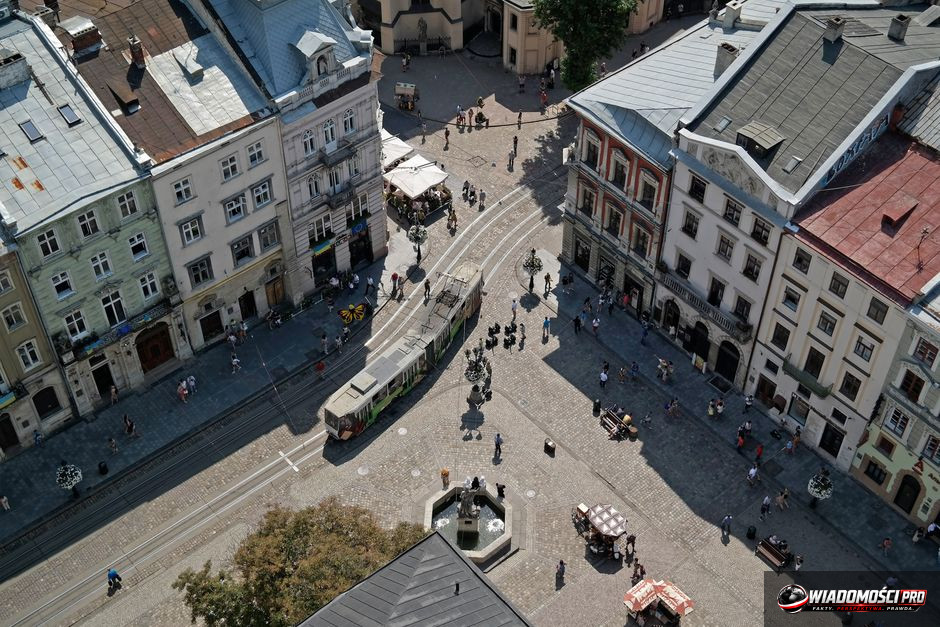
The authorities of Lviv plan to honor the UPA commander in 2027, which has triggered a wave of outrage in Poland, casting a shadow over city partnerships, including with Rzeszów. This decision strikes at the foundations of cross-border relations that have been built over the years on solidarity in the face of Russian aggression. This matter is becoming a litmus test for Polish local government diplomacy, placing Polish centers in a situation where silence is increasingly difficult to distinguish from acceptance.
The Year of Shukhevych as a spark for conflict
The choice of 2027 by the Lviv City Council is not accidental. It marks the 120th anniversary of Roman Shukhevych's birth. For Ukrainian local officials, this figure is a symbol of the fight for independence, while in Polish collective memory, he functions as the main architect of the genocide in Volhynia and Eastern Galicia. The announcement of plans to commemorate Shukhevych has resonated widely in the Polish media. Outlets such as Onet, Rzeszów News, naTemat, WP, and wm.pl have almost unanimously labeled this move a provocation.
Information about Lviv's plans has sparked an avalanche of questions about the sense of continuing partnership cooperation. Rzeszów, which since February 2022 has served as the main logistics hub for neighboring Lviv, is currently in a difficult position. Over the last few years, the city has provided hundreds of tons of humanitarian aid, medical equipment, and technical support. Now, this aid stands in contrast to the historical narrative being pushed by Lviv's decision-makers.
Polish society, which has been very open to helping Ukrainian partners until now, is beginning to react allergically to any attempts to relativize history. From the perspective of Rzeszów's residents, financing or even ceremonially supporting a city that officially glorifies a UPA commander is unacceptable. The lack of prior consultation regarding these plans with the Polish side demonstrates a profound misunderstanding of a neighbor's historical sensitivities. This is not a dispute about details, but about the fundamental values upon which the new quality of Polish-Ukrainian relations was supposed to be based.
Business, history, and the limits of tolerance
The problem is not limited solely to city council resolutions. In January 2025, the portal Kresy.pl revealed connections between the "Pijana Wiśnia" (Drunken Cherry) restaurant chain and entities openly promoting the UPA and Roman Shukhevych. The fact that these establishments operate in Polish cities has caused history to cease being a distant academic issue and become an element of everyday life. Consumers have begun to ask whether their spending in these establishments is indirectly supporting an ideology aimed against Polish identity.
In March 2025, in Poznań, the All-Polish Youth (Młodzież Wszechpolska) held a demonstration in front of one of the chain's locations. Activists demanded the removal of symbols glorifying the UPA from public space. This event showed that Polish society no longer shows patience for symbols that are directly associated with the tragedy of thousands of Polish families. The business expansion of Ukrainian brands linked to controversial historical politics has become fuel for tensions on the Warsaw-Kyiv line.
This situation creates a dangerous precedent. If local governments do not develop mechanisms for dialogue that go beyond pure wartime pragmatism, the entire cooperation could be halted by grassroots pressure. Residents of Rzeszów or Poznań do not want to be beneficiaries of a partnership that, in its historical narrative, does not respect the Polish memory of UPA victims.
Lviv, by pushing for 2027 as the Year of Shukhevych, ignores the fact that Polish public opinion is exceptionally sensitive regarding the Volhynian massacre. Any attempt to build monuments or dedicate anniversaries to commanders responsible for ethnic cleansing is perceived as a hostile act. The authorities of Lviv argue their position by citing the right to their own historical policy; however, in international relations, especially in the face of a common threat from Russia, gestures of this type are seen as political sabotage of unity.
Fact-checking in the shadow of disinformation
In the public sphere, accusations often arise that Polish taxpayer money is funding projects that glorify the UPA. In January 2025, the portal Demagog published an analysis aimed at verifying rumors about Polish funding for the reconstruction of a UPA museum in Lviv. The result was clear: no funds from Poland were allocated for this purpose. Grants flowing from Polish cities to Lviv were directed toward infrastructure modernization, humanitarian aid, and broadly defined culture.
Despite this, the conviction that "unfriendly actions" are being financed with Polish money remains alive. This situation shows how a lack of transparency and ambiguous actions by Ukrainian local governments favor theories about the waste of Polish funds. For the Polish taxpayer, the distinction is important: aid for a fighting Ukraine is one thing, and financing commemorations of figures responsible for crimes against Poles is an entirely different area.
The authorities of Lviv, by sticking rigidly to their narrative, risk losing the trust that was built over years. Rzeszów, as a partner city, is currently under fire. Local officials from Rzeszów cannot openly cut ties with Lviv so as not to harm the strategic interests of the state, but at the same time, they cannot downplay the voices of outrage from their own citizens. This is a classic example of a situation where history enters into a brutal collision with current politics.
Rzeszów facing the Lviv challenge
The partnership between Rzeszów and Lviv has been a model of cooperation for years. Youth exchanges, joint infrastructure projects, and support in crisis situations created a bond that seemed unbreakable. The decision of Lviv's councilors regarding 2027 is a test of whether this bond is based on sincere dialogue or merely on short-term benefits. If Lviv does not withdraw from these plans, Rzeszów will be forced to make difficult decisions.
Possible scenarios include limiting official contacts, suspending joint ceremonies, or even freezing cooperation at the municipal level. Each of these steps will have measurable consequences for both cities. Lviv will lose access to Rzeszów's experience in managing a logistics hub, and Rzeszów will lose a symbolic partner on the other side of the border. However, in the face of social pressure demanding respect for Polish historical memory, local officials may have no other choice.
This dispute does not concern only Lviv and Rzeszów. It is a micro-model of what is happening on a nationwide scale. Poland and Ukraine are destined for cooperation, but this cooperation cannot come at the expense of historical truth. If there is no will on the Ukrainian side to acknowledge Polish sensitivity, and if a strategy for conducting difficult dialogue without emotional agitation is not developed on the Polish side, these relations may undergo a permanent cooling.
Is dialogue still possible?
It seems that until a sincere conversation about UPA crimes takes place, every subsequent commemoration of the commanders of this formation will trigger a wave of opposition in Poland. Lviv faces a choice: is historical policy based on radical symbols more important, or long-term cooperation with a key partner like Poland? The current stance of the Lviv authorities suggests they are choosing the former, ignoring signals coming from Warsaw and Rzeszów.
What is happening in the relations between Rzeszów and Lviv is a warning for all centers cooperating with Ukraine. The history of the 20th century is still alive and influences the present. Ignoring this fact leads to misunderstandings that, over time, may become impossible to repair. Rzeszów and Lviv face a challenge that requires diplomatic skill and a large dose of courage on both sides of the border. If it is lacking, the idea of reconciliation will be shelved for decades to come.
Questions and answers
Why does Lviv want to honor Shukhevych right now?
Lviv councilors made the decision about the commemorations because 2027 marks the 120th anniversary of Roman Shukhevych's birth. This is a consistent implementation of the city's historical policy, which places on a pedestal figures recognized by Ukrainians as heroes of the fight for independence, which, however, stands in complete contradiction to the Polish historical assessment.
Will Rzeszów break off cooperation with Lviv?
Currently, there are no official announcements about breaking off the partnership. However, the Shukhevych year issue is a serious image and political burden for the Rzeszów authorities. Local officials must balance the desire to maintain relations with a city in need of support against strong pressure from public opinion, which expects a decisive reaction to the glorification of the UPA.
Is Polish money flowing into the promotion of the UPA?
There is no evidence for this. Analyses conducted by, among others, the portal Demagog, confirmed that funds transferred by Poland as part of development aid or humanitarian support are not allocated for purposes related to the cult of the UPA or the construction of museums for this formation. Any claims linking Polish funds to the glorification of Shukhevych are unsupported by facts and are based on disinformation.
What are the main causes of tension in relations between the cities?
The main flashpoint is the discrepancy in historical policy. While Ukraine builds its identity around figures recognized as fathers of independence, Poland treats these same figures as perpetrators of genocide. Additionally, the lack of consultation regarding anniversary commemorations and the presence of controversial brands in the Polish public sphere deepen the lack of mutual trust.
Can a change in the decision by the Lviv authorities be expected?
At this moment, there are no signals that Lviv councilors intend to withdraw from their plans. The authorities of Lviv argue that they have a sovereign right to conduct their own historical policy, which in practice means that confrontation with Polish sensitivity is written into their strategy for 2027.
How did the "Pijana Wiśnia" case affect the perception of Ukrainian investments in Poland?
This case caused Polish society to begin looking more closely at the origin of capital and the ideological background of foreign companies operating in Poland. Incidents such as the one in Poznań show that the Polish customer is increasingly less willing to separate business from worldview, which poses an image challenge for Ukrainian entrepreneurs.
What losses does a potential freezing of cooperation entail?
Breaking or limiting cooperation is primarily a loss for the idea of Polish-Ukrainian rapprochement. It would mean cutting off communication channels between local officials, hindering youth exchanges, and a decline in the trust that was built with such great effort in recent years. In the long term, both sides will lose out, and most of all the border regions, which benefited from active cross-border cooperation.
Is Rzeszów's role as an aid hub at risk?
Rzeszów's role as an aid hub is largely determined by the war situation and Ukraine's needs. However, if the atmosphere surrounding the partnership with Ukrainian cities becomes toxic due to historical disputes, it may affect a decline in residents' enthusiasm for supporting further aid initiatives. This is a challenge that local officials will have to face in the coming months.
What are the prospects for Polish-Ukrainian historical dialogue?
The prospects at this moment seem limited. Until both sides begin to conduct a sincere dialogue without avoiding responsibility for the difficult moments of the past, incidents like this one in Lviv will recur. It will be key to develop a model of conversation that respects the memory of the victims while not blocking current cooperation. Currently, however, there is a lack of political will for such a compromise.
Sources
- Scandalous idea of Lviv councilors. They want to commemorate the UPA commander - Onet News
- Lviv provokes Poland. 2027 as the Year of Shukhevych? This is a partner city of Rzeszów - Rzeszów News
- Lviv wants to honor UPA commander. There will soon be nothing left to salvage from relations with Ukraine - naTemat.pl
- Lviv's provocation towards Poland. "This is an unfriendly step" - WP News
- Lviv wants to honor UPA commander. Poland is boiling - wm.pl
- Did Poland finance the reconstruction of the UPA museum? No, that was money for a different purpose - Demagog
- Pijana Wiśnia chain linked to a restaurant promoting the UPA and Roman Shukhevych - Kresy.pl
- Poznań: All-Polish Youth placed inscriptions in front of a Ukrainian establishment - Do Rzeczy

Komentarze (0)
Ładowanie komentarzy...