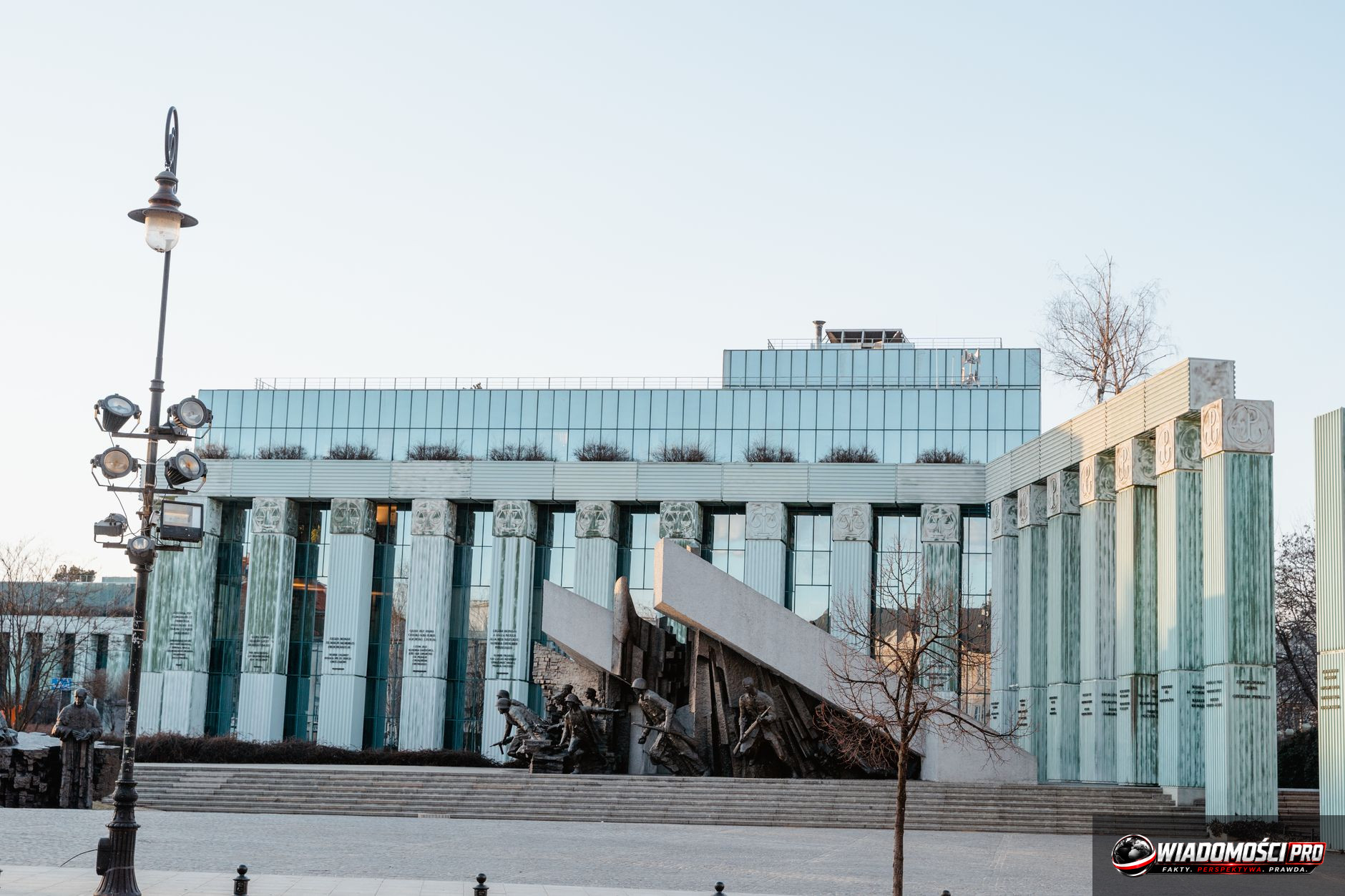
A group of 28 judges refused to participate in a meeting convened by Zbigniew Kapiński, questioning the legality of his election, the presence of judges appointed by the National Council of the Judiciary (KRS) after 2017, and the procedure for calling the session. The boycott has created uncertainty regarding the quorum required to pass the planned resolution. The First President of the Supreme Court intended to push through a position condemning the government's actions toward the Constitutional Tribunal, but encountered organized resistance from judges appointed under previous regulations.
In brief
- 28 Supreme Court judges signed statements refusing to participate in the extraordinary General Assembly convened for November 3, 2026.
- The signatories included 15 judges from the Criminal Chamber and 13 from the Civil Chamber and the Chamber of Labour and Social Security.
- The boycott casts doubt on whether a quorum can be reached to adopt the proposed resolution regarding the situation surrounding the Constitutional Tribunal.
Four charges and refusal to participate
Judge Włodzimierz Wróbel of the Supreme Court's Criminal Chamber published two identical statements on social media on Tuesday from the judges refusing to appear. The first document was signed by 15 judges from the Criminal Chamber, and the second by 13 judges from the Civil and Labour/Social Security Chambers. The list of signatories included Michał Laskowski, Dariusz Świecki, Małgorzata Wąsek-Wiaderek, Paweł Wiliński, Piotr Prusinowski, Karol Weitz, and Włodzimierz Wróbel himself.
The refusal to attend the assembly, scheduled for 2:00 PM, is based on four charges:
- The assembly was convened by a person appointed as First President of the Supreme Court in violation of the Polish Constitution and the 2017 Supreme Court Act. Kapiński assumed this role in May 2026 with the participation of the reformed KRS.
- The proceedings were to include judges selected under the 2017 KRS regulations in a procedure that grossly violates the Polish Constitution, meaning the meeting would not constitute a legitimate body.
- Setting the date violated Art. 17 par. 2a of the Supreme Court Act by failing to observe the required 7-day notice period.
- Due to the absence of 28 judges, it is impossible to gather the quorum necessary to adopt the planned resolution.
Allegations of politicization and the Constitutional Tribunal visit
In their statements, the judges accused the Supreme Court leadership of attempting to legitimize improper relations with executive authorities, mentioning President Karol Nawrocki. The authors indicated that contacts between the First President of the Supreme Court and the President of Poland should be strictly limited to situations defined by law. They viewed the convening of Tuesday's assembly to adopt the planned resolution as an attempt to legitimize the violation of these principles.
The flashpoint proved to be the events of the past weekend. On the night from Friday to Saturday, Zbigniew Kapiński appeared at the Constitutional Tribunal headquarters alongside President Karol Nawrocki, who had cut short a foreign visit after Constitutional Tribunal judge Anna Korwin-Piotrowska ordered a suspension of the duties of Tribunal President Bogdan Święczkowski and Vice-President Bartłomiej Sochański on October 30.
The judges emphasized that the Constitutional Tribunal is a judicial body whose operations must be free from political pressure, and its functioning should be determined solely by judges subject to the Polish Constitution.
Position of Zbigniew Kapiński and the Supreme Court Spokesperson
Zbigniew Kapiński convened the General Assembly to discuss threats to the constitutional order, the principles of a democratic state ruled by law, and judicial independence, and subsequently to adopt a resolution on the matter. In an order issued Saturday evening, Kapiński stated that the extraordinary nature of the situation surrounding the Constitutional Tribunal made it impossible to observe the seven-day notice period.
On Monday, Kapiński argued on Radio ZET that the Supreme Court cannot remain indifferent to the actions of the executive branch, which he described as a coup d'état.
Supreme Court spokesperson Igor Zgoliński stated before the start of Tuesday's proceedings that official notifications had been sent to all Supreme Court judges. He noted that participation in assemblies is a duty and that some judges had demanded such a meeting. According to the regulations, judges leaving a session must formally justify their absence to the First President.
Impact of the boycott on the quorum and the General Assembly
Although most positions in the Supreme Court are currently held by individuals selected by the KRS after the December 2017 amendment, the absence of 28 judges calls into question the possibility of passing a resolution. According to the signatories, without their presence, the statutory attendance requirements cannot be met. Neither the Supreme Court Act nor press materials provide the exact number of filled positions as of November 3, 2026, making it impossible to determine a precise mathematical threshold before the attendance list is closed.
SC spokesperson Igor Zgoliński informed at a briefing that he only knew of the boycott reports from media leaks and could not determine the actual attendance before the opening of the session.
When asked about the draft resolution, Zgoliński stated that the Supreme Court College had determined the content of the document, and any potential vote on it was dependent on attendance. The spokesperson also announced that a briefing by Zbigniew Kapiński would take place around 3:30 PM to present the decisions made during the meeting.
Sources
- Gazeta.pl: Bunt części sędziów. Nie wezmą udziału w Zgromadzeniu Ogólnym Sądu Najwyższego
- Polsat News: Bunt w Sądzie Najwyższym. Grupa sędziów bojkotuje zgromadzenie
- Bankier.pl: Bunt w Sądzie Najwyższym. 28 sędziów nie weźmie udziału w zgromadzeniu
- Rzeczpospolita: 28 sędziów nie weźmie udziału w Zgromadzeniu Ogólnym sędziów SN
- Zero.pl: Bunt 28 sędziów SN. Pokłosie sporu w TK
- Fakt: Bunt części sędziów przed Zgromadzeniem Ogólnym SN. Powiedzieli "nie" Kapińskiemu
Article prepared with the help of artificial intelligence based on: Gazeta.pl, Polsat News, Bankier.pl, Rzeczpospolita, Zero.pl, Fakt. Facts checked automatically against these sources. The Wiadomości PRO newsroom is responsible for this publication.


Comments (0)
Loading comments...