In brief
- Cezary Kulesza has announced an official decision regarding Jan Urban's future
- The coach will lead the Polish national team at least until the November Nations League matches
- The decision follows a loss to Bosnia and public commentary from Zbigniew Boniek and the media
Cezary Kulesza's official decision regarding Jan Urban
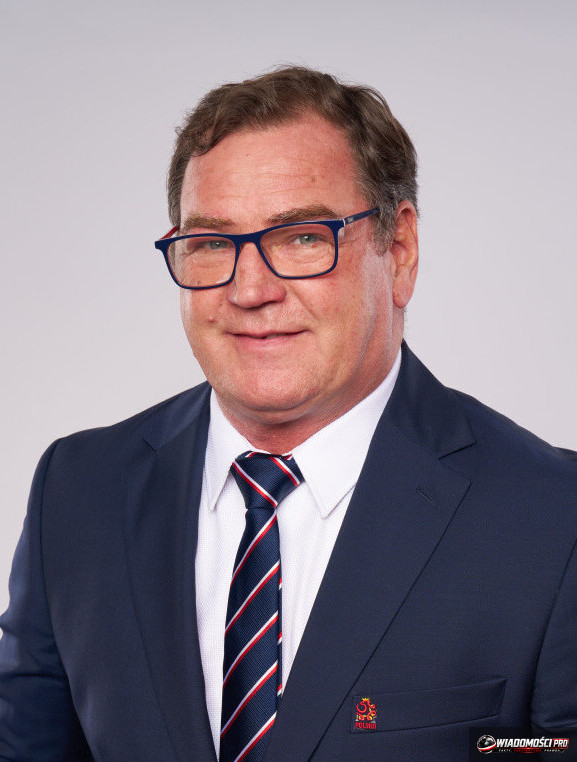
PZPN President Cezary Kulesza has made an official decision regarding Jan Urban's future as head coach of the Polish national team. The coach remains in his position at least until the November Nations League matches. The announcement definitively ended the media storm that erupted immediately after another disappointing performance by the national team. Reports on the federation head's decision were published on Tuesday, October 6, 2026, by Gol24 at 1:04 PM, Sportowy24 at 2:13 PM, and Super Express at 2:36 PM.
Instead of an immediate dismissal, Kulesza chose a "wait-and-see" maneuver. He made the situation clear: the coach is given time only until the end of the autumn phase. Not a day longer without concrete results.
Cool pragmatism has taken hold in the offices on Bitwy Warszawskiej 1920 r. Street in Warsaw. Firing the coach in early October would have meant an organizational disaster. It would require rushing to find a new name, paying severance, and throwing a successor into the deep end right before a decisive battle in international competition. Kulesza preferred to avoid this. However, he tied Urban's fate to upcoming results so closely that any further mistake will end his tenure immediately.
The margin for error has shrunk to zero. No one at the PZPN intends to tolerate further excuses about bad luck or supposedly good performance despite a lack of points. The president has given his coach a final chance, but at the same time, he has shifted all responsibility for the atmosphere surrounding the team onto his shoulders. If the recovery plan fails, Urban will be solely to blame.
In the corridors of the federation, there is no doubt that Tuesday's announcements are merely a stay of execution. The federation's apparatus has gained a few weeks to scout the coaching market, while the coach himself must work under the permanent suspicion of incompetence. Every move in training, every call-up, and every substitution during a game will be scrutinized without any leniency.
Kulesza's policy in this case is not about defending the coach, but about protecting the federation itself from an image collapse. Firing Urban suddenly would be an open admission by the president of a mistake in hiring him. Postponing the reckoning until November allows for the appearance of control over the training process. However, the truth is brutal: Urban is hanging by a thread.
Trust until the November Nations League matches
The November deadline is no coincidence. That is when the Polish national team will play its two final, decisive group stage matches of the Nations League. In the calendar of European competitions, this autumn series marks the definitive conclusion of the year. For Jan Urban, these two matches will be the final test.
Conditional support from the president creates extremely difficult realities in the dressing room. The players see the press releases and know perfectly well that their superior's position is temporary. In national team realities, working with the label of a "lame duck" coach rarely brings a breakthrough, as the coach's authority melts away day by day. The players focus on their own performance at their clubs, and the coaching staff's tactical instructions lose their persuasive power.
Kulesza has set a strict points requirement. In the November clashes, the team cannot afford a stumble, and the style of play must improve immediately. If the team once again displays helplessness in positional attack and chaos in defensive formations, dismissal will occur immediately after the final whistle closing the group stage.
The coaching staff is in a trap. Instead of executing a multi-month team rebuilding plan, Urban must act ad hoc. Only winning the next two matches matters. With such an approach, there is no room for testing new personnel variants or introducing young players. The coach must rely on proven names that will guarantee an immediate result.
From the federation's point of view, this is a very risky game. If the team fails in November, Poland will not only lose its chance to achieve sporting goals in the Nations League, but a new coach will take over the team in a state of deep mental crisis. Kulesza took this risk because he decided it was better than coaching chaos in the middle of autumn.
Time is running out. Before the November training camp, the staff must analyze the causes of the collapse and draw conclusions from the failures to date. Each day of delay distances the team from getting out of the slump, and fans expect a radical change in attitude on the pitch, not more smooth declarations at conferences.
Loss to Bosnia and Urban's words about "many positives"
The direct cause of the current collapse was the loss to Bosnia and Herzegovina. The style of play of the "White and Reds" in this match caused widespread embarrassment among fans and pundits. The team looked completely devoid of concepts, and the chaos in defensive formations allowed opponents to freely construct dangerous offensive actions.
However, the real shock came only after the match. Jan Urban stood before the cameras and made a comment that immediately turned against him. Instead of objective self-criticism, the coach publicly stated that he "sees many positives" in the team's actions. As reported by the newspaper "Rzeczpospolita" on Tuesday, October 6, at 2:31 AM, the coach went even further, stating literally: "We played well, we were wronged."
This statement was the final straw. The suggestion that the cause of the failure was alleged refereeing errors or unfavorable external circumstances was perceived as an attempt to escape responsibility. In the eyes of observers, the coach was completely out of touch with what was happening on the pitch. Bosnia and Herzegovina, which in recent years has rarely dictated the terms of play against stronger opponents, gave the impression of a better-organized team in every respect when facing Poland.
Fans felt disrespected. They expected a clear indication of errors, an explanation of fatal personnel choices, and an apology for the lackluster spectacle. Instead, they heard a story about imaginary bad luck. In the football community, it has become a common belief that a coach who cannot diagnose his own impotence after a lost match loses the ability to fix anything in the dressing room.
The media reaction was immediate. Urban's post-match words were considered proof of the exhaustion of his formula for working with the team. Such an attitude immediately forced Kulesza to take a stand before the wave of outrage led to a complete break in ties between the team and the stands. The coach exposed himself to fire, and his unfortunate statements became the main point of accusation in all sports discussions.
The coach's camp later tried to tone down the mood, but the damage was done. Urban's image as a down-to-earth professional lay in ruins. Instead of a discussion about tactics, all of Poland began debating whether the man leading the most important team in the country even understands the gravity of the situation.
Zbigniew Boniek assesses the coach's mistakes
Zbigniew Boniek immediately joined the ranks of ruthless critics. The former PZPN president and current UEFA vice-president addressed the team's attitude in the "Fakt" newspaper, which was noted on Tuesday at 6:45 AM under the telling headline: "Zbigniew Boniek clearly on Jan Urban's future. He also pointed out his biggest mistake."
The statement by the Polish football legend acted like a detonator on the community. Boniek's authority in national team matters still carries a lot of weight, and his public assessment of the incumbent coach's stumbles immediately set the tone for the discussion. Pointing out a mistake by a man who managed the entire federation for nine years deprived Urban of any alibi in the eyes of public opinion.
The former leader's voice exposed weaknesses in preparing the team for competitive matches. When Boniek publicly lists a coach's mistakes, the pressure on the current federation authorities increases exponentially. Cezary Kulesza found himself in an exceptionally uncomfortable position. Firing Urban right after the "Fakt" publication would look like following the instructions of the former president. Leaving him on the bench without a word of comment, on the other hand, would be perceived as ignoring obvious coaching facts.
For Urban himself, the situation became downright humiliating. Instead of focusing solely on preparations for the November matches, he has to deal with accusations formulated by one of the most influential figures in the history of Polish football. Such criticism hits directly at the coach's position within the team. The players see that their boss's authority has been questioned at the highest level.
The current staff has no tools to respond to Boniek in a media polemic. The only thing that could defend Urban is a series of convincing victories and a radical change in the style of play. However, that requires time, which the coach simply does not have. Publicly pointing out mistakes by the former PZPN head meant that every subsequent tactical decision by Urban would be viewed through the prism of his alleged ineptitude.
The conflict of visions in Polish football was highlighted once again. Boniek represents an approach of ruthless accountability for the quality of play, while Kulesza chose a tactic of procrastination and hedging. In the middle of this dispute remains a helpless team and a coach whose days seem numbered.
Bosnian media and speculation about successors
The result and style of the match echoed loudly outside of Poland. The post-match behavior of the staff and the reaction of the PZPN authorities were meticulously noted by the media in the Balkans. On the sport.interia.pl website, a report was published on Tuesday at 7:24 AM titled: "They saw what Kulesza did. The Bosnians passed judgment. No mercy for Urban." From the perspective of local journalists, Polish complaints about referees and denial of reality looked simply bizarre.
The Balkan press did not leave a dry thread on Urban. They pointed to the complete tactical helplessness of the Poles, the lack of reaction to the opponent's on-pitch adjustments, and complete confusion in defensive formations. In Bosnia, the triumph over Poland was considered fully deserved, and the Polish coach's explanations about being allegedly wronged by fate were perceived as a lack of respect for the winners.
At the same time, a ruthless market for potential successors began in the Polish media. At 8:23 AM, the SportoweFakty portal published an article with an unambiguous title: "Jan Urban at the abyss. Here are the potential successors." The public search for a new leader for the national team began before Kulesza even managed to take an official position.
The triggering of personnel speculation proved the scale of the collapse. In the football community, articles with lists of candidates for coach appear only when the incumbent coach's mandate is completely compromised. Experts began to analyze whether Kulesza would decide on a domestic option, betting on a coach who knows the realities of the Ekstraklasa, or perhaps reach for a name from abroad again.
For Urban, this is a humiliating reality. A coach who formally still holds the position of head coach has to read about his potential successors in leading sports portals. Such an atmosphere destroys any sense of stability. The national team players, instead of talking about tactical tasks for November, exchange reports on who will take over the dressing room in a few weeks.
The media carousel has started at full speed, and no statement from the president can stop it. Pushing Urban into the shadows has become a "fait accompli" in public perception. Even if the coach manages to last until the November matches, he will enter the dressing room with the awareness that the federation's faxes and the president's phones are already working on preparing a contingency plan.
Expert debate: should Urban leave?
A fierce debate has erupted in the Polish public space about the validity of keeping Urban in the position. The most telling example of this was the discussion initiated by the iGol.pl portal, which on Tuesday at 10:31 AM published an article titled: "Should Jan Urban continue to lead the Polish national team?". This question dominated all sports services in the country.
The community split into two warring camps. Proponents of an immediate cut argued that every subsequent week under Urban's leadership is irretrievably lost time. They pointed to the lack of any concept of play in attack, the lack of progress in organizing the press, and the absolute lack of trust from the fans. The crowning argument was the coach's post-match behavior. The attempt to blame external factors for the loss to Bosnia deprived him of the last remnants of credibility.
On the other hand, proponents of maintaining the status quo until November pointed to the schedule. Changing the national team leader in the middle of autumn would carry a huge risk. A new coach would not have time to conduct even a few full training sessions, and losses in the Nations League would burden his account right at the start of his tenure. It was argued that Urban should finish what he started, and a full reckoning should only take place after summarizing the group stage.
Cezary Kulesza chose a compromise variant, which, however, does not solve any problem. The federation gained momentary office peace, but on the pitch, the problem remains unsolved. The national team is still playing poorly, and the coach has lost the trust of the stands. Postponing the decision until November is a classic "wait-and-see" move that could hit the PZPN with double force.
If the Polish national team displays the same level of helplessness again in November, the wave of criticism will not stop at Urban. It will hit President Kulesza directly, who took full responsibility for keeping this coach in the position. The November matches will therefore be a judgment on the entire concept of managing the team by the current federation board.
The time for compromises has passed. The national team needs a radical impulse, not bureaucratic announcements about conditional trust. Urban faces the most difficult weeks of his coaching life. Either he will silence critics in November with two victories, or he will leave the national team in an atmosphere of complete disgrace.
What this means for you
Leaving Jan Urban in the position until November has a direct impact on what awaits the average fan. The national team under his leadership plays chaotic and lackluster football, which means that the November television broadcasts on open channels may again turn out to be a difficult spectacle to watch. Instead of a spectacle at a European level, fans will get a fight for survival and play under immense pressure for results.
The situation will also hit those who planned to travel to the national team matches. Tickets for Polish national team matches at the National Stadium cost from 120 to even 240 PLN for seats in better sectors. Paying such amounts to watch a team in a deep crisis and a coach with a conditional termination in his pocket is simply unprofitable for many people. On fan forums, there are already calls for a boycott of the stands and leaving seats empty as a protest against PZPN policy.
If you are planning to buy tickets, it is worth waiting until the call-ups are announced. It may turn out that at the November matches, the atmosphere in the stadium will be thick with whistles, and attendance will drop drastically. For a fan, this means one thing: the coming weeks will bring more nerves in front of the screen and on social media than pure football joy.
Questions and answers
What decision did Cezary Kulesza make regarding Jan Urban?
PZPN President Cezary Kulesza decided that Jan Urban will remain in the position of coach of the Polish national team at least until the November Nations League matches.
What caused the crisis surrounding the coach?
The crisis was caused by the loss to Bosnia and Urban's post-match words, where he claimed that the team 'played well' and that he 'sees many positives'.
Who from the football community commented on Jan Urban's situation?
Among others, former PZPN president Zbigniew Boniek spoke out, pointing out Urban's biggest mistake, as well as media in Bosnia and Poland.
Sources
- Jest decyzja w sprawie Jana Urbana! Prezes PZPN przekazał wieści - Gol24
- Jest decyzja w sprawie Jana Urbana! Prezes PZPN przekazał wieści - Sportowy24
- Jan Urban nad przepaścią. Oto potencjalni następcy - SportoweFakty
- Oficjalnie: Cezary Kulesza podjął decyzję ws. Jana Urbana! - Super Express
- Czy Jan Urban powinien dalej prowadzić reprezentację Polski? - iGol.pl
- Przegrywamy z Bośnią a trener „widzi wiele pozytywów”. „Zagraliśmy nieźle, zostaliśmy skrzywdzeni” - Rzeczpospolita
- Zobaczyli, co zrobił Kulesza. Bośniacy wydali wyrok. Bez litości dla Urbana - sport.interia.pl
- Zbigniew Boniek jasno o przyszłości Jana Urbana. Wskazał też jego największy błąd - Fakt
Article prepared with the help of artificial intelligence. Facts come from the sources listed above. The Wiadomości PRO newsroom is responsible for this publication.

Comments (0)
Loading comments...