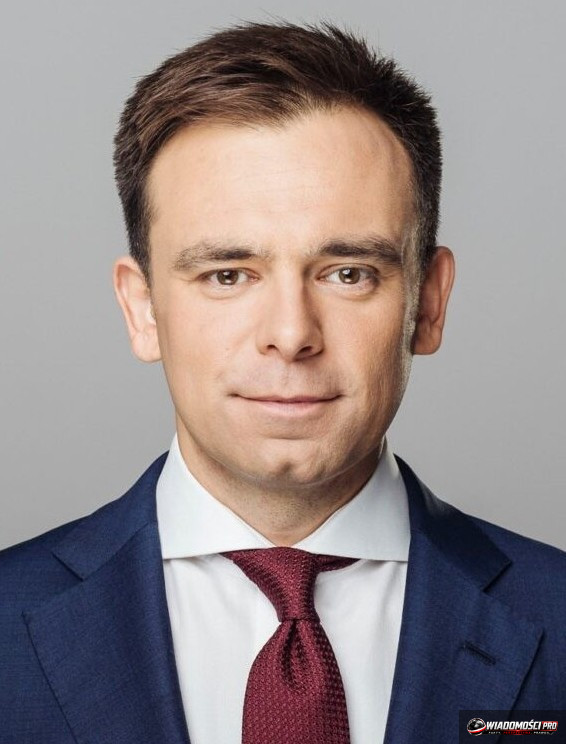
The Council of Ministers has adopted the 2025 draft budget act with a deficit of 289 billion zloty, resulting from the need to fund increased spending on defense and social programs. This decision marks a turning point in the debate over the state of public finances, defining the framework of state policy in the face of growing geopolitical challenges. The Ministry of Finance, led by Andrzej Domański, opted for a radical approach, integrating expenditures that in previous years were often dispersed across off-budget funds, which directly translated into the record scale of the deficit revealed in the official draft.
Deficit structure and government priorities
Understanding the scale of 289 billion zloty requires looking at the expenditure structure, which was dictated by the necessity of technical modernization of the Polish Armed Forces and the maintenance of social transfers rooted in the system. In 2025, the budget ceased to be merely a technical statement of revenues and expenditures, becoming a political manifesto of the government. National security, requiring investments in military equipment, became the main driver of debt. The ruling party argues that in the face of threats on the eastern border, the cost of debt servicing is a price the state must pay to maintain sovereignty.
From the Ministry of Finance's perspective, this fiscal model is the only way to avoid a collapse in key ministries. Replacing off-budget financing with explicit items in the central budget increased transparency but simultaneously exposed the scale of needs. Government experts point out that any attempt to drastically cut costs in this area could lead to the destabilization of a system that has been built for years on the foundation of social transfers. For the government, the priority has become continuity – maintaining programs that have a direct impact on the household budgets of millions of Poles, while simultaneously fulfilling allied obligations regarding defense.
However, this strategy raises a number of questions about the long-term stability of the zloty and the yield of treasury bonds. The financial market, observing such a high level of deficit, expects concrete plans for fiscal consolidation from the finance ministry in the coming years. Andrzej Domański has repeatedly emphasized that 289 billion zloty is the result of cold calculation, not political optimism, which, however, has not calmed the mood among analysts. In the building on Świętokrzyska Street, there is a conviction that the current budget is merely a "cost of entry" to a safer but much more expensive defense system, which forces the acceptance of temporary, high debt.
Opposition in counter: Rhetoric of "financial vandalism"
The opposition's reaction to the presented draft was immediate and extremely sharp. The term "financial vandalism," which appeared in the public debate, became the main tool of attack on the government team. Critics point out that the scale of the deficit is not the result of objective needs, but the effect of incompetence in managing public funds and a desire to buy social peace at the expense of future generations. Debates in the Sejm that accompanied work on the budget repeatedly turned into ideological clashes, where numbers became secondary to accusations of a lack of responsibility for the state treasury.
The parliamentary opposition argues that the government has not made any real attempts to optimize administrative costs. According to opponents, instead of looking for savings in state structures, the government chose the easiest path – increasing debt. In the critics' view, such action undermines the trust of foreign investors and exposes Poland to speculative attacks on the currency. Every parliamentary session regarding the 2025 budget was an opportunity to point out to the ruling party that their policy is merely ad-hoc patching of holes, which in a few years will lead to the necessity of introducing drastic cuts in social benefits.
The divisions on this issue are so deep that there can be no talk of any consensus. For the opposition, a budget with a 289 billion zloty deficit is proof that the ruling coalition has lost control over finances. For the government, in turn, the opposition's criticism is merely a form of playing politics that ignores real external threats. This dispute goes beyond the walls of the Sejm, reaching the press and public debate, where every billion of debt is converted into potential risk for the average citizen. The lack of a common language regarding the basic financial parameters of the state testifies to a deep crisis of trust that accompanied the entire budgeting process for 2025.
Absolutorium and political reckoning
The process of granting the government a discharge (absolutorium) for 2025 became another flashpoint. The votes in the Sejm, which took place in July 2026, were not just a formality, but the ultimate test of the stability of the current cabinet. Obtaining the discharge meant for the government the legitimization of previous expenditures, which in a situation of such a high deficit was a Herculean task. Tensions within the ruling coalition, resulting from the need to reconcile the conflicting interests of various factions, were visible in almost every vote.
In July 2026, the media reported on the government's difficult path to obtaining parliamentary support. For many observers, these votes were a signal that the government had to face growing skepticism even among its own deputies. The dispute over the discharge did not concern only numbers, but the way the government treats control procedures. The opposition accused the cabinet of avoiding responsibility for specific macroeconomic indicators, which led to the paralysis of many debates. In this context, granting the discharge became a turning point that allowed the government to continue its work, but in an atmosphere of political siege.
The course of the votes showed that every subsequent financial decision of the government would be analyzed in terms of future elections. For the government, success in the Sejm was necessary to maintain the narrative of effectiveness. However, the price of this success was high – the necessity of constant negotiation of support for every budget act made the stability of the state a hostage to party arrangements. In July 2026, it became clear that the 2025 budget was not just an accounting document, but a battlefield for the political future of the current team.
Presidential veto and conflict over healthcare
Relations between the government and the Presidential Palace in the context of the 2025 budget deteriorated sharply. The President, using his powers, became the main critic of the government's assumptions, and one of his most important arguments was the situation in healthcare. In January 2026, tension reached a critical point when allegations were publicly raised that the record deficit is the price for armaments, which is being paid by patients.
Karol Nawrocki, actively joining the debate, pointed to the risks associated with the underfunding of the medical system. Statements from January 20, 2026, in which the president described the budget document as a "budget of collapse in healthcare," resonated widely in the media. For the president, the government's attitude was proof of incorrectly prioritizing expenditures. In turn, the ruling party countered these attacks, pointing out that healthcare received record funding, and the system's problems result from years of neglect, not the current budget.
This dispute caused the issue of healthcare to become the main bargaining chip in the hands of the head of state. The President, placing himself in the role of a guardian of expenditures, forced the government to revise its plans, which led to even greater delays in legislative work. In January 2026, the situation seemed to be a stalemate – the government defended its vision of national security, and the president warned against the collapse of public services. For the citizen, this meant uncertainty regarding the availability of services, as the budget became a hostage to the conflict at the top levels of power. What was supposed to be a substantive discussion about finances turned into an open war for influence, in which each of the political camps used healthcare for its own purposes.
Local governments in survival mode
Local governments, which largely carry out state tasks, felt the effects of the 289 billion zloty deficit most directly. The freezing of many local investments became a fact when local officials were forced to adjust their financial plans to the requirements of the central government. A key moment was December 2025, when the finance ministry announced an extension of the time for settling funds for civil protection until the end of March of the following year.
This decision, although technical, sparked a wave of criticism among local government officials. It was pointed out that such a policy paralyzes the development of local infrastructure, as funds that should be spent on an ongoing basis are blocked by unclear settlements with Warsaw. Portal Samorządowy repeatedly drew attention to the fact that local governments, instead of planning development, must focus on maintaining financial liquidity. Every zloty allocated to civil protection was subject to meticulous control, which in practice meant that local authorities became hostages to the central deficit.
For local treasurers, this situation meant months of uncertainty and constant adjustment of plans. Instead of building new schools or roads, local governments were forced into crisis management. The centralization of expenditures, forced by the record deficit of the 2025 budget, showed the weakness of the local government financing system. In relations with central authorities, local officials emphasized that the security of the state cannot come at the cost of paralyzing local communities. However, from the perspective of the Ministry of Finance, control over every billion of debt was necessary to prevent even greater destabilization of the country's finances.
Minister Domański's perspective
Andrzej Domański, as Minister of Finance, found himself in the very center of a political hurricane. Signing his name to a budget with a 289 billion zloty deficit required from him not only proficiency in calculations but, above all, resistance to constant attacks. The finance ministry had been working for months in an atmosphere of tension, trying to convince public opinion that these numbers were the result of necessity, not choice. The minister repeatedly explained that the 2025 budget is a response to the geopolitical situation, in which Poland cannot afford savings at the expense of the army.
In the ministry building on Świętokrzyska Street, Domański consistently defended his strategy. According to him, any attempt to drastically reduce the deficit in 2025 would be associated with the risk of losing the state's defense capabilities. The ministry argued that living on credit is, in this situation, a choice of the lesser evil. However, the political costs of such a strategy were increasingly visible. Threats of a financial blockade, coming from the opposition as early as the beginning of 2026, put the minister in a difficult negotiating position. Every subsequent speech by Domański was analyzed by opponents as an attempt to hide the fatal state of public finances.
Nevertheless, the minister did not withdraw from the adopted assumptions. He maintained the position that the financial stability of the state in the long term depends on surviving the current, difficult period. Domański became the face of a policy that divides the political class, but according to the ministry – is the only right path. In the face of accusations of financial vandalism, the finance minister remained calm, counting on the fact that economic growth would allow for the servicing of the incurred debt in the future. Whether this calculation proves correct, time will tell, however, it is already clear that Domański's role in this process was crucial for the survival of the government.
Consequences for the citizen: What does this mean in practice?
A citizen, looking at a budget deficit of 289 billion zloty, may get the impression that it is just an abstract number. In reality, however, such a huge state debt carries a number of real consequences that can affect the standard of living. First of all, there is a risk of inflationary pressure, which may result from the need to finance such a large deficit through debt issuance. If financial markets begin to question the credibility of Polish bonds, the cost of servicing them will increase, which will mean that the state will have to allocate more funds to interest and less to public services.
The second threat is the limitation of the availability of budget subsidies. Strategic sectors, such as defense, are protected, but other areas, dependent on transfers from the budget, may feel the cuts. This could mean slower infrastructure development, less support for cultural or educational projects, as well as difficulties in maintaining healthcare standards. Citizens may notice that the public services they use on a daily basis are becoming less accessible or require more co-financing from their own pockets.
It is also worth noting that the state's fiscal policy affects the exchange rate of the zloty. A stable currency is crucial for maintaining low prices for imported products. If investors are uncertain about the future of Polish finances, the zloty may lose value, which will translate into price increases in stores. For the average Pole, this means that the 289 billion zloty deficit does not remain without impact on their wallet. Although the government argues that national security is a priority, every citizen must reckon with the fact that this choice will have to be paid for in the form of higher living costs or lower quality of public services in the coming years.
Questions and answers
How much exactly is the budget deficit for 2025?
The budget deficit for 2025 was set by the Council of Ministers at 289 billion zloty.
Why is the opposition criticizing this budget?
The opposition calls the draft "financial vandalism," pointing to the state's excessive debt, lack of savings in administration, and a dangerous direction of fiscal policy that could threaten Poland's credibility.
What reservations did the president raise?
The president pointed to the risk of "collapse in healthcare," suggesting that spending on armaments is prioritized at the expense of patients, and expressed deep skepticism toward the government's budget assumptions.
What is the role of the finance minister in this process?
Minister Andrzej Domański signed off on the budget draft, arguing that the high deficit is a necessity resulting from the geopolitical situation and the need to ensure funding for the army and social programs, despite strong political pressure.
How does the budget situation affect local governments?
Local governments were forced to correct their investment plans and operate in survival mode due to the centralization of expenditures and delays in settling funds for civil protection, which affects their financial liquidity.
Sources
- Sejm made a decision on the budget. The government received a discharge - Polskie Radio 24
- There is a discharge for the government. The opposition speaks of "financial vandalism" - Business Insider Polska
- Sejm voted on the budget. What about the discharge for the government? - Dziennik.pl
- President made a decision on the budget. "This is a budget of collapse in healthcare" - Rynek Zdrowia
- Budget in the hands of the president. Unexpected scenario on the table? - Money.pl
- Karol Nawrocki threatens the government over the budget. Domański grits his teeth and waits in tension - Wyborcza.biz
- Budget for 2026. President decided on the key act - Interia Biznes
- Local governments gained time until the end of March. It's about money for civil protection - Portal Samorządowy
Article prepared by the Wiadomości PRO editorial team with the support of artificial intelligence. Facts come from the sources listed above.


Komentarze (0)
Ładowanie komentarzy...