In brief
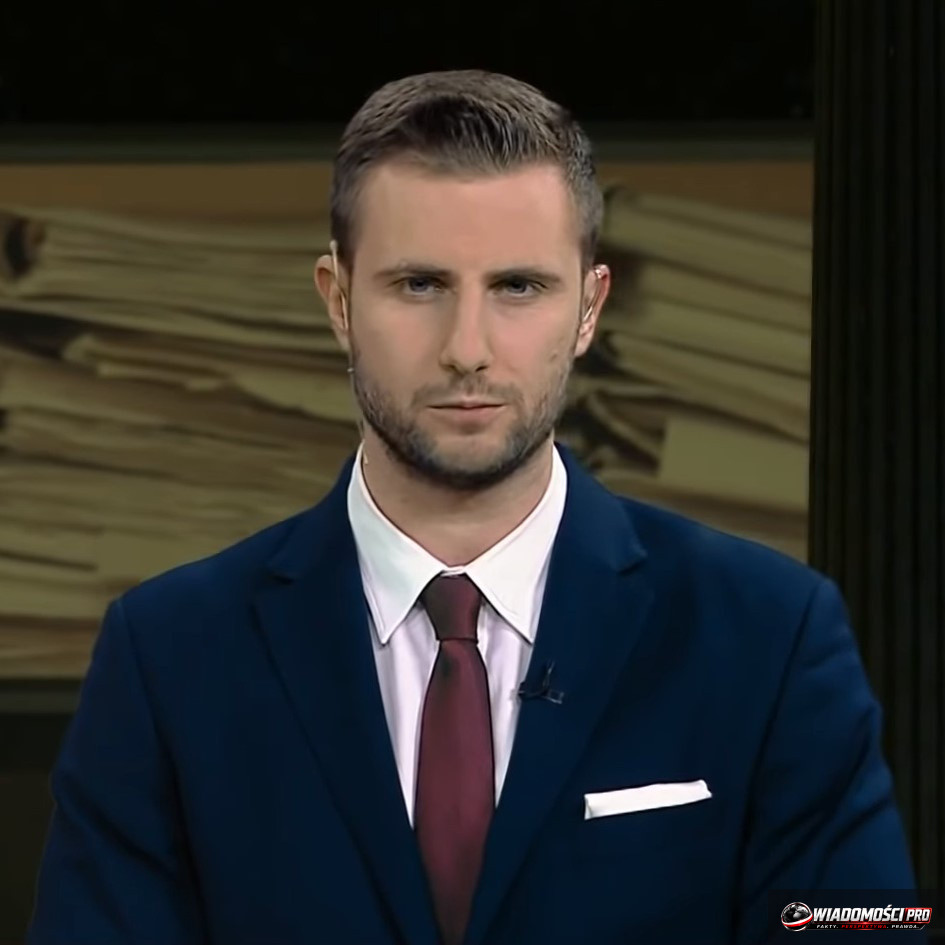
- On September 21, 2026, the Chancellery of the Sejm officially revoked Miłosz Kłeczek's accreditation.
- The legal basis for the decision was a violation of the regulations for media work in the Sejm and an incident during an interview, which was deemed unethical.
- The journalist has been barred from entering the parliament building with immediate effect.
Formal grounds for revoking accreditation
The decision of the Chancellery of the Sejm of September 21, 2026, is final and ends Miłosz Kłeczek's ability to work on the premises of the parliament as a permanent correspondent. The legal basis for this step is provided directly by the Regulations for Media Work in the Sejm of the Republic of Poland from 2026. This document precisely defines the boundaries of journalists' behavior in parliamentary buildings, and its violation opens an administrative path to revoking credentials.
Officials pointed to a gross violation of journalistic ethics, which allegedly occurred during an incident in the course of one of the recent interviews. Although the detailed course of this conversation has not been published by the Chancellery of the Sejm in the form of a transcript or recording in an official statement, the described behavior became the main premise for the decision. The regulations are not merely dead text on the chamber's website. They contain paragraphs obliging media representatives to maintain the dignity of the place and not to disrupt the work of parliamentarians.
In practice, this means that the Chancellery considered the incident to go beyond a standard, even sharp, exchange of views, qualifying it as a breach of the established order. The lack of insight into the exact evidence cited by the parliamentary services leaves room for interpretation, but from a legal point of view, the decision is based on regulatory provisions regarding "violation of the dignity of the Sejm."
The reader must be aware that in the case of such administrative decisions, the possibility of appeal is limited. The Chancellery of the Sejm acts here as the host of the facility, not as an adjudicating body in press disputes, which gives it a wide margin of maneuver in restricting access. Kłeczek therefore loses the right to enter zones reserved for the media, which paralyzes his current form of reporting events from Wiejska Street. This is not a dispute about freedom of speech, but about the technical rules for using parliamentary infrastructure.
Analysis of the incident during the interview
The direct cause of the Chancellery of the Sejm's decision of September 21, 2026, was an incident that took place in the parliamentary corridors. Miłosz Kłeczek, while attempting to conduct an interview with one of the MPs, in the opinion of officials, clearly crossed the boundaries of acceptable public debate. Witnesses to the event point to an extremely aggressive form of questioning and an attempt to physically block the interviewee's path. In the opinion of the security services, such action in the building on Wiejska Street exhausted the hallmarks of a gross violation of order and peace in the parliamentarians' workspace.
The regulations for the work of media representatives in the Sejm are unambiguous on this issue. A journalist has the right to ask difficult questions, but must do so with respect for the interviewee's personal space and basic professional ethical standards. In this case, the Chancellery of the Sejm decided that the journalist's behavior definitively went beyond standard journalistic inquisitiveness. However, it was not specified which MP was involved, nor what the exact flashpoint of the conversation was. The press services limited themselves to a laconic statement that there had been a gross violation of the rules of conduct in the public space of the Sejm.
Such argumentation is a dangerous precedent. If every sharp exchange between a reporter and a politician is qualified as a violation of the regulations, in practice, there will be no room for genuinely difficult questions. On the other hand, a journalist cannot be treated as a person standing above the law, who is allowed to do anything in the name of obtaining material. The lack of a full, publicly available video recording of this specific incident makes external verification difficult. At this moment, we only have a one-sided statement from the Chancellery of the Sejm, which puts a period on the matter and closes the doors of parliament to the journalist. Is this the end of the debate, or just the beginning of a dispute over the boundaries of freedom of speech in parliament? Time will tell.
Position of the Chancellery of the Sejm: Why now?
Position of the Chancellery of the Sejm: Why now?
The Chancellery of the Sejm, in an official statement issued on September 21, 2026, confirmed that Miłosz Kłeczek had lost his permanent journalistic accreditation. This decision ends a period of months-long tension between the parliamentary press team and the editorial office represented by the journalist. Officials left no room for interpretation. The reason for revoking the credentials was a gross violation of the media work regulations and ethical principles during an incident that took place while conducting an interview in the parliamentary space.
The document sent to editorial offices pointed to specific points that were broken. The Chancellery of the Sejm emphasizes that the rules for protecting order and security in the parliament building are absolutely binding for every accredited person. Officials, justifying their position, listed the violations that tipped the scales toward the final step:
- Absolute violation of zones designated for media representatives, which was intended to hinder the free movement of MPs and technical staff.
- Use of an aggressive form of verbal communication that went beyond the framework of acceptable public debate and disturbed the peace in the corridors.
- Failure to comply with the orders of the Marshal's Guard, which intervened during the interview itself.
It was not explained, however, whether additional legal consequences would be drawn in the case, beyond the loss of accreditation itself. The Chancellery's statement is laconic regarding whether the incident was recorded by internal surveillance cameras and whether this recording will be made available to the public as evidence in the case. This is important because previous disputes over access to the Sejm often ended at the level of an exchange of letters, without such radical sanctions. This time, officials went a step further, equating freedom of speech with responsibility for order in the building where the law is made. The lack of clarification on further legal steps suggests that the case may end up in court if the journalist's editorial office decides to appeal the Chancellery's decision.
Parliamentary motion and its significance
Parliamentary motion and its significance
The Chancellery of the Sejm made the final decision to revoke the permanent journalistic accreditation of Miłosz Kłeczek on September 21, 2026. The mechanism that led to this resolution was triggered by an official intervention by a group of parliamentarians. They filed a motion to verify the journalist's credentials, pointing to the need to protect the dignity of the parliament as a workplace. The signatories of the letter argued that during the incident in the course of the interview, there was a gross violation of the media work regulations and basic professional ethical standards.
The processing of this motion within the Chancellery of the Sejm took place in an administrative mode, in accordance with the applicable order regulations regarding the presence of media representatives on the premises of the building on Wiejska Street. Officials analyzed recordings of the incident and witness accounts, which formed the basis for issuing the verdict. The full composition of the group of MPs that initiated this process was not disclosed, nor were the names of the officials who signed the final decision.
This move by parliament sets a dangerous precedent in relations between the legislative branch and journalists. Although the Sejm's regulations provide for penalties for improper behavior, the decision to revoke accreditation is the most drastic of the available tools. In practice, for Miłosz Kłeczek's editorial office, this means not only the loss of current access to the corridors but, above all, the necessity of applying for one-time entry passes, which, in the case of a reporter's political activity, will radically hinder his daily work. Opposition MPs, who had previously drawn attention to Kłeczek's aggressive style of questioning, interpret this step as a restoration of debate standards. On the other hand, the journalist's supporters are already talking about censorship, which suggests that today's decision by the Chancellery of the Sejm, instead of calming emotions, will become new fuel for political polarization.
Standards of journalistic ethics in the Sejm
The decision of the Chancellery of the Sejm of September 21, 2026, to revoke the permanent accreditation of Miłosz Kłeczek is not only a technical issue but, above all, a test for the boundaries of parliamentary freedom of speech. The officials' justification is specific: a gross violation of the media work regulations and ethical principles during an incident in the course of an interview. The Chancellery, however, did not specify exactly which points of the regulations were broken, which leaves room for speculation for both sides of the political dispute.
The principles of media ethics in parliament are clear in theory but difficult to execute. A journalist has the right to ask difficult questions, but the Sejm's media work regulations impose an obligation to maintain the dignity of the place and not to disrupt the work of MPs. Kłeczek, known for his confrontational style, crossed a line that the parliamentary guards could not ignore. Was it a provocation, or a desperate attempt to elicit a reaction from the interviewee? The official statements of the Chancellery of the Sejm are silent on the detailed course of the incident. The recording, which was supposed to be evidence in the case, has also not been published, which for many observers is becoming the main point of contention.
Journalistic practice in parliament often balances on the edge. On one hand, we have the right to control the authorities; on the other, rigid regulatory frameworks that can be interpreted arbitrarily. If the regulations are used to silence inconvenient voices, we all lose. If, however, they are used to protect elementary work culture, then the Chancellery's move is a necessary step. Without insight into the full record of the incident, it is difficult to assess whether the punishment is adequate to the guilt. The impression remains that in the Polish parliament, the definition of journalistic ethics is becoming fluid and depends solely on who happens to be holding the press card and who holds the stamp with access to the building.
Appeal process: Is the decision final?
Appeal process: Is the decision final?
The decision of the Chancellery of the Sejm regarding the revocation of the permanent accreditation of Miłosz Kłeczek does not end the administrative procedure, although in practice it means an immediate suspension of entry to the parliament premises. The journalist has the right to fight to regain his credentials. In accordance with the Sejm's current internal regulations regarding media work, the appeal procedure is strictly formalized and does not provide for shortcuts.
The Chancellery of the Sejm has not yet disclosed the full schedule for how any letters will be processed, but the standard administrative mode in such cases is based on specific steps:
- The possibility of filing a request for reconsideration of the case to the Head of the Chancellery of the Sejm. This document must be submitted in writing within the time limit set by the media work regulations.
- Filing an appeal does not automatically stay the execution of the decision to revoke accreditation. This is a key detail that interested parties often forget.
- The administrative deadline for considering a request for reconsideration of the case by a higher-level body or the same body is defined in internal regulations, however, the Chancellery of the Sejm did not specify today whether standard code deadlines or internal parliamentary instructions would apply here.
Doubts arise as to whether an appeal can bring about a real change in the journalist's status in a short time. Experience from previous years shows that in disciplinary cases, the Chancellery of the Sejm rarely withdraws from its decisions if the argumentation is based on gross violations of professional ethics. At this moment, it has not been confirmed whether Miłosz Kłeczek's attorneys have already taken any legal steps beyond the mere statement of readiness to fight for the restoration of accreditation. From the reader's point of view, this is a signal that the case may move from the parliamentary corridors to the courtroom, which will significantly prolong the entire explanatory process.
What this means for you
This decision sets a new standard in the relations between the media and the legislative branch. MPs expecting more peace in the corridors gain, while confrontational media, for whom presence in the Sejm was crucial, lose. The catch lies in the risk of accusations of suppressing freedom of the press.
Questions and answers
Can Miłosz Kłeczek enter the Sejm as a guest?
Revocation of journalistic accreditation means a ban on entering the Sejm as a media representative, however, the rules regarding individual guests are regulated by separate provisions.
When was the final decision made?
The decision was issued and became legally binding on September 21, 2026.
Is this the first such situation in this term?
The Chancellery of the Sejm treats this case as a precedent due to its direct connection to the incident during the interview.
Article prepared by the Wiadomości PRO editorial team with the support of artificial intelligence. Facts are derived from the sources provided above.
Komentarze (0)
Ładowanie komentarzy...