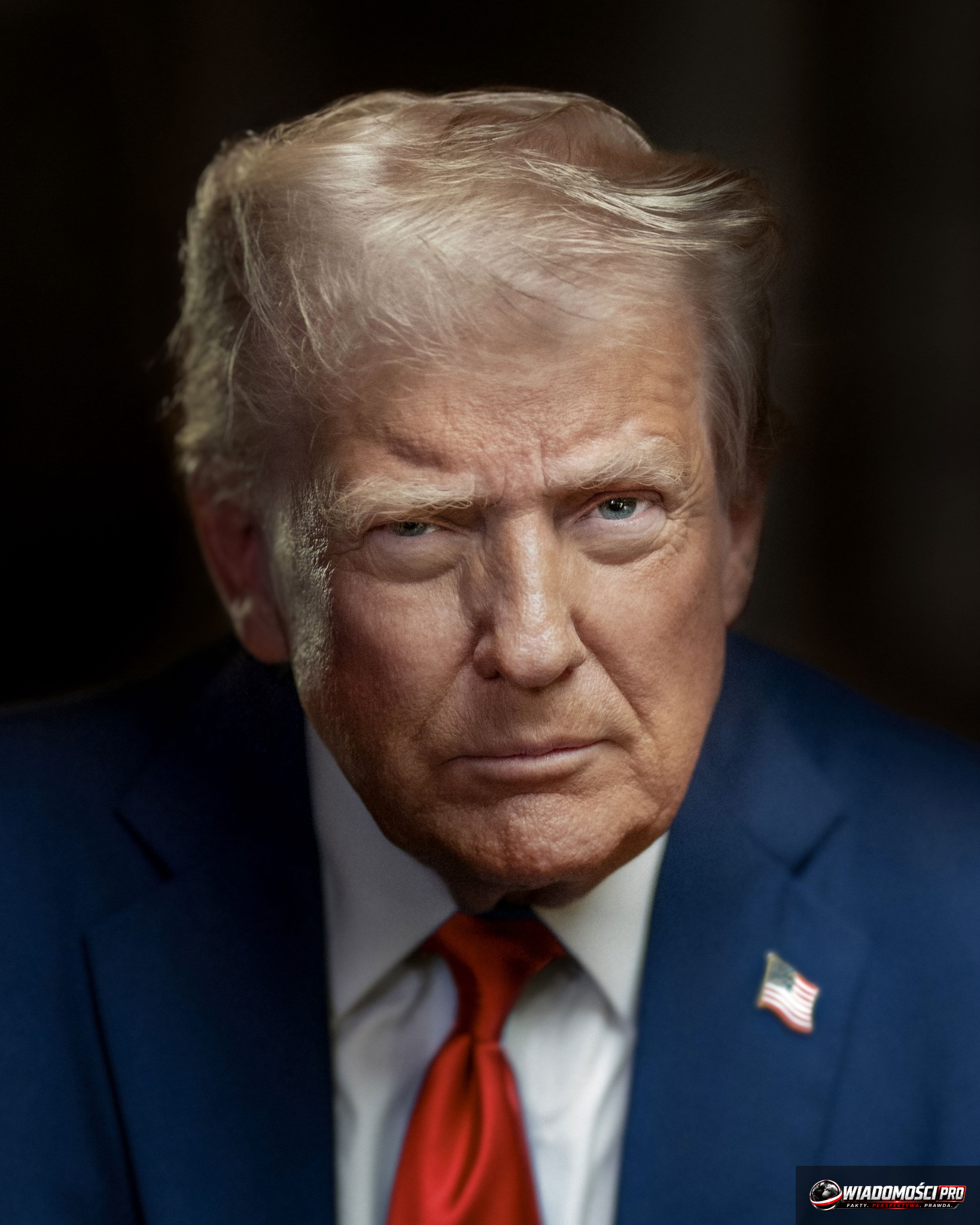
The 10-15% tariffs introduced by the Trump administration will directly translate into higher prices for imported goods, including agricultural products from Mexico and industrial components from Europe, which will force retail prices to rise. The end consumer in the US, and indirectly also recipients in Europe, will feel this move as a sharp acceleration in cost-push inflation. Passing fiscal costs onto the retail buyer is becoming the main balancing mechanism in the face of the ongoing trade conflict.
The retaliation mechanism: Why did the Fed become the target of tariff policy?
The White House does not treat tariffs merely as a way to protect domestic industry from foreign competition. It is primarily an attempt to force the Federal Reserve to change its monetary policy course. Donald Trump has long argued that maintaining high interest rates artificially inflates the value of the dollar. A strong currency, while desirable in theory, in practice stifles American exports, making them prohibitively expensive for foreign contractors. The 10-15% tariffs, introduced in February 2026, are therefore intended to be a brutal tool to correct these imbalances.
The administration's logic is simple, though not very accessible to the average citizen. If the Fed does not loosen monetary policy, the government will impose import barriers to balance the trade deficit. The problem is that the economy does not operate in a vacuum. Importers of industrial components, upon which American production depends, are unable to absorb the additional tariff costs. When the price of a bolt, gear, or electronic module rises by over a dozen percent at the border, the manufacturer of the finished product has two options. They can lower their margin, which leads to layoffs, or raise the final price for the customer. They choose the latter.
In this way, the fight between Washington and the Fed over the optimal dollar exchange rate turns into a tax for the average American. Imported inflation is no longer just a term from economics textbooks. It is becoming a fact at every cash register. This mechanism ricochets through global supply chains, which for decades were optimized for the lowest possible price. Currently, these chains are becoming not only more expensive but also less predictable.
The Mexican trail: Will vegetables become a luxury good?
Donald Trump's trade policy hit the agricultural sector fastest, where margins for error are minimal and transport time is critical. As early as July 15, 2025, the administration announced tariff restrictions on specific vegetables imported from Mexico. This decision, although presented as an element of a larger geopolitical puzzle, in practice meant the end of cheap food for millions of families. Mexico, being the main source of fresh produce for American retail chains, had to react to the new rates, which immediately translated into receipts in stores.
The agri-food sector operates on a "just-in-time" system. Products that were growing in fields in Mexico in the morning reached shelves in Texas or California by the evening. The introduction of a 10-15% tariff on this specific commodity destroyed this precise mechanism. Importers had to either look for more expensive domestic suppliers, which is physically impossible in a short time, or pay a higher price for imports and add it to the final cost. The consumer has no choice. Fresh vegetables are not a good that can be given up in a daily diet.
The effects of these decisions are felt on three levels. First, a direct increase in the cost of purchasing basic food. Second, pressure on retail chains, which are forced to renegotiate contracts with suppliers in the face of falling customer purchasing power. Third, the destabilization of entire agricultural regions that lived off exports to the US. An economist does not need to be a prophet to see that a tariff on vegetables is a blow to the poorest social strata. They spend the largest part of their income on food, so every percentage of the increase is felt by them much more severely than by wealthy consumers.
The European front: The EU's stance on new trade barriers
An open trade conflict with the European Union became a fact on February 1, 2025, when Donald Trump confirmed plans to impose tariffs on European goods. This was not just campaign rhetoric, but a concrete decision that caused panic in the boardrooms of the largest automotive and machinery corporations. European exporters, from specialized steel producers to creators of advanced electronics, were backed into a corner. Tariff rates in the 10-15% range effectively neutralized their competitive advantage in the American market.
It is worth noting the structure of European exports to the US. We are not just talking about finished goods, but primarily about components. German or Polish parts go to American factories, where they are assembled into final products. Imposing a tariff on these components means that the American end product – for example, a passenger car – becomes more expensive to produce. This is the paradox of protectionism: by trying to protect its own market, Washington raises production costs for its own companies.
Berlin, Paris, and Warsaw are watching these moves with growing concern. For Polish entrepreneurs who have invested heavily in supply chains for American contractors in recent years, the situation has become a stalemate. On one hand, there is pressure to maintain contracts; on the other, a tariff barrier that cannot be bypassed without a drastic reduction in margins. As a result, many companies are forced to look for alternative markets, which is a costly and long-term process. European industry, operating in defensive mode, is trying to survive the period of uncertainty, but for many smaller players, tariff rates of 15% are an insurmountable barrier.
Financial markets: Will the dollar gain from this?
The chaos that gripped financial markets in March 2025 was a direct response to uncertainty about the future of global trade. Investors, following reports from March 4, asked themselves the question: can a strong dollar, caused by high interest rates, be maintained in the face of a decline in trade volume? In theory, tariffs should limit imports and improve the trade balance, which theoretically supports the currency. In practice, the global economy is so interconnected that every blow to imports is simultaneously a blow to exports.
The dollar, although it initially gained on its status as a safe haven, began to show signs of nervousness. Investors see that the Trump administration is playing a very high-stakes game. If tariffs lead to a recession in partner countries, the American capital market will also suffer. The relationship between Fed decisions and the White House's tariff policy has become the main topic of analytical debates. Will the dollar gain from this? In the short term – perhaps. In the long term – the market does not like uncertainty, and tariff policy introduces more of it than any other factor.
It is worth citing data from financial reports from the beginning of 2026, which indicate that volatility on currency pairs with the dollar has reached levels unseen in years. Speculators are betting on a weakening of the dollar in the face of the risk of trade retaliation from the EU and China. On the other hand, proponents of a "hard dollar" point out that the American economy, as the largest in the world, is able to withstand the pressure better than its partners. Both sides have their points, but for the individual investor, this means one thing: higher risk of capital loss and the need for more frequent portfolio rebalancing. The dollar has ceased to be an anchor and has become a hostage to politics.
What this means for you
Most of us ask ourselves how all these numbers and percentages will translate into the contents of our wallets. The answer is brutally simple: it will be more expensive almost everywhere. Tariffs are not just a problem for importers or large corporations. It is a hidden tax that you pay when buying electronics, a car, or doing your weekly grocery shopping. The inflation we are observing now has a new face – the face of tariff policy.
If you are planning major purchases of imported goods, you must expect prices to rise. Retailers, wanting to maintain liquidity, pass costs on to the consumer at every opportunity. This situation will affect us all, regardless of whether we live in the US or in Europe. Globalization, which until recently allowed us to enjoy cheap goods from all over the world, is undergoing a profound transformation. For the consumer, this means the end of the era of cheap products and the need to get used to higher prices.
The Trump administration is counting on the pressure on the Fed to bring results in the form of cheaper money. However, until that happens, we are the ones bearing the costs of the trade war. We are the ones paying for the higher price of Mexican tomatoes, for more expensive European parts for our cars, and for the instability in financial markets. Every decision to raise a tariff is a real dent in the household budget. There is no room for optimism here – there is only the hard economic reality, in which political ambitions have a specific price expressed in dollars and cents.
Questions and answers
Why are tariffs being imposed on Mexico and the EU at the same time?
President Trump views these regions as key trading partners whose economic policy, in his view, indirectly benefits from high interest rates in the US, which from Washington's perspective requires a tariff correction to level the playing field.
Will Polish entrepreneurs feel these changes?
Yes, according to analyses from February 2025, Trump's tariffs will affect global supply chains, which will also affect Polish exports to the US and to EU countries, which are the main recipients of our industrial goods.
How high are the current tariffs on sanctioned goods?
In February 2026, rates were raised to 10% on Friday and 15% on Saturday, depending on the category of imported goods, which is a significant burden on importers' margins.
Is there a chance for a quick withdrawal from these tariffs?
Given the White House's current rhetoric, a quick withdrawal from tariffs is unlikely unless the Federal Reserve takes steps that the administration considers satisfactory in the context of monetary policy and the dollar exchange rate.
How do tariffs on vegetables from Mexico affect the average consumer?
They translate directly into an increase in shelf prices in grocery stores, as importers and retailers pass the costs of additional tariff fees on to the end customer, having no other way to maintain profitability in the short term.
Should investors be afraid of the dollar?
The situation is dynamic, and volatility on currency pairs with the dollar is currently higher than in previous years, which means that investors must reckon with the risk of exchange rate fluctuations caused by political decisions, not just economic fundamentals.
Does European industry have a chance to avoid these effects?
European producers are trying to diversify their sales markets and look for savings, but in the current geopolitical situation, any attempt to exit American tariff barriers is burdened with high operating costs and the risk of losing existing market share in the US.
What is the biggest threat in this trade war?
The biggest threat is the escalation of trade retaliation, which could lead to a global economic slowdown, where each side imposes increasingly higher barriers, deepening the inflationary crisis and making international trade more difficult.
Does the price increase only apply to food?
No, the price increase covers a wide range of goods, including industrial components, consumer electronics, and household appliances, which results from the global nature of supply chains and the fact that most modern end products contain components from different parts of the world, including Europe and Mexico.
What data from 2025 is key to understanding today's situation?
Key information includes the sudden turn by Donald Trump after talks with the leaders of Canada and Mexico in February 2025 and earlier announcements of tariffs on the EU, which outlined the direction of the administration's actions, leading to the current, higher tariff rates.
Is there a way for consumers to avoid paying higher prices?
In the current trading system, this is almost impossible because tariff taxes are included in the price of the product at an early stage of the supply chain, which makes the increase inevitable for anyone who purchases a good subject to the new restrictions.
Is Polish export to the US at risk?
Polish companies exporting to the US must face new barriers that make their products less price-competitive, which in practice means either the need to lower margins or the risk of losing contracts to suppliers from markets less burdened by American protectionism.
What does "imported inflation" mean?
This is a phenomenon in which the rise in the price of goods brought from abroad – caused by external factors such as tariffs or currency fluctuations – directly raises the level of prices within the country, hitting the purchasing power of consumers and forcing central banks to react.
Can the Fed respond to tariffs?
The Federal Reserve remains an independent institution, however, the White House's tariff policy puts it in a difficult situation where it must balance fighting inflation with political pressure to cut interest rates, which in itself generates additional uncertainty in the markets.
Is "Made in USA" the solution?
Although the administration promotes this slogan as a recipe for trade problems, in practice, rebuilding supply chains so that everything is produced in the US is a costly, time-consuming process and in the short term leads to further price increases for the consumer.
Who actually gains from these tariffs?
In theory, selected protected American sectors gain, but in practice, the costs of these actions are spread across the entire society in the form of higher prices, which makes the real balance of benefits highly debatable and assessed by many economists as negative for the economy as a whole.
Sources
- 10% on Friday, 15% on Saturday. Trump raised tariffs again - Gazeta Prawna
- Donald Trump's sudden turn on tariffs after talks with Canadian and Mexican leaders - Rzeczpospolita
- Donald Trump spoke about tariffs on goods from the European Union. "Absolutely" - Money.pl
- This is how Trump's tariffs will affect China, the EU, and Poland. Everything you need to know - Business Insider Polska
- American tariffs: how can we win this economic war? - subiektywnieofinansach.pl
- Huge tariffs are becoming a fact. Will the dollar gain from this? - forexclub.pl
- Trump announced new tariffs on one vegetable from Mexico - Money.pl
- Donald Trump's first salvo will hurt Americans. Will it hurt us too? - Rzeczpospolita
Article prepared by the Wiadomości PRO editorial team with the support of artificial intelligence. Facts come from the sources provided above.


Komentarze (0)
Ładowanie komentarzy...