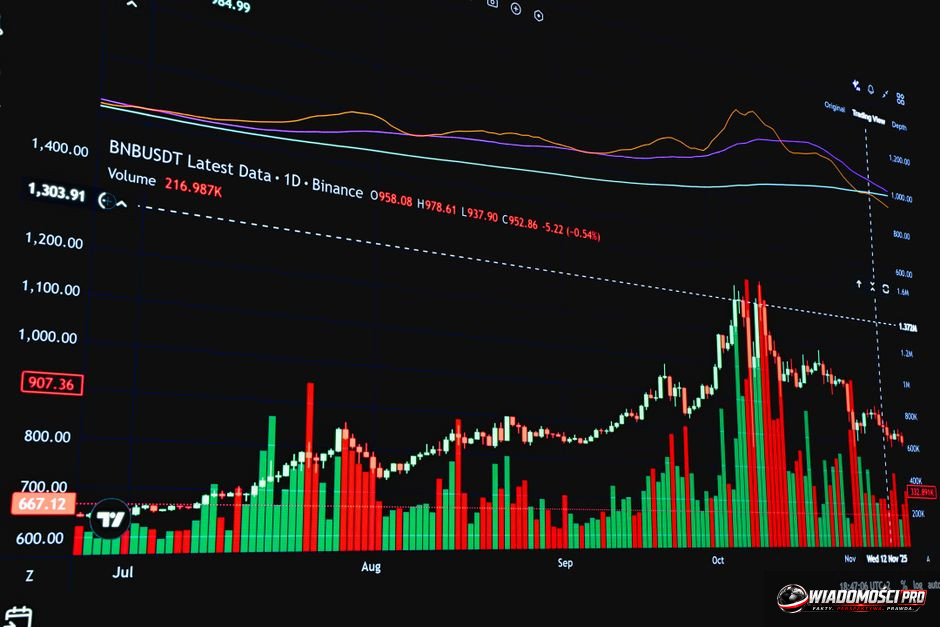
Following the Senate's decision, the price of BTC fell by 4.2% to $64,200, while the value of ETH saw a deeper decline of 5.8%, reaching $2,450. The vote in the upper house of Congress, which took place on September 17, 2026, definitively closed the door on the Clarity Act draft for the current parliamentary session. Investors who were counting on the rapid introduction of clear rules of the game have been forced to immediately revise their strategies in the face of prolonged legislative uncertainty.
The main architect behind blocking the bill in the Senate was the faction centered around Senator Elizabeth Warren, supported by representatives of the Democratic majority on the banking committee. Their opposition was neither accidental nor purely political. It was based on the fundamental conviction that the Clarity Act, in its current form, defines digital assets too broadly as commodities, which would consequently deprive the Securities and Exchange Commission (SEC) of the tools to protect retail investors from the risk of fraud. Senators from this camp argued that without strong supervisory guarantees, the introduction of such liberal regulations would expose the American financial system to an uncontrolled influx of products with derivative-like features, whose issuers are not subject to rigorous disclosure requirements.
On the other side of the barricade stood supporters of the bill, led by Senator Bill Hagerty, who openly accused their opponents of stifling innovation. According to them, the current legal status, based on interpretations developed in the 1930s, is completely ill-suited for the blockchain era. Hagerty emphasized during the debate that the lack of a clear distinction between a security and a commodity leads to a situation where American technology companies are forced to emigrate. The vote ended with a ratio that prevented further work on the project, which in practice means that the topic of crypto regulation in the US will return no earlier than next calendar year.
Mechanisms of paralysis: SEC vs. CFTC in practice
The rejection of the Clarity Act leaves the market in a state of suspension, which is extremely convenient for supervisory bodies. The current legal status favors "regulation by enforcement," a strategy where government agencies set the rules of the game through lawsuits rather than by creating clear guidelines. The Securities and Exchange Commission (SEC), under the current administration, will maintain its position that most digital assets meet the criteria of the Howey test, classifying them as investment contracts.
For cryptocurrency exchanges, this means a continuation of the costly fight for every token category. The CFTC (Commodity Futures Trading Commission) loses the chance to take over supervision of the spot market, which would have been a much more favorable solution for the industry. Historically, the CFTC has shown a more pragmatic approach to technology, accepting the decentralized nature of assets. Now, however, without statutory confirmation that Bitcoin or Ethereum are commodities, companies must reckon with the risk that any attempt to introduce new products based on these assets will be blocked by the SEC.
Procedurally, this means that every major exchange in the US, instead of focusing on infrastructure development, will have to maintain multi-million dollar budgets for legal departments. There will be no change in SEC procedures. The institution will continue lawsuits against entities that offer staking or crypto lending, treating these services as unregistered securities sales. For investors, this means that the availability of financial services in American crypto apps will remain limited, and the risk of sudden delisting of certain projects will increase.
Institutional exodus: Where is capital flowing?
Large investment funds, which had been building their positions for months in the hope of a positive vote, reacted to the result in a predictable way. Capital does not like legal uncertainty, and the Senate's decision turned the US into a jurisdiction with too high an operational risk for entities managing assets over a billion dollars. We see a clear acceleration in the transfer of assets to jurisdictions that have long since implemented comprehensive regulations, such as the European Union with the MiCA regulation or the United Arab Emirates.
For an institutional investor, the most important question today is not price, but the issue of "legal security of the deposit." If a hedge fund buys assets, it must be sure that it will not become a party to a lawsuit against the SEC within the next twelve months. The rejection of the Clarity Act prevented the creation of a safe haven that would allow for the mass entry of pension portfolios into the crypto market. Institutions that already had exposure to digital assets are now reducing their portfolios, shifting funds to more predictable instruments, such as precious metal ETFs or treasury bonds.
The result of this decision will be a decline in liquidity on American crypto exchanges. A smaller presence of large players means that the market will become more susceptible to sharp price movements caused by speculative capital. Every major purchase or sale will generate disproportionately large fluctuations, which will further discourage conservative investors. Washington has just sent a signal that for American policymakers, the development of financial infrastructure based on blockchain technology is not a priority, which in the long term could permanently weaken the US position as a global center of financial innovation.
Risk analysis for token issuers
Project developers and protocol creators are currently in the most difficult situation in years. The lack of a statutory definition of a digital asset means that every start-up that wants to raise capital through the issuance of its own token must operate based on legal interpretations that can be changed by a single court ruling. The costs of compliance audits in the US are becoming a barrier to entry that smaller programming teams cannot overcome.
In practice, this means clearing the market of smaller projects. Companies that do not have multi-million dollar funds to handle lawsuits will be forced to withdraw from the American market or cease operations. This, in turn, will lead to industry consolidation around the largest players who are able to survive the legal battle. For the user, this means less choice, higher commissions, and less innovation, because creators are afraid to introduce new functionalities that could be considered by regulators as a violation of securities laws.
The threat also applies to DeFi platforms. Their decentralized nature has been a thorn in the side of the SEC from the beginning. The lack of a clear legal framework, which was to be introduced by the Clarity Act, means that regulators may try to impose penalties on protocol creators, arguing that they exercise actual control over the code, which makes them "financial intermediaries" within the meaning of federal law. This is a direct path to blocking access to many decentralized applications for US users through IP blocks or KYC exclusions.
Survival strategy for the retail investor
In the face of such high volatility caused by political deadlock, individual investors should revise their approach to portfolio management. The first step is to realize that the crypto market in the US has now become a hostage to politics, which means that technical analysis of charts must be supplemented with political analysis. If you plan to hold assets long-term, you must accept a higher level of regulatory risk than before September 17.
First, it is necessary to diversify not only assets but also the platforms you use. If all your funds are on a US-based exchange, you are most exposed to sudden regulatory changes. Consider moving part of your capital to cold wallets, which gives you full control over your assets regardless of what decisions a given regulator makes regarding the exchange.
Second, avoid using financial leverage during periods when announcements from Washington or court rulings in high-profile SEC cases are expected. Volatility caused by political news is impossible to predict using technical indicators. Trading algorithms can liquidate positions that seem safe based on candlestick charts in a fraction of a second.
Third, do not panic when you see sudden price drops. Historically, the crypto market has reacted emotionally many times to political news, which after some time turned out to be less severe in its consequences than predicted. If you believe in the fundamentals of the technology, short-term volatility should be treated as the cost of entering a market that is still looking for its legal definition. This does not change the fact, however, that the coming months will be a time of "survival" for those who do not have nerves of steel.
Outlook for the fourth quarter of 2026
The coming months will be a period of waiting. Congressmen focused on election campaigns will not want to make controversial decisions that could be used against them by opponents. The rejection of the Clarity Act means that no new law will come into force before the end of 2026. The industry must prepare for an autumn and winter full of uncertainty, in which the only compass will be judicial precedent.
It is worth observing the cases currently pending in federal courts. That is where decisions are made that replace the missing law. Every verdict in a case involving a token issuer or an exchange is currently more important than any debate in Congress. If courts begin to issue rulings favorable to the industry, the market may rebound even without legislative support. Otherwise, the crypto market in the US will remain on the defensive, which may lead to further capital flight to more friendly jurisdictions.
For investors, this is a time for patience. The market must price in not only the lack of a law but, above all, the permanent legal costs that will be passed on to users. Instead of looking for opportunities for quick profit, it is better to focus on understanding how individual projects are preparing for life under conditions of permanent supervision. Projects that demonstrate the greatest transparency and have solid legal backing have the best chance of surviving this period in good condition.
Questions and answers
Why was the Clarity Act so important for investors?
The bill was intended to introduce a clear legal framework for decentralized finance and exchanges, which would have reduced legal risk for institutional investors and set a clear boundary between assets that are commodities and securities.
Is the price drop permanent?
The market is in a phase of high volatility, and the current depreciation is a reaction to decision-making paralysis; the durability of this trend depends on subsequent court rulings in cases between the SEC and cryptocurrency exchanges, which in the coming months will be the only source of legal interpretation.
Where to look for a safe haven in the face of these drops?
Many investors are moving capital to stablecoins or assets held in cold storage wallets, which minimizes the risk associated with potential legal problems of American cryptocurrency exchanges.
Who gained the most from the rejection of this bill?
Supervisory bodies, in particular the SEC, gained, as they maintain their existing power over the market through "regulation by enforcement," which allows them to decide the fate of projects through lawsuits instead of applying clear, statutory rules.
What are the chances of resuming work on regulations in 2026?
The chances of passing any new regulations before the end of 2026 are close to zero, as politicians' attention is focused on election campaigns, and any attempts at legislative compromise are blocked by deep ideological divisions within both houses of Congress.
Sources
Article prepared by the Wiadomości PRO editorial team with the support of artificial intelligence. Facts come from the sources listed above.


Komentarze (0)
Ładowanie komentarzy...