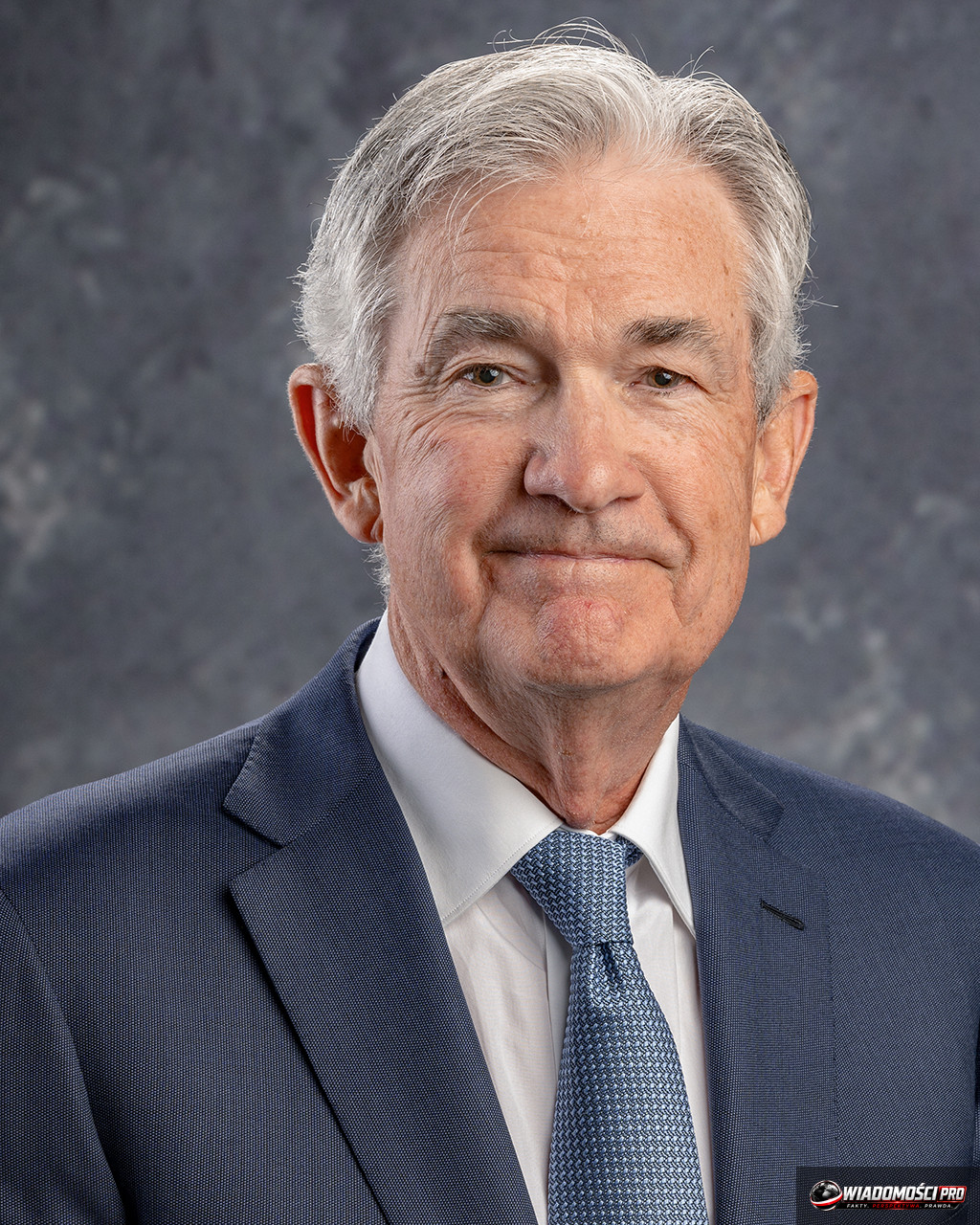
The Federal Reserve has lowered interest rates by 50 basis points to a range of 4.75-5.00 percent, which paves the way for reducing debt servicing costs and changing bond yields. Yes, this is the beginning of cheaper credit, but commercial banks will delay this process by at least a quarter. Consumers will not feel the change in their wallets immediately, as financial institutions will first prioritize their own net interest margins.
Details of the decision: The Fed cuts rates by 50 basis points
The Federal Open Market Committee meeting on September 15, 2026, concluded with a move that came as a significant surprise to many observers. Instead of a standard, balanced 25-basis-point adjustment, Jerome Powell opted for an aggressive scenario. A half-percentage-point cut means that the US central bank has determined that priorities have shifted. The fight against inflation, which has dictated every move from Washington in recent years, is giving way to concerns about economic stability and the labor market.
This transition from restrictive policy to attempts at a "soft landing" has its consequences. The cost of money in the US is now in the 4.75-5.00 percent range, marking the first such significant signal for global markets in a long time. Investors, who have lived in uncertainty for the past few months, have received a concrete reference point. Treasury bond yields have begun to react sharply to this data, adjusting to the new market reality.
The question of how quickly commercial banks will react remains open. In financial history, it has rarely been the case that credit institutions offered cheaper financing to their retail customers overnight. The operating profit of banks is directly linked to the net interest margin, which the current rate change significantly thins. Therefore, it can be expected that although the wholesale cost of money has fallen, the individual consumer will only see the effects after several months.
Analysts point out that such a deep one-time reduction in the cost of money always raises questions about the condition of the American economic giant. Is this a reaction to short-term turbulence, or an admission that the American machine has begun to slow down in a way that requires such radical intervention? The answer to this question will define the behavior of stock markets in the fourth quarter. The market dislikes a vacuum, and the Fed's decision has filled that vacuum with numerous speculations regarding Powell's next steps.
Why did the market expect Powell's move?
The long-standing debate over when to start the monetary easing cycle has ended in a way that many investors had been demanding for months. The Federal Reserve bowed to pressure from macroeconomic data indicating growing economic fatigue. Just a few quarters ago, Treasury bond yields were breaking through the 4.3 percent level, which was a warning signal for many financial institutions. The market was tired of the "higher for longer" rhetoric and pressured Jerome Powell to abandon a rigid approach in favor of a more flexible operating model.
The Fed chair himself repeatedly emphasized that every decision regarding the scale of cuts is inextricably linked to incoming macro data. Uncertainty regarding the size of the move was maintained until the very last moment. Choosing the aggressive variant is a clear message: the Fed is no longer treating the fight against inflation as the sole priority, recognizing risks to the stability of the debt market. Institutional investors who had positioned their portfolios for a 25 bps scenario had to revise their strategies at an express pace.
For borrowers, this is a signal that the worst period of drastically expensive financing is beginning to fade. However, the catch lies in the pace. A 50-basis-point cut is a strong impulse, but the market remains skeptical about the path of subsequent steps. If the US economy does not slow down too sharply, Powell may quickly return to a more conservative policy. Today's move is a relief, but not a guarantee of a return to the cheap money of pre-pandemic times.
Impact on stock markets and investment assets
The Federal Reserve decided on an aggressive move, and the effects of this are visible primarily on the trading floors. Such a decision forces immediate portfolio rebalancing. US Treasury bond yields reacted instantly, falling from their previous levels, which is a clear signal to investors: the bond market has begun to discount cheaper money.
Market history shows, however, that the correlation between Fed decisions and the behavior of stock indices is rarely simple. The volatility we observe after the announcement of the decision often results from shock, not cold calculation. Investors know that the central bank rarely cuts rates without a clear reason. If the market begins to suspect that the economy requires strong support, nervousness may quickly replace the euphoria associated with cheaper credit.
There is a serious risk of disappointment here. If the pace of subsequent cuts does not meet the high expectations of analysts, stock valuations may come under pressure. Wall Street lives with the conviction that this cut will be followed by a series of others, but if Jerome Powell signals a pause, the stock market's reaction could be violent. This is not a one-sided game.
For capital holders, this is a new reality. Highly indebted companies that have been struggling with high debt servicing costs until now are getting a breather, which makes them more attractive in the eyes of speculative capital. On the other hand, those who were counting on high returns from safe assets must look for alternatives. The era of high interest on deposits is just passing into history. The question remains whether the economy will handle this quick turnaround, or whether the Fed was simply late in reacting to the slowdown.
A concrete example: what does this mean for your loan?
Consider the case of an American borrower who has a mortgage of 500,000 USD, based on a variable interest rate linked to market debt rates. Before the Fed's decision, with rates in the 5.25-5.50 percent range, the cost of servicing such debt was drastically high. A 50-basis-point cut, or half a percentage point, translates directly into a reduction in interest costs.
On an annual basis, assuming that banks fully pass the cut on to the customer, the savings from interest alone for such a loan will amount to approximately 2,500 USD per year. This is an amount that is noticeable for the average US household, although in the context of total debt, it is not an amount that completely changes the financial situation. It should be remembered, however, that commercial banks rarely pass on the cut 1:1. They usually apply a delay that allows them to maintain a higher margin for a period of three to six months.
In practice, this means that the borrower will feel real relief only next year, when banks update their interest rate tables. Until then, despite the Fed's decision, debt servicing costs will remain relatively high. It is precisely this delay that is the biggest barrier between the decisions made in Washington and the real wallet of an American family.
What does the change mean for bank customers?
The Federal Reserve's decision will hit the wallets of savers directly. The era of high interest rates on term deposits, which we have become accustomed to in recent quarters, is coming to an end. Banks are not waiting to react. Analysts predict that financial institutions will instantly adjust their offers, which for the average retail customer will mean a real drop in profits from capital placed in savings accounts and deposits.
This is not an optimistic scenario for those living off interest. Banks, trying to protect their net interest margins in an environment of cheaper money, are first lowering interest rates on deposit products. The Fed's decision to cut by 50 bps creates pressure that the banking sector will not be able to ignore. The effect? The fading of attractive offers that until recently were attracting capital.
For bank customers, this means concrete, negative consequences:
- A drop in interest rates on term deposits – this is the main trend of the coming weeks, forced by pressure on bank margins.
- Lower profitability of savings – most customers will feel the real impact of the Fed's decision through lower interest income.
- The need to revise financial strategies – deposits are ceasing to serve as a safe haven with a decent rate of return.
The banking sector is under strong pressure. On one hand, it must fight for the customer, and on the other, defend profitability, which becomes harder to maintain with such a deep cut in the cost of money. Profits from savings will melt away, and searching for alternative forms of capital allocation will become a necessity for anyone who does not want to passively watch the drop in interest rates.
Outlook for borrowers and the debt market
The Federal Reserve has made the decision to cut, which is a hard signal for global markets. For debtors operating in dollars, this means immediate relief in the costs of servicing obligations, because it is the Fed rate that dictates the terms of refinancing US debt. Anyone who has taken out a loan linked to the US base rate will feel this in their monthly balance sheets faster than the average consumer at a local bank.
The mechanism is simple, though brutal for bond yields. A sharp move down in rates forces investors to recalibrate their portfolios. We expect the stabilization of bond yields in the long term, which for now resembles calming a rocking boat on the open sea. The debt market is now looking for a new equilibrium point. Financial institutions that previously held back on decisions are getting the green light for cheaper financing of their operations.
The catch, however, lies in the pace of passing these cuts on to retail customers. Experience from previous cycles shows that commercial banks do not always run with cuts as quickly as central bankers. Customers counting on instant and deep cuts in their loan agreements may feel the chill. The Fed has set the direction, but it is bank margins and credit risk assessment that will remain the main brakes in the process of money becoming cheaper. The debt market will adjust instantly, however, the wallets of borrowers will feel the change with a clear, several-month delay.
What's next? Forecasts for the end of 2026
The Federal Reserve has lowered interest rates, which opens the way to reducing debt servicing costs. However, this does not mean that markets can now breathe a sigh of relief and assume a scenario of fast, cheap money. Months of nervous observation lie ahead.
FOMC policymakers have clearly indicated that further moves downward will be strictly dependent on incoming data on inflation and employment. Jerome Powell was sparing in his declarations regarding the pace of subsequent cuts during the post-meeting conference. This is a clear signal: the Fed wants to maintain full flexibility and does not intend to tie itself to a rigid schedule that could force mistakes in the event of variable macroeconomic indicator readings. Investors who were counting on a clear roadmap may feel disappointed.
For the credit market, this means a period of uncertainty. Although the cut is a fact, commercial banks do not always pass Fed decisions on to their customer offerings at a one-to-one pace. Bond yields will now react to every, even the smallest, message coming from Washington. If economic data proves too strong, the FOMC may quickly slow its optimism, which would dash hopes for a fast drop in loan installments.
The situation remains fluid. Instead of looking for certainties, it is worth carefully following Powell's rhetoric, because it – and not the numbers in the tables themselves – will be the main rudder for financial markets in the coming quarter. Every subsequent publication of labor market data will now become a testing ground for future interest rate valuations.
Is this enough to avoid a recession? Economists are divided. Some point to the strength of the American consumer, others to the risks associated with excessive corporate debt. The fact that the Fed decided on such a bold move can be interpreted as an admission that a soft landing is at risk. Instead of predicting the end of the cycle, we should rather prepare for a long adjustment period.
Questions and answers
Will interest rates in the US continue to fall?
The 50 bps decision is the beginning of a cycle, however, further moves will be strictly dependent on upcoming inflation and labor market data. The Fed avoids binding declarations, maintaining room for maneuver.
How will the rate cut affect the dollar exchange rate?
Typically, an interest rate cut weakens the currency, however, the exchange rate reaction also depends on the policy of other central banks. If other banks also start cutting rates, the dollar may maintain its position.
Is this a good moment to invest in bonds?
A rate cut usually raises the prices of existing bonds, which can be beneficial for investors holding fixed-rate securities. However, one should monitor yields to avoid entering the market at a moment of reversal.
What about loans in Poland?
The Fed's decision does not directly affect rates in Poland, where the Monetary Policy Council (RPP) maintains its own policy. Polish borrowers must look mainly at NBP decisions, although global market sentiment can indirectly affect the zloty exchange rate and foreign financing costs.
Can commercial banks in the US completely ignore this cut?
They cannot ignore it in the long term, because competition will force an adjustment of the offer. They can, however, delay this process to improve financial results after a period of high inflation.
Which economic data will be most important in the coming months?
Key will be labor market reports, CPI inflation indicators, and retail sales data. These will show whether the US economy truly needs further stimulation.
Does this mean the end of high profits from deposits?
Yes, the era of record-high interest on deposits is slowly coming to an end. Customers looking for high rates of return will have to move capital toward riskier financial assets.
Has Powell changed his stance?
The Fed chair's statements indicate a transition from a defensive fight against inflation to a more balanced strategy that takes into account the risks of an economic slowdown.
How did stock markets react in the first hours after the decision?
The reaction was mixed, which reflects uncertainty about the Fed's future steps and the condition of American companies in an environment of variable interest rates.
Is 50 basis points a lot?
On a historical scale, this is a significant move that is rarely taken in "normal" market conditions, which suggests that the situation required decisive intervention.
Why are banks reacting so slowly?
Banks operate based on margins. Lowering loan interest rates while maintaining operating costs requires time to ensure the stability of the institution's profitability.
Will corporate bonds gain from this change?
Yes, lower rates mean a cheaper cost of debt servicing for corporations, which increases their chances for better financial results and improves their credit risk rating.
What role does Jerome Powell play here?
Powell acts as the chief architect of monetary policy, and his communication with the market is just as important as the decision on the level of interest rates itself.
Is inflation already completely under control?
The Fed suggests that inflationary risk has decreased, but this is not yet a level that guarantees full price stability, which is why further decisions will be made with caution.
What should an individual investor do in this situation?
Diversification of the portfolio and careful monitoring of FOMC communications is recommended, rather than making hasty decisions under the influence of momentary market volatility.
Is this the time to refinance a loan?
For people with expensive loans, this is a signal that the market is becoming friendlier, but it is worth waiting for rates to stabilize at commercial banks.
Why was 4.3 percent bond yield so important?
It was a psychological and technical resistance level, after crossing which the market began to exert strong pressure on the central bank, demanding intervention.
Does the Fed take into account the situation in other countries?
The Fed focuses mainly on the US, but the global nature of the economy means that US decisions affect currencies and capital markets around the world, which forces the Fed to consider global side effects.
How long will this cycle of cuts last?
There is no rigid schedule. Everything depends on the data, which makes every subsequent decision treated as an open card for investors.
Is this the end of "expensive money"?
It is the beginning of the end, but this process will be extended over time and dependent on the durability of disinflationary trends in the American economy.
Sources
- Most bank customers will not be satisfied. There is an important decision - businessinsider.com.pl
- Will the Fed start cutting in September? The market expects a new boss - FXMAG
- September Fed decision may disappoint stock markets. Debate around a possible interest rate cut in the US - Strefa Inwestorów
- Fed signals a pause in interest rate cuts, and US bond yields exceed 4.3%. - Vietnam.vn
- Fed cuts interest rates sharply. Economists, however, were wrong - Bankier.pl
- How will markets react if the Fed returns to rate cuts - Analizy.pl
- RPP did not change the interest rate level in September '24 - bank.pl
- When will the Fed cut interest rates? There is an announcement from Jerome Powell - Rzeczpospolita
Article prepared by the Wiadomości PRO editorial team with the support of artificial intelligence. Facts are derived from the sources listed above.



Komentarze (0)
Ładowanie komentarzy...