A budget deficit of 289 billion PLN in 2025 is the result of massive outlays on armaments and security, which necessitates increased state debt. For citizens, this means a real increase in mortgage installments of approximately 180 PLN per month for an average debt, resulting from pressure on the capital market and a 35 basis point rise in WIBOR treasury bond yields. This financial policy directly limits spending in other sectors, including healthcare, by redirecting funds to foreign defense corporations, which weakens the stability of household budgets.
Foundations of the 2025 budget: The scale of the deficit
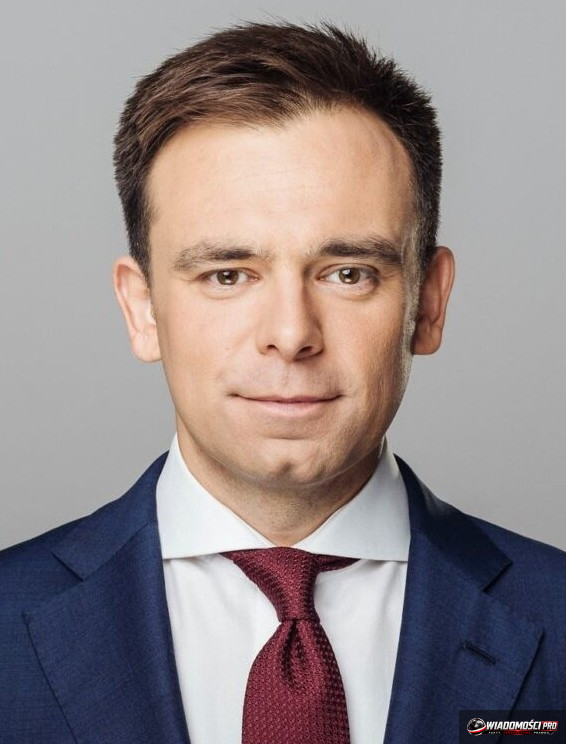
The government presented the budget bill as a strategy for an "ambitious and safe Poland." The document published by Gov.pl in August 2025 clearly defined priorities: technical modernization of the army has become the axis of public financing. From a macroeconomic perspective, a deficit of 289 billion PLN represents shifting the burden of servicing state obligations onto coming decades. The state does not generate sufficient tax revenue to fully cover arms purchases from current income. The Ministry of Finance, under the leadership of Andrzej Domański, was forced to issue bonds on an unprecedented scale, which became the main engine for financing expenditures.
This mechanism hits the stability of the zloty and directly affects the costs of servicing national debt. When the treasury borrows such huge amounts on the markets, it crowds out private investors. The rise in ten-year bond yields translates into a higher cost of money throughout the economy. For the average borrower with a mortgage obligation of 400,000 PLN, a 35 basis point increase in bond yields means a real increase in bank margins and refinancing costs, which burdens the household budget by over 2,100 PLN annually. National security, while crucial for the raison d'état, is in this variant financed by the capital market, which makes the Polish economy extremely sensitive to the sentiment of foreign investors.
Military spending has crowded out other investment ambitions. The 2025 budget lacked room for significant support for innovation in the civilian industry or the modernization of energy transmission networks on a scale that would realistically lower electricity prices for businesses. Instead, capital flows in a broad stream toward the defense industry. These funds largely go to defense giants in the USA or South Korea, which are fulfilling equipment supply contracts. Zlotys are leaving the country instead of stimulating the local market for services and highly specialized production. This is a process that, in the long term, limits GDP growth potential because funds allocated to armaments do not generate a return on investment in economic terms, unlike infrastructure or education.
Political dispute over state priorities
January 2026 brought the peak of tensions surrounding the processing of the budget bill. Karol Nawrocki, in his speeches, defined the government's proposal as a "budget of unfulfilled promises." The conflict between Nawrocki and Domański became the axis of the parliamentary debate that dominated the political agenda at the beginning of the year. Finance Minister Andrzej Domański, struggling with a huge budget hole, became the face of a policy of seeking savings in almost every ministry, while the president's entourage pointed out the ruling party's lack of ability to manage spending priorities.
For observers of legislative processes, this clash was fundamental. Both sides argued over whether the state has the right to indebt citizens in the name of future security without offering improved public services here and now. Nawrocki argued that the budget is proof of the failure of the government's social policy. Domański, in turn, constrained by hard EU guidelines and the need to finance the army, defended the deficit as a necessary historical necessity. This tension was not just a media spectacle. It had a real impact on the work of parliamentary committees, where every amendment regarding cuts in defense spending was rejected by the government majority.
The atmosphere in parliament, especially in mid-January 2026, was tense to the limit. The Ministry of Finance had to show determination to keep the plan in check, which often happened at the expense of the transparency of the debate on individual expenditures. The opposition and presidential advisors pointed out that the government sacrificed fiscal stability for the sake of immediate military goals. In the parliamentary corridors, emergency scenarios were discussed, including a possible veto of the bill, which would have halted state funding for subsequent months.
Healthcare in the shadow of the deficit
Rynek Zdrowia in January 2026 rightly warned of a "collapse budget." In the medical sector, the 289 billion PLN deficit became a verdict on the financial condition of public facilities. The President repeatedly emphasized in his statements that state security cannot be built on the ruins of the healthcare system. The numbers confirm these concerns. The increase in military spending as a percentage of GDP drastically exceeded the growth rate of healthcare outlays, which led to a real decline in the availability of services.
The effects of this policy are felt in clinics and district hospitals. Patients face lengthening queues for specialists, and facility directors are forced to limit the number of available beds to fit within increasingly tight contracts with the National Health Fund (NFZ). It is a mathematical impossibility to finance modern medicine with such drastically limited resources. Funds that could have fueled cancer prevention or child psychiatry programs were redirected to service the debt incurred for military equipment purchases.
Private medical insurance has become the only sector that gains from this. Citizens, seeing the inefficiency of the state system, opt for additional fees, which is effectively a hidden tax on state failure. The result of the 2025 budget is growing social inequality in access to healthcare. Those who can afford private care move away from the public system, leaving it in even worse condition, which creates a financial vicious circle. This impact is direct: the lack of funding in the 2025 budget means that for a patient, it is necessary to pay an average of 250 PLN for a specialist visit that should be free in the public system.
Legislative process and the role of the President
In January 2026, the fate of the budget bill became a bargaining chip in the games over the discharge for the government. The President, holding the power of veto, had to weigh the political risks. On one hand, rejecting the budget could plunge the state into a constitutional and financial crisis. On the other hand, signing the bill meant accepting the "collapse budget" that he himself mentioned in the media. Reports in Dziennik.pl and Money.pl indicated a high-stakes game of uncertainty, where every concession was analyzed in terms of future elections.
The legislative process was far from predictable. The government, holding a fragile majority, had to negotiate every point of the bill in an atmosphere of threats and ultimatums. Karol Nawrocki, using his powers and influence on public opinion, effectively scored points against the government on the issue of unfulfilled election promises. In the parliamentary corridors, there was talk of a "fear budget," where the fear of financial destabilization of the state forced MPs to vote for solutions they did not support in the election campaign.
The final votes on the discharge for the government, which took place in July 2026, were the formal culmination of this turbulent period. Despite the negative assessment of some experts and the President, the government managed to push through its solutions. However, this victory did not change the fact that the 289 billion PLN deficit remains a ticking time bomb. Every subsequent budget debate will be burdened with the same debt weight, which will require higher interest payments every year, drastically limiting the room for maneuver for future decision-makers.
Security spending vs. financial stability
Understanding the scale of security spending requires looking at the structure of the deficit. The government, implementing the vision of a "safe Poland," did not limit itself to purchasing ammunition. Investments include infrastructure, command systems, and the expansion of operational units. All this costs billions that do not bring a return in the short term. Unlike building roads or power plants, military equipment wears out or ages, generating further maintenance costs.
For the taxpayer, this means that "security" becomes a luxury product paid for by the middle class. Inflation growth, driven by such an expansive fiscal policy, is what hits the real value of savings the most. When the state pumps money into the economy through military orders, pressure on the money supply increases, which, given the limited supply of consumer goods, leads to price increases in stores. This is a price that no one calculated in government brochures, and which each of us pays at the checkout, losing about 300-500 PLN per month in real purchasing power.
This situation forces citizens to change their financial strategy. In the face of uncertainty regarding tax levels and inflation, Poles more often choose safe havens for their money, which weakens the private investment market. The lack of financial stability of the state translates into a lack of stability in citizens' life planning. If the state cannot balance its expenses, this burden always falls on the end consumer, who finances politicians' visions through higher taxes or hidden inflation.
Economic forecasts: What's next?
The outlook for the economy in the context of such a high deficit is not optimistic. The government received its discharge in July 2026, but this victory is short-lived. The lack of a thorough reform of public spending will make the deficit more difficult to control in the coming years. Economists point out that without a revision of priorities, Poland may find itself in an excessive deficit procedure, which will impose strict guidelines from Brussels, forcing us to make cuts in the most sensitive areas.
For the citizen, this means potential tax hikes. Since there is no more room for cuts in armaments, and the healthcare system is on the verge of collapse, the government will have to look for new revenue. The simplest solution is always to increase the burden on entrepreneurs and employees. Increased contributions or new earmarked fees are scenarios that are already being analyzed in government circles as a way to close the budget.
The stability of the zloty depends on how financial markets perceive our debt. If investors decide that Poland is losing control of its finances, the costs of servicing the debt will skyrocket, which will force the state to make even more drastic cuts. This is a vicious circle that will be difficult to escape without the political courage to say "no" to the most expensive armament programs. Currently, such courage is lacking, which puts us in the position of hostages to our own security policy, where every billion spent on missiles is a billion taken from the pool for the country's civilian development.
What this means for you
Your daily expenses are directly linked to what happens in the Sejm. A 289 billion PLN deficit is not a matter distant from your wallet. It is higher inflation that eats away at your savings, forcing you to look for alternative forms of capital investment. It is more difficult access to a specialist under the NFZ, which forces you to pay for private visits. Finally, it is higher loan installments, because the state competes with you for capital in the financial market, forcing banks to raise margins and tighten credit criteria.
As a citizen, you must be aware that every decision to buy new weapons is a decision to abandon investments in other areas of life. There are no free lunches, and national security policy costs much more than just the price of missiles. It costs your time in queues to the doctor, your real earnings, and the stability of your household budget. Understanding this mechanism allows you to better plan your own finances. In the coming years, the state will not be able to provide public services at the expected level. It is worth considering increasing your financial cushion by at least 15-20% of monthly income to offset the rising costs of medical and financial services that the state is ceasing to fund within the budget.
Questions and answers
Why is the deficit as high as 289 billion PLN?
The high level of the deficit results from the need to finance massive armament purchases and maintain a wide range of state expenditures, while simultaneously lacking sufficient tax revenue. The state decided to incur debt to modernize the army, considering security a priority over balancing public finances.
What is the President's position on the budget?
The President repeatedly criticized the bill, describing it as a "collapse budget" in the area of healthcare and a "budget of unfulfilled promises." His stance reflected the political tensions between the Presidential Palace and the government, especially regarding spending priorities.
Is the 2025 budget final?
The budget went through the entire legislative path and was approved, which was confirmed by the events of July 2026, when the government received its discharge. Although the budget is formally closed, its execution and economic consequences remain under constant observation by parliament and the public, especially in the face of rising debt servicing costs.
Will citizens feel this deficit in their wallets?
Yes, the direct result is inflationary pressure and higher loan costs caused by the increased supply of government bonds. Furthermore, the underfunding of public services, such as healthcare, forces citizens to shift funds to private services, which is an additional burden on household budgets.
Why was the Nawrocki-Domański dispute so important?
This dispute symbolized a clash of two visions of the state: one prioritized security at all costs, while the other raised the issue of the social consequences of such aggressive national indebtedness. For observers, this debate was a clear signal that the government does not have a broad consensus on financial priorities.
Sources
- Sejm made a decision on the budget. The government received its discharge - Polskie Radio 24
- Sejm voted on the budget. What about the discharge for the government? - Dziennik.pl
- The President made a decision on the budget. "This is a collapse budget in healthcare" - Rynek Zdrowia
- Budget in the hands of the President. Unexpected scenario on the table? - Money.pl
- Karol Nawrocki threatens the government over the budget. Domański grits his teeth and waits in tension - Wyborcza.biz
- Karol Nawrocki decided on the budget bill. "Budget of unfulfilled promises" - businessinsider.com.pl
- 2026 budget. The President decided on the key bill - Interia Biznes
- Budget of an ambitious and safe Poland - Gov.pl
Article prepared by the Wiadomości PRO editorial team with the support of artificial intelligence. Facts are derived from the sources listed above.

Komentarze (0)
Ładowanie komentarzy...