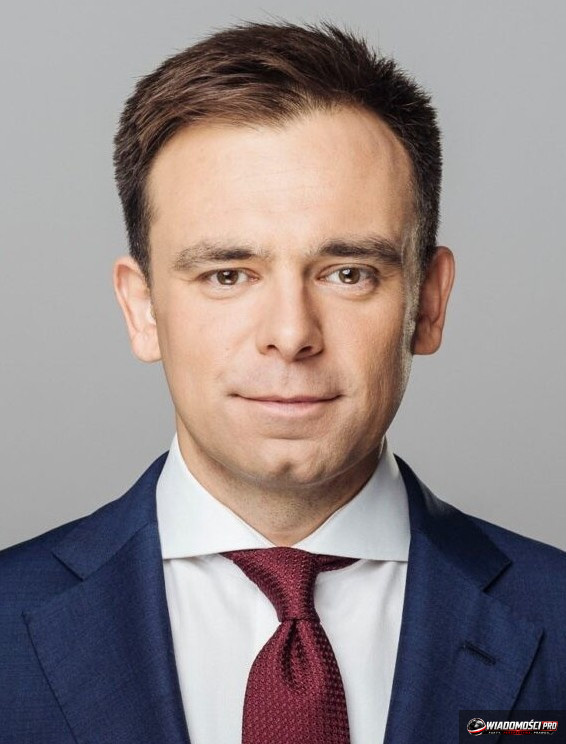
The Council of Ministers has adopted the draft budget for 2025 with a deficit of 289 billion PLN, representing a historic burden on public finances. The record scale of debt forces the finance ministry to drastically increase debt servicing expenditures, which in practice limits the room for funding key public services. The risk of cuts in areas such as healthcare and the growing pressure on treasury bond yields signal that the foundations of state stability have been put to a severe test.
Debt mechanics in the shadow of politics
The amount of 289 billion PLN is not just a figure in a table, but a starting point for negotiations that will dominate the parliamentary debate in the coming months. The Ministry of Finance, managed by Andrzej Domański, finds itself in a situation where it must balance growing social expectations with hard market constraints. Every billion of debt above current forecasts translates into specific financing costs, which the bond market is pricing with increasing nervousness. The yield on Polish treasury bonds has become a barometer of investor confidence, and current deficit levels are forcing the payment of a higher risk premium.
Institutional investors, while analyzing the draft, are paying attention to the expenditure structure. When the majority of the budget is rigidly consumed by debt servicing and social obligations, the state loses the flexibility to respond to macroeconomic shocks. In the event of an economic slowdown, the government has limited room for maneuver, which in the long term leads to the necessity of amending the budget or seeking savings in investment expenditures. This situation calls into question the long-term ability of the state to maintain the pace of GDP growth based on public investments.
Opposition in counter: vandalism or necessity?
The parliamentary opposition has adopted a strategy of frontal attack, labeling the budget structure as financial vandalism. These accusations, raised with varying intensity since July 2026, when the issue of the government's discharge became the main axis of the dispute, are not limited only to criticizing the amount of the deficit itself. Opponents of the government point out that such deep state debt is the result of a conscious abandonment of fiscal discipline in favor of short-term political goals.
The accusation of financial vandalism, frequently repeated during Sejm sessions, refers directly to the budget process. According to opponents, the government has lost control over the rate of public debt growth, which consequently shifts the burden of repayment onto future generations. In public debate, comparisons are made to periods when public finances were managed in an opaque manner. The opposition argues that the lack of real structural reforms makes the 2025 budget merely a passive record of expenses, rather than a tool for managing the economy.
This rhetoric has its roots in the events of the summer of 2026. At that time, the discussion on the discharge for the government became an arena where two visions of the state clashed. On one hand, the ruling coalition defended its actions as a necessary response to geopolitical and social challenges. On the other hand, the opposition used this event to undermine the credibility of the entire cabinet. Today, during the budget discussion, these same divisions are returning, paralyzing the substantive discussion on the quality of public spending.
The presidential fuse and market uncertainty
The role of the president in the budget process goes beyond a ceremonial signature on the act. Karol Nawrocki, through his public statements, has become a key player whose decisions are closely monitored by financial markets. In January 2026, tensions between the Presidential Palace and the Prime Minister's Office reached a critical point, which affected the exchange rate of the zloty and the valuations of Polish debt instruments.
The scenario in which the president refuses to sign or refers the budget to the Constitutional Tribunal is no longer just a theoretical threat. Such a decision could trigger a liquidity paralysis in the public sector and force the state to function under a provisional budget. For the markets, this would be a clear signal that Polish economic policy has become a hostage to a personal dispute between the government and the president. Even if a veto does not ultimately occur, the confrontational rhetoric itself effectively discourages long-term investors.
It is worth noting that foreign investors value predictability above any other indicators. Any information about an "unexpected scenario" on the president's desk, which was reported in January 2026, triggers an immediate reaction. Spreads on Polish bonds are widening, which directly increases the cost of debt servicing. The Domański government, being under pressure in this situation, must demonstrate extraordinary resilience to political attacks, which is evident in the way the ministry communicates with the markets.
Healthcare collapse as a side effect
Criticism of the budget goes beyond the purely financial sphere, touching the most sensitive areas of social life. Rynek Zdrowia (Health Market) in January 2026 explicitly described the processed document as a "budget of collapse in healthcare." The numbers contained in the draft are causing real anxiety among doctors, nurses, and patients themselves.
Financing healthcare with such a high deficit becomes an almost impossible task without drastic savings. If the pool of funds is limited, every zloty spent on debt servicing is, in fact, a zloty taken away from the healthcare system. This leads to longer queues for specialists, the suspension of wards in smaller towns, and the inhibition of investments in modern medical technologies.
In this debate, a fundamental question arises about the state's priorities. In the face of a historic deficit, should the government continue all existing programs, or rather make a painful redefinition of its goals? The opposition points out that the current solution is a dead end. In turn, the government argues that any attempt to cut healthcare would be socially unacceptable. As a result, we are dealing with a stalemate in which the healthcare system is operating at the limit of its capacity, waiting for a financial impulse that is unlikely under current budget conditions.
Market perspective: what do the numbers say?
Institutional investors do not look at the budget through the prism of political declarations, but through the prism of hard macroeconomic data. The planned deficit of 289 billion PLN changes the perception of Poland as a moderate-risk market. The increase in the supply of treasury bonds, necessary to finance such a large hole, exerts constant pressure on the yields of 10-year securities.
There are concerns that with persistent high inflation and debt servicing costs, Poland may have difficulty maintaining a stable rating in the eyes of the largest rating agencies. Any downgrade of the rating outlook for Polish debt is a measurable increase in costs for the taxpayer. Analysts point out that without a clear fiscal consolidation plan, the market may begin to price in higher risk premiums, which will consequently limit the country's investment opportunities.
It is also worth analyzing the impact of the deficit on inflation. Although the finance ministry argues that current spending is pro-investment, some economists warn of the pro-inflationary effect of such large fiscal stimulus. In conditions where the economy needs stabilization, the excess liquidity pumped in by the budget may hinder the National Bank of Poland's task in the fight to keep prices in check. This is a vicious cycle in which fiscal policy seems to act in opposition to monetary policy.
Coalition stability in the face of crisis
Tensions are growing within the ruling coalition, which is visible during key votes in the Sejm. Although in December 2025 it was officially communicated that there was a "stable coalition," behind closed doors, discussions on the 2026 budget and the consequences of the 2025 deficit are causing significant differences of opinion. The parties making up the government have divergent priorities regarding where to look for savings.
For coalition members, the budget is not just numbers, but above all a tool for building support. Each ministry, managed by a different politician, wants to keep its spending at an unchanged level. This leads to a situation where the government becomes a hostage to its own election promises. As a result, instead of carrying out a thorough reform of public finances, the coalition chooses the path of least resistance – maintaining spending while accepting a record deficit.
This strategy is extremely risky in an electoral context. If the public feels the negative side effects of the deficit – in the form of higher inflation or limited access to public services – the political price may prove too high. The stability of the coalition, so often emphasized in the media, is therefore directly linked to whether the government manages to push the budget through the legislative process without shocks that could lead to early elections or a deep cabinet reconstruction.
What does this mean for you?
As a citizen and taxpayer, you must take into account that a record deficit will not remain without impact on your finances. The government, looking for sources of funding, will have to operate in conditions of expensive money, which will directly affect the costs of servicing public debt. In practice, this means that funds that could have been allocated to infrastructure modernization or real investments in education will be "eaten up" by interest on loans taken out.
If you are an entrepreneur, you must prepare for greater volatility in the financial market and potential difficulties in accessing capital. A high deficit forces the state to compete strongly for free funds in the bond market, which naturally raises the cost of financing for the private sector. As a result, your investment plans may become more expensive, and their implementation – riskier.
From the editorial perspective, the greatest threat is not the deficit itself, but the lack of a transparent exit strategy from this state. The 2025 budget appears to be a document created "for survival," and not as a development plan. The lack of courage to limit rigid expenditures and the focus on current crisis management makes every subsequent zloty of the deficit increasingly difficult to justify. Is this the end of financial stability? The answer to this question depends on whether the government decides on real reforms or continues to mask problems with political slogans.
Questions and answers
How much is the planned budget deficit for 2025?
The planned budget deficit is 289 billion PLN, which is a record result in the history of Poland's public finances.
Why does the opposition call the budget draft financial vandalism?
The opposition uses this term to emphasize the lack of discipline in spending public money and to accuse the government of ruining the country's economic stability.
Can the president block the budget?
Yes, the president has the authority to refer the budget to the Constitutional Tribunal or refuse to sign it, which in the current political situation poses a significant risk to the state's financial liquidity.
What impact does high bond yield have on public finances?
High yield means that the state must pay higher interest on the debt incurred, which directly increases the costs of debt servicing and limits funds for other public purposes.
What does "budget of collapse in healthcare" mean?
This phrase refers to concerns that with such a large budget deficit, there will be a lack of funds for necessary investments, pay raises for medical personnel, and maintaining the quality of services for patients.
What are the main risks for investors in the context of the 2025 budget?
Investors fear a lack of legislative predictability, the risk of a presidential veto, and the potential impact of a high deficit on the growth of inflation and capital costs in Poland.
Is the budget for 2025 finally decided?
The budget process is complex and subject to constant changes depending on the results of votes in parliament and the decisions of the head of state, which makes the situation remain dynamic.
Why did the government decide on such a high deficit?
The authorities argue that a budget constructed in this way is a necessity resulting from the current obligations of the state and the challenges facing Poland, although critics see this primarily as political choices.
Is there a risk that the budget will have to be amended?
With such a high deficit, any negative deviation from macroeconomic assumptions may force the government to quickly amend the budget in order to seek additional savings.
How does the budget situation affect the zloty exchange rate?
Uncertainty about the state's fiscal stability usually weakens the national currency, which, combined with pressure on bonds, can lead to increased volatility in the currency market.
Sources
- Government receives discharge. Opposition speaks of "financial vandalism" - Business Insider Polska
- Sejm has made a decision regarding the budget. Government received discharge - Polskie Radio 24
- Sejm voted on the budget. What about the discharge for the government? - Dziennik.pl
- President has made a decision regarding the budget. "This is a budget of collapse in healthcare" - Rynek Zdrowia
- Budget in the hands of the president. Unexpected scenario on the table? - Money.pl
- Polish budget in the hands of Karol Nawrocki. The decision could shake markets even without a veto - wnp.pl
- Karol Nawrocki threatens the government over the budget. Domański grits his teeth and waits in tension - Wyborcza.biz
- Sejm decided on the 2026 budget. "There is a stable coalition" - Wiadomości Onet
Article prepared by the Wiadomości PRO editorial team with the support of artificial intelligence. Facts are derived from the sources provided above.
Komentarze (0)
Ładowanie komentarzy...