In brief
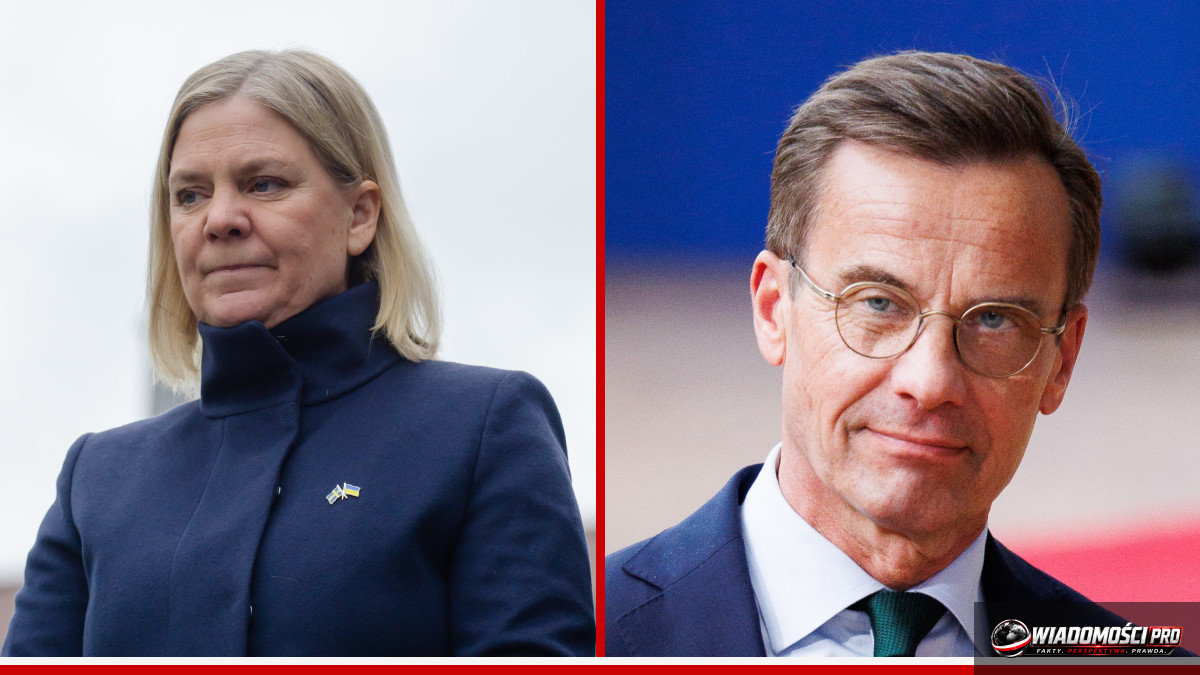
- Exit poll surveys from September 13, 2026, indicate a victory for the left-wing opposition, which is gaining the majority necessary to take power in the Riksdag.
- The Swedish Social Democratic Party, led by Magdalena Andersson, is ahead of the current right-wing coalition headed by outgoing Prime Minister Ulf Kristersson.
- Voter turnout in the 2026 elections was one of the highest in the last decade, reflecting strong social polarization regarding immigration policy and the cost of living.
- A record number of candidates of Polish origin appeared on the ballots in this year's vote, confirming the growing influence of the diaspora on local legislation.
Sensational exit poll results: The Left returns to the helm of power
According to exit poll surveys from September 13, 2026, the left-wing opposition is winning the parliamentary elections in Sweden, which means the current right-wing government is losing power. The Social Democrats, leading in the polls, are currently closest to forming a new cabinet in Stockholm. Magdalena Andersson, leader of the Social Democrats, faces the challenge of forming a stable majority in the 349-seat Riksdag. Outgoing Prime Minister Ulf Kristersson, representing the Moderate Party, must prepare to hand over the cabinet after four years in power.
The difference in support between the left-wing and right-wing blocs, although hovering within the margin of error in some polls, clearly tips the scales in favor of center-left groups in the final exit poll results. A key factor proved to be the mobilization of voters in large urban centers and the opposition of part of the electorate to the austerity policies introduced by the right in the previous term. The Social Democrats gained significant support in Stockholm, Gothenburg, and Malmö, where issues concerning public services outweighed the security demands that were the main pillar of the Moderate Party's campaign.
The Swedish electoral system requires winners to count mandates precisely. Each group entering the future coalition must cross the 4 percent threshold to bring its representatives into parliament. The Social Democrats, holding the largest mandate of trust, must now negotiate the terms of cooperation with the Green Party and the Left Party. The latter, led by Nooshi Dadgostar, has already signaled that support for the new government will be conditional on specific concessions regarding housing construction and increased healthcare spending.
The right, although weakened, retains significant representation in the Riksdag. The Sweden Democrats, led by Jimmie Åkesson, maintained a high score, which means that despite the defeat of the governing bloc, their influence on public debate will remain significant. The right-wing opposition will now focus on pointing out the mistakes of the new administration, especially on issues related to social integration and the fight against organized crime, which have become major flashpoints in Swedish society in recent years.
Social Democrats in the lead: Architecture of the new coalition
Building a coalition in Sweden is a complex process that takes on particular significance in 2026 due to the growing stratification of views in parliament. The Social Democrats must secure the support of not only their traditional allies but also convince independent deputies to support key budget laws. In the Swedish parliamentary system, a minority government is a common solution, but it requires the prime minister to be exceptionally skillful in seeking ad-hoc majorities for each key reform.
Magdalena Andersson, as the architect of the new power bloc, must face internal divisions within the left. The Left Party expects radical changes in tax policy, which may cause concern among more centrist voters whom the Social Democrats had to win over during the campaign. The conflict of interest between supporters of the market economy and proponents of the Scandinavian-style welfare state will be the main axis of dispute in the coming months. Any attempt at compromise will be a test for the cohesion of the future government.
The Riksdag, as the central point of Swedish democracy, is becoming an arena where the fate of the most important draft laws is weighed. According to procedures, after the official results are announced, the speaker of parliament – the Talman – will begin a series of consultations with the leaders of all groups. In this process, the Social Democrats currently hold the strongest bargaining chip because they have the largest number of seats among the opposition parties. Their goal is to create a cabinet that will survive the full term, which will be an extremely difficult task in the face of the instability of recent years.
It is worth noting that Swedish politics over the last term was dominated by the so-called Tidö Agreement, which cemented cooperation between right-wing parties and the Sweden Democrats. The collapse of this agreement, caused by the election loss, opens the way to a revision of many regulations regarding migration and criminal law. The Left announces a departure from hardened courses, which may meet with resistance in parliamentary committees, where the right still has strong influence. The Social Democrats' ability to take control of the legislative agenda will depend on the speed of government formation.
End of the right-wing era: Causes of the political shift
The right, which took power in 2022 with slogans of improving security and limiting immigration, must account for unfulfilled promises after four years. Although crime statistics remain a challenge, voters decided that the current administration failed to cope with rising inflation and the crisis in the real estate market. Ulf Kristersson, as leader of the Moderates, became the face of a policy that, in the eyes of many Swedes, focused too heavily on restrictions while neglecting social issues.
Analysis of the exit poll results indicates a clear outflow of the electorate from the Moderate Party to parties with a more social profile. The public service sector, including healthcare and education, became the main battlefield. Swedes, accustomed to a high level of state services, felt that the quality of these services had declined in recent years. The Social Democrats skillfully exploited these sentiments, promising to increase spending on healthcare and fight bureaucracy in public institutions.
The issue of foreign policy is also not without significance. In recent years, Sweden had to find itself in a new geopolitical reality, especially in the face of NATO membership. The right opted for closer cooperation with allies, which was accepted, but the lack of clear successes in domestic policy overshadowed these achievements. Voters expected a comprehensive approach from the government that would combine external security with internal prosperity.
The defeat of the right is also a signal of social fatigue with the current rhetoric. Public debate in Sweden has become exceptionally confrontational in recent years. Voters, tired of constant disputes over culture and identity, turned to groups that emphasized community and social solidarity in their campaign. The Social Democrats, appealing to the historical Swedish welfare state model, tapped into the moods of those who felt excluded from the rapid pace of change imposed by the right-wing cabinet.
Polish accent in Stockholm: Poles running in the elections
The Polish community in Sweden, numbering tens of thousands of people, has marked its presence in the electoral process so clearly for the first time in history. Polish candidates, running from the lists of various committees, have become full-fledged participants in Swedish political life. Their successes or failures in individual constituencies are observed by opinion leaders, who see the Polish community as an important voting group capable of tipping the scales in tight races for seats.
The participation of Poles in the 2026 parliamentary elections was not limited to just casting a vote. Compatriots actively engaged in the campaign, promoting issues important to immigrants, such as the recognition of professional qualifications, access to learning the Swedish language, and support for small businesses run by people of foreign origin. PolsatNews.pl and other media noted increased activity by Polish candidates, who combined the interests of the diaspora with nationwide postulates in their programs.
For a Polish candidate running in the Swedish electoral system, the biggest challenge is gaining the trust of the Swedish voter, who often votes along party lines. Nevertheless, the presence of Poles on the electoral lists testifies to a high level of integration. There are many indications that the new parliament will include people who not only represent their parties but also understand the specific challenges facing the Polish community in Sweden. This is an important step toward full participation in Swedish democracy, going beyond the role of passive recipients of state services.
The future government, formed by the Social Democrats, will have to take into account the demands of minorities, including Poles, if it wants to maintain support in the coming years. In the Swedish system, where margins are narrow, every vote counts. Polish representatives in parliament can become natural advocates for changes that will facilitate the functioning of EU citizens living in Sweden. Their role in the coming term will be to bridge the interests of different social groups, which is the key to effective policy in a diverse Swedish society.
Moods in Stockholm: First reactions after the polls
Sunday evening, September 13, 2026, in Stockholm was marked by political tension. Emotions reached their peak at election headquarters in the city center. When the first exit poll results showed a lead for the left, euphoria erupted at the Social Democrats' headquarters. In her speech, Magdalena Andersson emphasized that this result is an expression of the public's trust in the reform program that her party has presented over the last few months. At the same time, she warned against excessive optimism, reminding that every vote cast in the ballot boxes counts.
Completely different moods prevailed at the Moderates' headquarters. There, the silence was eloquent, and the right-wing leaders avoided direct comments, waiting for data from rural regions to flow in from election commissions. The right, which counted on maintaining power thanks to votes outside the largest agglomerations, was surprised by the mobilization of left-wing supporters in smaller towns. For many analysts, this shift in mood is a signal that Swedish society has ceased to be so clearly divided into "city" and "province" on worldview issues.
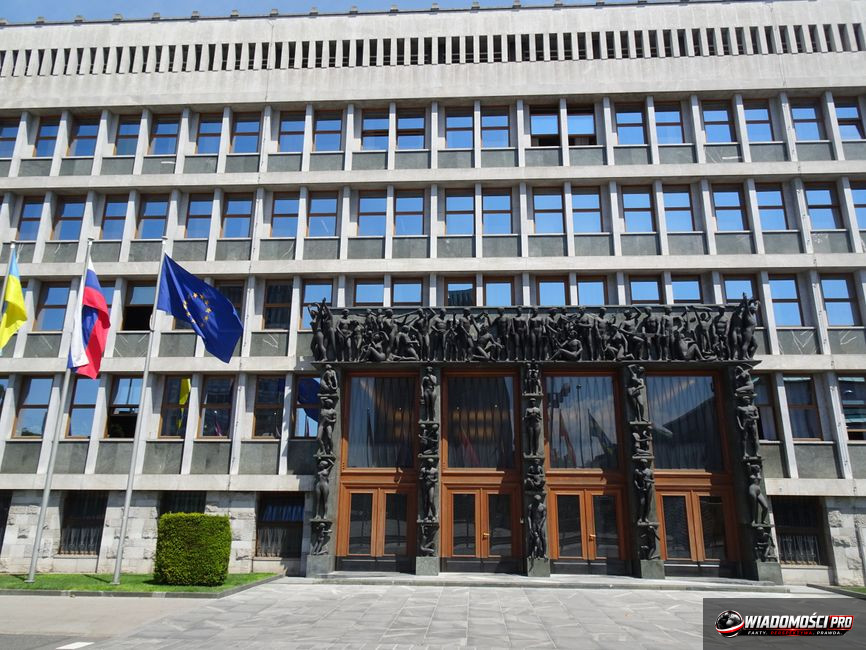
Varied reactions could be seen on the streets of Stockholm. Supporters of both blocs gathered in front of the parliament building, exchanging arguments about the country's future. The atmosphere was electrified, which confirms how important the result of these elections is for Swedes. The uncertainty that accompanied the election campaign did not disappear with the announcement of the polls. On the contrary, questions about what the new coalition will look like and who will receive the prime minister's portfolio have dominated discussions on social media and in the corridors of government buildings.
Waiting for the official results is a test of patience for all parties. The Swedish election commission announced that the final counting of votes could take until late at night, and in the case of a very close result – even until Monday morning. No one in Stockholm is planning premature celebrations. Every hour brings new data that could affect the final distribution of seats. This is not a time for quick conclusions, but for careful analysis of the trends that have emerged in today's vote.
Challenges for the future government: Economy and security
The new cabinet, which will be formed after September 13, 2026, will face tasks that will define Sweden's future for the next decades. The first and most important is the economy. Inflation, although it has slowed down compared to last year, still burdens household budgets. The Social Democrats announce the introduction of new tax breaks for the middle class and increased subsidies for companies investing in green energy. However, the implementation of these promises requires budget discipline, which may conflict with the Left Party's demands for increased social spending.
The second pillar is national security. In an era of uncertainty in the Baltic Sea region, Sweden must maintain the modernization of its armed forces. The Social Democrats have declared the continuation of increased spending on defense, which is a signal to NATO allies that a change of power in Stockholm does not mean a change of course in foreign policy. Nevertheless, the left raises the issue of control over military spending, arguing that it must be transparent and effective. Finding a balance between security and social needs will be the main challenge for the future defense minister.
The issue of integration and internal security remains open. The Social Democrats, unlike the right, place greater emphasis on prevention and education than on repression. The "safe neighborhoods" program, which was one of the points of the left's election program, is based on increasing the presence of social services in difficult areas of cities. The right, which will still be present in parliament, will certainly point out every government stumble in this area. The stability of the new cabinet will therefore largely depend on whether it can reduce crime using methods other than just tightening criminal law.
The final challenge is the real estate market. The lack of apartments in large cities is a problem that affects thousands of young Swedes. The Left promises investments in social housing, which is to be an alternative to the expensive private market. This solution, however, requires the involvement of local governments and cooperation with developers. If the Social Democrats fail to implement these reforms quickly, they may lose the support of that group of voters who opted for change in these elections, expecting a real improvement in living conditions.
What this means for you
The election result of September 13, 2026, means a paradigm shift in Swedish politics, where social priorities return to the center of public debate. For the average resident of Sweden, this means potential changes in the tax system, increased investment in public infrastructure, and a course correction in migration policy. A change of government is also a signal to investors that Sweden is looking for a new path of development that combines economic innovation with strong social protection. Whether this strategy proves effective depends on the stability of the future coalition and its ability to manage the state in difficult geopolitical times.
Questions and answers
Who won the parliamentary elections in Sweden in 2026?
According to exit poll surveys from September 13, 2026, the elections are won by the left-wing opposition led by the Social Democrats, which means this bloc has the best chance of forming a government.
Are the exit poll results final?
No, these are preliminary poll results. Official results will be confirmed after all votes are counted by the Swedish election commission, which may take several hours.
Did Poles have a part in these elections?
Yes, a record number of candidates of Polish origin ran in the elections, which is a significant phenomenon in the context of the integration of the Polish diaspora into the Swedish political system.
What's next for the right in Sweden?
The right, although losing power, remains an important force in parliament and will act as an opposition, controlling the actions of the new government on economic and security issues.
When will we know the composition of the new government?
The composition of the government will be announced after a series of consultations between the speaker of parliament and party leaders, which in the Swedish parliamentary tradition can take from a few days to a few weeks.
What are the main differences between the blocs?
The left focuses on a stronger welfare state and social investments, while the right emphasizes security issues and limiting public spending.
What impact did NATO membership have on the elections?
NATO membership is a non-partisan issue, however, both sides argued over how to finance the modernization of the army within the framework of new allied obligations.
Was voter turnout a significant factor?
Yes, high turnout was crucial to the election result, as it mobilized the social democratic electorate to vote against the current policies of the right-wing government.
What is the main problem for the new cabinet?
The biggest challenge is inflation and the housing crisis, which require quick action while maintaining budget discipline.
What role will the Sweden Democrats play?
As the largest right-wing party remaining in opposition, the Sweden Democrats will exert pressure on the government on issues related to immigration policy and the fight against crime.
Will the change of government affect relations with the European Union?
Sweden will remain an active member of the EU, and the new government will likely seek to strengthen cooperation within ecological and innovative projects.
What does "Talman" mean in the process of forming a government?
Talman is the speaker of parliament, who plays a key role in consultations with political parties aimed at selecting a candidate for prime minister who enjoys the support of the majority.
What are the chances for a stable government?
The stability of the government depends on the negotiating skills of the Social Democrats and their ability to build compromises with smaller coalition partners.
Did the elections bring sensational results in the regions?
Yes, a surprise was the high mobilization in regions that traditionally voted for right-wing parties, which ultimately decided the election result.
What are Magdalena Andersson's priorities?
The priorities of the Social Democrats' leader are repairing public services, lowering the cost of living for families, and improving citizen security.
What awaits the Swedish labor market after the elections?
The new government announces support for vocational education and easier access to employment for people coming to Sweden, which is intended to help fight structural unemployment.
Will the election result affect climate policy?
Yes, the left announces an acceleration of investments in green technologies, which may change the existing legal framework regarding the energy sector.
What are the moods in Stockholm after the results were announced?
Stockholm is divided – left-wing supporters are celebrating, while representatives of the right are showing caution and announcing constructive opposition.
Should we expect early elections?
In Swedish history, minority governments have sometimes been unstable, but the current political situation points more to the need for long-term negotiations than to quick new elections.
What is the role of the Left Party in the new setup?
The Left Party will be a key partner for the Social Democrats, forcing them toward a more social course in domestic policy.
Sources
- A big change is coming in Sweden. Exit poll results in the elections - Onet News
- Sweden has voted. Social Democrats in the lead, right loses power - Gazeta Prawna
- Will there be a turnaround after the elections in Sweden? First poll results are in - Interia Wydarzenia
- Swedes headed to the polls. Opposition leads, but the right is making up ground - Rzeczpospolita
- Armenia between Russia and the West. Exit poll indicates victory for Prime Minister Pashinyan - Rzeczpospolita
- Sweden elects parliament. Poles are also running in the elections - PolsatNews.pl
- Parliamentary elections in Sweden. Sensational exit poll results - Gazeta
- Swedes have voted. "The election result is uncertain" - TVN24
Article prepared by the Wiadomości PRO editorial team with the support of artificial intelligence. Facts come from the sources listed above.

Komentarze (0)
Ładowanie komentarzy...