
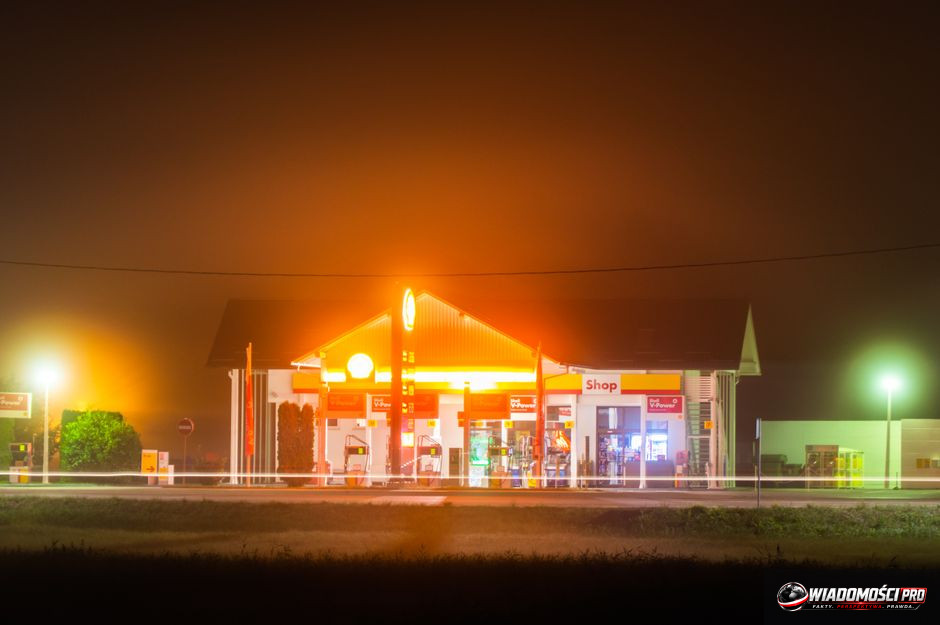
According to data from April 22, 2026, the price of a liter of 95-octane gasoline cannot exceed 5.97 PLN, while the price of diesel has been set at a maximum of 6.71 PLN. These limits constitute a rigid price ceiling for gas stations across Poland. The top-down imposed rates are intended to extinguish the inflationary pressure that Polish drivers are facing in mid-2026.
Legal mechanisms and enforcement of limits
The introduction of rigid price brackets is not merely a suggestion for entrepreneurs running gas stations. It is an administrative decision based on a government regulation aimed at stabilizing the market in situations of economic threat. The legal basis for these actions is provided by regulations allowing the state to intervene in the prices of energy raw materials when their rapid increase threatens the country's energy security. Gas stations that decide to exceed the set thresholds must face severe financial consequences.
Control over compliance with the established rates is exercised by the Trade Inspection and specialized units of the Office of Competition and Consumer Protection (UOKiK). Every instance of selling fuel above the limit is treated as a violation of market protection and consumer safety regulations. A station owner who ignores the top-down regulations risks severe financial penalties, which can range from several thousand to even several hundred thousand zlotys, depending on the scale of the violation and the facility's turnover. In extreme cases, in the event of recidivism, regulatory bodies have the authority to impose a ban on the sale of liquid fuels, which for many entities means rapid bankruptcy.
This mechanism was designed to eliminate speculative fuel price hikes. The state, through state-owned companies, monitors distributor margins, forcing them to keep prices in check. This approach is controversial because it shifts the focus from free-market competition to administrative resource management. Entrepreneurs emphasize that with current transport and raw material purchase costs, margins are drastically low, forcing stations to seek savings in other areas of business, such as non-fuel sales or staff reductions.
Security strategy and market stabilization
The government's price policy in 2026 is a direct continuation of the strategy mentioned by Deputy Prime Minister Władysław Kosiniak-Kamysz as early as May 2024. At that time, the priority was a strong army and alliances, but today we know that the stability of the state also relies on the predictability of the prices of basic goods. When citizens see stable amounts on gas station pylons, the sense of national security increases. This is an element of a broad defense doctrine in which avoiding social unrest is just as important as securing borders.
Key to understanding these actions is looking at the history of government decisions regarding crisis management. In May 2025, as indicated by Business Insider Polska, the effective actions of Donald Tusk's government on the eastern border calmed the mood, which had a measurable impact on exchange rates and commodity prices. Political stability translated into economic stability. Today, a year later, the government is continuing this path. Establishing fuel price limits is another step aimed at protecting wallets from the effects of external shocks. The state has taken on the role of an arbiter that assesses what is a fair price and what is an attempt to appropriate profits at the expense of citizens.
It is worth noting the role of government commissions that monitor the situation on the fuel market. The advisory body established in 2024, despite criticism from the opposition and some coalition partners, has survived and become the government's main analytical tool. Gazeta Prawna pointed to the turbulent discussions around this body, indicating the risk of politicizing economic processes. Nevertheless, the government concluded that without direct insight into fuel data, it is unable to effectively manage prices in the face of international perturbations.
Challenges within the ruling coalition
The unity of the ruling coalition, often tested in the media, is under constant scrutiny regarding fuel prices. Interia Wydarzenia signaled a cooling of relations between Donald Tusk and Szymon Hołownia as early as December 2024. These tensions have not disappeared and have even shifted to the field of economic management. For the Third Way camp, manual control of fuel prices is a risky solution. They fear that in the event of fuel shortages, the responsibility for the crisis will fall on the entire government, not just the Prime Minister.
Tusk's strategy is based on the assumption that in 2026, a year full of challenges for the state budget, fuel prices are the most sensitive point of social resistance. If prices at gas stations were to jump sharply, public sentiment could change radically, which would make it difficult to implement other political goals. For this reason, the government maintains rigid limits, even if it involves the necessity of subsidies to fuel companies or forcing them to limit margins.
For coalition partners, this situation is a political balancing act. On one hand, they must support the government's policy to maintain cohesion; on the other, they are looking for ways to distance themselves from the potential negative effects of this policy. If price limits prove ineffective in the long term, the dispute over who is to blame for a possible lack of gasoline or diesel at stations will become the axis of conflict within the coalition. For now, however, both sides are sticking to the established course, acknowledging that peace at gas stations is a price worth paying to maintain coalition agreement.
Consequences for the household budget
For every driver in Poland, price limits primarily mean predictability. When the government announced further decisions regarding fuel policy in August 2026, the market reacted with calm. No one expected sudden hikes because everyone knew that a ceiling had been set and would be guarded by the state apparatus. However, every stick has two ends. Artificially limiting prices means that in the event of a real jump in oil prices on world markets, the difference must be covered by the state budget or by fuel corporations, which in the final analysis can lead to an increase in the prices of other goods and services.
Drivers using individual transport feel relief. The cost of commuting to work or transporting goods has ceased to be a variable that could ruin a budget within one week. At the same time, entrepreneurs in the transport industry point out that stable fuel prices are only half the success. Equally important is the availability of fuel. History teaches that when the price is artificially lowered, demand often exceeds supply. So far, in 2026, no major shortages have been recorded at stations, which proves that supply logistics are working efficiently and the state is controlling the flow of raw materials.
It is worth noting that government decisions also affect how we plan our expenses. Knowing the upper limit makes it easier to plan vacation trips or business logistics. This is a comfort that was missing in previous years. However, we pay a hidden price for this comfort in the form of a lack of market dynamics. The lack of price fluctuations means that the fuel market has become "frozen" in a sense, which for some economists is a warning signal of possible stagnation in the energy sector.
Vote of confidence and assessment of government effectiveness
An analysis of the government's actions conducted by Konkret24 in June 2025 indicated that verifying election promises is one of the most difficult tasks for any government. In the case of fuel prices, the government had to face the accusation that its actions were populism calculated to gain support. The government's response is a hard argument about national security. According to officials, in the face of external threats, the state cannot allow energy prices to become a tool in the hands of speculators or hostile foreign entities.
Is this argument sufficient? Some voters believe in the necessity of intervention; others see it as an attempt to hide deeper economic problems. Konkret24 noted that the discrepancy between the government's rhetoric and the actual state of citizens' wallets is what most electrifies public opinion. For many Poles, the limits from April 2026 are the only tangible proof that the state is "doing something" in the face of high prices.
It is also worth recalling the arguments of Deputy Prime Minister Kosiniak-Kamysz, who from the beginning of his term has emphasized the national community as a guarantee of success. If the national community is to survive, it must be provided with basic conditions for functioning, including access to fuel at an acceptable price. The government treats this as its mission. Critics point out, however, that such a strategy is short-sighted. Instead of investing in the development of alternative energy sources that could permanently lower transport costs, the government focuses on the current administration of oil prices. This is a "here and now" strategy that does not solve the structural problems of the Polish energy sector.
Future prospects and conclusions
The question of what will happen after 2026 remains unanswered. Will the government decide to gradually unfreeze prices, or will it maintain the limits for years to come? Everything depends on the geopolitical situation. If tensions in the East subside, the pressure on raw material prices should fall, which will allow a return to market mechanisms. However, if the conflict continues, the state will be forced to continue controlling the fuel market.
Drivers should prepare for volatility. Even if the limits are currently rigid, any upward correction, if it occurs, will be communicated by the government as a higher necessity. One should not expect prices to fall below the current brackets. Rather, one must reckon with their slow, administrative upward update if the costs of oil purchases by refineries increase drastically.
In summary, the current fuel policy is the result of a compromise between economics and politics. The government buys social peace at the cost of interfering in the market. This is an effective solution in the short term, but one burdened with risk for the long-term condition of fuel companies. Is it worth it? This is a question that every driver must answer for themselves while filling up their car at a station. One thing is certain: in 2026, fuel ceased to be an ordinary commodity and became one of the most important elements of state security.
The role of state-owned companies
One cannot write about fuel prices in Poland without mentioning the role of state-owned companies. It is they, possessing a dominant position on the market, that are the main executors of government guidelines. When the government announces limits, it is these companies that must adjust their price lists at refineries and their own stations. This is not a voluntary process. It is the implementation of a strategy aimed at keeping prices in check.
For stock market investors, this situation is a warning signal. Fuel companies, forced to limit margins, record lower profits, which affects their valuations on the capital market. The government, however, argues that these companies have an obligation to carry out a social mission, which is to ensure citizens have access to energy at prices that do not cause social rebellion. This is a classic conflict between the interests of shareholders and the interests of the state.
It is worth noting that this mechanism only works because the state holds a majority of shares in key entities in the fuel sector. If the market were fully private and fragmented, introducing such rigid limits would be practically impossible without massive subsidies from the budget. Currently, the financial burden is spread across the companies, which allows the government to avoid direct cash transfers that could increase the budget deficit.
Questions and answers
How much exactly does a liter of 95 gasoline cost?
According to data from April 22, 2026, the price of 95 gasoline cannot exceed 5.97 PLN per liter.
What is the price limit for diesel?
The price limit for diesel has been set at 6.71 PLN per liter.
Who is responsible for the country's security strategy?
National security issues, including energy stability and cooperation with the army, are overseen by Deputy Prime Minister Władysław Kosiniak-Kamysz.
What is the penalty for a station that exceeds the established limits?
Gas stations that exceed the limits risk high financial penalties imposed by the Trade Inspection and UOKiK, and ultimately a ban on selling fuel.
Are price limits fixed forever?
No, the limits are the result of government decisions that are updated depending on the market and geopolitical situation. In August 2026, the government communicated further decisions regarding these rates, which confirms their variable nature.
Why did the government decide on such an intervention?
The government concluded that the unpredictability of prices at gas stations directly threatens the sense of security of citizens and social stability, which in the face of international tensions has become a priority in state policy.
What is the impact of these prices on the political situation?
Fuel price control is a tool that allows the government to maintain social support and mitigate conflicts within the ruling coalition, where any price increase would be used as an argument in political disputes.
Do these limits affect fuel availability?
So far, there have been no reported problems with fuel availability, which suggests that the logistics mechanisms supervised by the state remain efficient despite the imposed margin restrictions.
Are these actions consulted with the market?
The government uses the opinions of government commissions appointed to monitor the situation, but decisions are made arbitrarily, which draws criticism from some economic experts.
Can a citizen report a limit violation somewhere?
Yes, consumers have the ability to report irregularities to local branches of the Trade Inspection, which are obliged to conduct inspections in such cases.
What is the role of state-owned companies in this strategy?
These companies implement government guidelines, adjusting their price lists to the limits, which is crucial for the effectiveness of the entire state price policy.
Are other sectors of the economy also subject to such restrictions?
Currently, price limits mainly concern fuel as a commodity of key importance for the security and cost of living of citizens, but the government is also monitoring other sectors for potential speculation.
What can be expected in the coming months?
Drivers should carefully follow government announcements, as every subsequent decision to adjust the limits will have a direct impact on the amount of bills at the checkout at every gas station in Poland.
Are these limits a long-term solution?
This is a temporary solution that is extended depending on the current state of the budget and the situation on global oil markets.
Does the opposition agree with such a policy?
The opposition regularly criticizes the government for manual market control, pointing to the risk of shortages and the spoiling of free competition in the energy sector.
What are the hidden costs of these limits?
Hidden costs include, among others, reduced profits of fuel companies and the risk of passing on the costs of price maintenance to other sectors of the economy, which may lead to an indirect increase in the prices of other goods.
Is there a risk that fuel will run out?
Theoretically, any artificial price restriction carries the risk of shortages, but for now, the state manages supply in a way that prevents such situations.
What data is key when making decisions about prices?
The government relies on data regarding exchange rates, the costs of purchasing oil on world markets, and inflation indicators.
Is the role of the Deputy Prime Minister in this process significant?
Yes, as the person responsible for security, the Deputy Prime Minister actively participates in shaping the strategy in which fuel stability is treated as one of the pillars of the country's defense.
Do these limits apply to all types of fuel?
The limits focus on the most popular fuels: 95 gasoline and diesel, which have the greatest impact on transport costs in the national economy.
Sources
- Decision on fuel prices in Poland has been made. The Prime Minister just announced it - Money.pl
- Today, a liter of 95 gasoline is to cost no more than 5.97 PLN, and diesel 6.71 PLN - Rzeczpospolita
- The time of Tusk and Hołownia's "love" is coming to an end. A fierce campaign is ahead - Interia Wydarzenia
- What happened to the immigrants? The Tusk government's move calmed the situation at the border - Business Insider Polska
- Tusk appointed a government commission. Coalition partners and Kaczyński criticize - Gazeta Prawna
- Vote of confidence for the government. Here is "what the government has done this term"? We check - Konkret24
- Antoni Macierewicz responds to Prime Minister Donald Tusk's accusations - RadioMaryja.pl
- Deputy Prime Minister W. Kosiniak – Kamysz: a strong army, strength in alliances, and a national community – these are the guarantees of Poland's security - Gov.pl
Article prepared by the Wiadomości PRO editorial team with the support of artificial intelligence. Facts come from the sources listed above.
Komentarze (0)
Ładowanie komentarzy...