In brief
- The main NBP reference rate has been 5.75 percent continuously since November 2024.
- Geopolitical tensions in July 2026 put pressure on the zloty but did not force a change in monetary policy.
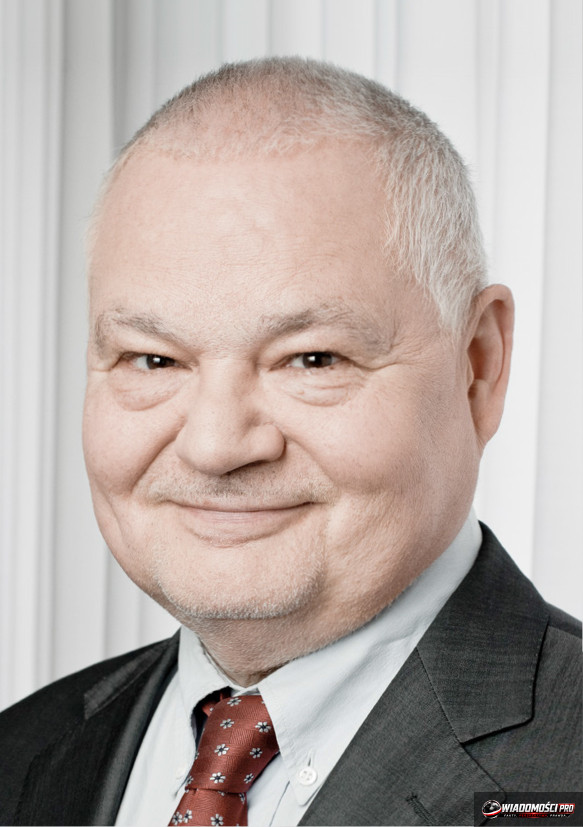
- The rhetoric of Governor Adam Glapiński indicates a determination to maintain stability despite external challenges.
The genesis of stabilization: why has 5.75 percent lasted since 2024?
The genesis of stabilization: why has 5.75 percent lasted since 2024?
The first decision to maintain interest rates at 5.75 percent was made in November 2024, and since then, the Monetary Policy Council has not made any move up or down. This nearly two-year inaction has become the foundation of the National Bank of Poland's strategy in the face of volatile inflation, placing stability above short-term market reactions. While investors and analysts expected adjustments, the MPC consistently kept its foot on the brake, ignoring pressure caused by international conflicts, including tensions between the USA and Iran, which regularly boost volatility in financial markets and affect the condition of the zloty.
Subsequent months in 2025 and 2026 only confirmed the lack of will to change the Council's composition. Even in the face of loud signals from the market, where there is increasing talk about the need to adjust monetary policy to global escalation, MPC members remained unyielding. This "wait-and-see" strategy created a peculiar economic reality in which the cost of money in Poland was frozen in time, even though the macroeconomic environment was changing dramatically.
For the average borrower, this stabilization is a double-edged sword. On one hand, it means predictable installments; on the other, it means abandoning any hope for a quick decrease in burdens, which was expected a year ago. The rigidity of this decision testifies to the policymakers' deep conviction that inflation is under control and that external chaos does not require intervention in the Polish banking system. However, the question remains how long one can ignore signals from global stock markets before the price of this stability proves higher than the cost of a potential change in course. For now, however, 5.75 percent remains the NBP's iron rule.
Geopolitics and MPC decisions: a lesson from July 2026
Geopolitics and MPC decisions: a lesson from July 2026
July 2026 showed how deeply the Monetary Policy Council has dug itself into a wait-and-see strategy. Despite the rapid escalation of the conflict between the USA and Iran, policymakers remained unmoved. Interest rates did not budge once again, remaining at 5.75 percent. This decision, announced on July 8, ignored clear signals from financial markets, which were trembling in the face of an impending crisis.
"Parkiet" analysts warned even before the meeting that the current international situation forces a reaction. They pointed to the real risk of hikes, caused by the destabilization of commodity prices and uncertainty in global trade. Currency markets responded instantly – the zloty exchange rate began to fluctuate violently in response to the tightening geopolitical sentiment. Investors do not like an information vacuum, and they interpreted the Council's passivity as a lack of preparation for crisis scenarios.
Such an attitude by the MPC is more than just conservatism. It is a conscious risk. While the global economy trembled before the effects of an open clash in the Middle East, the Polish central bank consistently kept monetary policy parameters frozen since November 2024. For borrowers, this calm is ambiguous. On one hand, it means no sudden jumps in installments; on the other, it exposes the national currency to blows that are not cushioned by monetary tools. The decision from two months ago confirmed that for the majority on the Council, internal narrative calm is more important than reacting to external shocks. This is an approach that could cost us dearly if the inflationary effects of conflicts begin to hit Poles' wallets in reality, and the MPC is forced into a sudden, delayed braking.
The role of Adam Glapiński in stabilizing the zloty exchange rate
The role of Adam Glapiński in stabilizing the zloty exchange rate
Adam Glapiński's actions in July 2026 showed that the Governor of the National Bank of Poland does not intend to passively watch fluctuations in the currency market. His statements from last month triggered an immediate and violent reaction from investors, which experts from Money.pl described as a phenomenon of an unprecedented nature. The market, living in the shadow of geopolitical tensions, including the escalation of the conflict in Iran, was desperately looking for signals regarding monetary policy. It received a clear message: the NBP's hawkish rhetoric is a shield, not a suggestion.
The strategy adopted by the Governor has one goal – to curb speculation against the zloty. In the face of external shocks that regularly hit the Polish currency, Glapiński opted for a demonstration of stability. The Monetary Policy Council, by maintaining interest rates at 5.75 percent continuously since November 2024, ignores market pressure caused by international conflicts. This approach is risky but clear to market participants.
Skeptics, however, note that words are not currency. Although the Governor's verbal intervention temporarily calmed sentiment, the long-term effectiveness of such a method is questionable. Investors do not like uncertainty, and sticking to unchanged parameters in dynamically changing global conditions forces them to estimate risk on their own. Glapiński is trying to impose a narrative of predictability, but every subsequent month without a movement in interest rates weakens the strength of his arguments. If the coming months bring an escalation of tensions in the Middle East, rhetoric alone may prove insufficient to keep the zloty exchange rate in check. The market will eventually test whether hawkish words are followed by concrete financial decisions.
The impact of maintaining rates on borrowers: status as of September 2026
The impact of maintaining rates on borrowers: status as of September 2026
The Monetary Policy Council has kept interest rates at 5.75 percent continuously since November 2024. This is a conservative decision that ignores growing market pressure caused by international conflicts, including the escalation of tensions between the USA and Iran. For the average borrower, the lack of movement in rates primarily means predictability.
The level of installments based on WIBOR remains in suspension. Borrowers counting on a quick breather in the form of cuts must arm themselves with patience, because the Council consistently gives no signals for loosening monetary policy. The wGospodarce service explicitly emphasizes that every such decision by the MPC directly affects the costs of debt servicing, but in this case, stabilization acts as a safety brake – installments are not rising, but they are not falling either.
For the wallet, this means that household budgets must be planned based on the current, high cost of money. The lack of movement from the Monetary Policy Council cements a situation in which borrowers remain in limbo regarding the date of potential cuts. This is a state of forced stabilization. The zloty, under pressure from the geopolitical situation, also offers no hope for cheap credit in the near future.
Here are the key parameters affecting today's financial situation:
- NBP reference rate — 5.75 percent (source: TVN24, 06.11.2024)
- MPC decision status — no changes (source: wGospodarce, 08.07.2026)
- Market pressure — international conflicts (source: INNPoland.pl, 08.07.2026)
The key catch lies in opportunity costs. Since installments are not falling, the capital that could fuel consumption or investment is still entirely absorbed by interest payments to banks. The patience of the Monetary Policy Council, although theoretically defending the value of the zloty, in practice extends the period of costly debt for thousands of Polish families.
Market forecasts: are we facing a trend change?
Market forecasts: are we facing a trend change?
Analysts have been trying to guess the intentions of the Monetary Policy Council for many months, but their expectations consistently diverge from reality. Maintaining rates at 5.75 percent since November 2024 has become the new norm, even though the market has regularly sent signals about the need to react to the unstable geopolitical situation. Instead of a fluid policy, we are observing stagnation, which in the face of international conflicts is beginning to cause anxiety among investors.
The discrepancy between what experts assumed and the MPC's decisions is drastic. This is visible in the dynamics of published forecasts:
- Already in April 2026, forecasts from the direct.money.pl service indicated great uncertainty, suggesting that predicting the Council's next steps had become an almost impossible task.
- In July 2026, the situation became even more confusing, as the portal TotalMoney.pl published extremely contradictory forecasts regarding further MPC moves, which only deepened the disorientation among borrowers and entrepreneurs.
- The market did not remain passive and on its own priced in the possibility of hikes, reacting nervously to the risk of an energy shock caused by tensions between the USA and Iran, as reported by INNPoland.pl.
It is becoming clear to observers that the MPC has chosen a wait-and-see strategy. Ignoring market pressure, even in the face of real threats to the stability of the zloty, is not neutral, however. It is a costly policy. Every subsequent decision to make no changes to interest rates makes the market lose faith in the causative power of communications coming from the NBP. Instead of a clear path, we are dealing with a drift that, in the current geopolitical situation, may prove dangerous for the economy, especially when the pressure for rising energy commodity prices does not subside. The reader asks themselves where caution ends and passivity begins.
Economic consequences of the lack of reaction to inflation and energy costs
Economic consequences of the lack of reaction to inflation and energy costs
Since November 2024, the Monetary Policy Council has stubbornly kept interest rates at 5.75 percent. This strategy, officially presented as a hard tool for fighting inflation, increasingly resembles the freezing of decision-making processes in the face of a changing reality in mid-2026. Ignoring market pressure caused by international conflicts, including tensions between the USA and Iran, creates real costs. The zloty remains under constant pressure, and the MPC's lack of flexibility is ceasing to be perceived as proof of steadfastness and starting to be seen as a lack of reaction to global shocks.
The brake pulled at 5.75 percent hits the production sector directly. Entrepreneurs who planned to expand production capacity in 2026 are revising their strategies. The cost of capital is an insurmountable barrier for Polish industry today. Investments that could stimulate GDP in subsequent quarters are being put on ice. Instead of modernizing technological lines, companies are focusing on servicing debt, which in the long term means a decline in the competitiveness of the Polish economy compared to the region.
Analysts agree: in the coming months, the decisive factor for the MPC will remain energy price stability. It is this parameter, not real indicators of economic growth or wage pressure, that dictates the conditions in the building on Świętokrzyska Street. If energy commodity prices do not stabilize on global markets, Council members will most likely maintain the current course, risking a further slowdown in industrial investment. Entrepreneurs who were counting on an impulse in the form of cheaper credit must prepare for another quarter on the defensive. We all pay the costs of keeping rates in limbo, although this bill is felt most acutely by the owners of companies building the foundations of domestic production.
What this means for you
Maintaining interest rates at 5.75 percent is a 'wait-and-see' strategy. Savers on deposits gain, while borrowers with high debt lose. The catch is that prolonged stabilization may stifle GDP growth if inflation does not fall to the NBP's target.
Questions and answers
Have interest rates changed since November 2024?
No, the main NBP reference rate has remained at 5.75 percent since November 2024.
Why did USA-Iran tensions not affect the MPC's decision in July 2026?
The MPC decided that Poland's economic foundations were stable enough not to react rashly to short-term geopolitical shocks.
Where to look for reliable interest rate forecasts for the end of 2026?
It is worth following NBP communications and analyses published on financial portals such as Money.pl or Business Insider, which monitor current MPC decisions.
Sources
- MPC keeps rates unchanged – will escalation in Iran bring hikes? (ANALYSIS) - Parkiet
- Interest rate value September 2026. Forecasts and current information on interest rates in Poland - TotalMoney.pl
- See what's happening with your loan! MPC has made a decision - wGospodarce
- USA and Iran are at each other's throats, and the MPC is not cutting rates. Zloty under pressure - INNPoland.pl
- Zloty reacts to Glapiński's words. This hasn't happened in a long time - Money.pl
- Interest rate forecasts in 2026 - direct.money.pl
- There is a decision on interest rates - TVN24
- There is an MPC decision on interest rates. It is already known what happens next with loan installments - Business Insider Polska
Article prepared by the Wiadomości PRO editorial team with the support of artificial intelligence. Facts come from the sources provided above.


Komentarze (0)
Ładowanie komentarzy...