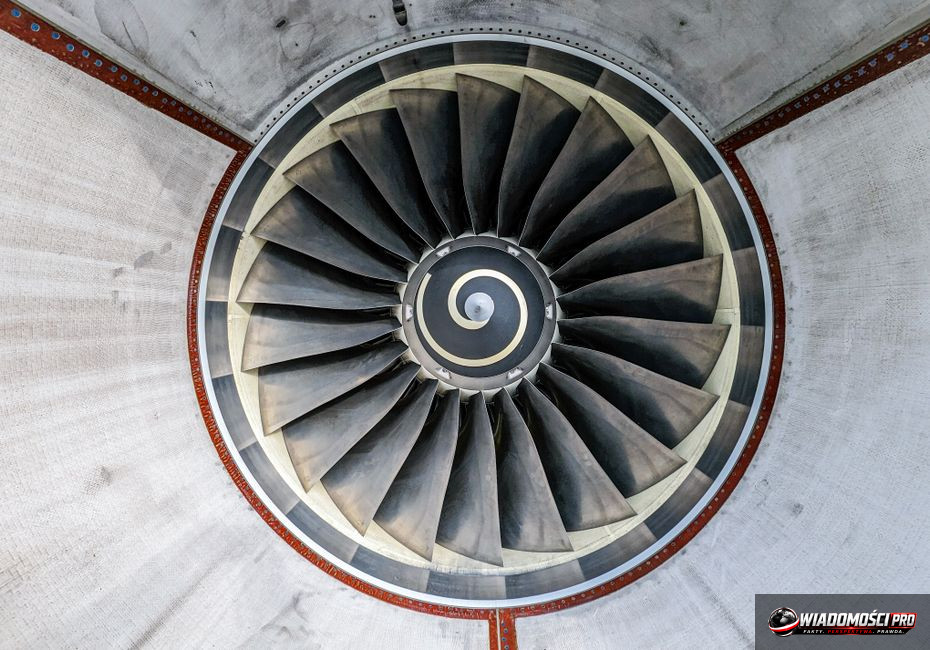
PZL Defence, part of the Unimot Group, in partnership with the Ukrainian design bureau Ivchenko-Progress, is launching the production of small-scale turbojet engines in Poland, dedicated to unmanned aerial vehicles and missiles. The production facility will be located in Sędziszów Małopolski in the Subcarpathian Voivodeship, which will allow for the utilization of the region's industrial potential in the field of aviation technology. The project aims to create a domestic source of propulsion, eliminating the existing gap in the supply chain of the Polish defense industry.
Unimot enters the defense sector
The decision to implement the production of turbojet engines within PZL Defence is a direct response to the deficit of propulsion components in the Polish unmanned systems sector. Unimot, previously identified mainly with fuel trading, is using the PZL Defence company as an operational defense entity. The official announcement of the cooperation with Ivchenko-Progress, which took place on June 26, 2026, ended a period of speculation regarding the group's diversification directions. The company is no longer looking solely for margin growth in the energy sector. It is focusing on niches with a high barrier to entry, where technical obstacles effectively limit competition.
The cooperation with the Ukrainian partner is not accidental. Ivchenko-Progress is an institution with a long history of designing propulsion units, the design of which has dominated aviation in the eastern part of Europe for decades. For the Polish side, it is crucial to use this experience to shorten the time from design to implementation. Creating a jet engine from scratch on one's own is a process that takes years and requires hundreds of thousands of man-hours of testing. Thanks to the technology transfer, PZL Defence gains access to ready-made design solutions that only require adaptation to the Polish production lines in Sędziszów.
However, the Unimot management board must prove that the change in the operational profile will translate into real production results. The defense sector verifies the capabilities of companies not through media declarations, but through product certification and their reliability in combat conditions. Every engine leaving the assembly line must meet strict durability standards, which means the group must adapt entirely new quality control standards.
Ivchenko-Progress: Ukrainian propulsion expert
JSC "Ivchenko-Progress" is a design bureau whose contribution to the project consists of providing technical documentation for small-scale engines. This company possesses unique competencies in designing propulsion units with a small diameter, which are characterized by a high thrust-to-weight ratio. It is these engines that form the "heart" of modern missile systems and strike drones. The participation of the Ukrainians in this venture changes the status of PZL Defence from a simple assembly plant to a technological partner.
The know-how transfer covers the scope of design, strength calculations, and material specifications. Transferring documentation to the plant in Sędziszów is a process requiring precision that cannot be replaced by improvisation. Polish engineers working with Ukrainian specialists must implement technological processes that, in Ukrainian conditions, were optimized for rapid production during wartime. In Poland, the challenge lies in maintaining this efficiency while adhering to NATO certification standards.
The success of this partnership depends on whether the differences in technical culture between the two sides can be bridged. Ivchenko-Progress brings experience, and PZL Defence provides the infrastructure and financial stability that partners from Ukraine cannot guarantee in their own facilities in the current situation. This is a symbiotic business arrangement. The Polish company gains a product, and the Ukrainian bureau secures the continuity of its designs' development on safe territory.
Why does the drone market need turbojet engines?
Currently, electric propulsion systems used in many unmanned aerial vehicles have range and speed limitations that cannot be overcome without changing the system architecture. A turbojet turbine in the small-scale segment allows for carrying payloads over distances of several hundred kilometers while maintaining high cruising speed. This is a fundamental difference in the tactics of using unmanned aerial vehicles. PZL Defence, by focusing on turbojet engines, is targeting the market for loitering munitions and cruise missiles, where demand exceeds supply.
The models of cooperation with the Ukrainian partner are intended to ensure the continuity of supplies for two key areas: operational drones and high-mobility missile systems. The use of a turbine in a drone is not just a matter of speed, but above all the ability to operate across a wide range of altitudes. Ivchenko-Progress provides axial compressor technology, which ensures high efficiency with a minimal engine diameter. This allows for the integration of the propulsion system inside the fuselage without the need for external nacelles, which significantly lowers the machine's radar signature.
From the designers' point of view, the miniaturization of jet engines while maintaining durability is the most difficult technical challenge. It requires advanced metallurgy and precise machining of turbine blades. The market expects PZL Defence to fill this gap, becoming a supplier of components that previously had to be imported. If the company manages to maintain the assumed pace of work, Poland will cease to be merely an assembly plant for others' solutions and will become a significant supplier of propulsion components for the entire region.
PZL Defence: New production hub in Sędziszów
PZL Defence, a subsidiary of the Unimot Group, is launching production in Sędziszów Małopolski. The choice of this location is not accidental. The plant has infrastructure adapted for precision machining, which is essential in the production of aviation components. The scale of the investment, although not disclosed in detail, fits into the long-term development strategy of the group, which has been consistently expanding its involvement in defense-related assets since June 2026.
For the Polish defense sector, locating production domestically shortens the supply chain and makes assembly lines resilient to disruptions in global component trade. The previous dependence on foreign suppliers was one of the main brakes on implementing new drone projects. Now, this process is to be reversed. PZL Defence is becoming a full-fledged industrial player, controlling a key component of modern weapons.
Operational efficiency in Sędziszów will be verified by the market not by announcements, but by the timeliness of deliveries. If PZL Defence can quickly move from the design phase to mass production, it will become a key facility for the Polish army. Otherwise, the project may share the fate of many other initiatives that got stuck at the prototyping stage. The company's management must show that it can manage such a complex process, where the margin for error in the production of turbine blades is close to zero.
Technological challenges and implementation logistics
The signed pact is an engineering challenge. The success of the venture depends on the integration of Ukrainian technical thought with Polish production capabilities. This involves adjusting material specifications and technological processes, which in the Ukrainian version may differ significantly from solutions used so far in Polish plants. The biggest barrier lies in certification. Every turbojet engine intended for unmanned aerial vehicles and missiles must pass procedures in accordance with strict NATO requirements, including STANAG standards.
This requires adapting the entire production cycle to Alliance standards, which means auditing every stage – from the heat treatment of turbine blades to the final test on the test bench. The question of the supply chain for critical materials remains. The companies have not disclosed details regarding the origin of heat-resistant alloys, which are essential for the durability of jet engines. If PZL Defence relies solely on sub-assemblies from Ukraine, it risks downtime resulting from the war situation. If they decide to "Polonize" the components, the costs and implementation time will increase drastically.
The actual date for the delivery of the first propulsion units remains a big unknown. Declarations of production are only the beginning of a long and expensive certification path. Investors must take into account the fact that the test bench phase may take much longer than the most optimistic business scenarios assume. This is standard in the aviation industry, where safety and parameter repeatability are more important than the speed of introducing a product to the market.
Technical parameters: What do we know about the engines?
The design details of the turbojet engines are classified as confidential. Nevertheless, by analyzing the profile of Ivchenko-Progress's activities, one can determine the standards that the partners are aiming for. Small-scale turbojet engines dedicated to loitering munitions typically achieve thrust in the range of 0.5 to 2.5 kN. These are units designed with a short life cycle in mind, but with high reliability in extreme thermal conditions.
A key parameter that the market is asking about is the thrust-to-weight ratio and Specific Fuel Consumption (SFC). In the case of strike drones, these engines must be capable of operating across a wide range of altitudes and cruising speeds. Ivchenko-Progress possesses axial compressor technology that ensures high efficiency while maintaining a minimal engine diameter. This allows for the integration of the propulsion system inside the fuselage without the need for external nacelles, which significantly lowers the radar signature of the unmanned aerial vehicle.
Implementing these units into production in Poland requires material certification. The use of appropriate nickel and cobalt alloys in the hot section of the engine is necessary to withstand exhaust gas temperatures exceeding 900 degrees Celsius. PZL Defence must demonstrate that the Polish production lines in Sędziszów are able to maintain tolerances on the order of micrometers when machining turbine blades. Without meeting these standards, the engine will not pass the durability tests required by STANAG certification.
Export potential: Where will Polish engines go?
The production of small-scale turbojet engines in Poland is intended to go beyond the needs of the national armed forces. Unimot, operating through the company PZL Defence, is focusing on a business model geared toward exports. The partnership with the Ukrainian bureau Ivchenko-Progress is a signal that the Polish entity wants to become a supplier of components for European manufacturers of unmanned systems. The market is insatiable.
Drones, which until recently were treated as auxiliary equipment, today constitute a strike foundation. This translates into a rapid increase in demand for propulsion units that must be lightweight, cheap in mass production, and at the same time reliable. Ivchenko-Progress possesses technology that the Polish industry lacked, while Unimot brings capital and production facilities in Poland. Is this enough to realistically threaten competition from Asia or the USA?
Optimism should be tempered. The companies' announcements to date, including confirmations from June 26 and reports from September 9, 2026, focus on the very fact of establishing cooperation. There is a lack of a delivery schedule or information about projected production volumes. Acquiring foreign contractors requires demonstrating high efficiency of assembly lines. If PZL Defence can quickly move from prototyping to serial production, the chances of entering supply chains for NATO allies are real. Otherwise, the project will remain a curiosity, not a source of revenue.
Industrial autonomy and supply chains
Developing one's own production capabilities in the field of turbojet engines is a matter of technological sovereignty for Poland. For years, Polish drone projects were blocked by the lack of access to their own propulsion units, which forced manufacturers to buy from external suppliers, often subject to export restrictions. Launching production at PZL Defence changes this dynamic.
From an investor's point of view, Unimot is taking risks associated with certification processes. Every new aircraft engine must undergo thousands of hours of testing on test benches before it is cleared for operational flights. This requires not only capital commitment but also the building of engineering staff capable of conducting research and development. Cooperation with Ivchenko-Progress shortens this process, but it does not eliminate the need to have one's own research and development centers in Poland.
The Polish defense industry has traditions in aviation, but the production of turbojet engines is a higher level of advancement than servicing or repairs. The challenge concerns the metals from which turbine components are made. Poland must ensure access to strategic raw materials that are resistant to high temperatures and stress. If these supply chains are not secured at the state level, the project may encounter barriers that no private company can overcome on its own.
The role of administration in the implementation process
The success of PZL Defence depends not only on the Unimot management board but also on support from state institutions. Defense programs of this scale require close cooperation with the Ministry of National Defense and the National Centre for Research and Development. Without contracts for serial deliveries for the Polish Army, it will be difficult for a private enterprise to maintain a production line while maintaining competitive prices.
The long-term strategy assumes that engines from Polish production will power not only reconnaissance drones but, above all, loitering munitions. This is a segment in which Poland has aspirations to become one of the leaders in Europe. If the engine developed within the partnership with Ivchenko-Progress proves to be highly reliable, it will open the door to the export of entire unmanned systems, in which the Polish propulsion unit will be the heart of the design.
Market observers point to the fact that Unimot is building its position in the defense industry in stages. From trading fuels to producing components – this is the path that many large defense corporations around the world have taken. The key, however, is patience and consistency. The defense market does not forgive delays, and the queue of those wanting ready-made turbojet engines is long. Poland has a chance to take a high position in it, provided that the pace of work set by the agreement of June 2026 can be maintained.
Strategic summary
Unimot's entry into the production of turbojet engines through PZL Defence is a signal that the Polish defense industry is beginning to treat technological autonomy as a priority. Cooperation with Ivchenko-Progress offers a chance for the rapid implementation of ready-made solutions, but the real test will come at the moment of moving to mass production.
For the end user, this means one thing: the Polish army is gaining a potentially independent source of propulsion for missile systems and drones. This will allow for better planning of equipment purchases and independence from the political decisions of other countries. The only challenge remains maintaining rigorous production standards and the timeliness of deliveries. If PZL Defence meets this task, the Polish defense industry will strengthen its position in the NATO supply chain, becoming a significant player in the aviation technology sector.
Questions and answers
Who is responsible for the engine design?
The Ukrainian design bureau JSC "Ivchenko-Progress" is responsible for the design and technology as part of the partnership with PZL Defence.
Where will these engines be produced?
The production of turbojet engines is planned in Poland, at the facility in Sędziszów Małopolski (Subcarpathian Voivodeship), by the company PZL Defence, which belongs to the Unimot Group.
What exactly are these engines intended to be used for?
The engines are dedicated to unmanned aerial vehicles (drones) and missile systems that require compact propulsion systems with high thrust power.
Are the technical parameters of the engines known?
Detailed specifications are classified for security reasons, however, the class of turbojet engines for these systems typically achieves thrust in the range of 0.5 to 2.5 kN.
When can we expect the first engines?
The project is in the operational phase after the signing of the agreement in June 2026; specific dates for test bench trials and certification have not been publicly announced.
Sources
- Ukrainians to develop a turbojet engine for PZL Sędziszów. Production to start in Poland - Carpatia Biznes
- Unimot, PZL Defence, and JSC "Ivchenko-Progress" strengthen Polish-Ukrainian cooperation on the design and production of small-scale turbojet engines - Unimot
- Unimot wants to cooperate with Ivchenko-Progress in the field of small turbojet engines - Inwestycje.pl
- Unimot and a Ukrainian company want to jointly develop and produce a turbojet engine in Poland - xyz.pl
- Unimot enters jet engines. Together with the Ukrainians, it will create propulsion for drones - Energetyka24
- Unimot enters the defense industry, wants to produce engines for drones. It has an agreement with a Ukrainian company - WNP.PL
- Polish-Ukrainian defense pact. Unimot and PZL Defence will produce engines for drones and missiles - Bankier.pl
Article prepared with the help of artificial intelligence. The Wiadomości PRO newsroom is responsible for this publication.




Comments (0)
Loading comments...