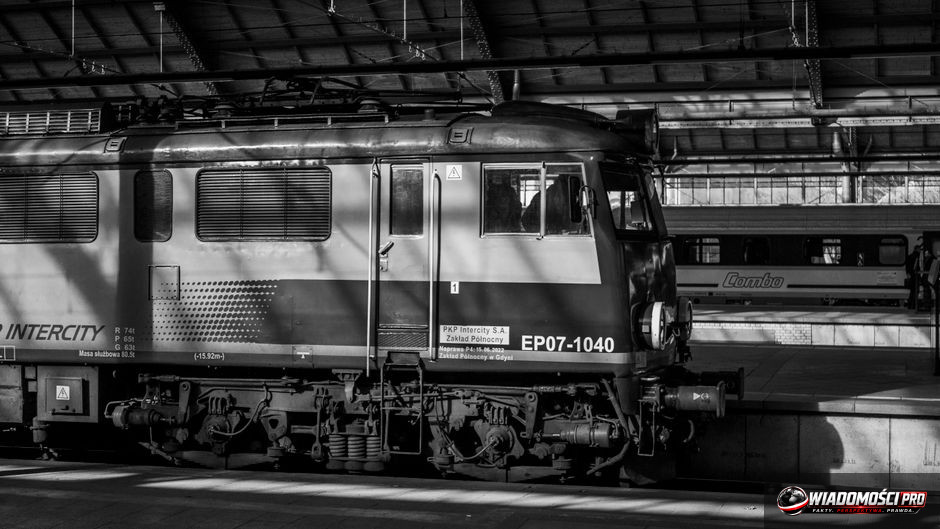
PKP Intercity has signed a contract with Newag worth PLN 2.8 billion net for the delivery of 32 modern multi-system Griffin locomotives. The signing of the agreement was announced on September 8, 2026, in Karpacz. This order strengthens the position of the Nowy Sącz-based manufacturer as the primary supplier for the national carrier, marking another stage in the modernization of its rolling stock.
Contract details: 32 Griffins for PLN 2.8 billion
The financial dimension of the transaction, amounting to PLN 2.8 billion net, represents one of the largest capital expenditures in the history of PKP Intercity. This amount covers not only the production of the 32 power units themselves but also their full technical documentation, homologation, and a service package. The choice of Karpacz as the venue for announcing the agreement underscores the importance of the event, which aligns with a broader strategy of fleet unification.
Multi-system Griffin locomotives are machines designed to operate under various voltage standards, which is crucial for servicing international corridors. Without the need to change locomotives at border stations, trains can continue their journey through the territories of neighboring countries, utilizing different power supply systems such as 3kV DC, 15kV AC, or 25kV AC. For PKP Intercity, this means shorter travel times on key routes, where every minute of technical stopover affects the attractiveness of the passenger offer.
The strategic decision to purchase more machines from Nowy Sącz demonstrates a high degree of trust in Newag's technical solutions. In recent years, this manufacturer has established itself as a leader by offering units that have been positively verified in daily operation. The order for 32 locomotives is not a one-off event, but part of a long-term plan in which the carrier aims to eliminate obsolete, energy-intensive machines from the PRL era and the early years of the transition.
However, the issue of logistics remains in the shadow of the multi-billion transaction. Delivering such technologically advanced units on a specific schedule requires the manufacturer to maintain high assembly line efficiency. Every month of delay in putting the locomotives into service generates real losses for PKP Intercity resulting from the inability to launch planned connections or the need to lease replacement rolling stock. The railway market is unforgiving of missed deadlines, which is why the eyes of experts are turned to the plant in Nowy Sącz.
Newag as a pillar of Polish railways
Newag's dominance in the Polish railway rolling stock manufacturing market has become a fact. The company is successfully displacing foreign giants from tenders by offering products with an increasing degree of complexity. The success of delivering 35 hybrid trainsets in 2024 laid the foundation for the current order for Griffins.
Trust in the domestic manufacturer has both an economic and a technical dimension. Maintaining a fleet based on a single, proven supplier facilitates maintenance. Mechanics working in PKP Intercity's technical bases know the specifics of the Griffins, which allows for faster diagnostics and troubleshooting. From the carrier's perspective, fleet unification means lower spare parts storage costs and a simpler training process for train drivers. On the other hand, total dependence on one manufacturer creates a risk in a situation where the company encounters financial or structural problems.
It is worth recalling the scale of orders, which has changed drastically in recent years. In 2013, PKP Intercity ordered 20 trains, which at the time seemed like an ambitious challenge for Polish industry. Today, we are talking about contracts worth billions of zlotys, with the number of units reaching into the tens. Newag has become a Polish champion capable of competing with players like Alstom or Stadler, offering machines that meet the rigorous TSI standards applicable throughout the European Union.
However, this expansion comes at a price. The railway market in Poland is specific and often dominated by the rolling stock policy of the state carrier. When PKP Intercity bets on one horse, the competition is forced to look for orders in other sectors or on foreign markets. Is such a concentration of orders in the hands of one company healthy for the economy? The answer to this question is not unambiguous. On one hand, we have the building of a strong, domestic industry; on the other, limited technological diversity, which in the event of a failure of an entire series of a specific model could lead to the paralysis of the network.
Foreign expansion: PKP Intercity's ambitions
The purchase of 32 Griffin locomotives is a direct response to PKP Intercity's foreign expansion plans. The carrier no longer wants to be just an operator serving domestic connections. Ambitions reach deeper, toward direct connections with Prague, Berlin, Bratislava, or Vienna. For this, rolling stock that does not stop at the border is needed.
Multi-system locomotives are a passport to the European railway network. They must possess appropriate certificates for various traffic control systems, including the ETCS system, which is becoming the standard across Europe. The multi-system version of the Griffin is the answer to these challenges. Possessing such a modern fleet allows PKP Intercity to flexibly plan routes and quickly respond to passenger needs within European transport corridors.
Modernizing the fleet as a tool for competitiveness is a key element of the management's strategy. Passengers on international routes expect the standard they have become accustomed to in aviation – reliability, speed, and comfort. Every minute spent changing a locomotive at the border is a loss that reduces the attractiveness of rail in competition with low-cost airlines. The investment in modern Griffins is intended to eliminate these barriers, making PKP Intercity's offer a real alternative to air and road transport.
The question of European competition remains open. Alstom and Stadler continue to fight for Polish contracts by offering their solutions. However, recent years have shown that PKP Intercity feels increasingly confident in its relationship with Newag. This business closeness can be seen as proof of the maturity of the Polish manufacturer, which has ceased to be merely a budget supplier and has become a full-fledged technological partner.
Scale of investment in rolling stock: a historical perspective
A historical analysis of PKP Intercity's contracts shows an evolution from small orders to gigantic infrastructure projects. In 2013, when the contract for 20 trains was signed, the industry was in a completely different place. Rolling stock was obsolete, and investments were treated as isolated interventions in crisis situations. Today's PLN 2.8 billion for 32 Griffins is the result of a systemic approach to modernization.
In May 2024, a contract was signed for 35 hybrid trainsets, which was a signal to the market that PKP Intercity is entering a phase of mass rolling stock replacement. These hybrids, capable of operating both under overhead lines and on non-electrified lines, showed that the carrier is looking for modern and universal solutions. The order for Griffins from September 2026 is a natural continuation of this trend.
Here is a summary of selected contracts that show the evolution of purchases:
- Contract for the purchase of 20 modern trains — 2013 (PKP Intercity)
- Contract for 35 hybrid trainsets — May 2024 (PAP MediaRoom)
- Contract for 32 Griffin locomotives — September 2026 (Stockwatch.pl, DTS24, Telewizja Tarnowska.tv)
Comparing these numbers, a clear upward trend in the value and scale of orders is visible. The amount of PLN 2.8 billion for the current contract is proof that PKP Intercity has the funds for purchases on an unprecedented scale. The question that intrigues observers is: will the pace of purchases be maintained in the coming years? The rolling stock market is cyclical, and PKP Intercity is currently at the peak of its modernization needs.
It is worth noting that behind each of these contracts lie not only numbers but also service challenges. Maintaining hybrids, Griffins, and older locomotives under one management is a massive logistical operation. Each type of vehicle requires dedicated technical facilities and specialized personnel. The company must therefore invest in its service bases in parallel with purchases, which constitutes a hidden but huge cost of the entire process.
Significance for the domestic industry
The investment in Griffins is a financial injection for the entire supply chain cooperating with Newag. Locomotive production is a complex process involving hundreds of subcontractors of electrical, mechanical, and electronic components. Newag's success translates into the development of the entire rail vehicle manufacturing sector in Poland.
Engineers from Nowy Sącz working on the Griffin project must face stringent interoperability standards. This is a process in which knowledge about European safety and automation standards is gained. This capital remains in the country, strengthening the position of Polish engineers on the international labor market. Instead of buying ready-made solutions from foreign corporations, PKP Intercity supports the development of technologies that may become a Polish export product in the future.
However, Newag's monopolistic position on the domestic scene raises some concerns. A lack of strong competition within the country can lead to technological stagnation. If the manufacturer does not feel the breath of a rival on its neck, the motivation to introduce innovations may decrease. For this reason, it is extremely important that PKP Intercity continues to maintain high quality and technical requirements in subsequent tenders, forcing Newag to continuously improve its flagship product.
Challenges and the future of Polish railways
Signing the contract for 32 Griffin locomotives is just the beginning of the journey. The real challenge will begin when the first units leave the production hall and enter the tracks. The logistics of implementing such a large number of machines into daily passenger traffic is a process fraught with risk.
Delivery schedules are tight, and PKP Intercity cannot afford downtime. Every locomotive that does not go on route means image and financial losses for the company. The challenges facing the execution of this order include:
- The need for efficient homologation in neighboring countries, which often proves to be a long and unpredictable process.
- Ensuring the continuity of supply of electronic components, the shortages of which on the global market can halt production for many months.
- Integrating new machines with the existing rolling stock management system, which requires software updates and training hundreds of employees.
The situation requires precision from Newag that the Polish railway industry has not always demonstrated in the past. The success of this contract depends on the seamless "plugging in" of the Griffins into the European railway network. If the manufacturer stumbles on technical procedures, then the PLN 2.8 billion invested in fleet modernization will turn out to be merely frozen capital. End passengers will feel a real change only when modern machines go on routes without failures and downtime.
The future of Polish railways depends on whether these 32 locomotives prove to be the foundation of a new quality or just another stage in a long struggle with rolling stock limitations. The industry is watching closely to see if Newag will shoulder the burden of responsibility it took upon itself by winning this contract.
What this means for you
This contract cements Newag's position as the primary supplier for PKP Intercity. From a passenger's perspective, this means hope for more modern rolling stock that fails less often on international routes. For Polish industry, it is a chance to maintain high engineering competencies. The challenge, however, remains the logistics of implementing such a large number of units in a short time while simultaneously planning expansion into markets where the competition (Alstom, Stadler) is very strong and does not intend to give up ground.
Questions and answers
How many Griffin locomotives were ordered in the latest contract?
PKP Intercity has ordered 32 Griffin locomotives with a total value of PLN 2.8 billion net.
Where was the contract signing announced?
Information about the signing of the contract for 32 locomotives was announced on September 8, 2026, in Karpacz.
Is this the largest investment in PKP Intercity's history?
The company is implementing a series of gigantic contracts, of which the one for 32 Griffins is one of the key elements of the ongoing fleet modernization.
Sources
- Newag to supply PKP Intercity with another 32 Griffin locomotives. Contract grew to PLN 2.8 billion net - stockwatch.pl
- PKP Intercity buys 32 more Griffins from NEWAG. The Nowy Sącz company's contract grows to PLN 2.8 billion - DTS24
- PKP Intercity orders another 32 locomotives from NEWAG. Contract announced in Karpacz - Telewizja Tarnowska.tv
- Alstom or Stadler? Decision on Friday - Kolejowy Portal
- PKP Intercity. The largest contract in history signed - TVP 3
- A big day for railways in Poland. A gigantic contract signed - polsatnews.pl
- Historical contract for NEWAG S.A. - 35 new hybrid trainsets for PKP Intercity - PAP MediaRoom portal.
- Contract for the purchase of 20 modern trains for PKP Intercity signed - PKP Intercity
Article prepared by the Wiadomości PRO editorial team with the support of artificial intelligence. Facts are derived from the sources provided above.


Komentarze (0)
Ładowanie komentarzy...