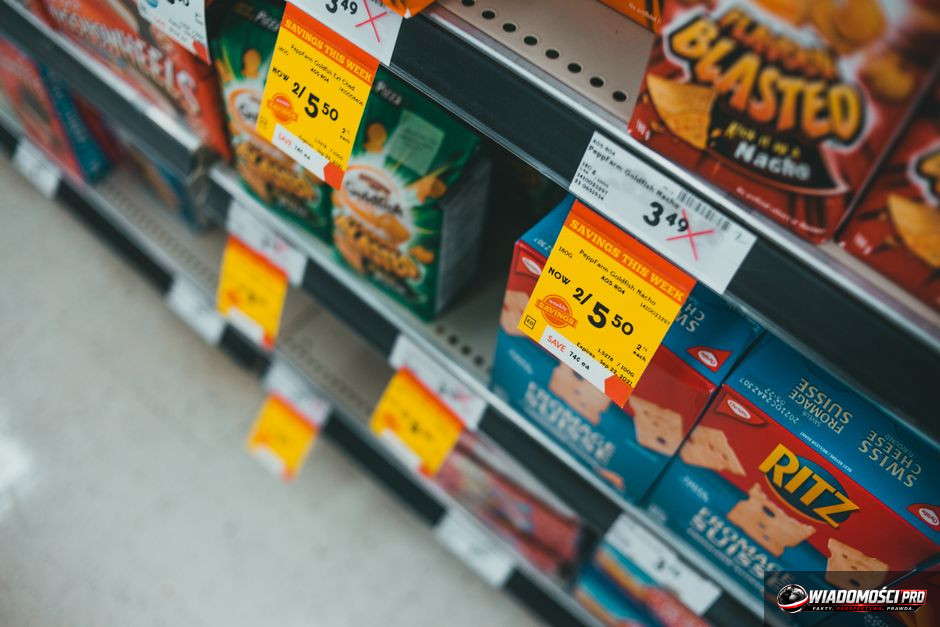
As of July 1, 2026, the VAT rate on non-alcoholic beer and selected energy drinks is 23%, which means a direct increase in retail prices by the difference between the previous preferential rate and the new tax. For example, a can of an energy drink that previously cost 4.50 PLN will increase to approximately 5.10 PLN after the rate change, assuming the full tax cost is passed on to the end customer. In the case of non-alcoholic beer, where previous preferences allowed for lower prices, a bottle previously priced at 5.00 PLN will become several dozen groszy more expensive, which represents a tangible difference in household expenses for those who purchase these products regularly.
The mechanism, which came into effect in the middle of the 2026 summer, removes privileges that the beverage industry has enjoyed for years. This decision is not merely a cosmetic correction of the tax system, but a radical break from the previous practice of taxing products that, according to the Ministry of Finance, should be subject to the highest rate. Analyzing data published in the final months of 2025 and at the beginning of 2026, it is clear that the government had been preparing the ground for these changes for a long time.
The mechanics of the increase and the math of the wallet
The transition from a preferential VAT rate to the basic 23% rate means that retailers must recalculate the price of each product individually. A store cannot absorb such a difference without drastically cutting its own margin, which is practically impossible in the reality of high rent and labor costs. The result is an automatic increase in shelf prices, which the consumer notices from their very first visit to the store after July 1.
Let's take a closer look at energy drinks. Their price consists of production costs, the manufacturer's margin, the distributor's margin, logistics costs, and taxes. When the VAT rate rises by several percentage points, the gross price must rise proportionally. If the previous price of a can was 4.50 PLN, then taking into account the new VAT rate, calculations point to an increase to around 5.10 PLN. This is an increase of 60 groszy per unit of goods. For someone buying a multipack of such drinks, the extra cost becomes very noticeable.
A similar pattern applies to non-alcoholic beer. This category, which has been developing dynamically in recent years as an alternative to alcohol, is losing its price advantage. If the price previously hovered around 5.00 PLN, then after the rate change, the consumer will pay about 5.60–5.70 PLN. The scale of the increase depends on exactly how individual retail chains have decided to account for the tax difference. Some may decide on periodic promotions to cushion the price shock, but in the long term, the market must accept the new price level resulting from the Ministry of Finance's policy.
The road to the decision: From autumn 2025 to summer 2026
The legislative process did not come as a surprise to market observers. As early as October 2025, as reported by businessinsider.com.pl, the Ministry of Finance spoke openly about plans to eliminate "tax absurdities." Officials argued at the time that the VAT rate system in Poland is opaque and requires unification. Behind the scenes, it was pointed out that some beverages, despite their composition and intended use, benefited from loopholes in the regulations, which allowed manufacturers to apply lower tax rates.
As the months passed, towards the end of 2025, information about the upcoming changes began to intensify. Farmer.pl clearly communicated on December 31, 2025, that 2026 would bring price increases resulting directly from the state's tax policy. The government did not hide the fact that the goal was to seal the system. It was about billions of zlotys which, in the ministry's assessment, should go to the budget rather than remain in the pockets of consumers or in manufacturers' margins.
Subsequent months, up to February 2026, confirmed the authorities' determination. Forsal.pl, in a publication dated February 27, 2026, described in detail the end of preferential rates. This was a signal to the industry that there would be no turning back from this decision. Beverage manufacturers who were still hoping to reach a compromise or exclude certain categories from the increases had to start preparing IT systems and price lists for the July revolution.
Impact on the industry and manufacturer strategies
The beverage industry reacted to these changes with a great deal of anxiety. For producers of non-alcoholic beer and energy drinks, the VAT increase is not just a problem with the shelf price, but above all a challenge for sales volume. Poles, accustomed to a certain level of spending on beverages, may limit consumption or look for cheaper substitutes, which hits manufacturers of premium brands.
As reported by INFOR.PL in December 2025, the industry had to adjust its strategies urgently. There was no talk of a gradual introduction of changes. The new 23% rate came into effect on July 1, 2026, which forced distributors to update price lists nationwide in one go. Some companies decided to change packaging sizes to keep the unit price at a level similar to the old one, which is a known market mechanism that allows hiding the real cost increase from the less attentive consumer.
Products such as energy drinks are particularly sensitive to price changes. Their target group is often budget-oriented. If the price of a can increases by 10–15%, sales in this category may see a decline, which in turn will affect the financial results of manufacturers. Companies are wondering whether maintaining the current margin with a higher tax will not lead to a permanent outflow of customers to product categories subject to a lower VAT rate, provided any such categories remain in this segment.
The strategy for fighting for the customer in the new fiscal reality currently relies on intensive optimization of production costs. Manufacturers are looking for savings in logistics, packaging, and marketing to at least partially offset the impact of the 23% VAT on the final price. Nevertheless, most market analysts agree that, in the final analysis, the consumer will cover the lion's share of this fiscal burden.
Budgetary perspective: Billions from beverages
The Ministry of Finance, in its communications from December 2025, emphasized that the unification of VAT rates is part of a broader strategy to stabilize public finances. The state budget, burdened with many expenses, needs constant revenue. The elimination of preferential rates on non-alcoholic beer and energy drinks is seen as a method to generate additional billions of zlotys annually.
For the state, this is a mathematical operation with a predictable result. The number of cans and bottles sold nationwide is enormous, so even a small tax increase on each item translates into a specific, large sum in the tax office's coffers. The Ministry of Finance argues that tax preferences should be reserved for essential products, such as unprocessed food, and not for categories of beverages that are often treated as recreational products or stimulants.
Skeptics, however, note that hitting non-alcoholic beer is contrary to declarations regarding the state's health policy. For years, this product was promoted as a healthier alternative to alcohol, and now it is becoming more expensive, which may discourage some consumers from choosing this option. Energy drinks, in turn, have long been in the crosshairs of the tax authorities due to health issues and concerns about the impact of excessive sugar and caffeine consumption on young people.
Regardless of political intentions, the fact remains unchanged: from July 1, 2026, the state collects a higher tax on every energy drink and non-alcoholic beer sold. This is pure profit for the budget, financed by everyone who reaches for these products in a store. This money is intended to supply the general financial needs of the state, which in practice means that consumers pay more for beverages, indirectly financing other public sector expenditures.
Is this the end of changes in 2026?
Observing the government's actions in the first half of 2026, one might get the impression that the Ministry of Finance has not said its last word. Although there is official talk of completing the process of sealing VAT rates on beverages, experts point out that every subsequent budgetary need could result in further moves in indirect taxes.
The system in which we have been operating since July 2026 is more rigorous and less lenient towards manufacturers than the one from a year ago. The consumer, accustomed to a certain price stability, must now relearn the costs of their shopping basket. There is no longer room for interpretations that would allow for the application of lower rates. The 23% rate is now the standard for these product categories, which closes the debate on tax preferences for energy drinks and non-alcoholic beers.
The future of the prices of these products will depend not only on taxes but also on global raw material and energy costs. However, it was the decision to increase VAT that became the main factor determining the sharp price increase in the middle of 2026. The beverage market in Poland has entered a phase of high tax burdens, and market players must reckon with the fact that every subsequent tax increase will be automatically passed on to the shelf price. The consumer has become the direct payer for the cleanup of regulations, and their wallet is the first place where the effects of this fiscal strategy are visible.
Summary and comparison of changes
As of July 1, 2026, the situation on the market is unambiguous. Products previously subject to lower VAT rates had to be adjusted to the 23% level. Below is a summary showing the scale of changes for the most important beverage categories:
- Non-alcoholic beer: before 01.07.2026 — preferential rate; after 01.07.2026 — 23% VAT.
- Energy drinks: before 01.07.2026 — preferential rate; after 01.07.2026 — 23% VAT.
Analyzing this state of affairs, it should be noted that these changes are not a one-time episode, but proof of a broader trend of unifying rates, which was mentioned by industry media, including Money.pl and Forsal.pl, in their reports at the turn of 2025 and 2026. The Ministry of Finance is consistently implementing a plan in which tax preferences for products considered less socially significant are being eliminated.
For the average Pole, this means that every visit to the store, during which they reach for an energy drink or non-alcoholic beer, involves a greater financial burden than just a few months ago. The scale of this burden is directly proportional to the difference between the old rate and the new 23% tax. This is math that cannot be avoided, and which has permanently become part of the shopping reality of the second half of 2026.
Questions and answers
Does the VAT increase apply to all beverages?
No, the VAT increase to 23% applies specifically to non-alcoholic beer and selected energy drinks, in accordance with the regulations that came into effect on July 1, 2026.
How much will product prices in stores rise?
The price increase is a direct result of the difference between the previous preferential rate and the new 23% VAT rate. In practice, this means that an example can of an energy drink costing 4.50 PLN may cost about 5.10 PLN, depending on the pricing policy of the specific seller.
Why did the government decide on this step?
The Ministry of Finance justifies the increase by the need to seal the tax system and eliminate unjustified preferences, which is intended to provide the budget with additional billions of zlotys in revenue.
Are manufacturers absorbing some of the costs?
Market data shows that in most cases, manufacturers are passing the tax cost on to the final price of the product to maintain production profitability in the face of rising operating costs.
Does this mean that beverage prices will continue to rise?
Current increases are the result of a tax decision. Further price changes will depend on market factors such as the costs of raw materials, energy, and the pricing policies of manufacturers and retail chains. At this moment, there is no information about further government changes to VAT rates on these products.
The consumer after July 1, 2026, finds themselves in a situation where they must accept higher prices for products that previously enjoyed lenient treatment. This is a structural change that permanently alters the price landscape in Polish stores. Every can of an energy drink or bottle of non-alcoholic beer is now more expensive, and the state records higher revenue as a result. For the industry, this is a time of trial, in which only those who can most effectively manage prices in the face of fiscal regulations will survive. The reader must be aware that this is not just a temporary change, but a new market standard that will apply for the coming years. The tax system has become tighter, but the cost of this tightening is entirely passed on to the average buyer, who pays more with every transaction. This is a reality we must face every day while shopping in the beverage aisle.
Sources
- "Gigantic VAT increase"? What decision is it about - Konkret24
- Government decided: there will be a VAT increase in 2026 - Forsal.pl
- In 2026, we are facing a VAT increase. Prices will go up - Farmer.pl
- Ministry plans to increase VAT rate on selected beverages. It will partially eliminate an absurdity - businessinsider.com.pl
- Ministry of Finance has a plan to raise VAT. The budget will gain billions - Interia Biznes
- Non-alcoholic beer and energy drinks with higher VAT. Government is preparing large increases as early as 2026 - INFOR.PL
- Will non-alcoholic beer and wine be more expensive? MF is working on a VAT increase - Money.pl
- Government raises VAT – changes to take effect on July 1, 2026. End of preferential tax rates? - Forsal.pl
Article prepared by the Wiadomości PRO editorial team with the support of artificial intelligence. Facts are derived from the sources listed above.


Komentarze (0)
Ładowanie komentarzy...