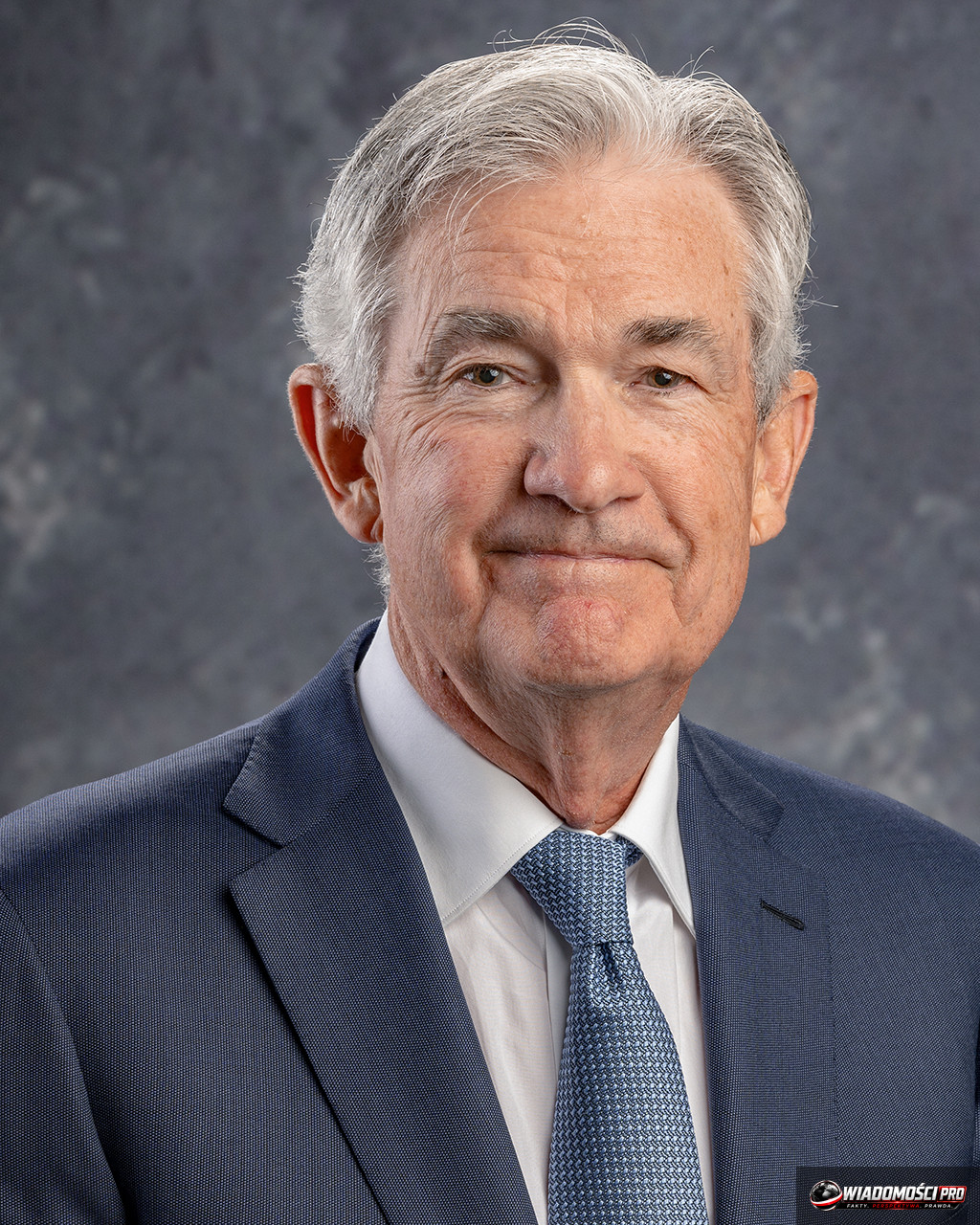
The Federal Reserve has raised interest rates by 75 basis points, marking the most significant move since 1994. This decision is a direct response to the labor market (NFP) data published on September 4, 2026, and persistent record inflation. Such a sudden tightening of monetary policy immediately impacted the valuations of risky assets, leading to clear declines in the cryptocurrency market, including Bitcoin.
New Fed chair and a paradigm shift in monetary policy
The nomination of Warsh as head of the Federal Reserve was supposed to signal stability, but the reality turned out to be quite different. As recently as July 29, 2026, the market assumed that the Fed would maintain its current course, ignoring symptoms of an overheating economy. Investors based their strategies on the belief that the central bank would avoid radical moves before the end of the year. These calculations ceased to be valid the moment the decision to hike by 75 basis points was announced.
Warsh's actions break away from the strategy of his predecessors, who for months avoided sudden moves. As early as August 28, 2026, the Fed chair signaled the need to tighten policy, although the market consensus at the time ignored these warnings. Even former governor Miran, as late as August 27, publicly questioned the validity of hikes, calling them strange actions in the context of the macroeconomic readings of that time. The market was lulled by summer stagnation, which made the September decision a liquidity shock for many stock market participants.
The shift in the Fed's stance was not a matter of choice, but a necessity forced by hard data. When inflation reached levels that made further passivity impossible, and the labor market showed unexpected resilience, the central bank abandoned attempts at a "soft landing." Currently, it is the mathematics of interest rates, not analyst forecasts, that determines the valuations of companies and digital assets. Investors who built portfolios in August based on expectations of a dovish pivot were forced to immediately revise their positions.
Labor market as the main driver of the decision
The data published on September 4, 2026, proved decisive. The employment report (NFP) indicated the state of the economy, which in the opinion of Fed policymakers had become too overheated to count on maintaining rates at their current level. The InteractiveCrypto service emphasized that after the publication of this data, any decision other than an aggressive hike would have been perceived as a loss of control over monetary policy.
The structure of the NFP report from September 4, 2026, provided arguments that ruled out further discussion of a pause in the tightening cycle. Employment growth while maintaining high wage dynamics created a spiral that the central bank must stifle by raising the cost of money. For the financial sector, this means the end of the era of free capital, which was utilized by technology companies and investment funds operating on high leverage.
The scale of the hike, comparable to the move in 1994, aims not only to fight inflation but also to force a cooling of the economy. For investors, this means the necessity of valuing assets at a significantly higher cost of debt financing. Nominal values that seemed justified as recently as August now require discounting at a higher risk-free rate. This effect hits high-beta assets first, which includes most of the crypto market.
Financial market reaction: From Bitcoin to stock exchanges
The market reaction was immediate. Bitcoin, acting as a barometer for speculative sentiment, reacted with a decline immediately after the Fed's announcement. A report prepared by Bitget points to a clear correlation between the hike decision and capital outflows from the digital asset sector. Institutional investors, calculating the risk resulting from the higher cost of money, are withdrawing liquidity from high-volatility markets toward fixed-income instruments, whose yields have risen following the Fed's decision.
Companies listed on technology exchanges also felt the effects of this decision. Higher interest rates mean increased debt service costs, which in company valuation models leads to a reduction in the present value of future cash flows. As a result, individual and institutional investors had to accept lower valuations for their portfolios.
Specific impact on an investor's portfolio:
- A 75 basis point rate hike translates into a direct increase in debt service costs in the US. For example, with a 500,000 USD mortgage with a variable interest rate, a 0.75% rate hike means an increase in the monthly installment of approximately 250-300 USD.
- Capital is fleeing risky assets because the yield on US Treasury bonds has become more attractive compared to stock dividends or potential gains from Bitcoin.
- The "buy the dip" strategy has lost its rationale in the face of the determination of a central bank that prioritizes fighting inflation over supporting a bull market.
For the individual investor, this situation means that portfolios based solely on growth stocks require hedging in the form of defensive instruments. The Fed has set a clear barrier: the fight against inflation is structural in nature and will not end with a single decision if macroeconomic data does not show a sustained downward trend.
Expert opinions: Was the hike necessary?
The debate surrounding the Fed's decision has divided the economist community. On one hand, there are proponents of a hard-line policy who believe that inaction in 2026 would have led to the entrenchment of inflation at a level threatening the stability of the dollar. On the other hand, figures such as the aforementioned former governor Miran pointed to the risk of excessively suffocating the economy. Speaking on August 27, Miran suggested that the Fed might be acting based on lagging data, ignoring the risk of recession.
Despite these warnings, the current Fed leadership decided on a radical course. The policymakers' argument is simple: the cost of the error resulting from an insufficient response to inflation is higher than the cost of the error consisting of cooling the economy too much. This "cold-blooded" stance meant that financial markets had to revise their expectations regarding future monetary policy.
Experts point out that the lack of consensus within the Fed regarding the pace of hikes could lead to increased volatility in the coming months. Each subsequent NFP reading will be analyzed to see if Warsh's policy is yielding the intended effects. If the labor market does not show signs of cooling, investors should expect a continuation of the hiking cycle, which rules out a scenario of a return to cheap money in the short term.
Global context: Fed, BoJ, and BoE in line
The Fed's decision is not an isolated event, but part of a broader process of global monetary tightening. Central banks, including the Bank of England (BoE) and the Bank of Japan (BoJ), have been struggling with similar inflationary dilemmas since June 2026. As the ING Economic Service indicated in June of that same year, the decisions of the world's largest financial institutions are closely correlated through global capital flows.
The US-Iran agreement, which was discussed in mid-2026, was supposed to bring some relief to commodity markets, but the impact of this event on global inflation proved limited. In the face of the Fed's decision, local geopolitical factors are taking a back seat. The main factor determining asset prices has become dollar liquidity.
It is worth noting the following turning points for the global economy:
- May 2026: First inflationary signals in ING data, which heralded the need for central bank reactions.
- June 2026: Decisions by the BoJ and BoE, which seemed bold at the time, today serve as confirmation of the global trend of fighting inflation.
- September 2026: The NFP report, which finally sealed the fate of "dovish" policy in the US.
For investors watching global markets, the Fed's decision means a strengthening of the dollar against other currencies, which further complicates the situation for emerging markets and export companies. Bitcoin, as a globally priced asset, is doubly exposed to a strong dollar and a higher opportunity cost of capital.
Forecasts for the coming months of 2026
Forecasting Fed moves in the fourth quarter of 2026 focuses on two scenarios. The first assumes that the 75 basis point hike from September will be enough to curb inflation dynamics, which will allow the Fed to move to a "pause and observe" policy. The second scenario, more likely in light of statements by Fed Chair Warsh, assumes that the central bank will maintain a restrictive course until the labor market shows clear signs of slowing down.
For long-term investors, this means the necessity of adapting to an environment of high interest rates. Assets that grew thanks to excess liquidity in 2023-2025 are currently in a correction phase. Capital is shifting toward high-rated Treasury bonds and companies with strong cash fundamentals that do not need to rely on debt financing.
Investors' patience will be tested. If inflation does not start to fall at the pace expected by the Fed, the coming months could bring further tightening, which will push Bitcoin and other risky assets into a defensive position. The Fed does not conduct policy at the behest of the stock market, which means that investors must reckon with further pressure on portfolio valuations regardless of short-term index fluctuations.
What this means for you
The interest rate hike by the Fed directly affects financing costs in the US, which translates into global credit conditions. For the consumer, this means more expensive mortgage and consumer loans, which limits purchasing power and thus affects the profits of consumer companies. Holders of cash in dollars can expect higher interest rates on deposits and bonds, but the real purchasing power of these funds remains under inflationary pressure. Investors in stock and cryptocurrency markets, in turn, must prepare for a period of lower valuations, where asset selection based on hard cash flows, rather than speculation, is rewarded.
Questions and answers
Why did the Fed decide on such a large hike now?
The decision stems from strong data from the employment report (NFP) of September 4, 2026, which showed that the US economy is too overheated, which, combined with persistent inflation, forced the central bank to take radical action.
How did the cryptocurrency market react to this decision?
The market reacted with declines; Bitget data confirms that Bitcoin lost value immediately after the announcement of the hike decision, which results from capital outflows toward safer financial havens.
Is this the last hike this year?
Signals from Fed Chair Warsh indicate that the central bank is ready for further action if inflationary pressure does not start to fall clearly, which means that the market must prepare for a scenario of maintaining high rates for a longer period.
Who loses the most from the Fed's decision?
Those who lose the most are investors holding portfolios based on technology companies and speculative assets, such as cryptocurrencies, as their valuations are the most sensitive to rising debt financing costs.
What impact does this decision have on borrowers?
The Fed's decision leads to an increase in loan interest rates, which translates into higher monthly installments for borrowers, reducing their disposable income and affecting the slowdown of consumer demand.
Sources
- Will NFP force the Fed to hike rates? - forexclub.pl
- Bitcoin falls, strong employment report restores possibility of Fed interest rate hike - Bitget
- Fed Chair Warsh signals possible rate hikes - UA.NEWS
- Before Fed meeting, former governor Miran says interest rate hike would be "strange" - BeInCrypto
- New Fed chair does not change course. There is a decision on interest rates - businessinsider.com.pl
- Interest rate market after strong labor market report: Fed holds, but hike getting closer - InteractiveCrypto
- ING Daily: Limited positive market reaction to US-Iran agreement. BoJ, Fed, BoE decisions this week. Today details of domestic inflation for May. - ING Economic Service
- Interest rates in the US. There is a decision from the new Fed chair - Interia Biznes
Article prepared by the Wiadomości PRO editorial team with the support of artificial intelligence. Facts come from the sources listed above.


Komentarze (0)
Ładowanie komentarzy...