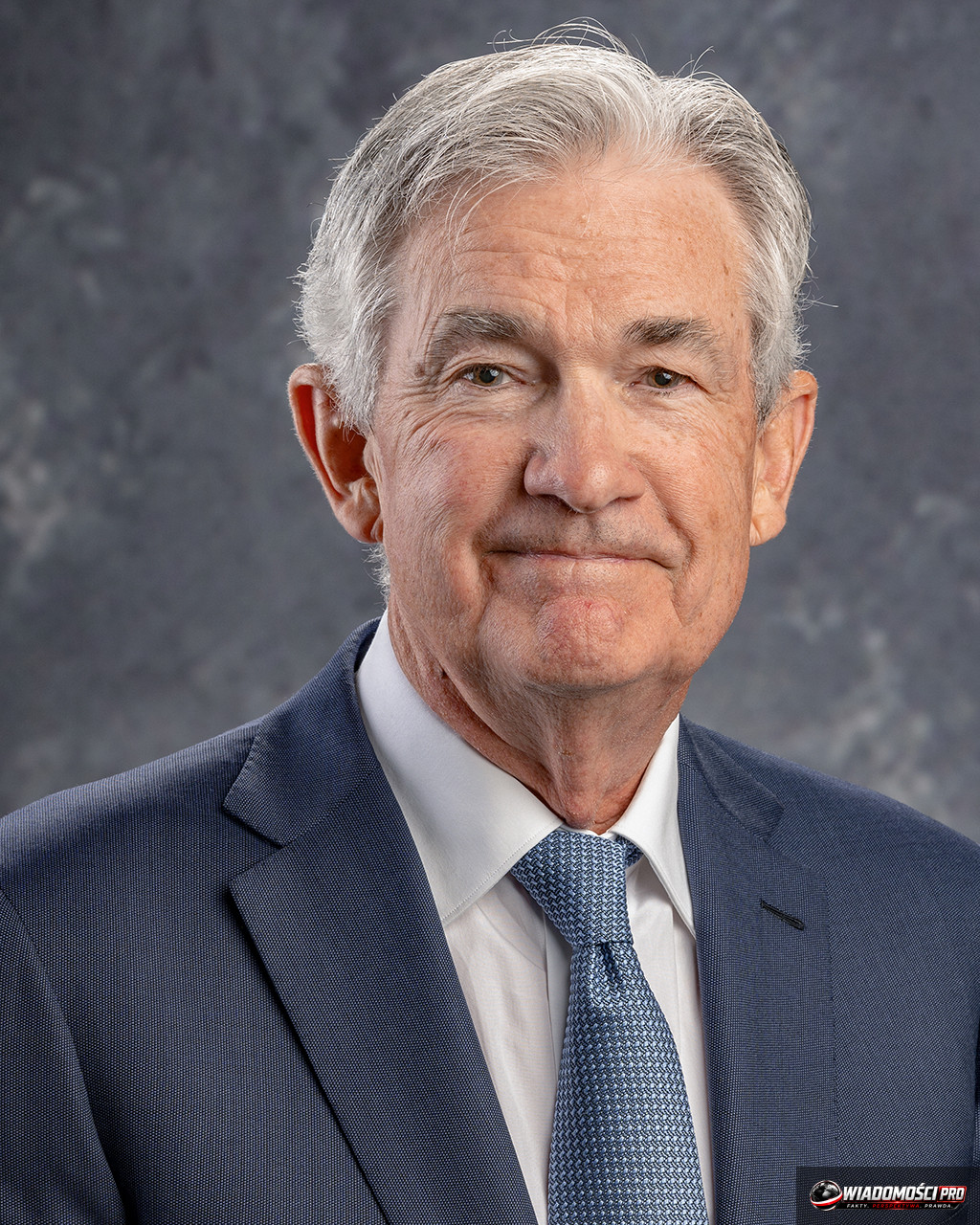
The Federal Reserve has lowered its main interest rate to a range of 4.75-5.00 percent, which directly reduces the cost of money in the economy and heralds a decline in loan interest rates and a potential increase in asset valuations. For the American consumer, this means a noticeable relief in monthly obligations, while stock market investors have received a signal to revise their long-term strategies. This move, taken in mid-September 2025, officially closes the period of high financing costs that defined the American market over the previous quarters.
Mechanisms behind the decision: why 50 basis points?
The decision to cut rates by 50 basis points goes beyond the standard, cautious 25 bps adjustments that market observers were accustomed to in times of uncertainty. Jerome Powell and the FOMC members decided on a larger move to accelerate the economy's adaptation to the new financial reality. In the world of economics, 50 basis points is not just cosmetic. It is a real difference in cash flow for the entire corporate sector.
When the cost of money falls, commercial banks adjust their credit offerings more quickly because their own cost of acquiring capital from the Fed becomes lower. This mechanism is direct: the benchmark rate affects the interest rates on mortgages, corporate credit lines, and consumer loans. As the main rate falls to the 4.75-5.00 percent range, the entire financial system begins to price risk differently than it did a month earlier. Companies that were holding back on investments due to high debt-servicing costs now gain the margin of safety necessary to make expansion decisions.
Analysts point out that such a decisive cut suggests that the Fed has identified risks it had not previously highlighted. If the central bank decides on a "big" step, it usually means that forecasts regarding the labor market or US GDP dynamics require immediate stimulation. For an investor, this means the need to exit safe havens, such as short-term bonds, and search for higher returns in assets that benefit from cheaper financing.
It is worth noting that this situation contrasts with September 2024, when the market held its breath waiting for any change, only to ultimately settle for the status quo. Now, the situation is different. We have a concrete move that ends the speculation that has lasted since Jerome Powell's first announcement in August 2025.
Political pressure and its impact on the Fed's schedule
An analysis of the Federal Reserve's actions over the last twelve months would not be complete without considering the political factor. Donald Trump, both before winning the election and after taking office, did not hide his expectations of the central bank. In July 2025, the public debate regarding the Fed's independence reached a climax. Pressure to lower rates became part of a broader narrative about stimulating American industry.
Although Powell repeatedly emphasized that decisions are made based on hard economic data, the temporal coincidence between political pressure and the September 2025 decision is a fact that cannot be ignored. For financial markets, this means the central bank is in a difficult position. It must balance the technical requirements of fighting inflation with the political demand for cheap credit.
Such an environment raises questions about the sustainability of the cycle. Is the current 50 basis points the result of a well-thought-out strategy, or the result of a compromise forced by the external environment? The answer to this question will define market sentiment over the next six months. Investors, having learned from periods when politics took precedence over economics, remain highly vigilant regarding every subsequent statement by the Fed chair.
Impact on your wallet: concrete numbers
To understand what a 50 basis point rate cut means for the average borrower or company, a simple calculation is needed. Suppose an American company has $10 million in variable-rate debt directly tied to the Fed rate. A 0.50 percentage point (50 bps) cut means a saving of $50,000 per year in interest costs alone for that company.
For an individual investor with a $500,000 mortgage, a drop in interest rates by the same amount means a potential reduction in interest costs of about $2,500 per year. These are funds that were "frozen" in banks under high-rate conditions and can now return to the economic cycle in the form of consumption or reinvestment.
This shows why markets reacted to the Fed's decision with such great attention. Increasing liquidity in the private sector is a key element of economic growth. However, if companies decide to pay off debts instead of making new investments, the stimulus effect may prove weaker than expected. It is precisely this "catch" that keeps analysts from falling into unjustified enthusiasm.
Stock market reactions and asset revaluation
The stock market's reaction to the Fed's decision was not uniform. On one hand, the technology sector, for which cheap financing is fuel for growth, reacted positively. On the other hand, small-cap companies, which are more sensitive to changes in debt-servicing costs, are still analyzing whether a 50 bps cut is enough to improve their financial results in the fourth quarter of 2025.
Capital began to flow out of money market funds, which had offered attractive returns with minimal risk over the past few months. Now, as Treasury bond yields fall in response to the Fed's decision, investors are forced to return to the stock market. This is a natural process of "searching for yield," which historically drives stock index valuations.
However, one should not forget the risk of recession. If the US economy is slowing down faster than official reports indicate, the rate cut could be seen as a defensive measure. In such a scenario, stock markets might initially rise, only to correct later in the face of weakening corporate earnings. Investors who remember 2024 and the periods of "holding their breath" know that markets do not forgive the misinterpretation of central bank intentions.
The dollar under pressure: what's next for the US currency?
The weakening of the dollar following the Fed's decision is the result of a simple mechanism: the difference in asset yields. When US interest rates fall, the attractiveness of US Treasury bonds in the eyes of foreign investors decreases. Foreign capital that flowed into the US in search of safe 5 percent returns begins to flow toward emerging markets or other currencies where real interest rates remain higher.
For American exporters, this is good news, as a weaker dollar increases the competitiveness of their products in global markets. However, for consumers, it means more expensive imported goods, which, at a certain level of inflation, could become a problem for the Fed in 2026. Jerome Powell faces a difficult task: to maintain the course of stimulating the economy without triggering a new wave of price pressure resulting from currency depreciation.
The current sell-off of the dollar is a test for the global financial system. If the downward trend continues, we can expect changes in the strategies of hedge funds that have built positions on the strengthening of the American currency for years. From the perspective of an individual investor in Poland, this primarily means volatility in the USD/PLN pair, which in the coming months will depend not only on the Fed's actions but also on the decisions of the Polish Monetary Policy Council (RPP).
The 2026-2027 perspective: is this the start of a cycle?
All eyes are now on the future. Was September 2025 a one-off episode, or the beginning of a long cycle of monetary easing? During the press conference following the announcement, Jerome Powell emphasized flexibility. This is a word that, in the language of central bankers, means a lack of commitment. The Fed wants to keep the door open to react to labor market readings.
Most market analysts predict that the Fed will continue cuts in 2026 if inflation remains in check. The baseline scenario assumes a slow approach to the neutral level of interest rates, which may take another 18 months. This means that 2026 will be a year of adjustments.
For borrowers, this is a signal to plan finances carefully. If rates fall successively, debt refinancing will become the main topic in conversations with banks. For investors, the most important task for the turn of 2026 and 2027 will be monitoring GDP indicators. If the US economy shows strength, rates may be paused at the 3.5-4.0 percent level. However, if we see signs of a slowdown, the Fed may be forced to go much lower.
The role of the RPP and local context: will the Polish market feel these changes?
It is worth remembering that Fed decisions do not happen in a vacuum. Although the Polish Monetary Policy Council (RPP) kept rates unchanged in September 2024, every move by the Federal Reserve is analyzed by our policymakers. Rate cuts in the US usually create space for other central banks to ease policy, provided that local inflation allows it.
For a Polish borrower, especially one with a loan in zlotys, the direct impact of the Fed's decision is limited, but the psychological and macroeconomic impact is significant. If the dollar weakens and global sentiment toward emerging markets grows, the zloty may strengthen. This, in turn, helps lower imported inflation, which gives the RPP more room for maneuver regarding interest rates in Poland.
However, one should not expect automatic reactions. The Polish economy follows its own rules, and local inflation remains the main point of reference for the RPP. Nevertheless, the end of the tightening cycle in the US is a signal to the whole world that the era of "expensive money" is slowly becoming a thing of the past.
Investment strategy in the new environment
How, then, should you manage your portfolio in the face of a rate cut to 4.75-5.00 percent? First and foremost, you should revise your exposure to corporate bonds. In an environment of falling rates, older bond series with higher coupons gain in value, which creates an opportunity to realize profits.
On the other hand, dividend-paying stocks become more attractive compared to bank deposits or bonds. Investors should look for companies with stable cash flows that can use cheaper capital for further growth, rather than just paying off rising interest.
Skepticism, however, remains the best advisor. The market has a tendency to over-discount future cuts. If the Fed does not deliver further cuts in 2026 at the pace expected by investors, we may witness disappointment and a sharp correction in stock markets. Therefore, diversification remains the foundation, regardless of what Jerome Powell has announced.
Questions and answers
How will the rate cut affect my loans?
The cut to 4.75-5.00 percent means a decrease in the cost of money, which over time should translate into lower installments for loans based on US benchmark rates. The direct impact on Polish mortgage loans is limited, but globally, it improves the climate for borrowers.
Does this mean the end of high inflation in the US?
The cut suggests that the Fed feels more confident about the inflation path and wants to support economic growth, which is a signal of price stabilization in the economy, although fighting inflation remains the bank's priority.
How will the cryptocurrency market react to this decision?
Historically, rate cuts increase market liquidity, which usually favors the growth of alternative assets, such as cryptocurrencies, due to cheaper capital and the lower attractiveness of safe debt assets.
Why did the Fed choose 50 basis points instead of 25?
Such a move suggests that the Federal Reserve assessed the risks to the American economy as requiring a decisive reaction, likely in response to labor market data or signs of an economic slowdown that forced a faster transition to the easing phase.
What does this mean for holders of cash in dollars?
People holding cash in USD may feel a drop in the profitability of deposits and savings accounts, as banks quickly adjust their interest rates to the Fed's decision. In this environment, it is worth considering moving part of your capital into assets with higher growth potential.
Sources
- Trump got his way. The Fed has resumed its interest rate cut cycle - Bankier.pl
- The September Fed decision may disappoint the markets. Debate over a possible US interest rate cut - Strefa Inwestorów
- How markets will react if the Fed returns to rate cuts - Analizy.pl
- The Fed holds its breath. The market expects rate stabilization in the US - Money.pl
- When will the Fed cut interest rates? Jerome Powell's announcement is here - Rzeczpospolita
- The RPP did not change interest rates in September '24 - bank.pl
- The Federal Reserve under pressure from Donald Trump. Time for a key decision - Business Insider Polska
- The Fed cuts rates for the first time this year. What will the effects be? - subiektywnieofinansach.pl
Article prepared by the Wiadomości PRO editorial team with the support of artificial intelligence. Facts are derived from the sources listed above.



Komentarze (0)
Ładowanie komentarzy...