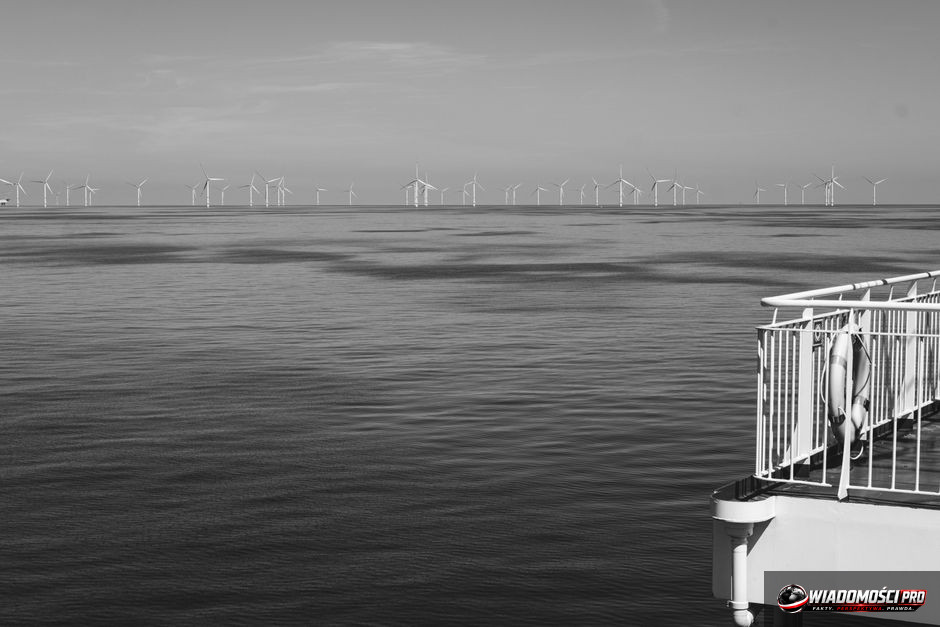
Orlen is building the Baltic Power farm for over 18 billion PLN, with market analysts estimating that subsequent stages of expansion in the Baltic will consume between 5 and 10 billion PLN. Detailed figures for new operational alliances planned for 2026 remain the subject of confidential negotiations and have not yet been included in official stock exchange announcements. The capital involved in this venture currently represents the largest expenditure in the history of the Polish offshore wind energy sector. Investors tracking the company's stock exchange announcements are awaiting an update to the financial strategy, which would allow for an assessment of the real costs of expanding transmission infrastructure in the coming quarters.
Baltic Power: The foundation of Poland's energy transition
The construction of the Baltic Power offshore wind farm forms the backbone of Orlen's investment portfolio in the offshore segment. The project, implemented jointly with the Canadian company Northland Power, involves the installation of turbines with a total installed capacity reaching approximately 1.2 GW. This scale allows for powering nearly 1.5 million households with electricity. The Canadian partner provides know-how gained from implementing projects in the North Sea and off the coast of Asia. For Orlen, this alliance reduces operational risk, which, when building offshore installations, exceeds the challenges known from onshore wind farms.
The Płock-based concern has adopted a financing model based on syndicated loans. A group of 25 financial institutions is participating in this process, including PKO BP, Bank Pekao, Santander Bank Polska, and a number of international commercial banks and export credit agencies. A debt portfolio structured in this way secures the project's liquidity until the farm is fully operational. The company's management prioritizes cost discipline. Prices for steel, copper, and specialized service in the offshore sector are subject to constant market fluctuations, which forces adjustments to the final cost estimate.
Orlen's management confirms in periodic reports that Baltic Power is being implemented according to schedule. Logistical challenges in 2026 force contractors to constantly optimize processes. Orlen is conducting talks with transmission system operators from Baltic countries, aiming to develop a model for shared use of infrastructure connecting Polish farms with neighboring markets. Every shift in the date of signing final agreements affects the valuation of future cash flows from this segment.
The profitability of Baltic Power depends on two main factors. The first is the unit price of energy, determined under a contract for difference, i.e., the CfD (Contract for Difference) mechanism. The second remains the company's ability to keep operating costs at the level assumed in the feasibility study. Any deviations resulting from labor or material cost inflation directly burden the concern's balance sheet. Investors should carefully analyze the reports for the third quarter of 2026, as the first budget adjustments regarding the operational phase will appear there.
Baltic Alliance: Strategic regional cooperation
The integration of the power systems of the Baltic states with the Polish transmission network is a condition for the stability of energy supplies in the region. Orlen, as the leader of the consortium, aims to create an energy corridor that would allow for the seamless exchange of surplus electricity from offshore wind farms. Cooperation with Lithuania, Latvia, and Estonia goes beyond pure trade. It includes joint technical maintenance and the standardization of transmission protocols.
Orlen specialists are working with operators from Baltic countries on a system of so-called energy islands. This concept assumes the possibility of cutting off part of the network in the event of a failure without losing the stability of the entire system. Technologies used at Baltic Power, such as monopile foundations, are being analyzed by regional partners for adaptation in the difficult conditions of the Baltic seabed. The transfer of knowledge between the concern and local energy companies is intended to lower the execution risk of installations planned after 2028.
The market needs concrete intergovernmental agreements that would define the division of expenditures for the expansion of power stations. Currently, the burden of financing rests largely on national entities. Orlen, as the sector leader, takes on the greatest technological responsibility, which, in the event of delays in component deliveries, puts the company in a difficult negotiating position. Skeptics point out that the lack of precise provisions on co-financing by partners could lead to a situation where the Polish concern becomes the sole guarantor of system stability for the entire region.
The costs of expanding transmission networks are often underestimated. Modernizing receiving stations and building new high-voltage lines consume billions of PLN, and their return is spread over decades. There is talk behind the scenes about involving capital from EU funds, but applications for support are still awaiting consideration in Brussels. The lack of a decision on granting subsidies means that every subsequent zloty invested in the Baltic alliance comes directly from Orlen's own capital. Whether this is business-justified or merely politically necessary is a question to which the company's management has not yet provided a definitive answer.
Project financing: Orlen's investment capacity
Managing capital on such a large scale requires iron discipline from Orlen. Financing offshore wind energy is based on a mix of own funds and debt. In the case of Baltic Power, this structure protects the company's credit ratings. However, in the face of investment plans for 2027–2030, the ability to take on further liabilities is becoming increasingly limited.
As of September 3, 2026, the main source of financing remains generated operating profit and issued corporate bonds. The company is successively repaying tranches of syndicated loans, which allows for maintaining the net debt to EBITDA ratio at a safe level. Analysts, however, point to rising debt service costs. In an environment of higher interest rates, every new loan to finance the next stage of offshore turns out to be more expensive than funds obtained two years ago. This calls into question the profitability of projects whose internal rate of return (IRR) hovers around the limit of acceptability for institutional investors.
Orlen's plans include the prospect of joint venture partnerships for subsequent projects in the Baltic. Such a solution would allow for sharing investment costs among several players, which would radically lower the capital exposure of the Płock-based concern. Negotiations with potential foreign partners are ongoing, but the lack of public declarations for 2026 signals that differences in asset valuations remain significant. Investors fear that the prolonged negotiation process will delay final investment decisions (FID) for subsequent offshore farms.
Main components of financial outlays:
- Baltic Power (wind farm construction) — over 18 billion PLN (company data)
- Operating and service costs (OPEX) — projected for the 25-year project lifecycle
- Investments in port infrastructure (Świnoujście) — co-financed from national funds
The entire offshore sector in Europe is struggling with the problem of high interest rates. Brussels, through support programs for the green transition, offers grants, but their scale remains insufficient in the face of multi-billion capital needs. Orlen is balancing between the necessity of maintaining the pace of investment and profitability requirements, which in current macroeconomic conditions is a huge challenge. Every delay in obtaining external capital translates into higher debt service costs, which directly affects the company's financial result in the energy segment.
Energy security: Why is the Baltic key?
The Baltic Power project forms the foundation of Poland's transition. This investment directly reduces the import of energy raw materials, replacing dependence on external supplies with a stable, domestic source of energy. This is not just a matter of ecology, but above all, an economic calculation. Own generating capacities in the Baltic act as an insurance policy against the volatility of natural gas prices on global markets.
Orlen is not showing its cards before the end of the current investment cycle. Detailed figures for potential agreements from 2026 remain confidential. There are no official announcements, which forces the market to make its own estimates. Analysts assess that a possible expansion of operations may require additional outlays of 5 to 10 billion PLN, but these are calculations based on market data, not on official company documents.
In the game for the country's energy independence, the lack of transparency regarding new alliances raises questions about the real cost of further expansion. The promise of cheaper electricity remains attractive, but until Orlen presents concrete numbers regarding the expansion of cooperation, investors are operating in the sphere of strategic assumptions. From the perspective of the end-user, the key question remains whether the new infrastructure will realistically influence the reduction of energy prices in the national mix. Experiences from other European markets show that offshore wind energy initially generates high system costs, which only begin to stabilize electricity prices for industry after reaching full operational scale.
Technological and logistical challenges
The implementation of the Baltic Power project is entering a phase where optimistic visualizations are giving way to raw engineering. Investors are watching to see if the company will be able to meet the schedule in the face of increasing pressure on the supply chain. In 2026, logistical challenges are not decreasing; on the contrary, the competition for specialized installation vessels (WTIV) in the North Sea and the Baltic has become exceptionally fierce.
Moving heavy offshore components to the middle of the sea is a logistical proving ground. The Baltic does not forgive planning errors. Engineers are facing a series of barriers that complicate every stage of work:
- The necessity of building a specialized installation port in Świnoujście constitutes a critical bottleneck. Without full operationality of this infrastructure, the pace of turbine assembly may be drastically limited, which generates delays in service contracts.
- The depth of the Baltic in the designated zones forces the use of non-standard foundations, which raises the unit costs of the entire installation.
- Hydrometeorological conditions, including unpredictable waves and periodic storms, drastically narrow the weather windows for installation units, forcing costly downtime that was not foreseen in the original schedules.
The investment in Świnoujście is a race against time. If the port does not reach full capacity according to plan, the entire supply chain for offshore wind farms will begin to break. One element is missing from this puzzle: financial transparency regarding future alliances that would support further expansion. Will these partnerships bear the weight of rising material and service costs in the coming years? At this moment, we only know that contracting for subsequent stages remains in the sphere of negotiations, and no concrete figures have yet been publicly confirmed. The budget for the entire venture remains fluid and susceptible to all market turbulence, which is a warning signal for conservative investors.
Schedule and outlook until 2030
Orlen is consistently implementing the Baltic Power project, which forms the foundation of the company's current offshore wind energy strategy. According to the adopted schedule, the first megawatts of energy will flow from the farm to the national grid before the end of the decade. This is an ambitious goal, considering the logistical challenges of installing turbines in the Baltic. The company aims to increase installed capacity in offshore to a level consistent with the current Energy Policy of Poland, however, the path to realizing these assumptions remains a mystery for market analysts.
Although the concern reports that it is conducting talks regarding new alliances for 2026, the detailed financial figures for these agreements have not yet seen the light of day. Negotiations are ongoing, and investors who were counting on quick specifics regarding the scale of new partners' financial involvement must arm themselves with patience. The lack of transparency regarding the costs of new agreements raises questions about the final financial burden that will rest on Orlen in the second half of the decade. The energy market in the region is unstable, and the costs of offshore technology often deviate from initial estimates.
The management has not confirmed whether current budgets for subsequent investment phases will be maintained or will increase in the face of new partnerships. Without hard data on the value of these alliances, assessing the profitability of the expanded portfolio of projects remains pure speculation. Orlen is playing for time, trying to close negotiations before announcing subsequent stages of the strategy until 2030. For energy consumers, this means uncertainty as to the pace at which the new infrastructure will realistically lower system costs in the Polish energy mix.
What this means for you
For the end-user, Orlen's investments mean the stabilization of energy prices in the long term, but in the short term, they require huge capital outlays that burden the company's balance sheet. Companies in the maritime and construction sectors are gaining, while coal-based entities that must close unprofitable units faster are losing. In a five-year perspective, the success of Baltic Power will be a litmus test for the entire Polish transition. If the project is delivered within the assumed budget and on time, it will become a model for subsequent farms. Otherwise, it may become a warning against excessive optimism in planning infrastructure investments with such a high scale of risk. Ultimately, it is the end consumers who will feel the effects in their energy bills of how effectively Orlen manages this multi-billion capital.
Orlen's financial situation in the context of offshore is complicated. On one hand, the company is building assets of enormous strategic importance; on the other, it is exposing itself to the risk of variable capital costs. Investors must look at every company announcement as an element of a puzzle. The question of whether Orlen will manage to finance subsequent farms on its own remains open. The lack of strategic partners with a strong capital position may force the company to issue further bonds, which is not an optimal solution in an environment of high interest rates.
It is also worth noting the role of the government. The state's energy policy assumes dynamic development of offshore, which gives Orlen a certain protective umbrella. Support mechanisms in the form of contracts for difference (CfD) limit energy price risk, but do not eliminate investment risk at the construction stage. If the costs of construction materials, such as steel or specialized metal alloys, continue to rise at a double-digit rate, the original budget assumptions for Baltic Power may require revision.
Another aspect is the availability of personnel. Building farms at sea is not just steel and concrete; it is primarily specialized engineering staff. Orlen must compete for employees with global players such as Ørsted or Equinor. High salary costs in the offshore sector are an inherent part of the project budget. If the company fails to keep key engineers within the project structures, the risk of delays will increase. This directly translates into operating costs, which in the long term affect the margin from energy production.
Looking more broadly, the energy transition in Poland is a process in which Orlen plays the leading role. However, the success of this process depends on many external factors over which the concern has no direct influence. Meteorological conditions in the Baltic, CO2 emission allowance prices, and supply chain stability are variables that can change the project's profitability overnight. Investors should therefore remain vigilant and not uncritically trust investor presentations, which often omit real operational risks in favor of optimistic forecasts.
Regarding Baltic alliances, the key question remains the model of cooperation. Will these be capital partnerships or merely operational ones? A capital partnership with a large investment fund or another energy concern could significantly relieve Orlen's balance sheet. In turn, an operational partnership, consisting of sharing transmission infrastructure, provides cost benefits but does not solve the problem of financing the turbines themselves. Orlen must choose a path that, on one hand, ensures control over assets, and on the other, disperses financial risk.
In summary, Baltic Power is only the beginning of a long road. Subsequent projects, such as those planned for the end of the decade, will require even greater outlays. If Orlen manages to optimize costs at the Baltic Power construction stage, it will have strong arguments in negotiations with banks for subsequent debt issues. Otherwise, the company may be forced to revise its ambitious development plans. Citizens, looking at their bills, must be aware that the price of energy from offshore farms will not be low from the first day. This is an investment in stability, for which we must pay now in order to become independent in the future from the variable prices of imported energy raw materials.
The issue of financial transparency remains the most important challenge for Orlen's investor relations. The lack of detailed data on the costs of new alliances generates uncertainty, and uncertainty on the stock exchange always costs. Investors who fear risk value the company's shares lower, which in turn increases the cost of obtaining new capital. Orlen is in a vicious circle, from which the only way out is to fully show its cards regarding the financial strategy for 2026–2030. We are waiting for reports that will finally show the full picture of financing Polish wind farms in the Baltic.
Questions and answers
How much exactly does the investment in Baltic Power cost?
The Baltic Power project budget is estimated at over 18 billion PLN, which constitutes the base for current installation work.
Are the new Baltic alliances already signed?
Cooperation is in the phase of strategic negotiations; specific figures for new agreements from 2026 have not yet been publicly confirmed or disclosed in the company's reports.
How will these investments affect my electricity bills?
The investments aim at long-term stabilization of energy costs by reducing dependence on imported fossil fuels, however, in the short term, the costs of the transition are included in market energy prices.
Why is the role of the port in Świnoujście so important?
The port in Świnoujście serves as the main installation and service base for offshore wind farms. Without its full operationality, the pace of turbine assembly at sea will be drastically limited, which generates risk for the timeliness of the entire project.
Which banks are financing the Baltic Power project?
Financing is provided by a consortium of 25 financial institutions, which includes PKO BP, Bank Pekao, Santander Bank Polska, and numerous international commercial banks and credit agencies.
Is Orlen building wind farms on its own?
No, the Baltic Power project is being implemented in partnership with the Canadian concern Northland Power, which brings the necessary operational experience gained in international markets.
What is the CfD mechanism in the context of wind farms?
CfD (Contract for Difference) is a contract that guarantees the energy producer a specific price for selling electricity. If the market price is lower than the guaranteed one, the difference is covered by the state, which ensures revenue stability for the investor.
What are the biggest challenges facing construction in the Baltic?
The biggest challenges are the depth of the seabed, unpredictable weather conditions limiting installation windows, and the necessity of building specialized port infrastructure in a short time.
Will investments in offshore pay off in a short time?
No, offshore wind energy is an investment with a very long time horizon, in which the return on capital is spread over decades of the farm's operation.
Does the lack of information about alliances affect the stock market?
Yes, the lack of financial transparency regarding future costs creates uncertainty among investors, which can negatively affect the company's share valuation.
Article prepared by the Wiadomości PRO editorial team with the support of artificial intelligence. Facts are derived from the sources provided above.



Komentarze (0)
Ładowanie komentarzy...