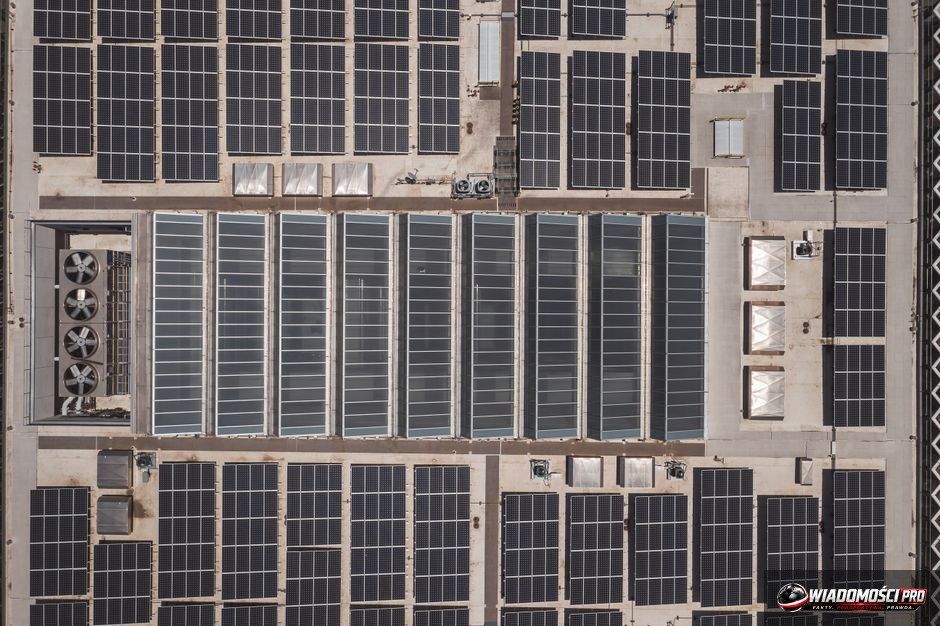
By 2028, owners of large-scale retail facilities will be required to implement photovoltaic systems, which, according to the Ministry of Climate's projections, will allow for a reduction in energy costs by as much as 30-40% annually and a significant reduction in their carbon footprint. The new requirements, contained in the draft act amending the Energy Efficiency Act (parliamentary document no. 421/2026), specify that this obligation applies to properties with a sales area exceeding 2,000 square meters. This regulation ends the era of voluntary renewable energy investments in the commercial real estate sector.
New law: Photovoltaics as a standard in retail
On August 29, 2026, the government adopted a draft law forcing the energy transition of the largest players in the retail market. By 2028, the roofs of facilities with an area of over 2,000 m2 must be covered with photovoltaic panels. These regulations constitute a direct implementation of the EU Energy Performance of Buildings Directive (EPBD), which imposes an obligation on member states to decarbonize the real estate sector. Operators can no longer treat photovoltaics as an ESG branding tool. From now on, it is a legal condition for conducting business.
The Ministry of Climate points to the necessity of making the retail sector independent of unstable grid energy prices. For shopping center managers, this means transitioning from a passive consumer model to a business prosumer model. The legislator has not provided transition periods for entities that fail to demonstrate progress in modernization before the deadline. Energy audits, which until now were merely a guideline, are becoming a document essential for obtaining operational permits. The development market, specializing in retail parks, is facing the need to quickly redefine its financial models.
Investors must face installation costs that, in the case of facilities with an area of 5,000 m2, exceed one million PLN. The lack of flexibility in the regulations forces companies to secure capital at a time when margins in the retail sector are under strong inflationary pressure. This situation forces developers to abandon other planned investments in favor of mandatory energy modernization. The rate of return on these expenditures is closely linked to wholesale energy prices in 2028, which is the biggest unknown for financial analysts.
Ministry estimates: How much CO2 will Poland save?
The Ministry of Climate is firm: every large-scale commercial property in Poland must become its own source of electricity. The ministry's calculations show that the mass adoption of PV in the retail sector will relieve the National Power System (KSE) during peak sunlight hours, i.e., when shopping centers record high demand for air conditioning and lighting. The reduction in the carbon footprint is expected to be measurable, although the ministry has not yet published specific megatons of emissions that will disappear from the country's balance sheet.
Experts, however, point to a technical problem. The national power system is already at the limit of its capacity in many regions. Connecting installations with a capacity of several megawatts at a single point requires the reconstruction of transformer stations. Without modernizing the transmission infrastructure, the ministry's ecological ambitions will collide with a technical wall. Distribution system operators are already reporting difficulties with balancing power during periods of overproduction from prosumer installations. There is a risk that on sunny days, shopping centers will be forced to limit production, which will directly hit the profitability of the investment.
Experiences with residential photovoltaics, where operators use remote shutdowns, are causing concern among commercial investors. In the case of shopping malls, the scale of cutoffs could be more severe. If the state forces owners to spend millions of zlotys, it must guarantee the stability of the intake of the produced energy. The lack of such a guarantee in the draft law raises doubts about the feasibility of the assumed climate goals. Without grid modernization, grand announcements about climate neutrality could be effectively blocked by the rigid physical limitations of the power infrastructure.
Savings in the retail sector: Financial analysis
Owners of large-scale retail facilities are facing the need to change their operating cost structure. Assuming an average photovoltaic system efficiency of 180-200 kWh per 1 m2 of roof per year, real savings can be calculated. A retail facility with an area of 2,000 m2, using 1,000 m2 of roof for panels, will produce approximately 180-200 MWh of energy annually. With an average grid energy purchase price of 0.80 PLN per 1 kWh, this means annual savings of 144,000 – 160,000 PLN. Over five years, this amount exceeds 800,000 PLN, which is a significant relief for the property manager's budget.
For shopping center managers, whose electricity expenses currently represent one of the largest cost items, such a change means independence from energy market volatility. Self-production of electricity eliminates the risk of sudden increases in transmission tariffs and capacity charges. Investing in panels stabilizes costs in the long term and improves the property's attractiveness in the eyes of corporate tenants, who themselves must report their carbon footprint in accordance with ESG requirements.
Key economic parameters of the upcoming transition:
- Average production from 1,000 m2 of roof: approx. 180-200 MWh of energy per year.
- Estimated financial savings per 1,000 m2: 144,000 – 160,000 PLN annually (at a price of 0.80 PLN/kWh).
- Deadline for full implementation of requirements: 2028 (in accordance with the EPBD).
Skeptics note, however, that the high cost of entering PV technology at current component prices is a barrier for smaller property owners. Return on investment (ROI) is a promise, but its pace depends on maintenance costs, installation insurance, and potential fees for transmitting surpluses to the grid. If the component market does not stabilize in the coming months, some investors may face liquidity problems. Nevertheless, in the face of upcoming regulations, rapid modernization is the only way to avoid administrative penalties and the loss of the facility's competitiveness in the rental market.
Technical challenges: Integration with the power grid
Implementing mandatory photovoltaic installations on the roofs of large-scale retail facilities is the easiest stage. The real challenge begins at the interface with the national power system. Investors must prepare for the necessity of modernizing energy connections. Old intake points were not designed for two-way energy flow on such a large scale. In practice, this means expenses for shopping mall owners counted in the hundreds of thousands of zlotys per facility.
The specter of shutdowns, warned about by the Farmer.pl service as early as May 2026, is a real threat to the continuity of power supply from own sources. Grid operators, wanting to protect the system from overload, are increasingly using tools that allow for remote limitation of installation operation. In the case of giant retail facilities, the scale of cutoffs will be significantly more severe than in the residential sector. Energy storage systems are intended to ensure system stabilization. Their installation is becoming a technical requirement to even consider avoiding forced shutdowns by operators.
The Energy Performance of Buildings Directive (EPBD), analyzed by development circles in March 2026, points to the need for a holistic approach to energy management in buildings. If shopping center owners do not invest in power buffering, their panels on sunny days will merely be idle roof decorations. Ultimately, without modernizing the transmission grid, grand announcements about reducing the carbon footprint could be effectively blocked by the rigid technical limitations of the operators. Investors must therefore plan the installation based on power flow analyses, not just roof area.
Preparing the investment: What must owners do?
The schedule for preparing technical documentation does not forgive delays. Procedures for obtaining connection conditions and environmental decisions in municipal offices currently take an average of six to eight months. By starting the process at the last minute, companies risk not only penalties but, above all, a lack of grid capacity, which will make it impossible to launch the installation by the statutory deadline.
Key steps that managers must take to adapt facilities to EPBD standards:
- Conducting a full energy audit, which will indicate specific gaps in the building's efficiency and calculate the actual production potential of the roof.
- Developing an executive design for the installation along with a static analysis of the roof structure, which is often the weakest link in old shopping centers, requiring costly steel reinforcements.
- Submitting applications for connection conditions to the distribution system operator (DSO), which, due to grid overload, is often the most risky stage in terms of time.
- Choosing a financing path – currently, investors can use dedicated grant programs and repayable instruments, such as investment loans with a thermal modernization bonus, although the availability of capital depends on precisely meeting audit requirements.
Installing panels is only half the success. The real challenge is integrating photovoltaics with Building Management Systems (BMS). Without intelligent control, energy surpluses may be wasted instead of actually lowering bills. The skepticism of some managers regarding the return on investment is understandable, but in the face of upcoming regulations, passivity costs more than installing panels. Every month of delay increases the risk of higher costs for components and execution services, resulting from the growing demand for installers before 2028.
2030 perspective: What awaits the commercial real estate market?
The year 2028 represents a hard deadline for the commercial real estate sector in Poland. That is when owners of large-scale retail facilities will be forced to implement photovoltaic installations, which will allow for a reduction in energy costs by as much as 30-40% annually and a significant reduction in their carbon footprint. This decision results from the strict schedule outlined by the EU EPBD directive.
Looking further ahead, the 2030 perspective causes even greater anxiety in the industry. These regulations do not end with the roofs of shopping centers. Further tightening of requirements for non-residential buildings means that in just four years, energy standards will become the main determinant of property valuation. The development market, as seen in analyses published by the portal mieszkanicznik.org.pl, must already include these stringent standards in its business models. A building that does not have ecological certification may become a financial burden for the owner in 2030, rather than an asset.
Institutional investors have begun to withdraw capital from facilities that do not meet future emission standards. The market value of certified green buildings is rising, while older shopping malls face the specter of costly modernization or loss of liquidity. The impact of the EPBD directive on the real estate market is direct. Owners who ignore these signals in the hope of deferring the regulations will lose the battle for tenants, for whom low operating costs are becoming a priority in the face of rising energy prices. This is not a matter of cost optimization, but of market survival.
What this means for you
For shopping center owners, this means the necessity of rapid capital investments, which, however, in the long term will protect them from rising energy costs. The catch remains the stability of transmission grids – even with their own panels, companies may face limitations from operators, which requires investment in energy storage. Entrepreneurs should not delay audits, as queues to obtain connection conditions are lengthening every month.
Questions and answers
Does the obligation apply to all stores?
The act covers only large-scale retail facilities with a sales area of over 2,000 square meters, in accordance with EPBD requirements.
What happens if the property owner does not install panels by 2028?
According to the draft act (document no. 421/2026), administrative penalties and requirements to limit the operation of properties that do not meet emission standards are provided for.
Will photovoltaic installations be fully safe for the grid?
The introduction of the act forces investors to use modern energy management technologies and storage to avoid transmission problems, which operators warned about in the context of residential micro-installations.
What are the estimated savings for a 2,000 m2 facility?
Using 1,000 m2 of roof, the owner can save between 144,000 and 160,000 PLN annually, based on current grid energy prices.
Does the roof structure matter for the investment?
Yes, a static analysis of the roof structure is an essential part of the project, as many older facilities require costly reinforcement modernization before panels can be installed.
Who finances these investments?
Property owners must provide their own capital or use repayable instruments, such as investment loans with a thermal modernization bonus, although the availability of funds depends on a precise energy audit.
Why would grid operators shut down photovoltaics in shopping centers?
In the event of power grid overload, operators have the right to remotely limit the power of installations to prevent system failures, which for investors means the necessity of investing in local energy storage.
Is 2028 the final deadline?
Yes, it is a rigid deadline resulting from the schedule for implementing the EPBD directive in Poland.
What are the main risks for the investor?
The main risks include the volatility of component prices, long waiting times for connection conditions, and uncertainty regarding future energy prices, which affect the final return on investment (ROI).
Is every roof suitable for mounting panels?
No, it is necessary to verify the load-bearing capacity of the structure and the orientation of the roof slope relative to the cardinal directions, which the auditor must include in the project documentation before submitting an application to the DSO.
What systems are necessary for energy management?
BMS (Building Management System) and intelligent inverters are key, allowing for the optimization of energy self-consumption in real time, limiting the need to transmit surpluses to the grid.
Will the change in law affect rents for tenants?
Investment in RES lowers operating costs (service charge), which in the long term may improve the facility's competitiveness in negotiations with tenants, for whom a low carbon footprint of the rented space is an important parameter.
Where to look for detailed information about audits?
In accordance with EPBD requirements, audits must be carried out by certified energy auditors, and guidelines can be found in the documentation accompanying the draft act.
Are energy storage systems mandatory?
They are not explicitly mandatory, but they constitute a necessary technical buffer in the event of restrictions imposed by grid operators, which makes them an economically justified element of the installation.
What are the requirements for building certification?
The EPBD directive introduces rigorous efficiency standards, which are becoming key in property valuation by institutional investors, forcing the pursuit of ecological certificates such as BREEAM or LEED.
Is this the end of modernization after 2028?
No, after 2028, further tightening of standards is expected towards 2030, which will force owners to continuously improve the energy efficiency of the commercial buildings they manage.
Sources
- Will the operator shut down residential photovoltaics? Important changes in the law are coming - Farmer.pl
- Energy Performance of Buildings Directive (EPBD) and the development market. How to prepare an investment for the 2028 and 2030 requirements? - mieszkanicznik.org.pl
Article prepared by the Wiadomości PRO editorial team with the support of artificial intelligence. Facts come from the sources provided above.


Komentarze (0)
Ładowanie komentarzy...