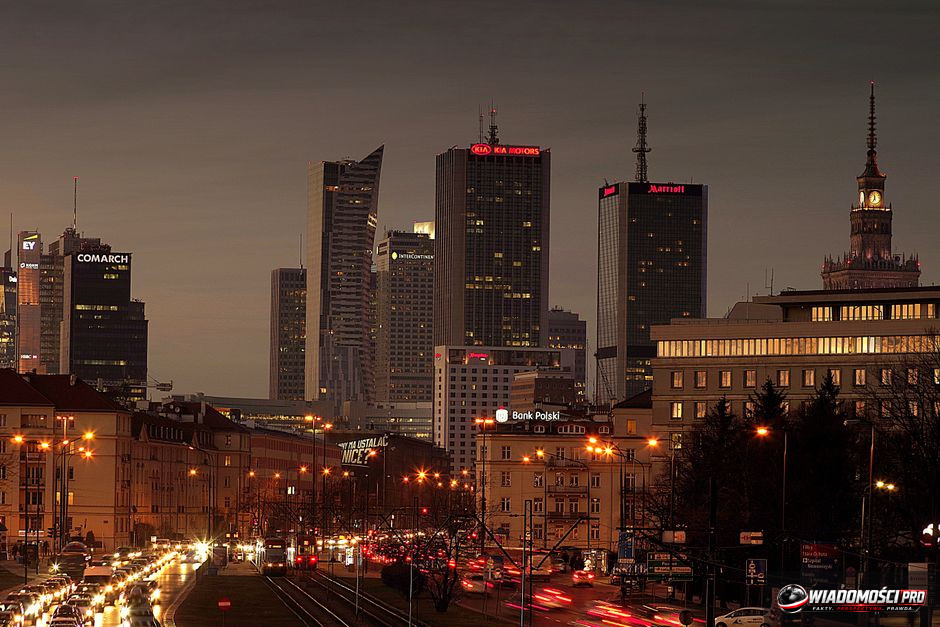
The Monetary Policy Council kept rates at 5.75% in November 2024, and in July 2026, the situation remains under pressure from geopolitical tensions, which is hindering decisions on cuts. This decision means that despite earlier market expectations, loan costs remain at a high level for subsequent months. Maintaining the reference rates at this level results from the central bank's defensive strategy in the face of global instability.
November 2024: The beginning of a long period of interest rate stabilization
November 2024 became the turning point from which the current era of money cost stabilization in Poland is counted. The Monetary Policy Council then decided to keep rates at 5.75 percent, ignoring growing market expectations for monetary policy easing. The decision of November 6, 2024, set a ceiling for the optimism of borrowers. For market observers, it was a clear signal: the MPC chose a conservative path, which became the foundation of monetary policy for the following years.
In November 2024, a reference rate of 5.75 percent meant that WIBOR 3M remained around 5.8-5.9 percent. For borrowers with an average mortgage of 400,000 PLN, taken out for 25 years, the installment with a bank margin of 2 percentage points oscillated around 3500-3600 PLN. Maintaining this level for subsequent quarters eliminated the chance for a quick reduction in household budget burdens. The market, expecting declines, had to revise its financial models.
July 2026: Why is the NBP still holding back on cuts?
During the July 2026 meeting, the MPC decided to keep rates unchanged at 5.75 percent. Such a strategy means that the cost of money in Poland remains frozen at the level it reached back in November 2024. The monetary policy easing cycle, which was supposed to bring relief to indebted Poles, has practically stalled. Hopes for cheaper credit are being postponed to subsequent quarters.
The main brake for Council members has become the international situation. Growing tension between the USA and Iran translates directly into decisions made at the NBP headquarters. The conflict acts as a fuse: uncertainty in commodity markets and the weakening of the zloty make policymakers fear moving toward cuts. In the face of such an unstable external environment, the zloty is under constant pressure, which effectively prevents the hawks from changing their stance to a more dovish one.
Forecasts often assumed a faster pace of easing, but the reality of 2026 is brutally verifying these expectations. Instead of stimulating the economy with cheaper credit, the MPC chooses caution, prioritizing the fight against potential exchange rate volatility over stimulating consumption. Each month of delay is a higher cost of debt servicing, which in July 2026 is becoming a permanent element of household budgets. For many households, what policymakers call stability is simply a costly impasse draining their real disposable income.
An analysis of the Council's meetings shows a repetition of arguments. MPC members point out that in conditions of high volatility in oil and gas prices resulting from the situation in Iran, the Polish currency becomes extremely sensitive to the outflow of foreign capital. A cut in interest rates, with a simultaneous increase in risk aversion in global markets, could lead to a sharp sell-off of the zloty. This would translate into imported inflation, which would be contrary to the NBP's statutory goal. Borrowers have therefore become hostages of the exchange rate.
Geopolitics and the Polish zloty: the impact of conflicts on wallets
The Monetary Policy Council has stubbornly kept rates at 5.75 percent since November 2024. Although almost two years have passed, the narrative in the building on Świętokrzyska Street remains unchanged. The July 2026 decision confirmed that there is practically no room for monetary policy easing. At the center of this impotence lies the exchange rate of the zloty, which has become a hostage to events far from the Polish border. Currency stability has become more important to policymakers than direct relief for indebted households.
Investors are looking at the Middle East with growing anxiety. Tensions between the USA and Iran are draining capital from emerging markets, including Poland. The Polish zloty, instead of enjoying predictable stability, has come under strong selling pressure. When the domestic currency loses value, it brings imported inflation to Poland, driving up fuel and energy prices. In such unstable conditions, any interest rate cut would be a clear signal to the market that the central bank is ignoring currency risk, which could lead to a speculative attack on the zloty.
The relationship between the exchange rate and the stability of monetary policy is brutal for Poles' wallets. The Council cannot afford a cut maneuver as long as the external environment threatens to destabilize the currency. From the point of view of borrowers, hopes for cheaper money have been postponed to an indefinite future. The market currently prices in that as long as the Washington-Tehran conflict does not expire and the zloty exchange rate does not return to safe levels, the Council will remain on the defensive. This is not a matter of a lack of political will, but a lack of room for maneuver in the face of global uncertainty, which has effectively frozen Polish monetary policy at 5.75 percent.
The monetary policy transmission mechanism in Poland has currently become ineffective. Raising rates in the past was supposed to slow down demand, which was achieved to some extent, but keeping them at a high level for such a long time is starting to act as a drag on private investment. Companies, in the face of high financing costs, are holding back on expansion, which in the long term may affect GDP dynamics. The MPC faces a dilemma: whether to risk weakening the zloty and the return of inflationary pressure, or to continue a policy that is slowly stifling economic activity. So far, the "wait and see" option is winning.
Forecasts for borrowers and savers for the second half of 2026
November 2024 brought a decision that became the foundation of the current financial strategy: the Monetary Policy Council kept interest rates at 5.75 percent. Today, in August 2026, this level still defines the credit reality in Poland. Instead of the expected easing, we have received a geopolitical impasse, the exit from which depends on external factors.
The situation in the Middle East and the escalation of tensions between the USA and Iran are paralyzing policymakers. The zloty is under constant pressure, which effectively excludes the aggressive cuts that credit-based sectors of the economy were counting on. Each subsequent month of keeping rates at this level means a real increase in debt servicing costs for households. Borrowers, especially those with variable-rate loans based on WIBOR, must prepare for the fact that their installments will not fall in the foreseeable future. With WIBOR 3M remaining near 5.75-5.85 percent, bank margins mean that mortgage interest rates still oscillate around 7.5-8.5 percent per year.
For savers, the situation looks the opposite. Deposits and savings accounts offer interest rates that often do not beat inflation, providing only a substitute for capital protection. However, the real profit from savings is eaten up by rising living costs, driven by imported inflation. We are dealing with a situation where no one wins. Borrowers lose due to high installments, and savers lose due to the decline in the purchasing power of money. This is a vicious circle from which the MPC cannot find a way out with the current monetary policy parameters.
Financial institutions' forecasts for the end of 2026 have been drastically revised downward compared to the assumptions from the beginning of the year. As late as March 2026, the market was pricing in at least one, and preferably two, interest rate cuts before the end of the year. Currently, these expectations have been replaced by a scenario of maintaining high rates for longer. If there is no de-escalation in the Middle East in the coming months, the chance of a change in the Council's decision in 2026 is close to zero. This means that we will end 2026 with a high cost of money, which will negatively affect the real estate market, sales of durable goods, and the general condition of private consumption.
Evolution of MPC decisions: a 2024-2026 retrospective
Looking at interest rate charts from the last two years, it is easy to see that monetary policy in Poland has ceased to be a simple function of the inflation target. November 2024 brought a decision to keep rates at 5.75 percent, which was then announced as a wait-and-see signal. It was a time of calm that was supposed to prepare the ground for later easing, but reality turned out to be more complicated.
The chronology of the Monetary Policy Council's recent moves shows how quickly plans are verified by the market and the international situation:
- November 2024: The MPC approves stabilization at 5.75 percent, ignoring voices demanding faster reductions in the cost of money.
- November 2025: According to market reports, the Council decides on a symbolic rate cut, giving hope to borrowers for relief in installments, which, however, was quickly extinguished by new geopolitical tensions.
- July 2026: Instead of the expected easing cycle, the MPC stands still, keeping rates at 5.75 percent.
Today, in August 2026, the optimism from the end of last year has evaporated. Instead of further cuts, we have an impasse caused by factors over which Governor Glapiński has no influence. Tensions between the USA and Iran tie the hands of Council members. The currency market is reacting nervously, the zloty remains under pressure, and inflation has ceased to be the only determinant of monetary policy.
Economists have stopped being in agreement about the timing of the next moves. When financial services were suggesting as late as March 2026 that a cut was just around the corner, geopolitical reality brutally corrected these predictions. Uncertainty has become the new norm. Borrowers who were counting on a quick drop in installments must arm themselves with patience, because stabilization, originally planned as a short stop, has become a trap for many.
In the history of the MPC, there have rarely been such long periods of such high rates combined with such great external uncertainty. In the past, the central bank could count on a stable zloty exchange rate, which allowed for easier rate steering. Currently, when global capital flow is strongly linked to war sentiment, monetary policy instruments have become blunt. The MPC is trying to stabilize the currency using interest rates, but this is done at the expense of the real economy. This approach raises controversy among economists, who point out that excessive focus on the exchange rate leads to unnecessary stifling of domestic demand.
What's next for inflation and rates? Autumn prospects
The Monetary Policy Council froze the cost of money at 5.75 percent in November 2024 and has been sticking to that line firmly ever since. Currently, looking at August 2026, we know one thing: hopes for quick interest rate cuts have collided with brutal geopolitical reality. The escalation of tensions between the USA and Iran effectively ties the hands of Council members. The market, which was debating monetary policy easing as late as March 2026, must today revise its expectations and come to terms with the lack of changes.
Inflation, energy prices, and the condition of the labor market are variables that, in theory, should determine the MPC's moves. In practice, however, when the zloty is under pressure and the international situation resembles a powder keg, the central bank chooses defense. Uncertainty is too great to risk easing policy, which was directly suggested by July headlines in economic services pointing to the direct impact of instability in the Middle East on MPC decisions.
For borrowers, this means an extension of the period of high installments. Illusions that autumn 2026 will bring relief are being replaced by cold risk calculation. Market expectations for the end of the year have shifted toward a scenario assuming the status quo. No one on the Council wants to take responsibility for a potential inflation spike in the face of external supply shocks. From the perspective of households, this is a difficult scenario, but for MPC members – the only safe one. Stabilization at 5.75 percent has become the new, uncomfortable norm to which we have all had to adapt.
It should be remembered that every MPC decision is preceded by an analysis of inflation and GDP projections, prepared by NBP departments. Recent projections indicate that the path back to the inflation target is extremely bumpy. Even if the CPI index starts to fall, so-called core inflation – i.e., excluding energy and food prices – remains sticky. It is this that is the main point of reference for Council members, who fear second-round effects, i.e., the transfer of higher production costs to final prices. Keeping rates at 5.75 percent is intended to cool these expectations, but this happens at the expense of borrowers, who must finance this process out of their own pockets.
If we look at the statements of MPC members from recent months, there is a clear division into factions, but there is surprising unity on the issue of rates. Regardless of political views, everyone agrees on one thing: in wartime conditions, currency risk is too great to afford easing. This makes the discussion about cuts in 2026 largely theoretical. Will this change? Only if the situation in the Middle East calms down. And looking at the latest reports, that is not on the horizon.
Questions and answers
Why didn't the MPC cut rates in July 2026?
The main reason was the pressure on the zloty caused by geopolitical tensions between the USA and Iran, which prompted the Council to adopt a defensive stance and caution in managing the exchange rate.
Can borrowers count on lower installments in the near future?
Forecasts for the second half of 2026 remain uncertain, and MPC decisions are fully dependent on exchange rate stability and the situation in commodity markets; at the moment, the chances for cuts are minimal.
What was the level of interest rates in November 2024?
In November 2024, the Monetary Policy Council kept NBP interest rates at 5.75 percent, which began the period of money cost stabilization that continues to this day.
How does the situation in Iran affect Poles' wallets?
The conflict in the Middle East is destabilizing commodity markets and weakening the zloty, which forces the NBP to maintain high interest rates to avoid imported inflation, which directly translates into higher loan installments.
Sources
- MPC keeps rates unchanged – will the escalation in Iran bring hikes? (ANALYSIS) - Parkiet
- See what happens with your loan! MPC has made a decision - wGospodarce
- USA and Iran are at daggers drawn, and the MPC is not cutting rates. Zloty under pressure - INNPoland.pl
- Interest rate value August 2026. Forecasts and current information about interest rates in Poland - TotalMoney.pl
- Forecasts of interest rate levels in 2026 - Direct Money
- Rate cut: borrowers will gain, savers will lose. MPC decision soon - INFOR.PL
- There is a decision on interest rates - TVN24
- The Monetary Policy Council has lowered interest rates. This is already the second autumn quarter - Bankier.pl
Article prepared by the Wiadomości PRO editorial team with the support of artificial intelligence. Facts come from the sources listed above.

Komentarze (0)
Ładowanie komentarzy...