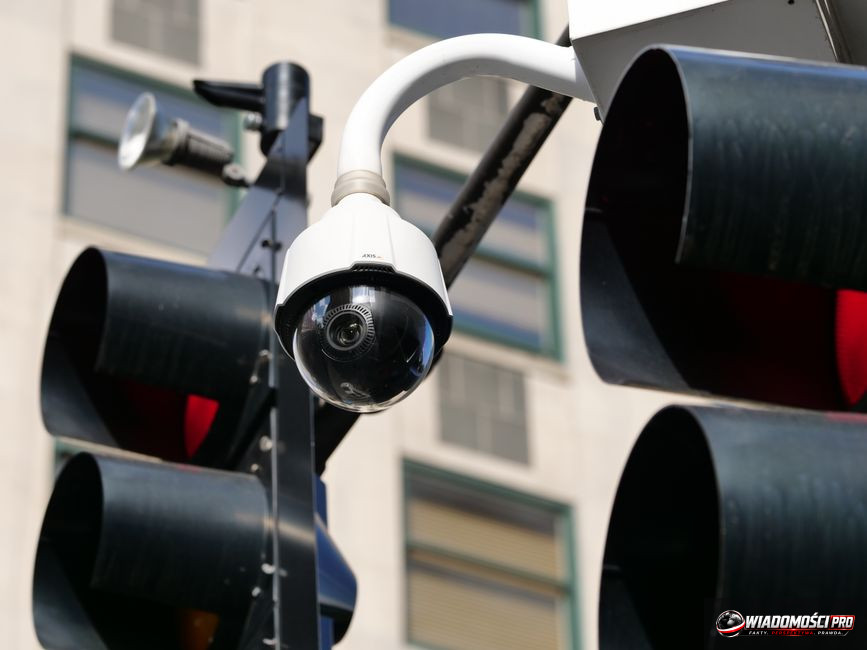
The maximum fine for speeding will increase to 7,500 PLN, and the permissible measurement tolerance will be limited to just 5 km/h. These changes will hit every driver who has previously relied on the margin of error of measurement devices. The new regulations put the final nail in the coffin regarding the owner's liability for offenses recorded by the speed camera system.
Financial burden: 7,500 PLN in the face of a household budget
The amount of 7,500 PLN is not accidental. It is a threshold that, for many Polish families, represents the equivalent of two or three net salaries. Such a high penalty shifts the focus from disciplinary measures to an existential threat to the household's financial liquidity. Introducing such stringent rates changes the nature of the fine from an administrative fee for a mistake to a severe financial sanction.
The previous system, in which fines were scaled to relatively low levels, allowed for a certain degree of acceptable risk. The new tariff completely eliminates this phenomenon. If a driver is caught significantly exceeding the speed limit, the penalty may exceed the value of the older car they are driving. This is a situation where one speed camera determines the fate of the household budget for the next six months. Financial experts point out that such a sudden increase in burdens could lead to a phenomenon where drivers attempt to challenge measurements in court more often than before, which in turn will block the efficiency of the justice system.
The penalty system is intended to discourage recklessness, but with such high amounts, there is a risk of transport exclusion. People who cannot afford to pay the fine may face bailiff seizures. The Ministry of Infrastructure is pushing this solution as a tool to improve safety, but it does not provide estimates regarding the actual collectability of such high penalties in a situation where thousands of fines remain unpaid today.
Technical challenge: 5 km/h margin
A permissible measurement tolerance of 5 km/h is a technological rigor that, in practice, means the end of driving "by the speedometer." Every driver knows that car speedometers are factory-calibrated to overestimate speed by a few percent. When a speed camera is set to a strict limit of 5 km/h above the speed limit, the margin of error between the device's reading in the car and the police measurement practically disappears.
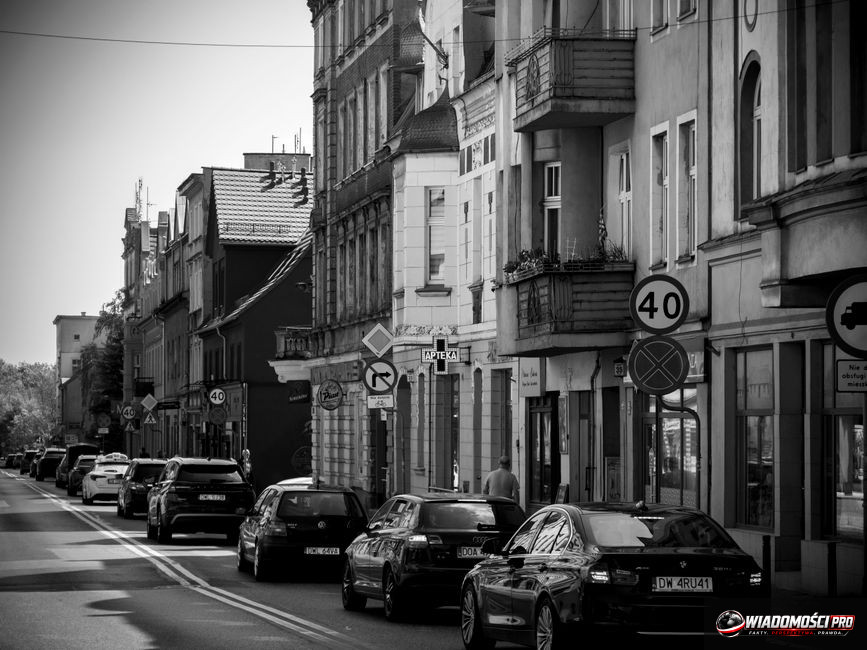
In built-up areas, where the limit is 50 km/h, every needle movement exceeding 55 km/h triggers the offense registration process. This means that the driver must maintain a speed of around 48-49 km/h to be sure they will not be penalized. Driving like this in a modern car, equipped with advanced assistance systems and high-power engines, is extremely uncomfortable. It requires constant glancing at the speedometer, which, paradoxically, can worsen road observation.
The calibration of the speed cameras themselves also remains a problem. Despite regular certifications, these devices have their own measurement error margin, which is usually around 3 km/h. Assuming the statutory tolerance is 5 km/h, the safety margin for the driver remains negligible. A minor slip, a momentary press of the gas pedal while overtaking, or driving downhill is enough for the system to detect an offense. It is a technical trap that turns every speed camera into an uncompromising judge.
Owner liability: how to protect your assets
Transferring responsibility to the vehicle owner, without the possibility of hiding behind a lack of knowledge about who was driving, is a fundamental change. No more excuses like "I don't know who was driving" closes the path for car owners to avoid penalty points. In this legal model, the burden of proof rests on the owner. If the car is filmed during an offense, the owner receives the fine.
How to protect yourself against such a situation if other people use the car? First of all, a change in vehicle management culture is necessary. If you lend your car to a family member or coworker, draw up a short written statement. The document should include the date, time of handing over the keys, the details of the person taking the vehicle, and their signature. Such a paper does not automatically exempt you from the fine, but it constitutes key evidence in recourse proceedings.
In the case of company fleets, the situation is even more rigorous. Entrepreneurs should implement electronic vehicle usage logs, where each driver records their routes. It is worth considering the installation of GPS route recorders that record exact speed in real-time. In the event of receiving a fine, having a camera recording that confirms a speed other than that shown by the speed camera can be the basis for an effective appeal.
For private individuals who share cars, the safest method is to keep your own event log. Record who you entrust your car to and for how long. If you receive a summons, having solid documentation will make it easier for you to claim reimbursement from the actual perpetrator through civil proceedings. Remember that in the eyes of the law, you are the vehicle administrator, and the payment demand will come in your name. Trust in family relationships is one thing, but protection against a 7,500 PLN fine requires formalizing every instance of lending keys.
Systemic execution: what changes in practice
The speed camera system is ceasing to act as a preventive measure and is becoming a machine for mass financial execution. The Ministry of Infrastructure is striving for full automation of the process. A photo from a speed camera, analysis by an algorithm, generation of a fine, and dispatch to the owner – all this is to take place without human intervention. Such automation eliminates the possibility of any discussion on the road or explanations before an officer.
The introduced changes mean that the driver no longer has a chance for a warning. Every violation, even one resulting from a momentary lapse in attention, will be settled. The ministry argues that this is a fair approach because the regulations are meant to be clear to everyone. However, skeptics raise the issue of the lack of human judgment. In emergency situations, where a driver had to accelerate to avoid a collision, the system will not be able to distinguish recklessness from a defensive maneuver.
The state administration is betting on a simple calculation: the more speed cameras and the higher the fines, the higher the budget revenue. From the driver's perspective, this means the need for permanent focus. There is no longer room for error. Even if you are an exemplary driver, one moment of inattention in a built-up area is enough to expose yourself to consequences that will be unbearable for many.
Survival strategy on the road: how not to go bankrupt
In the face of such drastic changes, the driving strategy must be completely modified. The first step is to use modern driver support systems, such as speed limiters. Setting the limit to 50 km/h in the city allows you to avoid speeding, even when pressing the gas harder. This is the simplest method of protection against a fine.
Another aspect is knowing the locations of speed cameras. Mobile applications warning about measurement devices are becoming an essential tool, not an optional one. It is not about slowing down only in front of a radar, but about being constantly aware that the system is particularly sensitive to the smallest deviations in a given place.
It is also worth verifying the technical condition of the speedometer in your car. If you have the opportunity, check using GPS navigation how much your speedometer overestimates the actual speed. Knowing that at a reading of 55 km/h you are actually driving 51 km/h can save you from a fine in a 50 km/h zone. That is knowledge worth 7,500 PLN.
Safety or fiscalism? Opinions on the project
The debate on the new regulations is dividing public opinion. On one hand, we have supporters of radical solutions who believe that only the fear of a high fine can realistically influence the driving culture of Poles. On the other hand, there are road safety experts who warn about side effects. In their opinion, the driver's focus on the speedometer instead of the road increases the risk of accidents at lower speeds.
Journalists point out that the government has not presented any analysis regarding whether such high penalties will translate into a decrease in the number of fatal accidents. Instead, the narrative of boosting the state budget dominates in the public space. Critics of the system emphasize that the state, instead of investing in better infrastructure, is choosing the path of punishing citizens.
It is worth asking whether, in an era of rising living costs, drivers are able to bear the additional financial burden. For many people, a car is not a luxury, but an essential work tool. The loss of financial liquidity due to one fine may mean the need to give up commuting to work, which will consequently hit the labor market.
Questions and answers
Does the new 5 km/h tolerance mean that I will be penalized for every minimal violation?
Yes, the project assumes that any speed above the permissible limit by more than 5 km/h will be the basis for issuing a fine. This means that the system will react to violations that were previously treated as a measurement error or an insignificant violation.
What happens if a speed camera photographs someone else behind the wheel of my car?
According to the new regulations, the vehicle owner will bear direct responsibility for the offense recorded by the speed camera. If the owner does not want to pay for someone else, they must ensure documentation beforehand that allows for claiming damages from that person through civil proceedings.
When will the new regulations come into force?
The project is currently in the legislative phase, and information about tightening the system has been appearing in the media in August 2026. After the president signs the act and it is published in the Journal of Laws, the regulations will enter into force after the designated vacatio legis period, which usually lasts from a few weeks to a few months.
Will it be possible to appeal a fine from a speed camera?
Yes, the right to appeal remains, however, in light of the new regulations, the owner's role in the process of proving innocence will become much more difficult. The court will consider the case based on the record from the measurement device, and the burden of proof that it was not the owner driving will rest on the owner themselves.
Do the new penalties also cover section speed measurements?
Yes, the new tolerance rules and the amount of penalties are to apply to all automatic speed recording devices, including stationary speed cameras, section speed measurements, and devices mounted in police cars.
Legal perspective: responsibility without guilt?
Introducing full owner liability for an offense recorded by a speed camera raises serious constitutional controversies. The principle of guilt dominates in the Polish legal system, which means that the perpetrator of the offense should be punished. Shifting this burden to the owner, who may have been in a completely different place at the time of the event, is a departure from the classic principles of offense law towards objective liability.
Lawyers point out that such a solution may be challenged before the Constitutional Tribunal. If the vehicle owner cannot effectively defend themselves in an offense case by pointing to the lack of their own perpetration, the right to defense is violated. On the other hand, the legislator may argue that the owner has an obligation to oversee the vehicle, and lending it to a third party involves assuming financial risk.
For the average citizen, this means the need to be the lawyer of their own fate. If you receive a payment demand for an offense you did not commit, you will have to take a series of formal actions to avoid consequences. This is additional time, stress, and potential costs of legal services. The system, which was supposed to be simple and fast, is becoming another source of bureaucratic torment for drivers.
Financial spiral: is this the end of freedom?
Many drivers are asking themselves how to live in the new reality. Will driving a car become a privilege available only to people with high incomes who can afford to pay fines? Or maybe we will simply stop driving, switching cars for public transport, which, by the way, would be in line with the policy of many local governments?
Regardless of the legislator's intentions, the fact is that the margin of freedom we had on Polish roads is shrinking drastically. Speed cameras are ceasing to be sensors present in particularly dangerous places and are becoming a tool for permanent control over road traffic. Every kilometer of the route will now require assessment in terms of the presence of measurement devices.
In this situation, the most affected will be professional drivers, for whom every day on the road is hundreds of opportunities to receive a fine. Even if the transport company is able to cover the costs of penalties, the penalty points, which will also be assigned to fleet owners or drivers, may lead to temporary loss of qualifications. This is a direct path to the paralysis of many branches of the economy that rely on road transport.
Summary of changes
The upcoming reform is a paradigm shift in Polish traffic law. We are moving away from a model based on trust and a certain degree of leniency towards a technocratic, ruthless penal system. Drivers who do not prepare for these changes will quickly feel their effects in their wallets. The maximum amount of 7,500 PLN is a signal that the state has stopped joking about traffic regulations.
The key to surviving in this new reality is awareness of one's own responsibility. As vehicle owners, we must start treating the car as a tool subject to strict record-keeping. Every loan, every route, and every person getting behind the wheel must be monitored. This is the only way to avoid a situation where someone else's mistake becomes our financial catastrophe.
Will this solution bring the expected safety? Statistics a year after the introduction of the regulations will answer this question. However, it is already clear that the price for this social experiment will be paid directly by the drivers. One can only hope that law enforcement agencies will approach the execution of these regulations with at least minimal common sense, not turning every mistake into a reason for the financial ruin of a citizen.
It is worth remembering one thing: the law is equal for everyone, but its effects hit unequally. A person with a low income will feel a 7,500 PLN fine as the end of life stability, while for a wealthy driver, it will be just another, albeit painful, fee. This is social inequality, which becomes particularly visible in the context of traffic regulations. Is this really the justice we were looking for? The answer to this question remains in the hands of the legislator, who, when designing these changes, seems not to notice the complexity of the life of an ordinary driver, focusing solely on the figures generated by measurement systems.
Care for every kilometer, watching the speed, and formalizing every relationship with users of our car – this is the new everyday life to which we must get used to. There is no return to the old days. A speed camera is no longer just a device; it is now an active participant in our lives, watching over every movement of the steering wheel. Whoever ignores these signals will sooner or later receive a letter from the office that will effectively remind them of the new rules of the game. And in this game, the stake is not only safety, but above all peace of mind and the state of our bank account.
Sources
- New regulations will hit drivers' pockets. You will pay up to 7,500 PLN for a speed camera - Lublin Radio ESKA
- 7,500 PLN fine and only 5 km/h tolerance. New penalties for drivers - Portal Samorządowy
- Drivers! Government preparing draconian penalties for speed cameras. Up to 7,500 PLN for speeding. No more "I don't know who was driving" - Gazeta Wrocławska
- Driving "sixty" in a fifty zone? That might not pass anymore - Fakt
- Speed camera will take a photo, and the owner will pay. New rules already in the draft - TVP Info
- Speed cameras with less "tolerance". Ministry wants to change the rules - WP Moto
- Speed cameras to be less "lenient". Ministry wants to change speed measurement rules - InfoPrzasnysz
- Speed cameras will be even less lenient. Changes are coming - Słowo Podlasia
Article prepared by the Wiadomości PRO editorial team with the support of artificial intelligence. Facts come from the sources listed above.

Komentarze (0)
Ładowanie komentarzy...