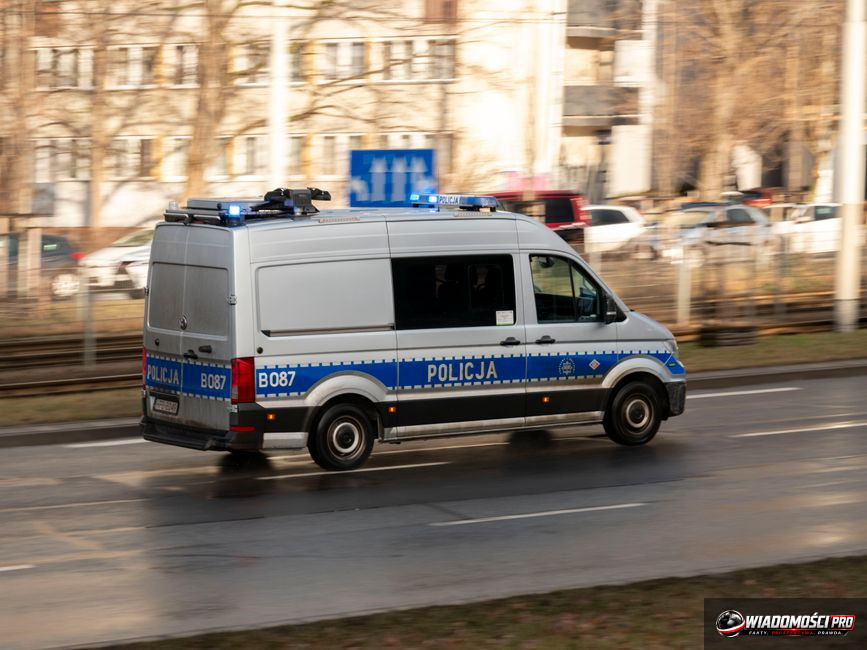
The Ministry of Infrastructure's draft provides for increasing fines for speed camera offenses to 7,500 PLN and closing the legal loophole that allows avoiding the identification of the perpetrator. The planned tightening also includes reducing speed measurement tolerances to a limit of 5–6 km/h. This is a proposal for changes in regulations that is currently at the legislative stage, which means that the final wording of the regulations may still change during the parliamentary process.
New tariff: Fines up to 7,500 PLN in practice
The infrastructure ministry's proposal assumes a drastic increase in the upper limit of the fine, which in extreme cases is to be 7,500 PLN. This change strikes directly at the current practice, where many drivers treated fines as a predictable expense. The currently applicable regulations limit the amount of penalties, which, according to the ministry, encourages recidivism. The ministry wants the amount of 7,500 PLN to be a real burden that will force even high-income individuals to comply with speed limits.
Media reports from mid-August 2026, including information published by "Rzeczpospolita" and "Gazeta Wrocławska", indicate that the government is betting on financial deterrence. This mechanism is intended to work on the principle of general prevention. If a driver receives a summons, the confrontation with the amount of 7,500 PLN is intended to be severe enough to eliminate the inclination for risky driving. The infrastructure ministry argues that current rates do not match economic realities and do not serve a disciplinary function.
The project does not only concern the amount of fines, but primarily a systemic change in enforcement. The current system allowed vehicle owners to avoid penalty points by not indicating the person driving the car at the time of the offense. In exchange for not indicating the perpetrator, the vehicle owner paid a higher fee but kept a clean record. The ministry's project is intended to definitively close this loophole, shifting full responsibility to the owner, which is meant to eliminate the "I don't know who was driving" practice.
End of the "who was driving?" game
Closing the legal loophole regarding the identification of the driver is the foundation of the planned amendment. The infrastructure ministry is striving for a situation where every case of speeding registered by a speed camera ends with the penalty being assigned to the vehicle owner. As the Onet service reported as early as August 8, 2026, the government realized that current regulations had become a tool for legally avoiding responsibility for traffic offenses.
The vehicle owner, upon receiving a photo from a speed camera, often used the right to refuse to identify the driver. In the current legal state, this involves a monetary penalty, which, however, was often lower than the point and financial consequences for speeding. The new law is intended to change this calculation. The owner's responsibility will become default and almost automatic. The system is intended to be airtight, which means that officials will not have to conduct tedious investigative proceedings to determine who was actually behind the wheel.
Such a change poses new challenges for car owners. In the case of transport companies or enterprises owning vehicle fleets, every decision to lend a vehicle to an employee will be burdened with financial risk. If an employee exceeds the speed limit, the company owner will not be able to hide behind ignorance. This will force entrepreneurs to introduce stricter internal regulations for the use of company vehicles, including mandatory maintenance of travel logs, which will allow for the precise identification of the user at any time.
Measurement tolerance: The era of 5-6 km/h is coming?
Tightening speed measurement tolerances to the level of 5–6 km/h is the most technical and at the same time the most controversial change in the project. According to information from "Auto Świat" dated August 21, 2026, the ministry wants measuring devices to be set to an almost zero margin of error. In practice, this means that any driving at a speed 6 km/h higher than allowed will be recorded as an offense.
For drivers, this is a signal that the current margin of "safe" speeding no longer exists. Until now, many motorists assumed that speed cameras were set with some allowance, which allowed for driving at a speed slightly higher than the statutory one. Now this situation will change. Every speedometer in a car that is not perfectly calibrated will become a source of potential financial problems.
The introduction of such restrictive measurement standards raises questions about the technical side of the devices. Are all speed cameras in Poland ready for such precise measurements? The infrastructure ministry would have to carry out a large-scale calibration of the entire measurement system, which generates additional costs and logistical challenges. It cannot be ruled out that with such a low tolerance threshold, the system will generate thousands of erroneous readings, which in turn will flood courts with cases for overturning fines.
Drivers must remember that the measurement error of the device is one thing, and the error of the speedometer reading in the car is another. Older car models often have speedometers showing values different from the actual speed of the vehicle. With a tolerance of 5-6 km/h, even a small deviation may result in a fine. This will force drivers to be more cautious and use cruise control systems more frequently, which allow for precise maintenance of the set speed.
Not paying the fine? You will lose your registration certificate
The most severe penalty provided for in the project is linking unpaid fines to the automatic loss of the registration certificate. This information, already signaled by the brd24.pl portal in March 2026, indicates that the ministry wants to use IT systems to immobilize the vehicles of people who evade paying fines. The blocking of the registration certificate in the CEPiK system is to take place without the involvement of a bailiff or court.
In practice, this means that every traffic stop after receiving a fine and failing to pay it within 31 days may end in the car being towed. A police officer during an inspection, checking the status of documents in the system, will receive information about the block. This is a radical measure intended to eliminate the problem of the uncollectibility of fines. From the state's point of view, this is an optimization of enforcement costs, but for the citizen, it means the risk of losing mobility overnight.
It is worth noting the consequences for people who question the validity of the fine. If a driver does not agree with the measurement and intends to pursue their rights in court, in the current project, they may find themselves in a dead-end situation. If the court does not suspend the enforceability of the fine for the duration of the trial, the vehicle owner may lose their registration certificate even though the case is pending. This is one of the most serious accusations made by critics of the project – the possibility of punishing a citizen before the end of the court process.
This system is to be fully automated. Failure to pay within 31 days triggers the blocking procedure. In the era of digitization of state administration, this is technically possible to implement almost immediately after the act enters into force. For drivers, this means the necessity of monitoring payment deadlines with extreme care. Even a mistake in the account number or a short stay in the hospital that prevents paying the fine may result in problems with admitting the vehicle to traffic.
Ministry's argumentation: Budget versus safety
The Ministry of Infrastructure officially justifies the project with the need to improve safety on Polish roads. The ministry points to accident statistics where the main cause is excessive speed. According to officials, only a radical tightening of penalties can change the habits of Polish drivers. A less tolerant approach is intended to be a signal that the "era of impunity" has come to an end and that every illegal act of driving involves a real financial risk.
However, as was pointed out on the air of wPolsce24 in August 2026, skeptics note that the project is a convenient way to patch the budget deficit. The system of automatic speed cameras does not require the costly maintenance of police patrols on the roads. It is enough to set up a device and wait for the revenue from fines. With a maximum penalty of 7,500 PLN, a single device in a well-chosen location can generate revenue counted in millions of PLN per year.
The regulatory impact assessment, which accompanies every government project, should contain a forecast of budget revenues. If these revenues are high, the question arises about the ministry's priorities. Is the goal the actual improvement of safety, or increasing the collection of funds for the state budget? The lack of reliable analyses regarding the impact of the new 5-6 km/h tolerance on traffic flow further increases doubts. If the introduction of such rigorous standards leads to traffic jams because drivers will brake excessively before every device, it may paradoxically lower safety.
The ministry does not address the issue of court capacity more broadly. If vehicle owners start to appeal against fines en masse (which is likely with fines of 7,500 PLN), the judicial system may face the specter of total paralysis. Currently, the waiting time for a hearing in traffic offense cases in many cities is counted in months or even years. Additional thousands of cases may effectively block the work of judges, which will lead to statute of limitations and ultimately to the ineffectiveness of the entire system.
Schedule of changes: What awaits us in the coming months?
The project is currently in the legislative preparation phase. To become binding law, it must pass through the Council of Ministers, then go to the Sejm, where it will undergo three readings, and to the Senate. The Obserwator Logistyczny in its report from August 20, 2026, noted that the government is aiming for a fast pace of work. Unofficially, there is talk of a desire to implement the regulations before the end of 2026.
The legislative process in Poland can be unpredictable. During parliamentary work, the project may undergo significant modifications. It is possible that the 7,500 PLN rate will be maintained as the maximum, but lower thresholds will be provided for less egregious offenses. Similarly, the issue of speed measurement tolerance may be a subject of compromise – some circles suggest maintaining current standards for minor speeding.
Drivers should follow publications in the Journal of Laws and announcements from the infrastructure ministry. Changes of such fundamental importance usually require a *vacatio legis* period, i.e., time for citizens to prepare for the new regulations. It usually lasts from 14 to 30 days, although in the case of fiscal amendments, the government may shorten this time to a minimum.
It is also worth noting the announcements of the modernization of speed camera infrastructure. The government plans to replace older devices with more modern sectional speed measurement systems, which are much more effective in disciplining drivers on longer routes. This, combined with new penalties, will create a comprehensive control system that will be difficult to escape.
What this means for you
As a driver, you must first and foremost change your approach to interpreting the speedometer. With the new 5-6 km/h tolerance limit, driving "by feel" becomes a financial roulette. If you drive a car for professional purposes, you must have precise documentation of who used the vehicle and when. If you receive a summons, do not ignore it. The 31-day deadline is crucial – after it is exceeded, the procedure for blocking the registration certificate becomes inevitable.
If you believe that the fine is unjustified, you have the right to file an objection. However, remember that in the current project, this procedure does not automatically suspend the decision to block the registration certificate. In such a situation, it may be necessary to apply to the enforcement authority to suspend the execution of the penalty for the duration of the application review. This requires having documentation confirming the filing of an appeal. In case of doubt, it is worth consulting a lawyer specializing in offense law, because every case requires an individual approach to the evidence material, which is the photo from the speed camera.
Questions and answers
Does the 7,500 PLN penalty apply to every speeding offense?
No, 7,500 PLN is the maximum penalty provided for in the project. It usually applies to the most serious offenses or recidivism. The exact tariff, assigning specific rates to speeds, will be published in a regulation after the act is passed.
What will happen if I do not indicate who was driving the car?
The project assumes the elimination of this possibility. Responsibility for an offense registered by a speed camera will be automatically assigned to the vehicle owner, which excludes the need to indicate the perpetrator in order to avoid penalty points.
Is the blocking of the registration certificate final?
The block is an administrative consequence of non-payment within 31 days. It is removed when the payment is recorded in the system. If you do not agree with the fine, you must take legal steps to suspend the enforceability of the decision to avoid a block before the case is resolved.
When will the changes come into force?
The project is in the legislative work phase. The government aims to implement the regulations in 2026, however, the final date depends on the pace of work in the Sejm and Senate. After being signed by the President and published in the Journal of Laws, the regulations will enter into force after the *vacatio legis* period indicated in the act.
Does the 5-6 km/h system mean that every car will be penalized?
The system means that the device's margin of error will be very small. Drivers must pay attention to speed limit signs and maintain vehicle speed strictly according to the speedometer, remembering that even exceeding by 6 km/h may be considered an offense.
Sources
- They want to vote it through. 7.5 thousand PLN penalty for 31 days of delay and the 5-6 km/h rule - Auto Świat
- End of the "who was driving?" game. Up to 7,500 PLN for a photo from a speed camera - Rzeczpospolita
- New tariff will hit the pocket. Up to 7,500 PLN fine - Farmer.pl
- Drivers! Government is preparing draconian penalties for speed cameras. Up to 7,500 PLN for speeding. Also an end to "I don't know who was driving" - Gazeta Wrocławska
- Government fights against dodging speed camera fines. Possible loophole in the law - Onet
- Speed cameras in a new way. Check what changes the government is preparing - Obserwator Logistyczny
- Speed cameras to the rescue of the state budget. It will be expensive and less tolerant - wPolsce24
- If you don't pay the speed camera fine, you will lose your registration certificate. There is a government project - brd24.pl
Article prepared by the Wiadomości PRO editorial team with the support of artificial intelligence. Facts come from the sources listed above.
Komentarze (0)
Ładowanie komentarzy...