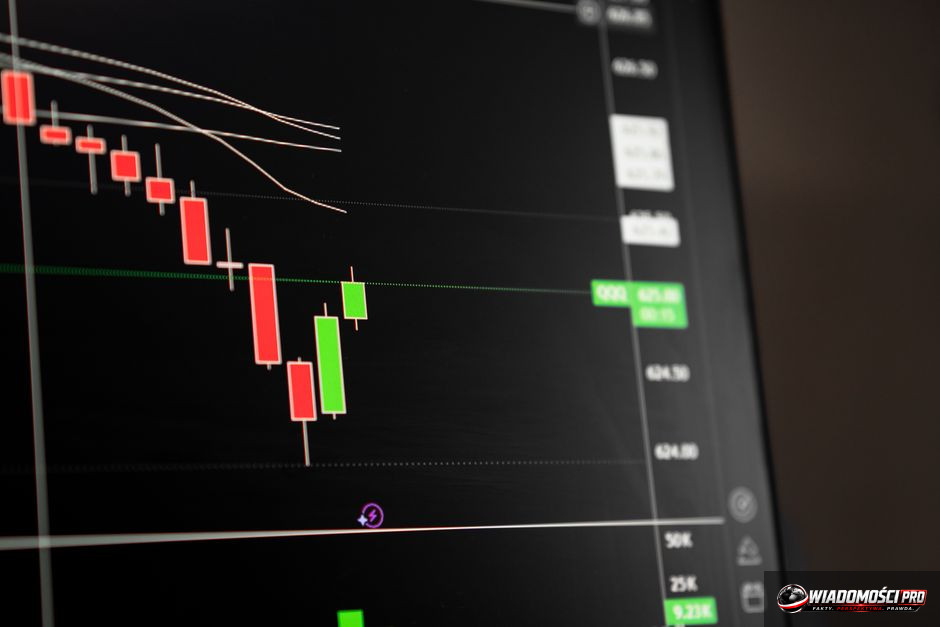
Promotion to the group of developed markets means prestige and a potential inflow of capital, but experts warn that it may involve high operating costs and risks that could outweigh short-term gains. The decision by S&P Dow Jones Indices on June 3, 2026, places the Warsaw Stock Exchange before a fundamental dilemma: whether the benefits of being in the elite will compensate for the need to suddenly adapt to restrictive standards. The Polish capital market must now assess whether entering the developed markets league will become a financial burden for domestic companies, permanently lowering their competitiveness against entities from countries with established market positions.
S&P Dow Jones Indices: The mechanism of a historic change
On June 3, 2026, S&P Dow Jones Indices officially proposed a change in the status of the Warsaw trading floor. This proposal triggered an immediate wave of discussion among fund managers and stock market analysts. The transition from the emerging markets category to developed markets is a systemic process, not just a cosmetic correction in the documentation of rating agencies. This change redefines Poland's position in the global capital flow chain. In the eyes of major institutional investors, such as pension or insurance funds from the USA and Western Europe, developed market status serves as a guarantee of a certain level of legal, technological, and liquidity stability.
In investment practice, such a move forces portfolio rebalancing by index funds, which must reflect new benchmarks. Passive capital, flowing in a broad stream, is usually treated as a blessing. However, there is a risk that the Warsaw market will become a victim of its own promotion. Experts note that the requirements set by S&P DJI are much more restrictive than those to which companies listed on the WSE are accustomed. Operating costs, necessary to maintain reporting standards, investor communication, and ensuring adequate liquidity, may prove to be an insurmountable barrier for many issuers.
Mathematical analysis indicates that for medium-sized companies on the Warsaw floor, the increase in operating costs after promotion could range from 15 to even 25 percent annually. These expenses primarily include expanding investor relations departments, implementing international accounting standards in a more detailed manner than before, and increasing the transparency of management actions. The prestige flowing from belonging to the elite will not cover the bills for audits and technical consulting. The question is whether the Warsaw market is ready for such an evolution, or whether it will become a victim of its own success, where the costs of maintaining the status exceed the profits from capital inflows.
PKO TFI on meeting developed market criteria
On June 8, 2026, a decision was made that opens a new chapter in the history of the Warsaw trading floor: Poland has officially met the hard criteria for entry into the group of developed markets in the MSCI DM classification. This is the result of years of systemic changes and regulatory adjustments intended to make Polish assets more accessible to global capital. From an institutional perspective, such a distinction is a quality certificate, but PKO TFI analysts warn that the success story has a flip side. Although the upgrade is desirable, experts from PKO TFI point to a subtle balance between benefits and hidden burdens.
Success in rankings is one thing, but daily investment management in a developed market regime involves higher operational requirements. Real expenses, which for some market participants may prove to be an insurmountable barrier, concern not only procedures but the entire stock market ecosystem. The risk is tangible. Promotion to the elite means changing the rules of the game, where Polish companies will no longer be evaluated in the category of "promising emerging markets" but will become an element of a broad basket of developed countries. In this environment, capital is pickier and more nervous.
PKO TFI points out that if short-term gains from the inflow of passive investors do not translate into lasting liquidity and valuation growth, the Polish market may painfully feel the effects of increased operating costs. For an investor, this means one thing: entering the first league does not guarantee victories, but only increases the stakes in every subsequent match. If companies do not deliver the financial results expected by demanding Western capital, they will be sold off instantly. The lack of a buffer in the form of "emerging market attractiveness" may lead to greater stock price volatility, which is an undesirable phenomenon for stable long-term portfolios.
Stock market elite: Is this invitation worth the price?
Poland's entry into the group of developed markets in the S&P DJI classification is a scenario for the WSE where prestige clashes with hard economics. Although the proposal to change status from an emerging to a developed market sounds like a success, market observers are increasingly vocal about the hidden costs of this promotion. Investor enthusiasm is cooled by financial reality, as knocking on the door of the Champions League may turn out to be a financial burden for the Polish floor, rather than a springboard for growth.
Experts warn that presence in a prestigious index is a necessity to adapt to restrictive requirements that generate measurable operational burdens. Doubts are raised about the profitability of this change, especially when compared with the potential costs of maintaining the new position. The main points casting a shadow over optimistic forecasts focus on four areas.
First, a sharp increase in operating costs. Industry reports from June 12, 2026, emphasize that for companies listed on the WSE, this means the need to invest in IT and reporting systems that must be compatible with global standards. Second, the risk associated with the outflow of some capital that specializes exclusively in emerging markets. These funds will not have room for Poland in their portfolios after the status change, which may trigger a temporary but painful sell-off.
Third, the need to rebuild settlement systems and adapt market infrastructure to standards that are mandatory for developed markets. These requirements may be an excessive financial burden for smaller entities that do not have such extensive support structures. Fourth, uncertainty as to the actual net profit from the promotion. A PKO TFI analysis from June 8, 2026, notes that although the criteria for entry into MSCI DM are met, the upgrade itself carries a number of risks that outweigh short-term benefits.
The status of "knocking on the door of the Champions League" can be a trap. While for national prestige it is an undoubted recognition of institutional maturity, for the stock exchange's profit and loss account, it is a challenge that may bring more problems than real benefits from capital inflows. The S&P DJI classification change is a costly investment, the return on which in Polish realities remains an open question.
Capital inflow: Opportunities and threats for the WSE
The potential promotion to the group of developed markets in the S&P DJI classification is an ambiguous scenario for the Warsaw Stock Exchange. On one hand, market theorists point to the prospect of passive capital inflow, which must follow changes in indices. Index funds, which have previously bypassed Poland as an emerging market, would be forced to revise their portfolios and buy Polish stocks in the event of a status change. However, prestige is only one side of the coin, behind which lie specific operating costs mentioned by experts in PKO TFI analyses.
The problem is that moving to the Champions League involves rigorous requirements for companies listed on the WSE. Not every company on the Warsaw floor will be able to handle these standards, which in practice means a risk of capital outflow from entities that do not adapt to the new, more demanding rules of the game. Foreign investors, accustomed to the transparency and liquidity of developed markets, may be ruthless toward Polish companies that do not meet their expectations.
In practice, the promotion may bring a temporary increase in interest, but in the long term, there is a real threat that presence in a higher league will prove too expensive for domestic issuers. Instead of the expected bull market, the market may face pressure for restructuring and the need to fight for investor attention in a much more difficult environment. Short-term gains from passive capital inflows may be quickly consumed by expenses related to maintaining high status and the risk of marginalizing less liquid companies that will not find a place in updated global fund portfolios. For the WSE, this is a moment when the profit and loss account requires a cool calculation, not just faith in stock market ennoblement.
Benefits for Polish companies in the long term
Presence in the group of developed markets is, for Warsaw, primarily a signal sent to the largest global investment funds. This status automatically increases the visibility of Polish companies on the radars of capital that has previously bypassed our floor due to restrictions resulting from belonging to the emerging markets group. Greater recognition translates into trading liquidity. Institutions from the USA or Western Europe are more willing to allocate funds where the rules of the game are clear and reporting standards are similar to those they know from London or Frankfurt.
Hard reality, however, verifies this optimism. Entering the elite is not just prestige, but above all the necessity to meet rigorous challenges in terms of corporate governance and transparency. Companies that do not adapt to new information requirements will quickly find themselves on the margins of interest from big players. This is a costly process. Investor relations at the level expected by funds from developed markets require higher financial outlays, which for smaller WSE companies may become an insurmountable barrier.
Analysts point to specific indicators that may determine success or failure after a potential promotion. Participation in the S&P DJI index is dependent on meeting liquidity criteria, which for many Polish companies are currently unattainable. Potential capital inflow is estimated as a variable dependent on the level of valuations, which currently remain at an attractive but risky level. Corporate governance requirements imposed by index agencies require Polish companies to make deep changes in supervisory board compositions and dividend policies.
Promotion is therefore a double-edged sword. On one hand, it opens doors wider to capital that can value assets higher, and on the other, it imposes a corset of costly regulations on the Polish market. If companies do not bear the burden of transparency, the prestigious promotion will quickly become just an expensive entry in the history of the stock exchange, and the expected stream of money will turn into an outflow of capital to more competitive markets with lower operating costs. The final balance depends on whether Polish business treats these challenges as an investment in development or as a burdensome cost to be avoided.
Summary: Are we ready for stock market adulthood?
August 2026 puts the WSE in a place where prestige clashes with hard economics. The June proposals from S&P DJI to move Poland to the group of developed markets sparked a wave of enthusiasm, but debates in the trade press are cooling the mood. Promotion to the stock market elite is theoretically a magnet for institutional capital, but analysts, including experts from PKO TFI, clearly note: this is not a free ticket to success. Poland meets the technical criteria for MSCI DM, which opens the door to valuations that mature markets dream of. The question is whether we are ready for the costs of this adulthood.
Moving to a higher league is not just changing the sign on the door. It means higher operational and regulatory requirements that may hit the profitability of smaller entities. Journalism from June 12 leaves no illusions – this invitation may cost us dearly. The risks associated with this transformation are real. If the costs of maintaining developed market status outweigh the capital inflow, the stock market premier league will become a golden cage for us, not a springboard.
Currently, the market is facing a dilemma. The enthusiasm flowing from the perspective of the Champions League is understandable, but investors should look at it coolly. We will gain the recognition of international funds, but we will lose flexibility and will likely incur significantly higher fees for system maintenance. The history of stock market promotions shows that they do not always end in a bull market. The situation after the June reports clearly indicates: promotion in the S&P DJI hierarchy is a game of uncertain sum, where operational risk can be just as painful as potential gains – promising, but still only on paper.
For the individual investor, this means the need to verify their portfolio. Companies that do not have strong financial foundations may become a burden after the promotion that the market will get rid of. Rising standards are a time of natural selection. Winners will gain access to global capital that is not afraid to invest in quality assets, while losers will be pushed to the margins of trading. The decision to promote is not the end of the road, but the beginning of a very demanding test, in which there will be no room for mediocrity or lack of full transparency in relations with the market.
The final assessment depends on whether the Warsaw market can transform itself into a structure that not only accepts capital but also knows how to effectively rotate it in conditions of strong international competition. If this succeeds, Poland will gain a real chance to permanently take a place in the mainstream of world finance. If, however, there is a lack of proper preparation, the promotion will be remembered as a costly lesson in humility that did not bring the expected breakthrough.
What this means for you
Promotion to developed markets is a prestigious quality certificate, but for the WSE, it means the end of the promotional era and entry into a high-cost requirement mode. The largest companies (blue chips) will gain, while smaller entities may be marginalized by passive funds that will stop noticing them. Individual investors must prepare for greater market selectivity and potentially higher stock volatility for companies that do not meet the new, stricter reporting and liquidity standards.
Questions and answers
Why can promotion to the group of developed markets be costly?
Promotion involves the need to meet higher reporting and liquidity standards, which generates costs for companies and may limit interest in smaller entities by funds that only look for the largest players.
Does Poland meet the technical requirements of MSCI DM?
Yes, according to PKO TFI analyses from June 2026, Poland meets the hard criteria for entry into MSCI DM, which opens the way for further changes in classification and potential passive capital inflow.
What are the main risks of status change for the Polish investor?
The main risk is the outflow of capital from emerging market funds that cannot invest in developed markets, and potential market overvaluation that will not be supported by company results, leading to a painful price correction.
Does promotion to S&P DJI guarantee an increase in stock market liquidity?
It is not guaranteed. Although passive capital inflow is likely, higher operational requirements may discourage some companies from maintaining listings, which in an extreme case could limit the number of liquid assets on the floor.
How should companies prepare for this change?
Companies must increase spending on investor relations, improve reporting transparency in accordance with international standards, and ensure high liquidity of their shares to maintain the interest of global funds.
What happens if Polish companies do not meet the new requirements?
Companies that do not adapt to developed market standards may be excluded from key indices, which will result in a drastic decline in interest from institutional investors and capital outflow.
Are the June reports the final decision?
June 2026 brought a proposal to change status, which is a key stage of the process, but the final implementation of changes in index fund portfolios depends on technical decisions by S&P DJI made in the following months.
Sources
- Stock market elite opens up to Poland. This invitation may also cost us dearly - Parkiet
- Poland meets MSCI DM entry criteria, upgrade would be beneficial, though it carries risks - PKO TFI - PAP Biznes
- Poland advancing to the stock market premier league? S&P DJI proposes a change in the status of our market - Bankier.pl
- Poland knocking on the stock market Champions League. This does not have to be good news - Parkiet
Article prepared by the Wiadomości PRO editorial team with the support of artificial intelligence. Facts come from the sources provided above.



Komentarze (0)
Ładowanie komentarzy...