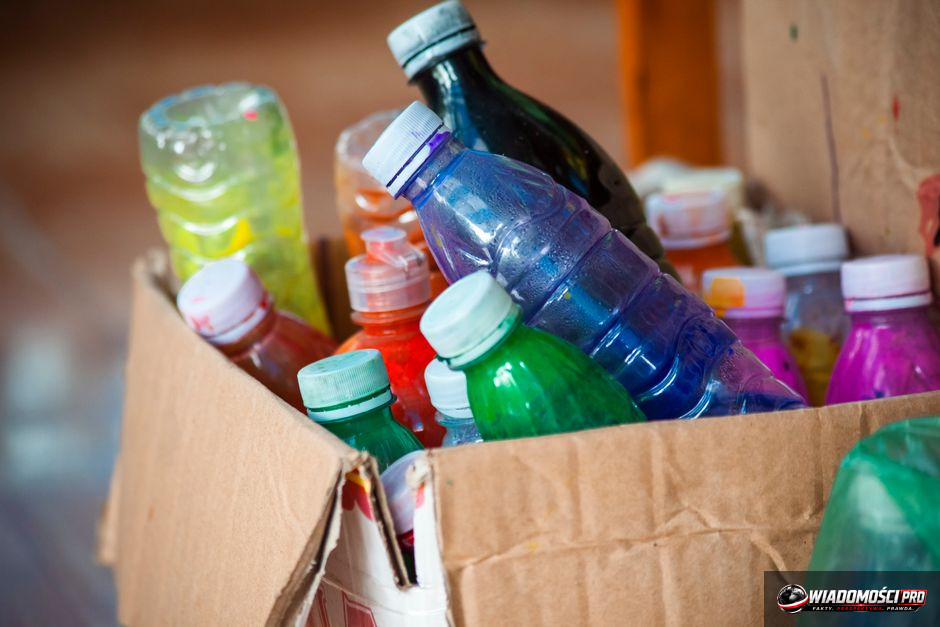
The deposit system generates an average loss of 450 PLN per month for every small retail point in Poland. These costs result from the necessity of manual return management and the loss of storage space. It is a systemic failure that divides the market into two speeds of operation.
Small retail outlets, such as the "U Krysi" grocery store in Gdańsk's Oliwa district, are becoming hostages to regulations that do not account for the realities of floor space under 50 square meters. Every bottle returned by a customer is not just physical waste, but above all, blocked space that could be used to display margin-generating goods. Owners of these points must find space for piles of bags containing packaging, which forces a reduction in the assortment of basic products. This directly hits the profitability of small businesses, whose operational model is based on high inventory turnover rather than the storage of recyclable materials.
Large retail chains, possessing investment budgets counted in millions of zlotys, are building dedicated return points and automating the collection process. For them, the deposit system is a cost that can be amortized across the entire enterprise. Small retailers do not have this capability. They are forced to manually check codes, verify damage, and sort, which, under conditions of limited staff, means the physical impossibility of performing all duties at once. The cashier's work turns into warehouse work, which lowers customer service standards and leads to frustration for both parties of the transaction.
Two speeds of the system: the exclusion of small shops
The Polish retail market has been brutally divided. On one hand, we have corporate standards, and on the other, local entrepreneurs for whom every square centimeter of floor space is worth its weight in gold. The situation described in August 2026 by Puls Gdańska is not an isolated case, but a systemic symptom of the marginalization of smaller entities. The legislator, when drafting the regulations, assumed that every shop has a logistical back-office capable of taking on the role of a recycling center. Reality has verified this assumption in a way that is painful for neighborhood shopkeepers.
Handling a thousand bottles requires several hours of staff work if one counts the time for code verification, checking if the bottle is not crushed, and then counting and properly securing it before collection. At the hourly rate of a retail employee, this cost exceeds the profit the shop makes from the sale of the drink itself. The entrepreneur loses twice. First, they give up the margin to the system operator, and then they lose time and space, for which no one compensates them. The lack of compensatory mechanisms makes small retail less competitive compared to discounters, which pass their operational costs onto their customers.
A fragmented goods collection system is another nail in the coffin for small outlets. The lack of central guidelines regarding the schedule of visits by logistics companies means that the shop becomes an unpredictable waste warehouse. On hot days, which are occurring more frequently in the Polish climate, lingering bottles with liquid residues become a serious sanitary problem. Shop owners must invest in additional cleaning supplies and ventilation, which constitutes another unplanned expense straining the budget. All these elements make up a picture of a system that favors strong players at the expense of small, family-owned businesses.
Chaos in the labor market: the role of collection drivers
The introduction of the deposit system has forced shifts in the labor market, the scale of which was underestimated during the design phase. The wGospodarce service pointed out in May 2026 that the role of the collection driver has become a source of tension in supply chains. This new professional function requires not only driving skills but, above all, competence in verifying deposit documentation. Drivers who service routes in smaller towns face a logistical nightmare.
Servicing ten small points in a dispersed location generates significantly higher fuel and labor costs than a visit to one large-scale logistics center. Every downtime in this process hits the retailer directly. If the driver does not arrive on time, the shop owner is left with bags full of bottles that block the passage and discourage customers. This causes staffing tensions. Employees who were previously responsible for displaying goods are now delegated to handle returns, which lowers their motivation and leads to high turnover in the retail sector.
The collection driver is not just a forklift operator. They must possess knowledge of deposit settlements, which raises qualification requirements and, consequently, wage costs in the transport sector. Every error in documentation, resulting from haste or fatigue, creates financial disputes between the shop and the system operator. Entrepreneurs, deprived of bargaining power, become hostages to schedules that do not take into account the spatial limitations of their premises. This leads to paralysis, where no one feels responsible for errors in the system.
Accessibility barriers: invisible markings
The problem of the deposit system goes beyond pure economics and logistics, touching on the issue of social inclusivity. The current system of markings on packaging, implemented in 2026, is illegible for people with visual impairments. The lack of raised markings, tactile codes, or contrast standards makes participation in recycling for this social group almost impossible without the assistance of third parties. The drafters of the regulations overlooked the fact that the deposit system is supposed to be universal, not just accessible to able-bodied people who have the time to verify complicated markings on labels.
For a blind person, identifying a bottle subject to a deposit is a challenge that excludes them from recovering the paid amount. If the shop does not offer help in verifying products, the consumer loses money, which constitutes a form of economic discrimination. It is difficult to expect a stressed and overloaded small shop employee to spend time verifying every package for a customer with a disability when they themselves are struggling with logistical paralysis. This is proof that the system was designed in isolation from real social needs and the operational capabilities of retail trade.
The lack of inclusive markings is just one element of a broader communication problem. A consumer coming to a small shop with a bottle bought in a large supermarket often encounters a refusal to accept it due to the lack of appropriate markings or a verification system. This creates conflicts between the seller and the customer, which further burdens the atmosphere in the workplace. The deposit system, instead of building ecological awareness, generates barriers that discourage citizens from actively participating in the circular economy.
Return logistics in the face of Gov.pl documents
Official documents published on Gov.pl websites present a vision of the system that differs drastically from the daily experiences of entrepreneurs. The theoretical framework contained in government guidelines does not offer solutions for problems related to warehouse management in a small format. Entrepreneurs, looking for tips on how to cope with the rising costs of handling bottles, receive only vague instructions. They do not answer the basic question: where to store waste when there is no room in the back office?
The lack of clear procedures regarding liability for the return of damaged packaging is another loophole in the regulations. Government documentation suggests that the system should work smoothly, however, every retailer must develop their own model of conduct in disputed situations. This creates chaos and legal uncertainty. Shopkeepers fear penalties for non-compliance with regulations whose interpretation remains ambiguous. As a result, many of them decide on excessive rigor, which discourages customers from making returns at local points.
Comparing official communications with market reality shows a deep divide. The government emphasizes the success of the implementation, while statistics regarding the number of returns in small towns indicate a clear decline in efficiency. The system, which was supposed to be an ecological standard, becomes an operational burden in Polish realities. Entrepreneurs, instead of receiving support in the form of tools for automation, are left to their own devices with the necessity of manually settling deposits. The lack of a central IT system that would connect all points in real-time makes it difficult to control the flow of packaging and financial settlements between system participants.
The future of the system: is repair possible?
Repairing the current state of affairs requires a radical change in the approach to designing logistical processes. Centralization of packaging collection is necessary, which would relieve small retail from the burden of storage. Without support in the form of subsidies for the purchase of compact sorting devices or the introduction of common collection points for several neighboring premises, small shops will lose competitiveness. Operational costs can no longer burden only the retailer's margin, because on a micro scale, this leads to the elimination of local retail points from the market.
Legislative correction must also cover the issue of markings on packaging. Introducing a unified, legible coding system, including tactile elements, is a necessary step towards full inclusivity. The legislator should develop clear rules of liability in the logistics chain so that the retailer is not the only entity bearing the financial risk associated with damage to packaging during transport. Transparency of settlements between producers, logistics operators, and retail points is the only way to regain the trust of entrepreneurs.
Experience with the deposit system so far shows that ignoring the specifics of the Polish retail market leads to the destabilization of the sector. If the ministry does not take corrective action, the deposit system will remain just another burden for small companies, rather than a tool for environmental protection. Experts predict that the long-term effect of current errors will be an increase in the prices of final products for the consumer, which is intended to cover the operational costs generated by an inefficient system. This is the highest price the Polish market pays for the lack of dialogue with entrepreneurs at the planning stage of changes.
What this means for you
The deposit system in its current form favors large retail chains, pushing costs onto small outlets and making life difficult for people with disabilities, which calls its environmental effectiveness into question. The reader should be aware that a local shop may become more expensive or limit the assortment of products subject to a deposit to avoid logistical paralysis. This is a direct hit to the availability of essential products in smaller towns. Every bottle returned in a supermarket is a profit for a corporation, while the same bottle in a neighborhood shop is often a loss for the owner.
Consumers should be aware that the system was not created in a vacuum. It was imposed in a way that ignores the structure of Polish retail, where small-scale trade is still an important element of the urban and rural fabric. If we do not change the way settlements are handled, many small shops will simply disappear from the map, which will lead to so-called food deserts in smaller towns. This is a phenomenon that is already being observed in some regions, and the deposit system only accelerates it.
It is worth following the announcements of the Ministry of Climate and Environment regarding changes to the act. Every amendment should be subjected to social pressure so that it takes into account the interests of small entrepreneurs. As consumers, we have an influence on where we shop and what products we choose. Supporting local shops that, despite difficulties, try to adapt to new requirements is a form of civic support for the diversity of Polish retail. Without this, in a few years, the only choice will be large-format supermarkets, where the individual needs of the customer lose importance in favor of profit optimization.
Questions and answers
Why do small shops have it harder in the new system?
Small shops have limited storage space and human resources. Unlike supermarkets, they do not have automatic systems for handling returns, which forces them to perform manual, costly, and time-consuming processing, paralyzing the daily work of staff. Every hour spent on sorting waste is an hour in which an employee cannot attend to customers.
Is the system friendly to people with disabilities?
No, the system is considered unfriendly to people with visual impairments. Current markings on packaging do not take into account the needs of these people, which excludes them from independent and equal participation in the deposit return process. The lack of raised codes means that a blind person is unable to independently verify whether a given product is subject to a return, which forces them to use the help of third parties.
How has the deposit system affected the labor market?
It has introduced chaos into supply chains and forced the creation of a new, logistically burdened role of the collection driver. Additional administrative and physical duties related to handling bottles have influenced wage pressure in small shops and caused staffing tensions resulting from the need to combine sales with waste management. Qualification requirements for drivers, including the verification of deposit documentation, have increased transport costs across the entire sector.
What exactly does "systemic failure" mean in the context of retail?
It means a lack of consistency between legislative assumptions and the technical capabilities of the market. The legislator imposed obligations for which small entities are not prepared financially or spatially. The result is a decline in recycling efficiency, an increase in costs for consumers, and a deterioration of working conditions in retail, which on a national scale leads to the destabilization of the sector.
Sources
- Two speeds of the deposit system in Poland - difficult situation for small shops and the smallest towns - Puls Gdańska
- Collection driver: the deposit system has stirred up the labor market - wGospodarce
- The deposit system is actually a failure. Because you are making it difficult for yourselves - Spider's Web
- Questions and answers - Gov.pl
Article prepared by the Wiadomości PRO editorial team with the support of artificial intelligence. Facts are derived from the sources listed above.


Komentarze (0)
Ładowanie komentarzy...