The Europa Clipper mission has consumed 5 billion dollars, and its key task is to investigate whether conditions conducive to life exist beneath the icy shell of Jupiter's moon. The probe has begun its multi-year journey toward the Jovian system to perform a series of precise flybys over the surface of this globe. It is NASA's most expensive venture in the field of astrobiological research, aimed at searching for chemical ingredients essential for biology.
The success of the mission depends on a suite of nine advanced research instruments tasked with peering beneath the icy shell, which is estimated to be several kilometers thick. The most important of these is REASON, an ice-penetrating radar. This device uses very high-frequency radio waves to map Europa's internal structure. Through it, scientists hope to detect pockets of water within the icy shell, which would be direct evidence of geological activity capable of sustaining biological processes.
Equally important to the mission is the MISE imaging spectrometer. Its task is to analyze the chemical composition of the surface. The probe will scan the moon in search of organic molecules, salts, and other compounds that may have been pushed from the interior ocean to the surface as a result of tidal processes. Understanding the distribution of these substances will allow us to determine how the ocean communicates with the surface and whether potential habitats are sufficiently rich in the elements necessary for life.
The EIS camera system, or Europa Imaging System, will provide high-resolution images. This is not just a matter of photographic documentation. These observations will enable the creation of precise topographic and geological maps. Analyzing the cracks, ridges, and craters on Europa's surface will allow scientists to understand the history of this moon's evolution. Every detail recorded by EIS brings us closer to explaining how strong Jupiter's gravitational influence is on Europa's interior and how it translates into heat generation.
Among the equipment is also the MASPEX mass spectrometer. This instrument is used to analyze the composition of the atmosphere and molecules ejected from the moon's surface. During flybys, the probe will "smell" the surroundings, collecting data on gas and dust particles. This will allow for the identification of complex chemical compounds that may be byproducts of chemical processes occurring in the depths of the ocean.

Engineers from the Jet Propulsion Laboratory had to face the extremely harsh radiation environment around Jupiter. This planet has the strongest magnetic field in the Solar System, which accelerates charged particles to enormous speeds. This radiation is lethal to delicate electronics. Therefore, the entire probe was enclosed in a special vault made of aluminum and titanium with wall thicknesses reaching nearly a centimeter. Such shielding is intended to minimize the impact of radiation on the device's processors and memory, extending its operating time in this hostile region of space.
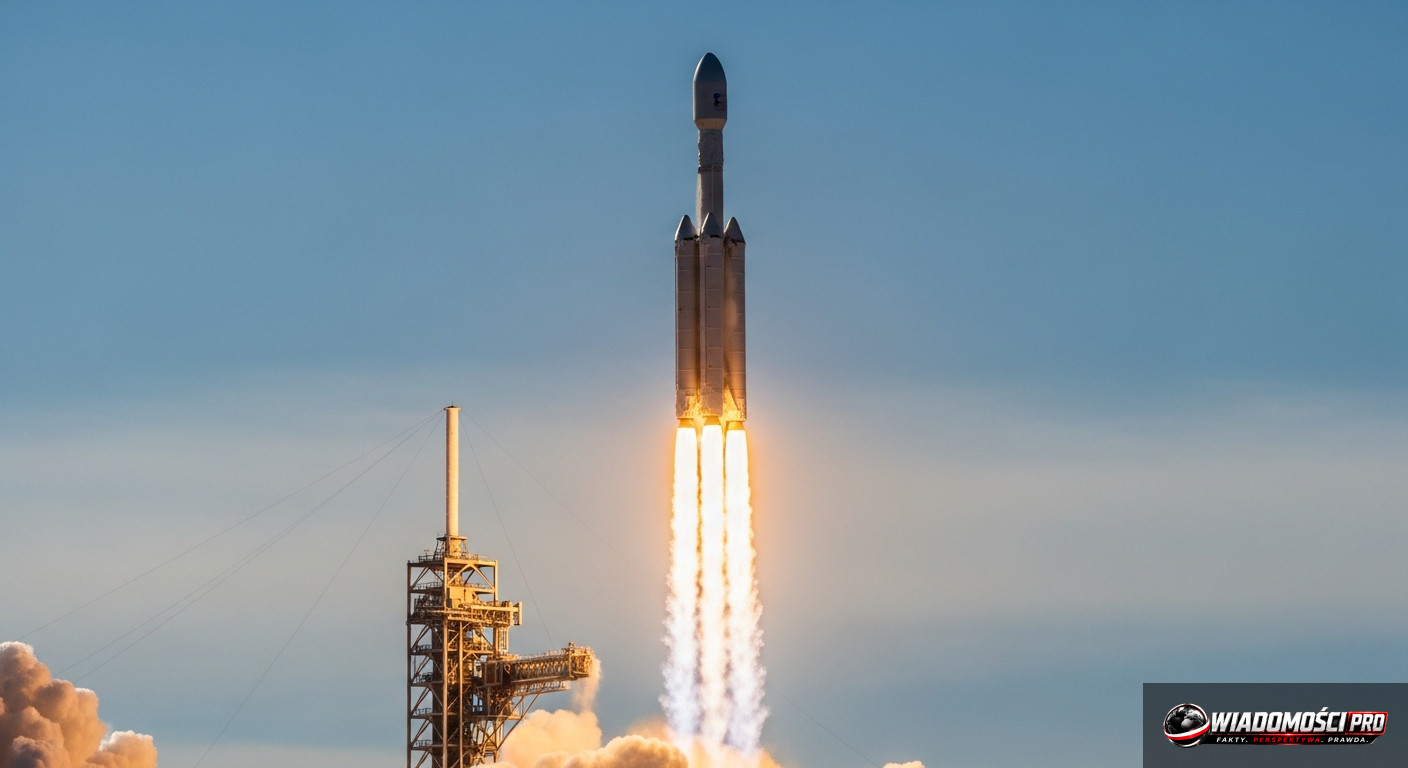
Falcon Heavy, the launch vehicle provided by SpaceX, placed the probe on an interplanetary trajectory with the precision required by the complex flight plan. The choice of this specific model was necessary due to the launch mass of Europa Clipper, which exceeds six tons. The use of three rocket stages and Merlin engines allowed for reaching the escape velocity sufficient to begin the journey through the inner regions of the Solar System.
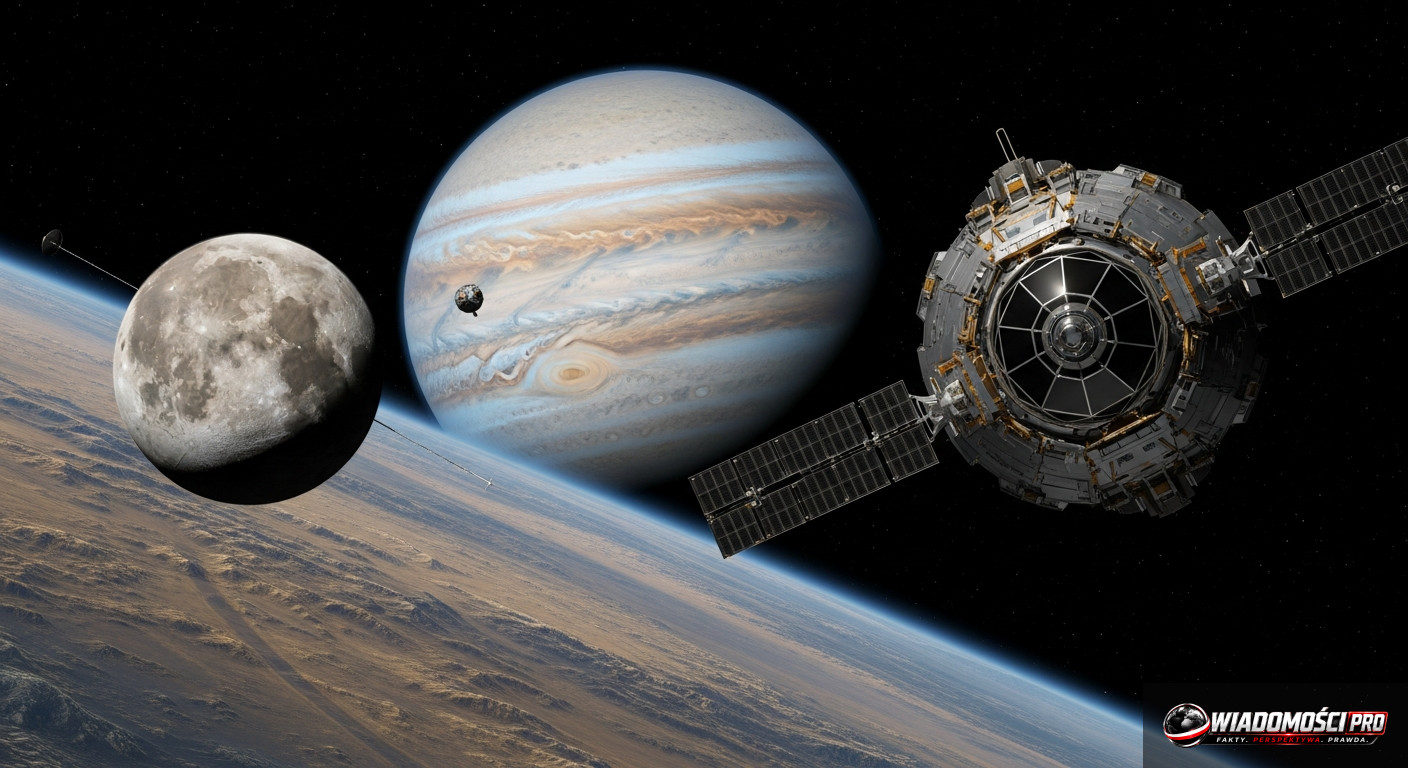
The flight trajectory does not lead directly to Jupiter. The probe must use gravitational assists from Earth and Mars to gain the speed necessary to reach its destination. This complex orbital dance is necessary because a direct flight would require huge amounts of fuel, which would significantly increase the launch mass and the costs of the entire undertaking. Each flyby maneuver must be performed with accuracy to a fraction of a second; otherwise, the probe could miss Jupiter, which would mean the failure of the mission.
This journey will take nearly six years. In 2030, Europa Clipper will enter orbit around Jupiter. However, before the probe begins intensive scientific work, it must undergo a series of braking maneuvers, using the gravity of the Galilean moons. This is the stage of the mission where the risk of a navigation error is greatest. Only after the orbit around Jupiter is stabilized will the actual research phase begin, involving dozens of close flybys over Europa.
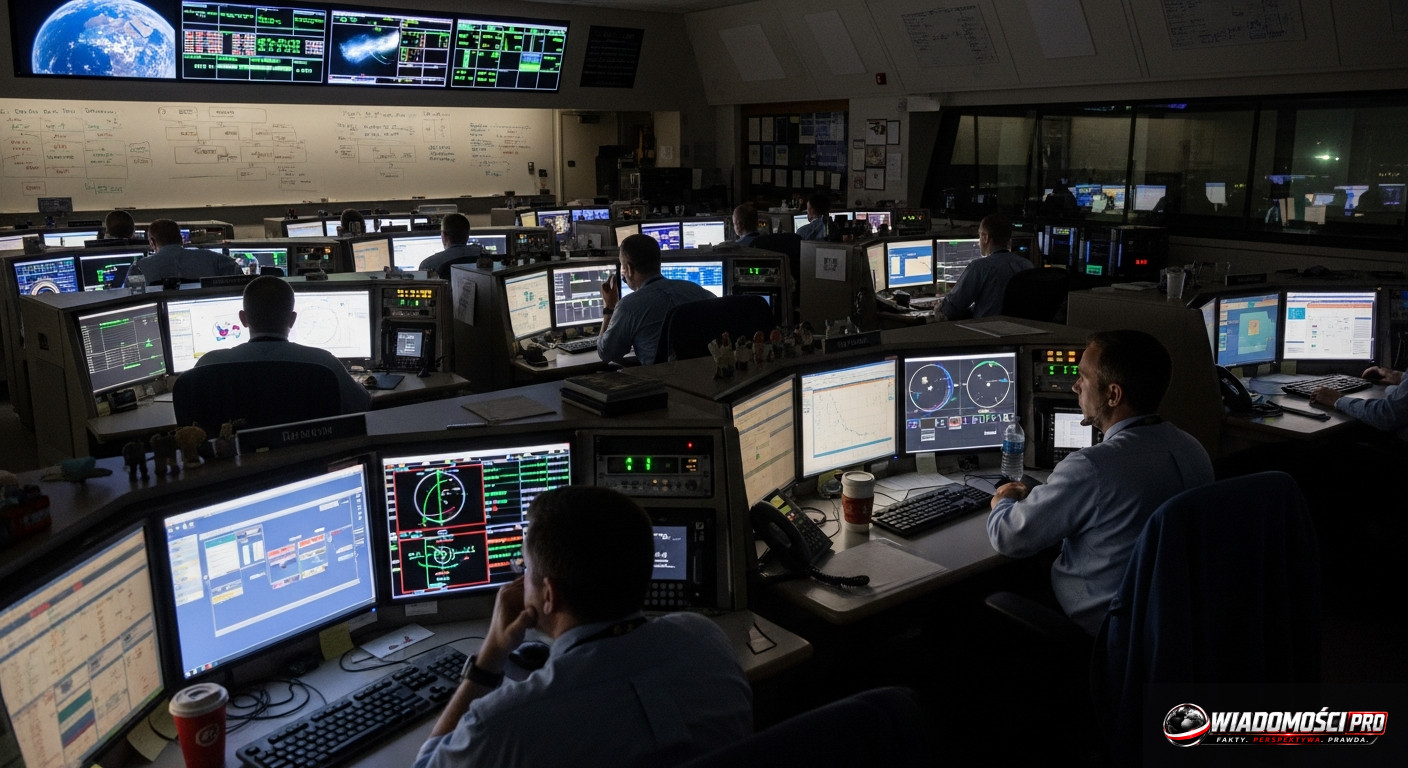
During each flyby, the probe will have to transmit data to Earth using a high-gain antenna. Due to the vast distance, the signal delay will be several tens of minutes. This means that every movement of the probe must be programmed in advance. The mission control team cannot steer the instruments in real-time. All observation sequences must be uploaded to the onboard computer before each flyby begins.
Skepticism from part of the scientific community stems from the fact that even with such advanced instruments, we are not sure what we will find on-site. Europa is a dynamic object, and conditions under the ice may differ significantly from our theoretical models. There is a risk that the samples of molecules collected by the spectrometers will be too contaminated or too sparse to draw definitive conclusions. Investing in this project is, therefore, in a sense, a bet on the nature of life in space.
International cooperation in the context of this mission is also limited. Although Europa Clipper is an American project, scientific data will eventually be made available to the global research community. However, for the moment, the United States maintains full control over the operational side of the project. This is a conscious strategy intended to ensure continuity of operations and protect technology from unwanted interference.
The question of the justification for such a huge financial effort returns in NASA's budget debates. Critics point to the rising costs of maintaining orbital stations and the need to fund return missions from the Moon. However, Europa Clipper is treated as a flagship project that is expected to provide an answer to one of humanity's most important questions. Even if the research result is negative—meaning we do not find traces of life—the knowledge about Europa's geology and chemistry itself will be a breakthrough in planetary sciences.
The physical threats the probe must face are not limited to radiation. Jupiter's magnetic field affects all onboard systems. Temperature changes are also a problem, which can affect the operation of the mechanisms that deploy the solar panels. Europa Clipper is equipped with some of the largest solar panels ever sent into space. At Jupiter's distance from the Sun, light intensity is significantly lower than on Earth, which is why the surface area of the cells must be gigantic to power the research instruments.
During the mission, the probe will repeatedly change its position relative to the Sun, which forces the power management systems to work continuously. Engineers had to design software that autonomously manages power consumption. In the event of a failure of one of the cells, the system must automatically switch to a power-saving mode to prevent the probe from shutting down completely.
A key element of success is the stability of the probe's orbit. Europa Clipper will move along an elliptical trajectory that will allow it to approach the moon's surface while spending most of its time outside Jupiter's most destructive radiation belts. This is a solution designed to balance the need for close contact with the object of study and the protection of sensitive equipment.
Scientists working on the project emphasize that Europa Clipper is a "fly-by" mission, not a lander. This means we will not have the ability to collect samples directly from the surface into a laboratory interior. We depend on what can be recorded during the flybys. This technical limitation is often a subject of discussion. Is it worth sending a lander there in the future? The answer to this question depends on the data that Europa Clipper will send over the coming years.
It is worth noting that this mission does not take place in a political vacuum. The United States, by funding the project entirely, is building its position in the space exploration sector. It is a signal to other powers that the American space industry has the potential to independently carry out such complex tasks. For the American taxpayer, this is an expense intended to bring prestige and technological advantage.
The construction of the probe itself is the result of many years of work by thousands of engineers. Every element, from screws to advanced integrated circuits, had to meet NASA's standards for mission-critical tasks. There is no room for errors that cannot be fixed remotely. The onboard software underwent thousands of hours of simulations to prepare for every possible failure, from a momentary power loss to communication errors with Earth.
For the average observer, this mission may seem distant, even abstract. However, in the scientific world, every photo of Europa's surface sent back will be an event followed by millions of people. What we see in these images could forever change our perception of humanity's place in the cosmos. If it turns out that Europa has an ocean in which biological processes can occur, the definition of life in the Solar System will be expanded.
Currently, the probe is in the interplanetary travel phase. Onboard systems are operating in monitoring mode, checking the technical condition of all components. Every signal arriving from the probe is analyzed by control centers to detect potential anomalies. For now, everything is going according to plan, and the flight trajectory is stable.
Will Europa Clipper discover life? No one knows. The mission has been designed to provide us with evidence of an environment conducive to life, not direct proof of biology itself. This is a subtle but important difference. Confirming the presence of liquid water, energy, and the right chemistry will be a success that justifies every dollar spent. However, if the probe does not find these ingredients, it will be a signal that our understanding of the processes occurring on icy moons requires a thorough verification.
Modern astrobiology is based on the assumption that life requires conditions similar to those on Earth. Europa is our best laboratory for testing this thesis beyond Earth. Thanks to the large amount of data that will flow from this mission, we will be able to better plan the next steps in the exploration of the outer Jovian system. Perhaps it will be Europa Clipper that opens the door to building permanent research bases in this region of space.
The educational aspect cannot be overlooked. Millions of young people around the world are watching the progress of this mission, which may influence their decisions about choosing a career path. Interest in exact sciences, engineering, and astronomy is key to the further technological development of humanity. Europa Clipper is a symbol of what we can achieve by combining financial resources with human curiosity and determination.
Regarding funding, it is worth remembering that these funds are spent mainly on Earth, driving the high-tech sector. Companies collaborating with NASA on this project are often innovative enterprises that, thanks to working on such demanding orders, develop new technologies. These, in turn, find application in other branches of the economy, from telecommunications to medicine.
The ultimate success of the mission will be measured by the quality of the collected data. Regardless of whether we find life there or not, Europa Clipper will go down in history as one of the most important achievements of 21st-century space engineering. It is a project that tests our technological limits and patience.
Questions and answers:
Why is Europa so important to scientists?
Europa is considered one of the most promising places in the Solar System due to the presence of a saltwater ocean beneath an icy shell, which creates potential conditions for the existence of life.
When can we expect the first results?
The Europa Clipper probe will reach the Jovian system after a long journey, so the first key data will flow to NASA after the flyby phase and stabilization in orbit are completed, which is expected in the years following 2030.
Will the probe land on the moon's surface?
No, the Europa Clipper mission involves multiple flybys at a close distance from the surface, which will allow for safe data collection without the risk of landing in an unknown and extreme environment.
Which instruments are key to the mission?
Key instruments include the REASON radar for studying the interior, the MISE spectrometer for chemical composition analysis, the EIS camera for surface mapping, and the MASPEX mass spectrometer for analyzing ejected matter.
Is the mission safe for the equipment?
The probe has been secured with a special vault made of aluminum and titanium, which protects the electronics from Jupiter's strong radiation, which is one of the most serious technical challenges of the entire undertaking.
Why was the Falcon Heavy rocket chosen?
The choice of this rocket resulted from the need to carry the large mass of the probe (over 6 tons) and provide sufficient launch power to direct the vehicle onto the required interplanetary trajectory.
What is the main risk of the mission?
The greatest risk is the extreme radiation in Jupiter's environment and the need to perform precise orbital maneuvers, on which the success of the entire research operation depends.
What happens if we don't find traces of life?
The mission will provide invaluable data on Europa's geology and chemistry, which will expand our knowledge of planetary processes, which in itself is a significant contribution to the development of astrobiology and space science.
What is the communication delay with the probe?
Due to the distance, the radio signal transmitted between the probe and Earth needs several tens of minutes to cover the distance, which forces full operational autonomy of the system during flybys.
Can the mission be extended?
The decision on a possible extension depends on the technical condition of the probe and the availability of energy resources, which will be assessed after the completion of the basic research phase planned after 2030.
Sources
- Start of the Europa Clipper mission to Europa - AstroNET – Polish Astronomical Portal
- Europa Clipper launches. A key task ahead of them - Geekweek Interia
- Europa Clipper probe to search for life on Europa - Urania - Polish Astronomical Portal
- Start of the Europa Clipper mission [BROADCAST]. Americans to outpace Europeans in the search for life on Europa - Wyborcza.pl
- NASA sends probe to Europa. Europa Clipper mission has launched - WP Tech
- Europa Clipper has launched. It will investigate whether there are conditions for life on Jupiter's moon - Polskie Radio 24
- Europa Clipper probe to search for life on Jupiter's moon, Europa - wszystkoconajwazniejsze.pl
- Flight to Jupiter for 5 billion dollars. Launch of Europa Clipper on board Falcon Heavy - Benchmark.pl
Article prepared by the Wiadomości PRO editorial team with the support of artificial intelligence. Facts come from the sources listed above.


Komentarze (0)
Ładowanie komentarzy...