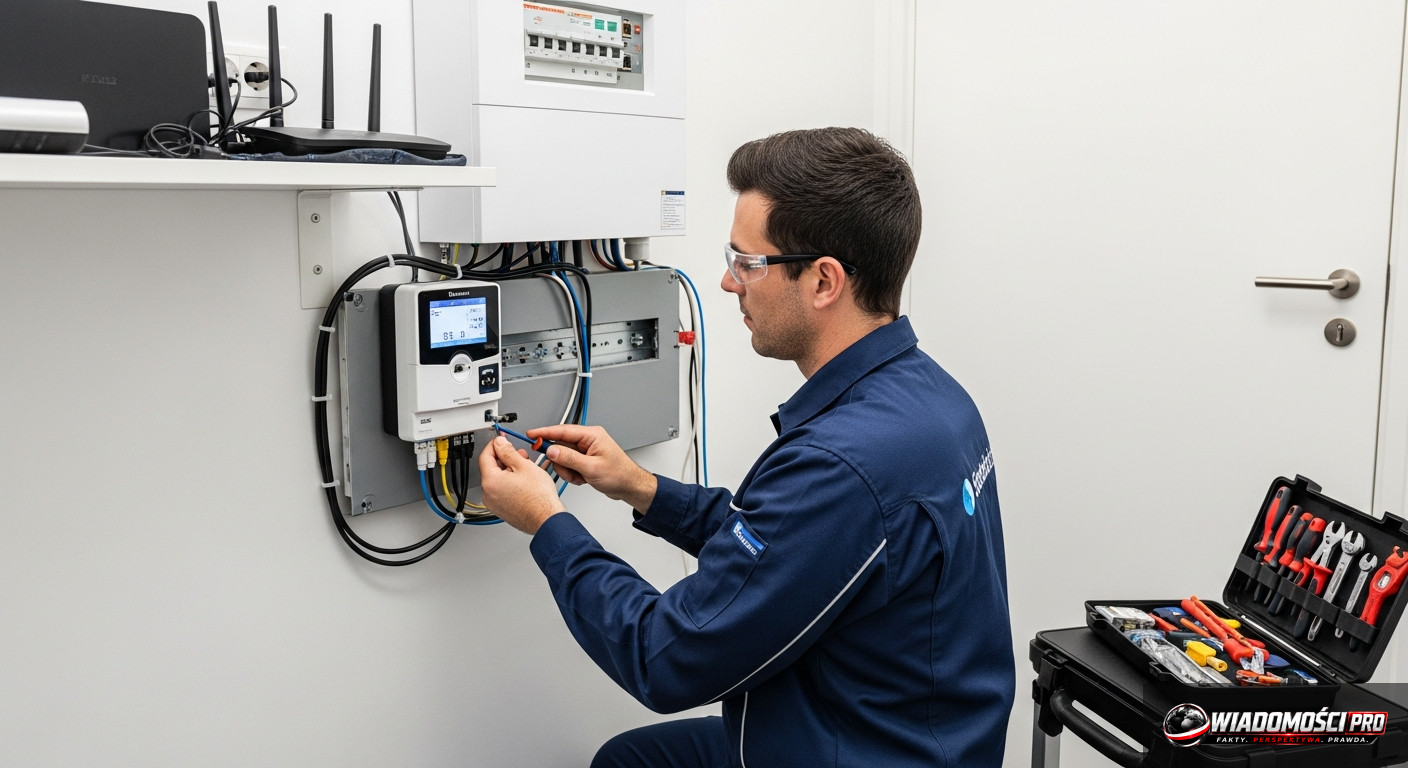
Thanks to an NFOŚiGW investment worth 379 million PLN and subsidies for PGE Dystrybucja, the installation of smart meters will allow for the remote reading of actual energy consumption, which will ultimately eliminate the need for estimated invoices. This is a change in the billing model from an estimated one to one based on data transmitted in real-time. The Fund launched the funds in July 2024, and PGE Dystrybucja received support in January 2026.
379 million PLN in the service of digitalization: NFOŚiGW funds
The amount of 379 million PLN, reserved by NFOŚiGW on July 11, 2024, constitutes the financial foundation for an operation on an industrial scale. This money is not just payment for devices, but acts as a financial engine for rebuilding Polish energy grids toward Advanced Metering Infrastructure (AMI). This modernization, although theoretically planned for years, only gained real execution capabilities thanks to such an injection of capital. The Fund set a specific goal for PGE Dystrybucja: replacing devices that had previously been a passive element of the installation with fully digital units.
For over a decade, the Polish energy sector operated in a model where the meter remained a "mute" device. It required the physical presence of a meter reader or the customer reporting the reading themselves. Any error in these readings or delays in reporting led to the creation of estimated invoices. For households, this meant unpredictable bills. Billing systems, based on historical data, often diverged from reality, resulting in painful surcharges after the annual settlement.
The investment from July 2024 changes this paradigm. Instead of estimates, operators receive direct insight into actual consumption. Data flows to the headquarters continuously. The billing system ceases to be a guessing game of the customer's energy needs and becomes a precise record of grid load. This process requires not only replacing the meters themselves but also a thorough reconstruction of IT systems, which must process billions of data records coming from millions of energy consumption points.
An energy grid that knows how much electricity is being consumed every minute manages its load more effectively. This is the foundation for the further development of prosumer energy, where homes not only consume energy but also feed it back. Without smart meters, the grid remained insensitive to these flows, which led to technical problems, such as photovoltaic inverters shutting down during moments of high sunlight.

The role of PGE Dystrybucja in the modernization process
PGE Dystrybucja, being one of the largest operators in the country, took on the logistical burden of this transformation. The subsidy granted to the company on January 2, 2026, gave the operation momentum. Previously, this process resembled laboriously pushing through a thicket of bureaucracy and equipment shortages. Now that financial resources have been unlocked, PGE Dystrybucja's role is shifting from planning to field execution.
The logistics of replacing millions of devices is an operation on a scale that Polish energy companies are facing for the first time. Each meter is a separate visit, the necessity of ensuring access to the meter box, and integrating the new device with the operator's communication system. The company manages thousands of installers who appear in Polish homes every day.
Communication standards were a barrier for years. Devices from different manufacturers often could not work together. This meant that even with a modern meter installed, the system was not fully functional. The 2026 subsidy allows for the unification of these systems. Thanks to this, data from devices is readable for the headquarters, regardless of whether the meter was installed in an apartment block or a single-family house in the countryside.
The efficiency of this process is measured by the speed at which PGE Dystrybucja reduces the number of estimated invoices. Consumers expect a correct bill that reflects what they actually consumed in a given month. If the company manages to maintain the pace of replacement in 2026, the problem of estimates will cease to exist in many regions before the end of the year.
There remains the issue of customer service quality. In the face of mass meter replacement, PGE Dystrybucja must prepare for a wave of inquiries and service requests. Each such replacement is an interference with privacy and home infrastructure. The success of this undertaking depends on the fluidity of communication between the installer, the operator, and the end customer.
Why are we ending estimates? The mechanism of change
The end of the era of guesswork in electricity billing results from a change in the technical nature of the measuring device. The mechanism is simple: a smart meter, also known as a remote reading meter (AMI – Advanced Metering Infrastructure), acts like a small computer. It not only measures the flow of electricity but has a built-in communication module that sends consumption data directly to PGE Dystrybucja's IT systems.
In the old system, an estimated invoice was forced by a lack of data. The operator estimated consumption based on history from previous years. If a family installed a heat pump or bought an electric car in the meantime, the estimates became useless. This led to situations where customers received bills that were unrealistically high or too low, which was frustrating for the household budget.
Smart meters eliminate the human factor. There is no need to send a meter reader to check the meter status, nor for the customer to manually transcribe numbers in an app or over the phone. The system sees consumption in real-time. As a result, every invoice issued after the system implementation is based on hard data, not on the electricity seller's assumptions.
For the end consumer, this primarily means predictability. You pay for what you consumed. If you went on vacation and electricity was used to a minimal extent, the system will show it. If you had increased demand during the winter period, the bill will be higher, but it will not be the result of an error in estimation, but of actual energy usage. It is a transparent arrangement that builds trust between the customer and the supplier.
Maintaining such a huge IT infrastructure is a challenge for the operator. Processing millions of readings requires server rooms with enormous computing power. Any IT system failure can result in problems with issuing invoices, which makes smart meters just as dependent on the stability of the digital network as they are on the stability of the energy grid.
Implementation schedule for millions of homes
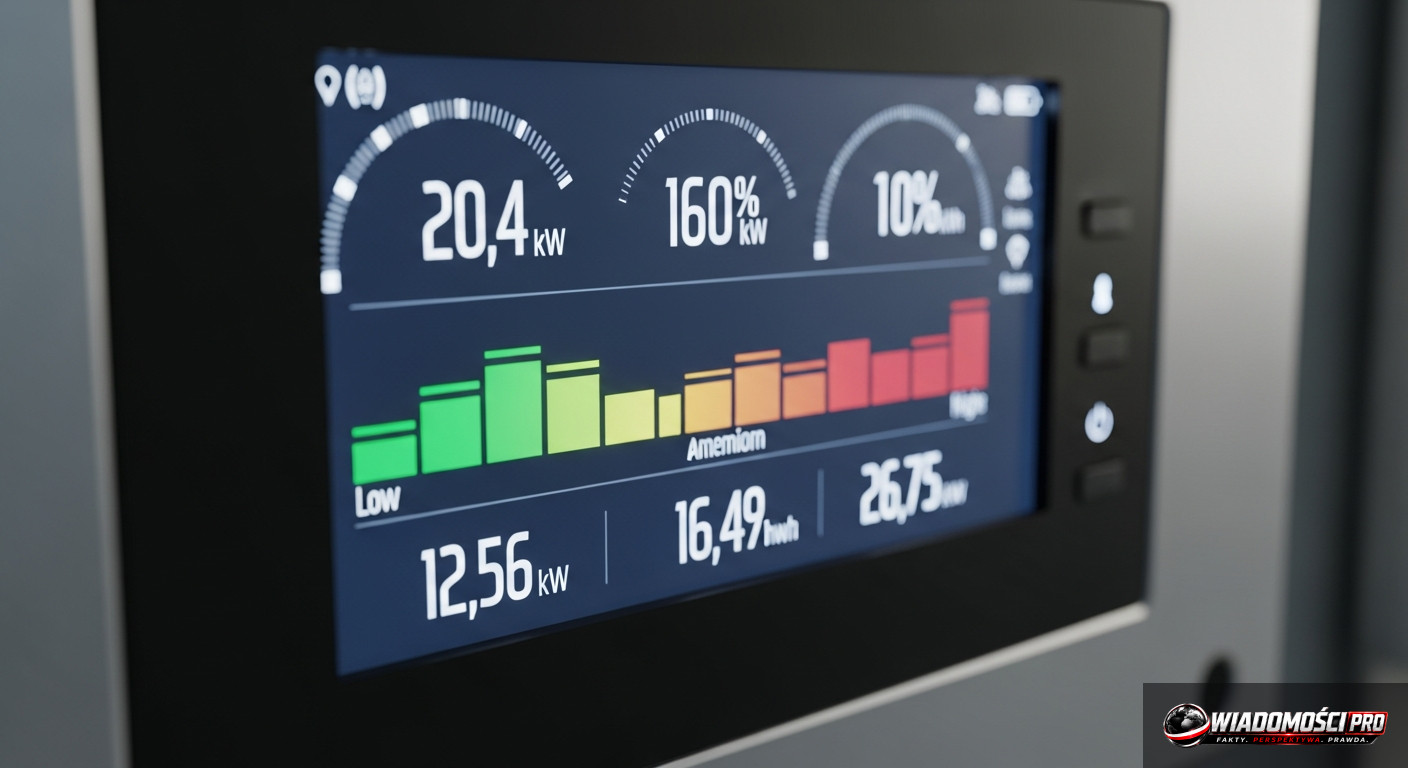
The meter replacement operation is spread over years, which results from technical and personnel limitations. It is impossible to replace all devices in the country within a few months. This process takes place in stages, covering first the regions where the grid requires the most urgent modernization. PGE Dystrybucja carries out these works continuously, adjusting the schedule to the execution capabilities of its branches.
Replacing a meter is also a modernization of the transmission infrastructure in its immediate vicinity. It often turns out that the old meter was connected to an installation that also requires minor corrections to ensure stable data transmission. PGE Dystrybucja installers often perform work that goes beyond just replacing the measuring device.
Below we present the key logistical stages of this modernization:
- Successive replacement of devices in households that previously used traditional meters requiring a physical visit from a meter reader.
- Adaptation of PGE Dystrybucja's IT systems to handle data transmitted in real-time from millions of new energy consumption points.
- Technical verification of each installation so that remote reading is not only possible but, above all, precise and resistant to transmission errors.
- Unification of communication protocols so that devices from different suppliers can work together seamlessly within one smart grid.
The scale of the challenge is enormous. In many rural regions, where energy infrastructure is several decades old, the installation of a smart meter is often the first step toward deeper modernization of the entire connection. This makes the pace of work strictly dependent on the state of the grid in a given town. Residents of cities, where the grid is denser and newer, can count on faster modernization than residents of dispersed areas.
In 2026, PGE Dystrybucja is focusing on optimizing installation processes. It uses route planning systems for installers, which allows for maximum utilization of working time. Every day of delay in installation means that more consumers are exposed to inaccurate estimates. Therefore, the company places great emphasis on ensuring the process is as unobtrusive as possible for household members, limiting power outages to an absolute minimum.
Contract value and benefits for the consumer
For the average household in Poland, settlements with energy companies have resembled tea-leaf reading for years. The forecasting system, based on historical consumption, often missed the mark, leading to painful surcharges or the need for long waits for the return of overpaid funds. The money flowing from public funds is intended to realistically translate into the transparency that has been lacking for decades. The consumer will not have to guess how much energy they will use in the coming quarter, and operators will stop turning over customer money, which in the old model was often treated as a free loan when forecasts were inflated relative to actual consumption.
Here is a summary of key figures regarding project financing:
- Value of the NFOŚiGW pool for smart meters — 379 million PLN (Gov.pl, July 11, 2024)
- Subsidy for PGE Dystrybucja — amount in millions of zlotys (Gramwzielone.pl, January 2, 2026)
However, the question of the pace of work remains. Although plans for grid modernization and meter replacement date back to 2011, when the need for smart grids was first written about more broadly (MuratorPlus, July 7, 2011), only now, in mid-2026, are concrete financial effects visible. This process could have started much faster if not for the sluggishness in implementing communication standards between devices. Now that the funds are in circulation, the key will be how quickly PGE and other companies manage to physically install the devices in homes, because the transfer from NFOŚiGW alone will not measure the electricity in the sockets.
Editorial analysis indicates that the main beneficiary of this change is the honesty of settlements. A consumer who takes care to save energy will finally see the effects in the following month, not after a year when they receive a corrected invoice. On the other hand, for the operator, the greatest benefit is the reduction of operating costs associated with hiring meter readers and handling office complaints regarding incorrect estimates. This is a situation where both parties should come out ahead, provided that IT systems can withstand the pressure of the data.
Energy evolution: from old meters to Smart Grid
The concept of smart grids, or Smart Grid, is not a new idea in Poland. Discussions about the need to replace obsolete metering infrastructure were already taking place in 2011. Back then, according to industry publications of the time, smart grids were supposed to be a remedy for energy waste and imprecise billing. For years, however, these plans remained in the realm of projects and pilots, and Polish homes were still served by devices based on technology from the last century.
The implementations carried out in 2026 represent the culmination of these long-standing efforts to modernize the energy sector. The transition to smart metering is a technical leap that finally allows operators to monitor electricity flows on an ongoing basis, rather than just estimating them based on historical data from months ago. For the consumer, this means the end of the era of suppliers "guessing" bills. The stress associated with surcharges after the annual settlement, which often stemmed from incorrect estimates rather than actual consumption, is becoming a thing of the past.
Fifteen years from the first serious debates on Smart Grid to full implementation is an eternity in the technology industry. While the technology itself is not new, its ubiquity is only becoming a fact now. The question of whether the pace of these changes was too slow relative to the growing needs of the market remains open. Now, however, what counts is the effect: a system that finally stops guessing and starts measuring.
Smart grids are not just meters. It is an entire structure that allows for demand management. In the future, thanks to smart meters, we will be able to pay less for electricity if we consume it during hours when the grid is less loaded. This is a potential that old meters never had. Operators will be able to offer dynamic tariffs that change every hour, and the smart meter will perfectly record these changes.
What this means for you
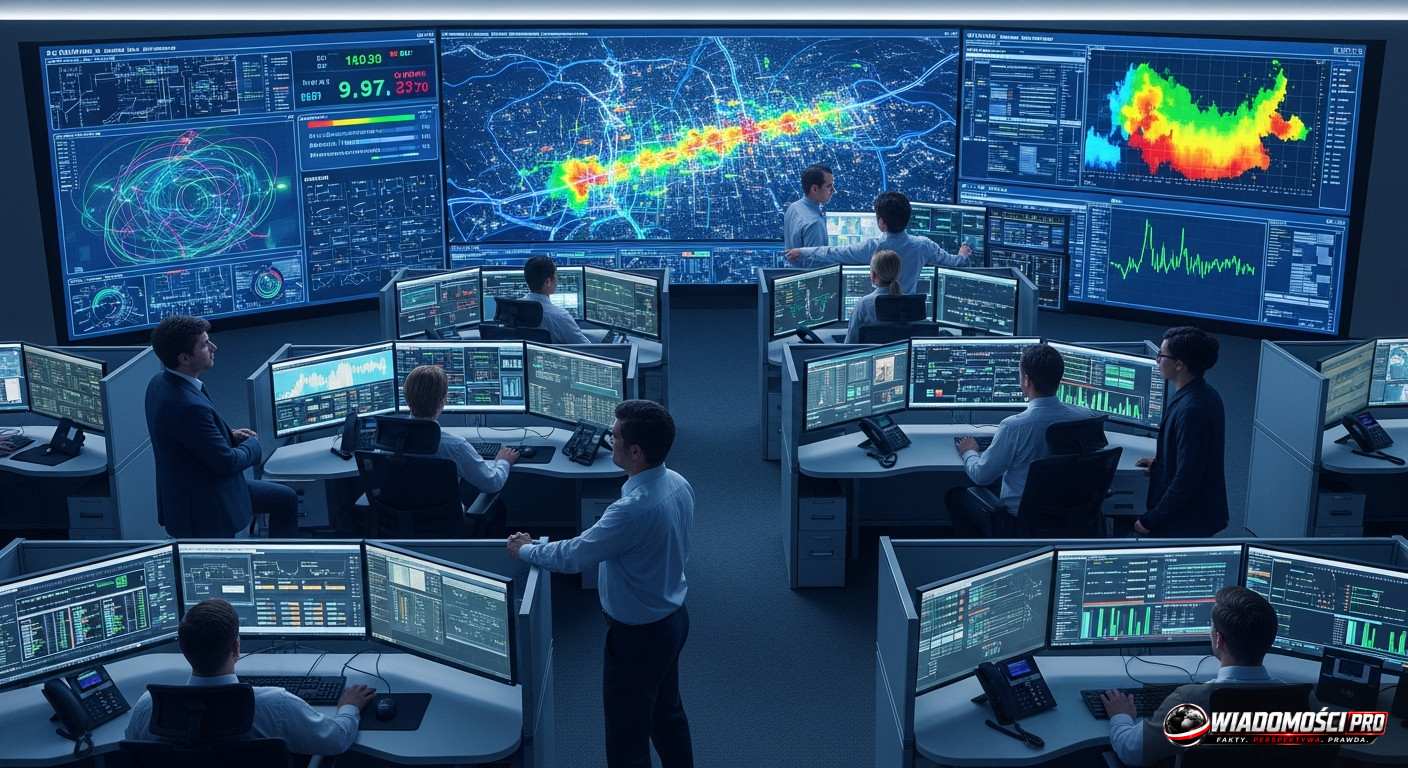
Editorial perspective: Individual consumers gain the most, as they will avoid the stress associated with surcharges after the estimation period. Companies that previously benefited from capital "frozen" in customers' overpaid estimates lose out. The catch lies in the pace of replacement – not everyone will receive a meter immediately, and the process is spread over years.
For an elderly or less tech-savvy person, replacing a meter can be a source of anxiety. PGE Dystrybucja must ensure that this process is clear and understandable. Every customer should receive simple instructions on what is changing in their billing and how they can monitor their consumption online. If this communication fails, even the most advanced device will not improve the consumer's quality of life.
Additionally, for households with photovoltaic installations, a smart meter is a necessity. It allows for precise monitoring of how much energy we feed into the grid and how much we consume. This is crucial under the current rules for prosumer settlements. Thanks to the new devices, settlements with the "virtual warehouse" (the grid) become much more transparent.
In summary, meter replacement is a process that will not transform the energy sector overnight, but it is an essential foundation. Without it, it would not be possible to transition to a modern model where the consumer becomes an active participant in the energy market. It is an investment in the future that is finally moving from the theoretical phase to the implementation phase.
Questions and answers
Will replacing the meter with a smart one cost me anything?
Meter replacement is financed by NFOŚiGW funds and the own resources of operators such as PGE Dystrybucja, which means no direct costs for the individual consumer.
When will I stop receiving estimated invoices?
With the installation of a smart meter and its activation in the remote reading system, billing will be automatically switched to actual energy consumption.
How many homes will be covered by the program?
The program assumes the replacement of meters in millions of households, which is supported, among other things, by the subsidy for PGE Dystrybucja granted at the beginning of 2026.
Do I have to configure anything myself after replacing the meter?
No. The entire process of installation and integration with the operator's system is carried out by PGE Dystrybucja installers. There are no technical duties related to operating the device on the user's side.
Do smart meters affect data security?
Yes, these devices use encrypted data transmission channels, which is intended to protect user privacy and prevent manipulation of readings by third parties.
Will I have insight into my energy consumption before the invoice is issued?
By design, remote reading systems are intended to eventually provide customers with an online panel where they can check current energy consumption, which will allow for better control over the household budget.
What if the meter breaks down?
As with old devices, the service and maintenance of the meter lie with the grid operator (PGE Dystrybucja). In case of any irregularities, this fact should be reported to the energy company.
Do I have to be at home during the replacement?
In most cases, replacing the meter, if it is located in an easily accessible box in the stairwell or on the building's facade, does not require the presence of a household member. If the meter is inside the apartment, the installer will contact you in advance to arrange a convenient time.
The NFOŚiGW investment (379 million PLN) and support for PGE Dystrybucja (January 2026) are just the tip of the iceberg that is the modernization of the Polish transmission system. Beyond the obvious benefits for the consumer, in the form of no need for consumption forecasting, there are a number of operational challenges. AMI infrastructure, i.e., advanced metering infrastructure, requires the operator to make huge expenditures on database maintenance. In 2026, PGE Dystrybucja must meet the task of synchronizing millions of meters that work in different communication standards. This is not just a matter of replacing equipment, but above all a matter of digital integration.
Modern energy grids, so-called Smart Grids, are systems that must be resistant to overloads. Thanks to remote readings, PGE Dystrybucja will be able to locate failures faster. In the old model, a report of a power outage often had to be verified by a technical team on-site. Now, the headquarters sees whether a given consumption point is connected to the grid in real-time. This radically shortens the reaction time to any faults.
Another aspect is the issue of dynamic tariffs. Smart meters allow for energy billing depending on the time of day. In practice, this means that a customer who decides to do laundry or charge an electric car at night, when grid load is lower, will pay less for energy. This is a solution that promotes rational electricity management. The old meter was unable to record such precise data. New technology is therefore becoming a tool in the hands of a conscious consumer.
The question of data privacy is valid. Many people fear that the operator will know too much about their private lives. However, it should be noted that AMI systems are designed in accordance with rigorous personal data protection standards. The data transmitted from the meter is only information about energy consumption over time – it does not specify what specific devices in the home are running. Data encryption is a standard required for every new implementation, which constitutes an insurmountable barrier for third parties.
The logistics of replacement are incredibly complex. PGE Dystrybucja in 2026 must coordinate thousands of installers. Each of them has assigned routes in different regions of the country. IT systems optimize these routes to minimize fuel costs and working time. This is pure mathematics and process engineering. If we assume that replacing one meter takes an average of 30–60 minutes, then with millions of points, the total operational time counted in man-hours is enormous.
It is worth returning to history. Already in 2011 (MuratorPlus), it was pointed out that smart meters are the future. For 15 years, the Polish energy market remained in a slump, relying on solutions from the 1990s. Only the combination of EU and national funds, like this 379 million PLN from NFOŚiGW, allowed this impasse to be broken. This shows that technology without capital support remains just a theory.
Many consumers may wonder what will happen to their old meters. They are disposed of in accordance with electronic waste management regulations. This is a process that also generates costs, but it is unavoidable. PGE Dystrybucja has developed procedures that allow for the safe disposal of old equipment, which is important from the point of view of environmental protection.
An important element is also social education. Many people, after installing a smart meter, do not know how to use the new possibilities. PGE Dystrybucja should focus on information campaigns that explain why it is worth taking care of ongoing consumption monitoring. If the customer understands how the system works, they will be more willing to use it to optimize their costs.
In summary, the year 2026 is a turning point. The Polish energy sector is emerging from the shadow of the estimation era and entering the era of precise measurements. This is a process that has its drawbacks – it requires time, patience, and huge financial outlays. However, the benefits, both for consumers and for the stability of the energy system, are undeniable. The end of estimates is not just a marketing slogan; it is a qualitative change that permanently fits into the development of a modern society using Smart Grid technology. The future of this project will depend on efficient data management and maintaining the pace of work by PGE Dystrybucja. Will the IT system hold up? This is a question the answer to which we will know in the coming months, when the number of active smart meters in Poland exceeds further millions. Time will tell if this modernization proves fully effective in every corner of the country, or if infrastructure barriers in rural areas will slow down this process. For the moment, the direction of change is clear and irreversible. The transition to smart metering is a milestone toward sustainable energy.
Sources
- PGE Dystrybucja with millions of zlotys in subsidies for smart energy meters - Gramwzielone.pl
- NFOŚiGW has already allocated 379 million PLN for smart meters - Gov.pl
- Smart energy grids. Time for new energy meters - MuratorPlus
Article prepared by the Wiadomości PRO editorial team with the support of artificial intelligence. Facts come from the sources provided above.

Komentarze (0)
Ładowanie komentarzy...