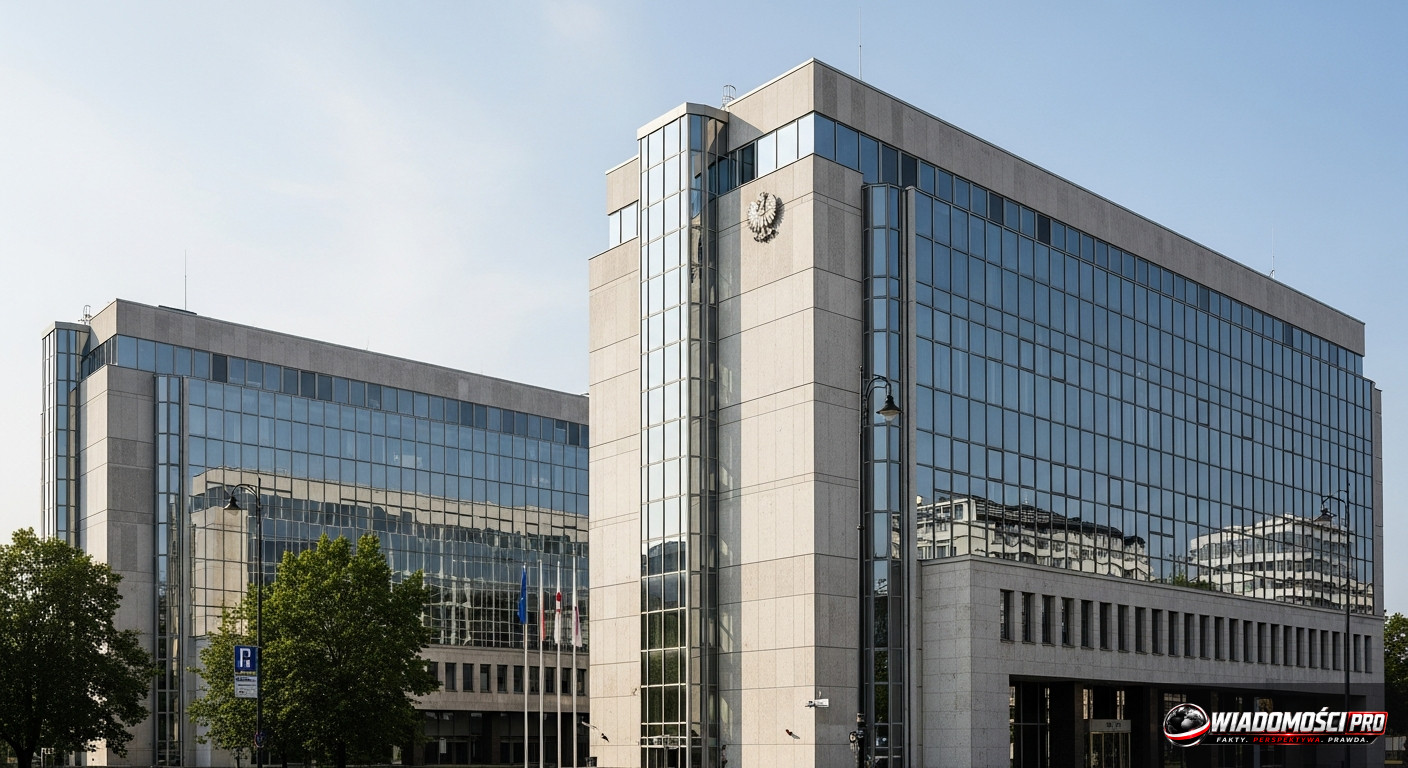
In August 2026, the Monetary Policy Council (MPC) is maintaining interest rates at 5.75 percent, which is a direct reaction to the tense geopolitical situation between the USA and Iran. This decision marks the continuation of a period of stagnation in the cost of money in Poland, closing the door to rapid reductions in mortgage installments. The next MPC decision-making meeting is scheduled for September 2026, when the council will again assess the impact of the conflict in the Middle East on the stability of the zloty and the domestic inflation path.
The MPC decision from July 2026: why did rates remain unchanged?
On July 8, 2026, the Monetary Policy Council decided to keep interest rates at the current level of 5.75 percent. This resolution became the definitive end to the expectations of a segment of the market that, following the November 2025 moves, had been counting on a continuation of the monetary policy easing cycle. The stabilization of the cost of money in Poland has, at this moment, become a hostage to a situation far beyond the country's borders, specifically in the Middle East.
During the July deliberations, members of the Council focused on analyzing external risks. The escalation of the conflict between the United States and Iran dominated the discussion, overshadowing domestic macroeconomic data. In the face of high market uncertainty, easing monetary policy was considered too risky a move. Geopolitics pushed standard inflation projection models into the background. Had the MPC decided on a cut in July or August, it could have further weakened the currency, which is already feeling the effects of a global flight of capital to safe havens.
The zloty is under strong pressure, and investors in situations of international tension usually sell off assets in emerging markets. The lack of movement from the Council represents an attempt to protect the national currency's exchange rate from a sharp sell-off that could fuel imported inflation. For borrowers, this means painful stagnation, as installments remain at the same high level. The financial market received a clear signal: the MPC will not take the risk of cutting rates until the dust settles around the conflict in the Middle East. Hopes for cheaper credit have been postponed, and central banks around the world are watching oil and gas prices with concern, which react with nervous jumps after every report from the region. Such a situation effectively ties the hands of Polish policymakers, making every subsequent interest rate decision a defensive act rather than a proactive one.
Escalation in the Middle East and the Polish economy
The Monetary Policy Council left no illusions in August 2026. Interest rates remain at an unchanged level of 5.75 percent, which for borrowers means an extension of the period of high debt service costs. This decision, although expected by analysts, directly results from the rising temperature in relations between Washington and Tehran. The tense geopolitical situation has become the main brake on any attempts to ease monetary policy in Poland.
The market feels this clearly in the valuations of futures contracts. Tensions between the USA and Iran are currently the main risk factor for the stability of the zloty, which is losing value against the dollar and the euro under the influence of global unrest. The MPC cannot afford risky moves when our currency is under such strong pressure. In this situation, a more dovish policy, which some observers hoped for in the first half of 2026, proved impossible to implement without jeopardizing the stability of the financial system.
Added to this is the issue of raw materials. The sharp rise in energy prices on global markets hits core inflation directly. Every impulse coming from the Middle East translates into higher production and transport costs, which consumers see on store shelves and at fuel pumps. High market uncertainty makes Council members prefer to be cautious rather than take the risk of easing policy at a time when an external supply shock is looming.
Monetary policy in Warsaw has become a hostage to decisions made thousands of kilometers away. From the perspective of the average citizen, this means one thing: the stabilization that mortgage holders are waiting for will not come as quickly as the optimistic scenarios from a few months ago suggested. Without a calming of the situation in the Persian Gulf region, the room for any cuts will remain merely theoretical. The Council does not want to repeat the mistakes of the past, when easing too early led to the entrenchment of inflation expectations, which is why it is keeping rates at the current level, monitoring the situation almost day by day.

Chronology of changes: from November 2025 to today
The last few months have been a series of difficult decisions for the Monetary Policy Council taken in the shadow of growing geopolitical risk. The current stabilization of the cost of money at 5.75 percent is no accident, but the result of a defensive stance by the central bank, which prefers to observe the fluid conflict between Washington and Tehran rather than risk volatility in the zloty.
This approach contrasts with the moods that dominated the economy as recently as the end of 2025. Let us recall the most important turning points of the last quarters:
- November 5, 2025: The Council carried out its second autumn interest rate cut. The market took this as a signal of possible monetary policy easing for longer.
- March 4, 2026: Analysts and investors openly discussed further downward moves, counting on cheaper credit, which caused market expectations to diverge significantly from the subsequent MPC strategy.
- August 2026: The Council's position became conservative, which is confirmed by the latest decision to keep rates unchanged.
Today, the situation looks completely different than it did a year ago. Back then, the optimism of borrowers was based on the assumption that the cutting cycle would continue without obstacles. Today, that enthusiasm has been extinguished by the situation in the Middle East. The USA and Iran are at odds, and this automatically translates into global risk aversion. For the Polish zloty, this means pressure that the MPC does not want to further fuel with rate cuts, which could narrow the difference in the profitability of Polish assets relative to base markets.
For the average Pole's wallet, this change in the Council's mood is primarily information that relief on loan installments will take longer to arrive than was assumed in the spring. Hopes for rapid drops in WIBOR rates have collided with the hard reality of international politics. As a result, the central bank's conservatism has become the new norm, rather than just a temporary stop on the way to cheaper money.
Impact on mortgage installments in 2026
The Monetary Policy Council's decision to keep interest rates at 5.75 percent in August 2026 cuts off all speculation about a quick breather for the indebted. The lack of cuts means, in practice, no change in debt service costs. Borrowers paying off obligations based on the WIBOR rate must accept the status quo, which does not mean relief for household budgets.
The stabilization of rates at the current level is a direct response to the unstable geopolitical situation between the USA and Iran, which effectively paralyzes any attempts to ease monetary policy in Poland. Markets are nervous, and the zloty is under constant pressure, which forces the MPC to be cautious. For the average person, this means one thing: the mortgage installment will not fall in the near future.
Hopes for cheaper money, fueled by some market narratives in the first half of the year, are proving to be futile. Direct Money forecasts from a few months ago suggested that expectations for quick and clear drops in installments were premature, and today's reality only confirms this thesis. Borrowers should prepare for a longer period of higher debt service costs, which forces a recalibration of household financial plans.
Banks have no reason to lower margins or offers when economic fundamentals force the cost of money to be maintained at the current level. The situation is a stalemate. On one hand, we have the hope for cheaper credit, and on the other, the realities of global conflict and its impact on the Polish currency. In this puzzle, however, it is geopolitics that holds the cards, pushing the needs of borrowers into the background. There is no room for optimism until tensions between Washington and Tehran subside and the zloty's exchange rate regains stability. Tightening the belt remains the only option, as the central bank prioritizes fighting potential imported inflation over immediate support for the household budgets of indebted Poles.
What does the MPC decision mean for savers?
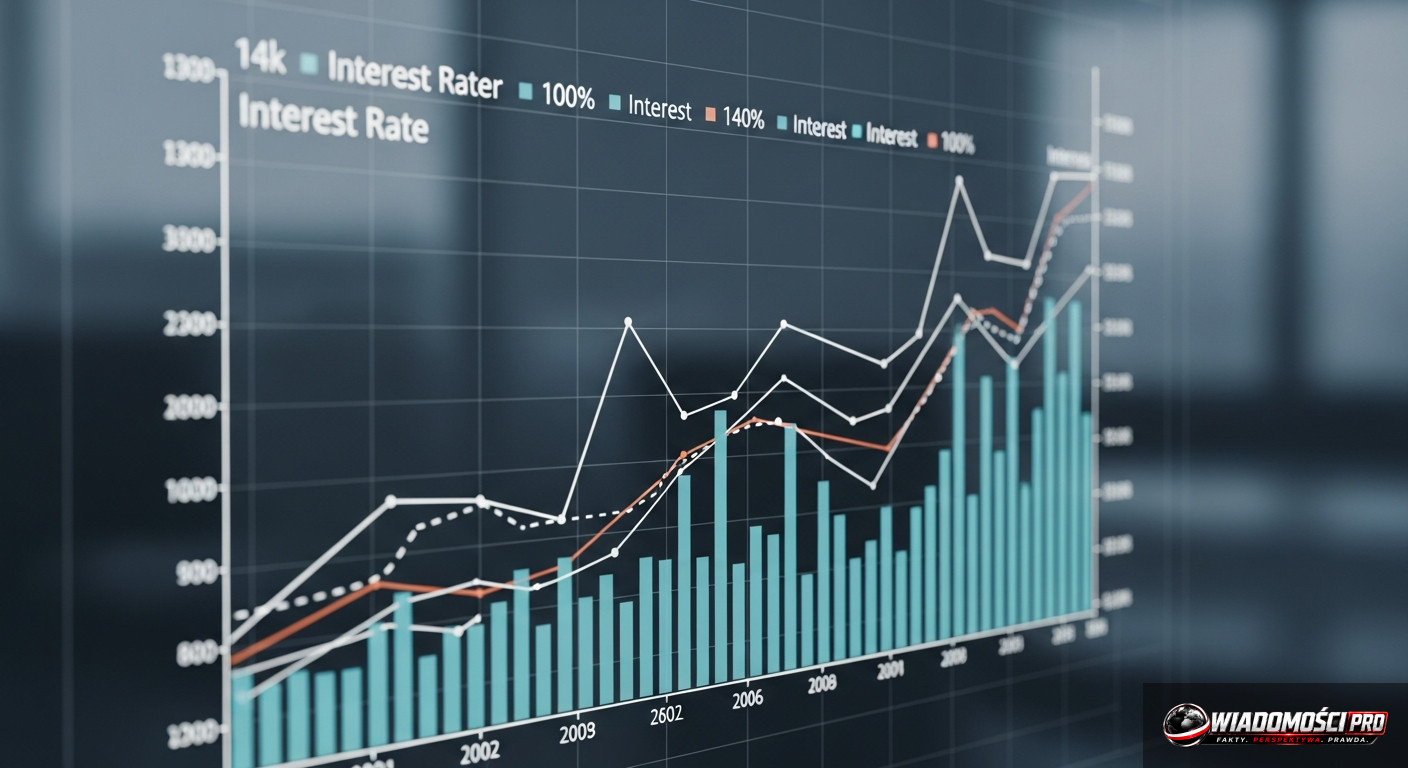
The Monetary Policy Council's decision to keep interest rates at 5.75 percent in August 2026 means stabilization for savers, though not necessarily profit. The lack of an upward move primarily means no pressure on commercial banks to further lower interest rates on deposits and savings accounts. Customers who were counting on rapid growth in deposit profits must arm themselves with patience, as current market conditions have frozen bank offers at the level known from recent weeks.
Banks currently have no reason to aggressively fight for customer capital by jacking up rates when the cost of money in the economy remains unchanged. Maintaining current rates by financial institutions gives capital holders only a certain predictability. However, this is not an ideal situation. As INFOR.PL previously pointed out in its analyses, there is a clear imbalance in the market between what savers gain and the costs that borrowers must bear. This disproportion remains a fact, and the MPC's decision, dictated mainly by geopolitical tensions between the USA and Iran, only preserves this state of affairs.
For the small saver, this means that the fight against inflation remains unequal. Capital in deposits loses its real value if interest rates do not keep up with the pace of price growth, and commercial banks show no desire to improve their deposit offers. In the short term, savers benefit from the lack of radical cuts that could further deplete their wallets, but in the long term, the current stagnation of interest rates does not bring a real improvement in the profitability of savings. Hopes for higher profits have been postponed to an indefinite future, which forces savers to look for alternative methods of capital protection, often riskier than standard bank deposits.
Forecasts for monetary policy for the end of 2026
Market analysts have no illusions: the coming months will be dictated by geopolitics, not dry macroeconomic data. Focusing attention on the escalation of the conflict between the USA and Iran means that the Monetary Policy Council is closing itself off to any easing of monetary policy. A clear signal flows from the July MPC communiqué: there is no schedule for further cuts, which freezes borrowers' expectations for cheaper money before the end of the year.
Experts from Direct Money and Parkiet unanimously point out that the room for maneuver for the Council is currently minimal. Any decision to cut rates in the face of such an unstable international situation could drastically weaken the zloty, which would consequently fuel imported inflation. MPC members are carefully tracking three indicators: the inflation level, the current exchange rate of the zloty, and energy prices. It is these variables, often detached from domestic fundamentals, that determine the central bank's stance today. If tensions in the Middle East do not subside, the prospect of cuts in the fourth quarter of 2026 becomes increasingly distant. The market must prepare for a longer period of stabilization at 5.75 percent, which for people paying off loans means maintaining current high installments for the coming months.
Below is a summary of forecasts from analytical institutions regarding monetary policy:
- Direct Money — no clear schedule for cuts in 2026 (Direct Money, 13.04.2026)
- Parkiet — dependence of MPC decisions on the escalation of the conflict in Iran (Parkiet, 08.07.2026)
- INNPoland.pl — no rate cuts in the face of USA-Iran tensions (INNPoland.pl, 08.07.2026)
The silence in the Council's communication is no accident, but a conscious choice. In such an uncertain market environment, any declaration could be used by speculators against the Polish currency. It remains to wait for the calming of moods across the ocean and in the Middle East, because only that will open the door for the MPC to revise its current strategy. The Council remains in wait-and-see mode, which in practice means that until we see lasting stabilization in commodity and currency markets, one should not count on any easing of monetary policy in Poland. Every meeting, until the end of the year, will be played out under the dictates of currency security, not the optimization of loan costs for the private sector.

What this means for you
For the average Pole, the current MPC decision means no relief for the wallet. People with savings in banks gain, as deposit interest rates will not continue to fall in line with cuts that might otherwise have occurred. Borrowers who were counting on a faster path of installment cuts lose, which in the face of global instability proves unlikely in the short term. The cost of debt service at a 5.75 percent reference rate becomes a reference point for the coming months, forcing households to maintain budget discipline.
Questions and answers
Were NBP interest rates cut in August 2026?
No, the MPC kept interest rates at an unchanged level of 5.75 percent during the July 2026 meeting, which also applies in August.
How does the situation in Iran affect my loan installments?
Geopolitical tensions between the USA and Iran are weakening the zloty, which forces the MPC to maintain higher interest rates to protect the currency and fight imported inflation, which directly translates into no drop in mortgage installments.
When did the MPC last decide to cut rates?
The last significant cut took place in November 2025, when the MPC carried out its second autumn interest rate reduction, followed by a period of stabilization.
When will the next MPC meeting take place?
The next decision-making meeting of the Monetary Policy Council is scheduled for September 2026, when the council will again analyze the impact of the geopolitical situation on the condition of the Polish economy.
Sources
- See what's happening with your loan! The MPC has made a decision - wGospodarce
- The Monetary Policy Council has cut interest rates. This is already the second autumn quarter - Bankier.pl
- MPC keeps rates unchanged – will the escalation in Iran bring hikes? (ANALYSIS) - Parkiet
- Interest rate forecasts for 2026 - Direct Money
- Interest rate value August 2026. Forecasts and current information on interest rates in Poland - TotalMoney.pl
- USA and Iran are at odds, and the MPC is not cutting rates. Zloty under pressure - INNPoland.pl
- The MPC decision on interest rates is in. It is already known what happens next with loan installments - Business Insider Polska
- Rate cut: borrowers will gain, savers will lose. MPC decision soon - INFOR.PL
Article prepared by the Wiadomości PRO editorial team with the support of artificial intelligence. Facts come from the sources provided above.


Komentarze (0)
Ładowanie komentarzy...