
President Lee Jae Myung officially proposed talks to the North on August 15, 2026, regarding ending the state of war, aiming to stabilize the region following a series of North Korean missile tests in April 2026. The chances of this initiative succeeding are minimal, as Pyongyang has for years treated its asymmetric military advantage as the only guarantee of the regime's survival. It is difficult to expect a breakthrough when the foundations of both nations' security remain in a state of open hostility.
The initiative of August 15, 2026, is an attempt to break the diplomatic paralysis in which the Korean Peninsula has been stuck since the signing of the armistice on July 27, 1953. Seoul is striving to transform the fragile armistice provisions into a full-fledged peace treaty. Lee Jae Myung wants to force Pyongyang to change its priorities: instead of further expanding its nuclear arsenal, the regime would open itself to dialogue. The President used Liberation Day—the anniversary of the end of Japanese occupation—to give his proposal the weight of a symbolic break with the anachronism of a technical war.
## The genesis of the military impasse
A key turning point for the current situation remains the night of April 8, 2026. At a time when the international community's attention was focused on the Middle East and the ceasefire there, Pyongyang conducted a series of missile tests. According to reports by "Rzeczpospolita," the nighttime launches were a clear signal that Kim Jong Un's regime does not intend to abandon its displays of force. These actions effectively severed communication channels between the capitals. The South Korean administration, placed on the defensive, is now trying to reverse this dynamic by moving to a diplomatic offensive.
An analysis of the effectiveness of similar appeals in the history of inter-Korean relations points to a recurring pattern. Since 1953, a number of agreements have been signed that were intended to lead to de-escalation, but they ended in failure whenever the North felt its military interests were threatened. Lee Jae Myung is staking his own political capital. Within South Korea, there is strong resistance to concessions toward Pyongyang, especially after the April provocations. Skeptics point out that the regime rarely responds to proposals for dialogue at times when it feels militarily confident. If Lee Jae Myung does not present guarantees that Pyongyang considers credible, this appeal will remain merely a gesture addressed to the international community, rather than a real tool for change.
## Geopolitical conditions of the dialogue
History shows that without the involvement of external powers—mainly the USA and China—negotiations for a peace treaty have limited chances of success. The United States maintains that any attempt to end the state of war must be strictly linked to the denuclearization of the North. Meanwhile, Beijing, seeking to maintain the status quo on its borders, acts as an arbiter that restrains radical moves by both sides. Lee Jae Myung, by proposing talks now, is trying to exploit a gap in global attention to define the terms of peace on his own. This approach could lead to friction with Washington if the American administration decides that Seoul is making too many concessions.
Financial market reactions after the April missile tests were violent. Investors responded with a massive sell-off of assets related to South Korea, which translated into huge volatility for the won. Today's peace proposal brought a short-lived calming of sentiment, but stock market analysts remain cautious. The financial stability of the region is directly dependent on the absence of further ballistic tests. Every subsequent missile test by the North after such a high-profile peace proposal will be perceived by the markets as the final proof of the failure of Lee Jae Myung's strategy.
## Technical aspects of the treaty
Signing a peace treaty requires developing an arms control mechanism and agreement on the verification of the North Korean arsenal. So far, Pyongyang has not agreed to any form of external oversight. Lee Jae Myung proposes breaking this impasse through incremental trust-building. He assumes that a framework for peaceful coexistence must be established first, and only then should the focus shift to nuclear issues. This is a change in strategy that meets with sharp criticism from conservative circles in Seoul. From Pyongyang's perspective, Seoul's offer can be interpreted in two ways. The first is an attempt to weaken the regime by drawing it into global economic systems. The second is a "Trojan horse" strategy aimed at internal destabilization of North Korean structures through the opening of borders and the flow of information. The Kim Jong Un regime, known for its paranoid protection of its own sovereignty, will likely treat these proposals with the utmost suspicion.

The situation requires extraordinary diplomatic skill from the administration in Seoul. If the North responds with further missile tests, Lee Jae Myung will have to decide: withdraw the offer, which will weaken his position, or push forward, risking accusations of naivety. The existing policy of deterrence, based on the alliance with the USA, seems to be exhausting its effectiveness in the face of the North's technological missile progress. The events of April 8, 2026, showed that even in the face of global interest in de-escalation, Pyongyang is capable of creating a crisis on its own.
Understanding why dialogue is so difficult requires looking at the nature of the relationship between the two states. The North views the South not as a partner, but as a vassal of Western powers. Conversely, the South views the North as an unpredictable threat whose only motivation is the survival of the regime. Breaking this thought pattern would require gestures that are currently unacceptable to both sides. Lee Jae Myung is trying to jump over this wall by offering dialogue, but without concrete security guarantees for Pyongyang, this proposal remains in the realm of rhetoric.
## The role of China and internal dilemmas
Beijing is Pyongyang's main trading partner and the only entity that has real financial leverage over Kim Jong Un. If Lee Jae Myung's proposal gains even tacit support from China, the chances of successful negotiations will increase. Otherwise, the North will have the freedom to ignore Seoul's calls, knowing that it faces no serious economic consequences from its main ally.
South Korean citizens are watching these events with mixed feelings. On one hand, there is a desire for the normalization of relations; on the other, a fear of weakening defense capabilities. For the average resident of Seoul, the April missile launch was not just a technical incident, but a reminder that war is still a real threat. President Lee must now convince his own society that his strategy is safe, which will be an extremely difficult task in the face of growing political polarization.
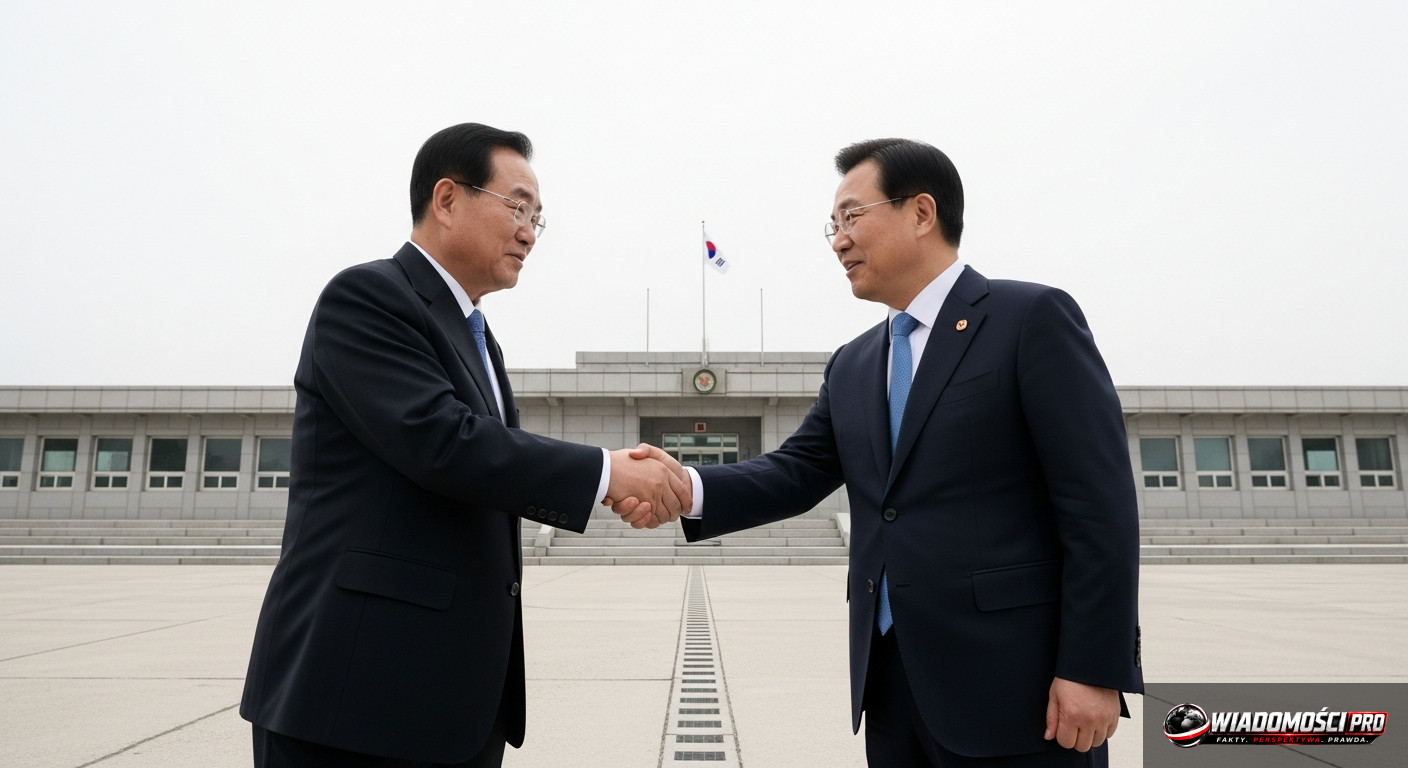
Direct negotiations, if they occur, will require enormous discipline from both sides. Previous attempts based on international agreements failed as soon as the political climate changed. Lee Jae Myung seems to believe in the power of direct dialogue that bypasses intermediaries, but this same directness makes him the most vulnerable to attacks from internal opponents. The stabilization of the Korean Peninsula is a matter of South Korea's national security, which has lived in the shadow of North Korean missile launchers for decades.
Every successive generation of leaders in Seoul has tried to tackle the Peninsula problem in some way. From the "Sunshine Policy" to hard deterrence—all these strategies ended in a return to square one. Lee Jae Myung seems to believe that the year 2026, with its specific international dynamics, is a moment when the North might be more willing to negotiate due to fatigue with isolation. However, the evidence for this fatigue is only circumstantial.
Questions and answers:
Why is President Lee Jae Myung proposing talks right now?
The President is striving for lasting peace in the region, using Liberation Day as a symbolic moment to initiate dialogue on peaceful coexistence, attempting to take the initiative after a period of tension.
Will the April missile tests affect the course of the talks?
The tests of April 8, 2026, represent the main challenge to the trust that Seoul must now rebuild to convince the North to formally end the war, as the regime in Pyongyang proved its readiness for provocation at that time.
What exactly does a formal end to the Korean War mean?
It means replacing the armistice in effect since 1953 with a full-fledged peace treaty, which would definitively close the state of war between the North and the South, while requiring detailed arrangements regarding arms control and the verification of arsenals.
What are the biggest threats to this initiative?
The biggest threat is the lack of reciprocity from Pyongyang and the risk that the regime will treat the offer of talks as a sign of weakness, continuing missile tests, which could consequently lead to a total collapse of diplomacy and the necessity for the government in Seoul to return to a hard-line policy.
What is the role of allies in this process?
The USA and China remain key actors; the USA demands denuclearization, while China balances between maintaining stability and supporting the North, which makes Lee Jae Myung's proposal a complicated geopolitical game with many unknowns.
What does Seoul expect from Pyongyang in the first phase?
Seoul expects, above all, an end to military provocations and a readiness to begin direct dialogue, which would replace the rhetoric of threats, which is a prerequisite for any subsequent peace arrangements.
## Forecast: Scenarios for the peninsula
The realistic forecast for Lee Jae Myung's initiative is pessimistic. Pyongyang, keeping the stability of the regime in mind, will not give up its existing military assets in exchange for uncertain political guarantees. In the coming months, one should expect the August 15 proposal to be ignored by North Korean state media. If the North decides to respond, it will be conditional—it will likely demand the withdrawal of American troops from South Korea as a prelude to any talks, which is unacceptable to Seoul.
Consequently, the diplomatic process will reach a dead end, and Lee Jae Myung will have to withdraw the proposal or intensify defense cooperation with the USA to prevent his own position from weakening. The Korean Peninsula will remain in a state of "cold peace," in which the technical armistice will be merely a facade for an ongoing arms race. No breakthrough in inter-Korean relations should be expected before the end of 2026. Any attempt to force peace without changing the security paradigm in Pyongyang is doomed to failure, and the only real consequence of the President's proposal will be further polarization of public opinion in Seoul. The history of this region shows that agreements are possible only when both sides recognize that the costs of further confrontation outweigh the benefits of isolation, and in the case of the Kim Jong Un regime, this threshold has not yet been crossed. Seoul will have to prepare for a long-term diplomatic defense, while the North will continue its strategy of building missile potential, ignoring any attempts at rapprochement that do not offer it total recognition of its sovereignty on its own terms. We face months of stagnation, in which the only certain factor remains uncertainty.
Sources
- South Korean President called on North Korea to engage in dialogue for peaceful coexistence. - Vietnam.vn
- Ceasefire in the Middle East, while North Korea launched missiles. Happened overnight - Rzeczpospolita
Article prepared by the Wiadomości PRO editorial team with the support of artificial intelligence. Facts are derived from the sources provided above.



Komentarze (0)
Ładowanie komentarzy...