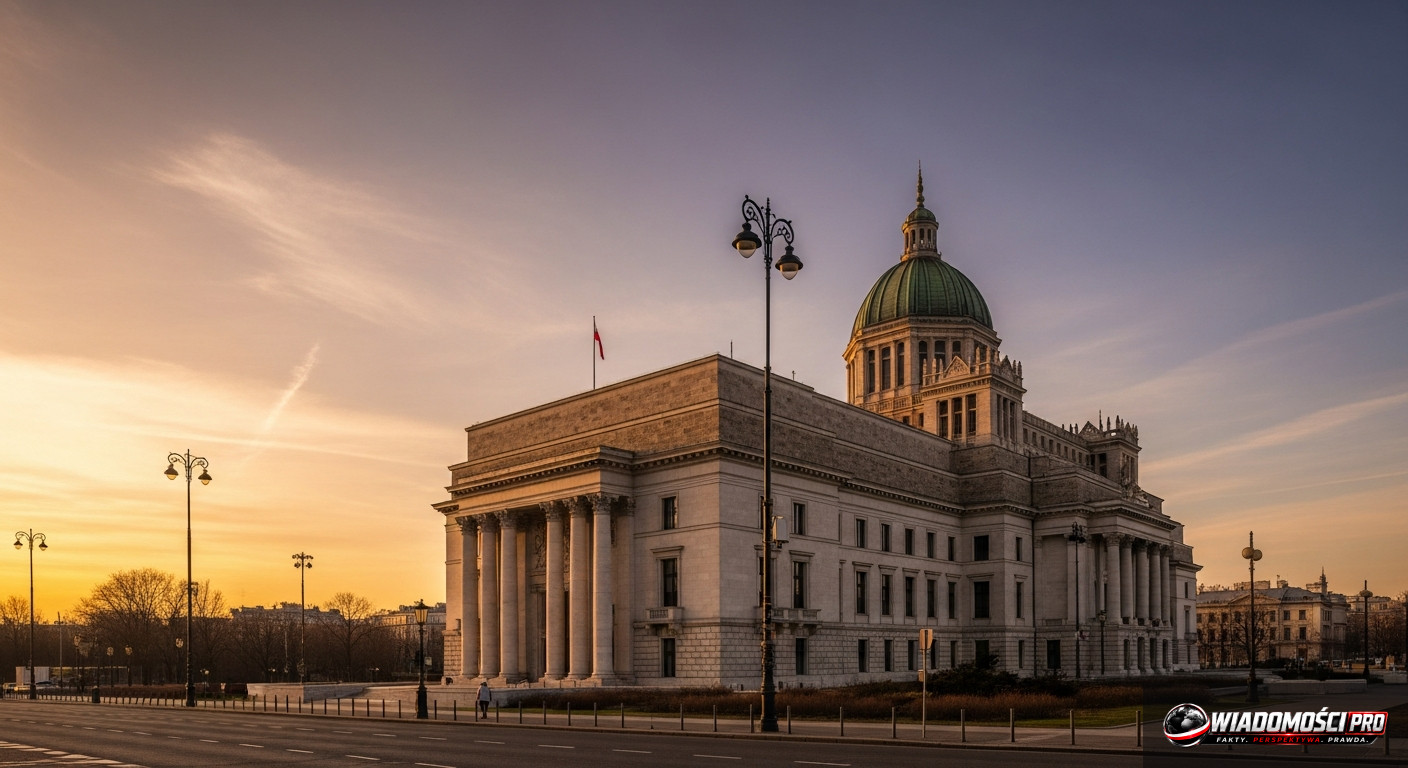
The government has adopted a draft budget for 2025 with a deficit of 289 billion PLN, which constitutes a record burden on public finances in the history of the Third Polish Republic. This decision became the spark for a sharp constitutional conflict in which state institutions, including the Constitutional Tribunal, were perceived as tools of political pressure. Experts point out that such a drastic budgetary imbalance not only undermines investor confidence but directly threatens the stability of the healthcare system and the social security of citizens.
The mechanism of record debt
The 289 billion PLN deficit is a sum that shifts the center of gravity in the debate on the state's financial sovereignty. In an economy where the gross domestic product oscillates around 4 trillion PLN, such a high deficit means that the state is financing its current needs almost entirely through debt. Analysts draw attention to the costs of servicing this debt. Assuming an average debt servicing cost of 5-6 percent, annual interest expenses alone could consume tens of billions of PLN, which limits the space for any development investments.
The financial market reacted to these figures with clear anxiety. The yield on Polish treasury bonds, a barometer of state credibility, reacted violently to every piece of information about the escalation of the dispute between the government and the president. Investors are not afraid of the deficit itself, but of the lack of a clear path back to fiscal balance. The lack of a transparent debt reduction plan makes every subsequent bond issuance increasingly expensive for the taxpayer.
Conflict over the shape of the state
The legislative process, which began at the end of 2025, exposed deep cracks in the power structure. The budget debate ceased to be just an exchange of numbers and became a battlefield over the vision of how the state should function. By the end of November 2025, it became clear that the budget would come under the scrutiny of the Constitutional Tribunal. Such a scenario introduced an element of systemic risk into the debate. Institutions that should stand guard over stability became parties to a political dispute.
For financial markets, such a situation is the worst possible signal. Uncertainty as to whether the budget would be deemed compliant with the constitution paralyzed investment decisions. Representatives of financial institutions warned that in such a tense atmosphere, any attempt to challenge the budget could trigger a chain reaction on the stock exchange. The state, instead of offering a stable legal framework, became a generator of uncertainty. In December 2025, the debate focused on whether the government even possessed the legitimacy to manage such a huge deficit without the support of a full social and political consensus.

The President as a fiscal brake
January 2026 brought an intensification of the conflict. President Karol Nawrocki, exercising his prerogatives, openly opposed the budgetary assumptions. His criticism did not concern only the technical aspects of expenditure accounting, but primarily healthcare. The speeches of January 19, 2026, in which the president used the phrase "collapse budget," became a turning point in the media narrative.
Nawrocki pointed out that the government's draft was a document that drastically limited access to basic medical services. For patients, this meant a real threat of longer queues for specialists and further degradation of hospital infrastructure. The president did not limit himself to rhetoric. His decisions to raise objections to individual budget items forced the Ministry of Finance onto the defensive. Although there was ultimately no veto that could have blocked the payment of benefits, the president's role was remembered as an attempt to slow down government spending.
The market followed every move of the Presidential Palace with attention. Analysts in mid-January 2026 warned that even without a formal veto, the very attitude of the head of state shakes confidence in the durability of the financial plan. Every statement by the president was interpreted as a signal of possible government instability. At that time, the debate moved from government buildings toward the citizens, who began to feel the effects of the lack of agreement at the top levels of power.
Discharge as political theater
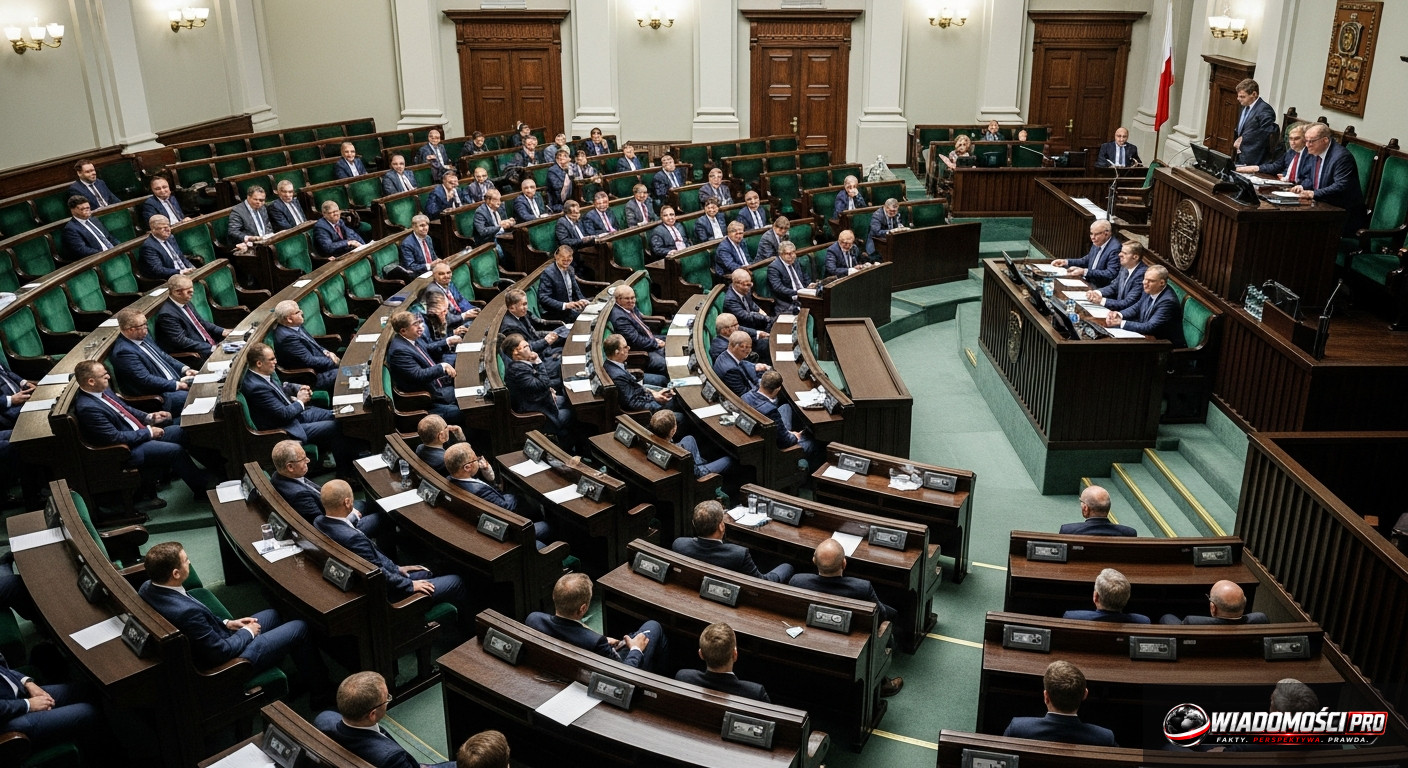
On July 31, 2026, the Sejm decided to grant the government a discharge for the execution of the budget. This vote, preceded by months of sharp debate, was a moment of trial for the ruling coalition. The discharge, technically an assessment of the correctness of public spending, became in practice a vote of confidence in the entire model of state management. The opposition used this opportunity to bring out the heavy artillery, accusing the government of "financial vandalism."
This term, although emotionally charged, refers to a structural violation of the principles of responsibility for public finances. Opposition politicians pointed out that such a high deficit is not the result of a sudden external shock, but the result of deliberate spending policy. They argued that the government, by forcing its projects through, had led to a situation in which the state is no longer efficient in key areas. The vote at the end of July closed the formal stage of accountability, but did not end the dispute over whether the Polish state is heading toward stabilization or toward a debt crisis.
In parliamentary practice, a discharge is an expression of acceptance of the way the budget was executed. However, in 2026, this vote was devoid of the characteristics of a technical formality. The atmosphere in the Sejm was thick with accusations of a lack of transparency. The parliamentary opposition accused the government of choosing priorities in a way completely detached from the needs of citizens. Instead of investing in modern technologies or healthcare, the state was said to be prioritizing political expenditures.
Health as a hostage of the budget
The healthcare sector became the main front of the dispute. When the budget for this department was discussed in January 2026, it became clear that budget mathematics was winning over empathy for patients. The lack of sufficient funds for key medical procedures was for many circles proof that the government had lost control over spending priorities.
Industry media and patient organizations warned that the cuts, although called optimization, in reality meant collapse. For the average citizen who has to wait months for a visit to a cardiologist or oncologist, these figures are not just statistics, but a verdict. The government argued that in the face of such a huge deficit, it must make drastic choices. The opposition retorted that "financial vandalism" consists precisely in the fact that the government finds funds for political ventures while there is a shortage for health.
This dissonance between needs and budgetary possibilities deepened social frustration. In July 2026, during the discussion on the discharge, the issue of health returned with redoubled force. It turned out that political capital had been largely consumed by the fight for the survival of the medical system. The opposition accused those in power that in the pursuit of maintaining financial liquidity, they sacrificed the health security of millions of Poles.
Consequences for the economy and the taxpayer
Every billion of deficit is a debt that will have to be repaid by taxpayers in the future. With the current scale of debt, the Polish economy is becoming a hostage to high financing costs. Foreign investors, looking at the 289 billion PLN deficit, demand a higher risk premium. This means that Polish companies have to pay more for loans, which hinders their development and lowers competitiveness in the region.
The dispute that took place between the government and the president, and then within the walls of the Sejm, had a direct impact on the currency exchange rate and the inflation level. Political uncertainty is a much more dangerous factor for financial markets than the high deficit itself. In the face of such large debt, any fluctuation in the economic cycle can become a spark for a deeper crisis.
For the average taxpayer, this means not only a real risk of increased tax burdens in the coming years, but also a reduction in the quality of public services. A state that has to allocate such a significant part of tax revenues to debt servicing is unable to effectively manage education, infrastructure, or security. The record deficit is therefore not only an accounting problem, but above all a constitutional challenge that will shape Polish politics over the next decade.
Analysis of the opposition's arguments
The parliamentary opposition created a list of charges that became the foundation of their attack on the ruling coalition. First and foremost, they pointed to the ignoring of macroeconomic warnings coming both from within the country and from international institutions. According to critics, the government consciously ignored signals of an upcoming slowdown, constructing a financial plan on "inflated" growth forecasts.
Another point of dispute was the aforementioned Constitutional Tribunal. The opposition claimed that the government tried to neutralize the role of the Tribunal so as not to have to explain the constitutionality of its budget decisions. This approach was called an assault on financial rule of law. According to the opposition, the state should operate within a rigid statutory corset, and any attempt to bypass these restrictions is an act of vandalism.
The argument of "eating up the future" also appeared in the opposition's reasoning. It was argued that the current generation of politicians is taking out loans that will fall on the shoulders of future generations. This intergenerational transfer of burdens is considered one of the most serious sins of the current team. In the parliamentary debate, harsh words were spoken about the fact that the state is living on credit, and the "bill for this feast" will have to be settled under much less favorable economic conditions.
Perspectives for the future
Granting the discharge to the government in July 2026 closed a certain stage, but opened new questions. Are the state's finances able to bear the burden of such huge debt? Will the government be able to maintain budgetary discipline, or will the pressure for further spending lead to a deepening of the structural imbalance?
Currently, the Polish economy is at a turning point. On one hand, we have modernization ambitions, and on the other – financial limitations that force restraint. The lack of flexibility in health and social spending means that any attempt at savings triggers social resistance. The government is facing a wall: either drastic cuts or further increasing debt, which in the long run could lead to a loss of creditworthiness.
For investors, the coming months will be crucial. Every communication coming from the Ministry of Finance will be analyzed in terms of whether it will be possible to avoid similar deficits in future years. If the government does not develop a real recovery plan, the 289 billion PLN deficit will become the "new normal" that we will have to face. This, in turn, means a period of increased volatility in the markets and the need for constant monitoring of the state treasury's condition by every citizen who wants to understand why the prices of public services are rising and the quality of life remains stagnant.
Approving a budget with such a high deficit is a symbol of deep divisions in Polish society. The beneficiaries of government programs gain, while taxpayers feeling the direct and indirect effects of debt servicing lose. The 2025 budget will remain in the history of the Third Polish Republic as proof of the great challenges facing a state that tries to combine unlimited ambitions with limited resources.
Questions and answers
How much exactly is the deficit in the 2025 budget?
The deficit was planned at the level of 289 billion PLN, which constitutes a record level in the history of the Third Polish Republic, raising huge controversy among economists and the political opposition.
Did the Sejm grant the government a discharge for the execution of the budget?
Yes, the Sejm made the decision to grant the government a discharge on July 31, 2026, which was the culmination of a months-long political dispute over the shape of state finances.
What influence did President Karol Nawrocki have on the budget?
The President actively interfered in budgetary processes, exerting pressure on the Ministry of Finance, especially regarding the underfunding of healthcare, which heralded difficult relations between the Presidential Palace and the government in 2026.
Why does the opposition use the term "financial vandalism"?
This term is used as a political accusation of exceeding the boundaries of fiscal responsibility, consisting of generating record debt while neglecting key sectors of the state, such as medicine.
What does the discharge mean for the country's further financial stability?
The discharge ends the formal stage of accountability for 2025, however, it does not solve basic structural problems, such as high debt servicing costs and the lack of budgetary balance, which will constitute a key challenge for the stability of the Polish economy in the coming years.
Sources
- Discharge granted to the government. The opposition speaks of "financial vandalism" - Business Insider Polska
- Sejm made a decision regarding the budget. The government received a discharge - Polskie Radio 24
- Sejm voted on the budget. What about the discharge for the government? - Dziennik.pl
- President made a decision regarding the budget. "This is a budget of collapse in healthcare" - Rynek Zdrowia
- President made a decision regarding the healthcare budget - Niepelnosprawni.pl
- Budget in the hands of the president. An unexpected scenario on the table? - Money.pl
- Polish budget in the hands of Karol Nawrocki. The decision could shake the markets even without a veto - wnp.pl
- Since it's the end of the year, it's time for a budget dispute. All options are on the table - including the Constitutional Tribunal - Wyborcza.biz
Article prepared by the Wiadomości PRO editorial team with the support of artificial intelligence. Facts come from the sources provided above.
Komentarze (0)
Ładowanie komentarzy...