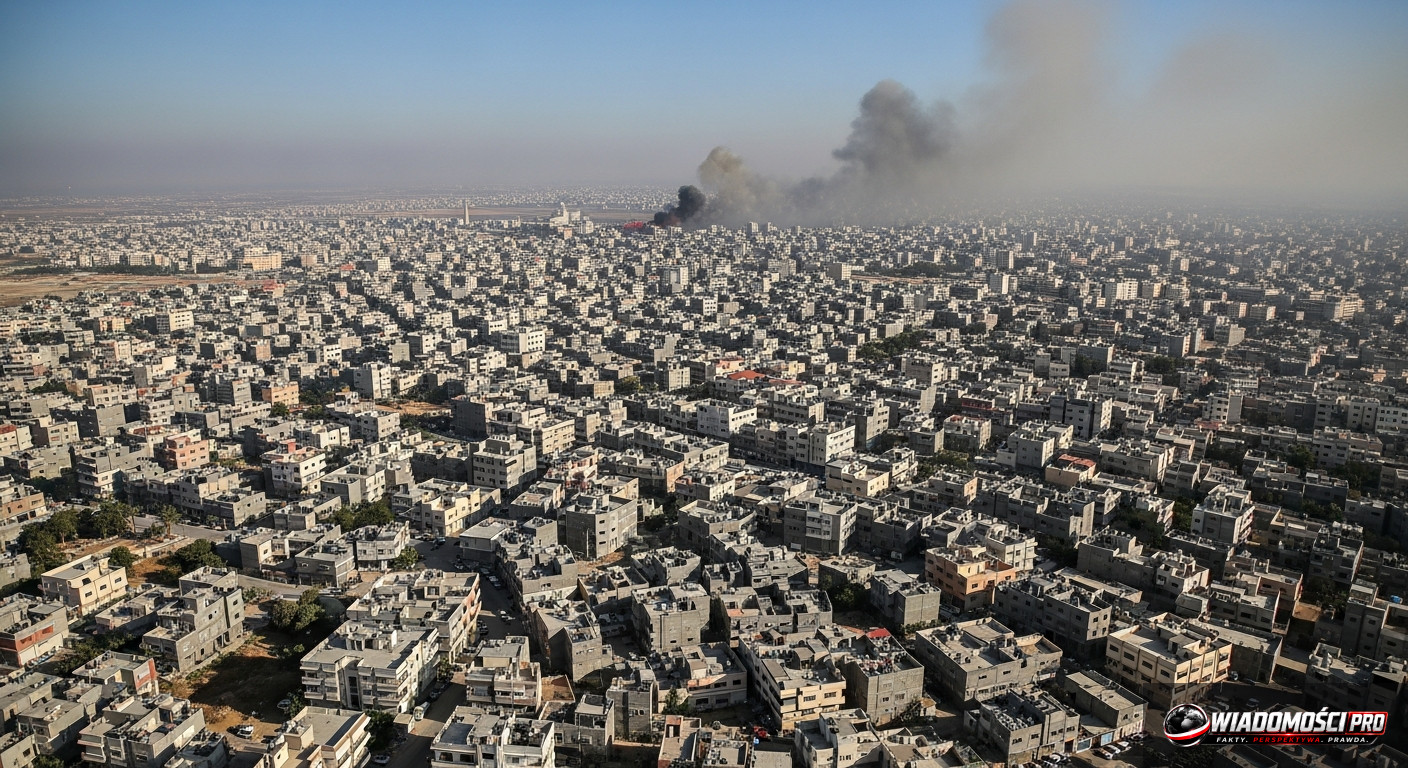
Israel has rejected Donald Trump's 15-point plan because Prime Minister Benjamin Netanyahu deemed it a threat to the country's security, refusing to withdraw troops and announcing the continuation of fighting until the total elimination of Hamas. This decision, publicly announced on August 9, 2026, ends speculation regarding a possible breakthrough in peace negotiations for the Gaza Strip. The government in Jerusalem deemed the American proposal incompatible with Israel's national security strategy, which led to an immediate impasse in talks with Washington.
The genesis of Donald Trump's 15-point plan
President Donald Trump presented the 15-point peace plan for the Gaza Strip at a time when military operations in the area had been ongoing for many months without a clear resolution. The White House, seeking to extinguish the conflict, prepared a comprehensive document intended to serve as an alternative to the existing state of permanent confrontation. American diplomats assumed that presenting a concrete roadmap would allow for the stabilization of the situation, forcing the parties to make the concessions necessary to cease hostilities.
The document, reported by the media on Sunday, August 9, 2026, was to include a set of conditions regarding the future management of Gaza, the issue of demilitarization, and—what proved to be a point of contention—a schedule for the withdrawal of Israeli armed forces. The administration in Washington aimed to create a framework in which Israel's security would be guaranteed by international mechanisms rather than solely by the physical presence of troops in Palestinian enclaves. Although the content of the points was not fully made public in an official statement, Jerusalem's reaction indicates that they contained demands that Netanyahu did not intend to accept.
The Israeli Prime Minister assessed that implementing these guidelines would weaken the operational capabilities of the Israeli army. From the perspective of the cabinet in Jerusalem, any pause in operations that does not guarantee the total dismantling of Hamas's structures is merely an opportunity for militants to regroup and regain control of the territory. Israeli politicians argued that the American plan ignores the specific nature of the terrorist threats the country faces, imposing peace standards that do not fit the realities of the front line.
Why is Netanyahu saying "no" to Trump's plan?
Benjamin Netanyahu's position is the result of a deep difference in the perception of the threat. For the Israeli Prime Minister, the state's security is a paramount value that cannot be the subject of compromise within diplomatic arrangements with Washington. A key element of the rejected plan was the demand for troop withdrawal, which in the eyes of the Israeli command would constitute a strategic error with irreversible consequences. Jerusalem does not agree to abandon occupied positions until the primary goal—the elimination of Hamas as a political and military force—is achieved.
Authorities in Tel Aviv concluded that Trump's proposals, while motivated by a desire to restore peace, carry the risk of returning to the situation before the operation began. The Prime Minister emphasized that the army must maintain full operational freedom in Gaza. According to sources close to the Israeli government, any attempt to impose a schedule for the withdrawal of forces is treated as an interference in Israel's sovereign right to defend its own citizens against terrorist threats.
The decision to reject the plan was made in the face of growing international pressure. Despite this, Netanyahu shows a determination that, in his view, is necessary for the state's survival. The Israeli Prime Minister believes that any concessions regarding military presence would be perceived as a sign of weakness by militant organizations. This conviction determines the current course of Israel's foreign policy, which is increasingly distancing itself from American instructions, opting for its own rules of warfare.
The "Total Elimination of Hamas" strategy
For the Israeli command, the concept of the total elimination of Hamas is not merely a political slogan, but a precise operational plan. According to official statements from August 9, 2026, the government in Jerusalem does not intend to abandon this premise under the influence of external suggestions. Operations in the field are being continued with full commitment, and every point of Trump's plan that would suggest limiting this intensity is being rejected.
Israeli military analysts point out that Hamas's structures are deeply rooted in the social fabric and underground infrastructure of Gaza. In their view, only a long-term and uninterrupted presence of armed forces allows for the effective destruction of these networks. Withdrawing units, as the peace plan suggested, would lead to a vacuum that supporters of radical groups would quickly fill. Therefore, from Jerusalem's point of view, the American proposal is dangerous.
Prime Minister Netanyahu consistently builds a consensus around this goal within his cabinet. Despite the controversy this causes on the international stage, the Israeli leader maintains support for continuing the offensive. In his rhetoric, any ceasefire that is not dictated by total victory is treated as a failure. This approach makes the space for any agreement with the US extremely narrow.
New settlements as a response to the impasse
One of the most controversial aspects of Israel's reaction to Trump's plan is the announcement of further settlement development. As reported by the media on Sunday, August 9, 2026, immediately after rejecting the peace proposal, the Israeli government turned its attention to plans for creating new settlements. This move is seen as a direct response to pressure from Washington. Instead of de-escalation, Israel is choosing to manifest its presence in disputed territories.
The construction of new settlement units in the context of ongoing hostilities is a clear signal to the international community. Authorities in Jerusalem are sending a message that Israeli territorial policy remains independent of American peace plans. For observers, this situation is proof that the Netanyahu government does not feel bound by the American vision for the region's future. The decision to expand settlements at a time when a cooling of emotions was expected is politically risky, but consistent with the ideological assumptions of the current governing coalition in Israel.
These actions complicate relations with Western allies, who see settlement activity as one of the main obstacles to building lasting peace. However, in Jerusalem, it is argued that control over the territory is an element of national security. Every new location, every new outpost is intended to consolidate Israel's presence where—in the Prime Minister's assessment—it is strategically necessary. This approach makes the diplomatic impasse even deeper, and the chances of returning to the negotiating table in the near future are diminishing.

Washington's reaction and the international impasse
Washington has found itself in a difficult diplomatic situation. President Trump's administration, counting on the success of its 15-point plan, hit a wall it could not break through. Reports from August 10, 2026, including from the Vietnamese "Vietnam.vn" and the Ukrainian "UA.NEWS," confirm that American mediation attempts have reached a dead end. The lack of agreement from Israel calls into question the authority of American diplomacy in the region.
In diplomatic circles, there is talk of the "shock" caused by such a firm refusal from Netanyahu. The Americans counted on common interests outweighing the local ambitions of the Israeli government. However, the opposite happened. Israel not only rejected the plan but did so in a way that precludes further discussion of its details. For observers, it is clear that in this game, Jerusalem's priorities are defined in Tel Aviv, not in Washington.
This situation is also a challenge for other countries involved in processes in the Middle East. The impasse that has arisen does not concern just one plan, but the very idea of solutions imposed from the outside. If the US's main ally rejects an American proposal, what chances do other initiatives have? This is a question most Western capitals are currently asking themselves. Washington must now decide whether to exert further pressure on Netanyahu or accept the current state of affairs, risking a loss of face in the eyes of international public opinion.
What next for the operation in the Gaza Strip?
The rejection of the plan means that the conflict in the Gaza Strip will enter a new, even more unpredictable phase. Israel, by rejecting the American way out, takes full responsibility for the consequences of continuing the operation. Prime Minister Netanyahu has declared that military actions will last as long as necessary to achieve total victory. In practice, this means continued intensive airstrikes, ground operations, and the maintenance of blockades.
The humanitarian situation in Gaza, already tragic, will likely deteriorate further. The lack of an agreement means that no ceasefire mechanism will be created that could bring a moment of respite to civilians. Each side is preparing for a long-term struggle. Hamas, despite losses, still possesses the capability to resist, which in turn forces Israel to engage increasingly larger forces.
The prospects for the near future are as follows:
- Military operations will continue according to the IDF command's established schedule, ignoring calls for a ceasefire.
- Israel's relations with the US will remain tense, which may translate into restrictions on the supply of certain types of advanced military equipment if Washington decides to take more decisive steps.
- The construction of new settlements will become a major flashpoint in international relations, drawing attention away from the situation in Gaza itself.
This is a political game with the highest stakes. Netanyahu is risking everything, believing that his determination will be appreciated by the Israeli public, which often unites around a strong leader in the face of a threat. However, the lack of external support for this strategy may prove costly in the long run. Israel remains in isolation, pursuing its own uncompromising scenario.

What this means for you
The rejection of the Trump plan by the Israeli government is a signal that diplomacy in current realities is losing to military necessity, as defined by Netanyahu. For the average reader, this means that the conflict in the Middle East will not find a quick solution. The catch in this situation is the permanent freezing of all peace talks, which in practice condemns the region to further destabilization. Political radicals on both sides of the barricade gain from this, while civilians and supporters of solutions based on dialogue pay the price for this impasse.
Questions and answers
Why did Israel reject the Trump plan?
Israel concluded that the 15-point plan contained demands, including the withdrawal of troops, that threaten the state's security and prevent the total elimination of Hamas.
What are Netanyahu's further plans regarding Gaza?
The Prime Minister announced the continuation of military operations until the total elimination of Hamas structures is achieved and the maintenance of full operational freedom for the army in the area.
Is the US exerting pressure on Israel after the rejection of the plan?
Washington has found itself in a difficult diplomatic situation, and the rejection of the plan by Jerusalem has caused clear tensions, calling into question the effectiveness of American mediation.
What actions is Israel taking in response to pressure?
Israel has announced plans to build new settlements, which is interpreted as an expression of independence from international pressure and the consolidation of its presence in disputed territories.
Are there chances for the resumption of peace talks?
Currently, the chances of resuming talks based on the Trump plan are minimal, as both sides have hardened their positions, and the diplomatic impasse seems total.
What do media reports from August 2026 mean?
Media outlets such as "Rzeczpospolita," "TVP Info," and "Business Insider Polska" consistently point to the failure of the American initiative and the Israeli government's determination to pursue its own security policy.
What is the main point of contention between the US and Israel?
The main point of contention is the military presence in the Gaza Strip; while the US seeks to limit it as part of the peace plan, Israel considers it essential for eliminating terrorist threats.
What are the consequences for the residents of Gaza?
The lack of an agreement means the extension of the state of war, no prospects for rapid stabilization, and continued life in conditions of ongoing armed conflict.
Why is settlement activity considered so controversial?
New settlements complicate international relations and draw opposition from many countries, which view these actions as an obstacle to the peace process and a violation of the status quo of disputed territories.
Is Netanyahu's stance merely pre-election rhetoric?
Analyses indicate that the Israeli government's actions are systemic and strategic in nature, going beyond immediate political rhetoric, which is confirmed by the consistent implementation of military goals in the field.
What does the 15-point Trump plan mentioned consist of?
It was an American peace proposal aimed at a comprehensive resolution of the conflict through demilitarization and changing the model of governing Gaza, but its details were rejected by Israel as threatening its security.
What is the role of organizations like "Vietnam.vn" in reporting on this conflict?
International services, including the aforementioned "Vietnam.vn" or "UA.NEWS," act as observers of the global impasse, documenting the growing rift between the US and its main ally in the Middle East.
What does "total elimination of Hamas" mean for Netanyahu?
It is an operational goal assuming the destruction of Hamas's military, logistical, and administrative structures, which in the Israeli Prime Minister's assessment is the only guarantee of the state's security.
What is the position of the Israeli army command?
The command shares the view that any pause in operations that does not guarantee the destruction of the opponent is used by Hamas to rebuild its potential, which is why it advocates for continued military pressure.
Why did the Trump plan reach a dead end?
The plan reached a dead end because its key assumptions, such as troop withdrawal, met with categorical opposition from Israel, which made it impossible to move to further stages of negotiation.
Does the situation in the Middle East affect other regions?
Yes, the diplomatic impasse regarding Gaza affects the perception of US influence in the world and geopolitical stability, which is noted by media in various corners of the globe, from Europe to Asia.
What is the reaction of public opinion in Israel?
In the face of a threat, a significant part of Israeli society shows understanding for the government's hard line, perceiving it as necessary for protection against terrorist attacks.
Are there chances for a change in strategy by Israel?
Under current political conditions, a change in strategy is unlikely unless there is a drastic change in the situation on the front or an internal political breakthrough in Israel.
What is the significance of the date August 9, 2026?
This is the key moment when the official announcement of the rejection of the Trump plan occurred, which definitively ended the stage of the American attempt to impose a peace framework in its then-current form.
What next for American diplomacy in the Middle East?
Washington faces the necessity of revising its policy, as previous mediation methods have proven ineffective in the face of Israel's hard security interests.
Why was the 15-point plan considered an "opportunity"?
The plan was seen as an opportunity to end a devastating war by introducing mechanisms that were intended to reconcile Israel's security requirements with the need for Gaza's stabilization.
Was the Trump plan consulted with Israel?
Reports indicate insufficient consultation, which led to the Israeli government feeling surprised by proposals it deemed contrary to its vital interests.
What role do the media play in monitoring this impasse?
The media act as critical observers, documenting every step of the conflict parties and analyzing the consequences of decisions made in Tel Aviv and Washington.
Does Netanyahu take international consequences into account?
The Israeli Prime Minister seems aware of the political risk, but for him, military effectiveness remains the priority, even at the cost of a temporary deterioration in relations with key foreign partners.
What are the chances for lasting peace after the rejection of the plan?
Lasting peace remains a distant prospect, as the currently dominant strategy is a forceful solution, which excludes the need for compromise with the other side.
Why did Israel reject all 15 points, and not just selected ones?
Rejecting the plan as a whole is an expression of fundamental opposition to the philosophy that formed the basis of the American proposal, which assumed that peace could be achieved through territorial concessions and troop withdrawal.
What does "no agreement to leave occupied positions" mean?
It means maintaining the IDF's presence in key points of the Gaza Strip, which is intended to prevent Hamas from regaining control over these areas.
Does Hamas have an influence on these decisions?
Hamas is the direct target of Israel's actions, and its existence and activity determine the scale and nature of the Israeli operation, forcing the government in Jerusalem to maintain a radical course.
What is the significance of the "total elimination" strategy?
This strategy sets the timeframe and intensity of war operations, making them a long-term process in which there is no room for diplomatic breaks before achieving full military success.
What should the reader fear in the context of this conflict?
The reader should be aware that the lack of an agreement means long-term consequences for the region's stability, affecting not only the Middle East but also international relations in a broader, global context.
Sources
- Israel rejects Donald Trump's plan for the Gaza Strip. Benjamin Netanyahu sets conditions - Interia Wydarzenia
- Israel rejects Trump's demands! No peace plan for Gaza. "No withdrawal" - Rzeczpospolita
- Israel rejects Trump's plan for Gaza. Prepares new illegal settlements - TVP Info
- Trump's plan for Gaza stuck. Israel sets condition for Hamas - Business Insider Polska
- Israel rejects US President Trump's peace plan regarding Gaza – Cao Bang Online Newspaper - vietnam.vn
- Netanyahu announced that Israel rejects Trump's 15-point plan regarding the Gaza Strip - UA.NEWS
- Israeli Prime Minister rejects President Trump's 15-point plan regarding Gaza. - vietnam.vn
- Israel rejects US 15-point peace plan for the Gaza Strip. - vietnam.vn
Article prepared by the Wiadomości PRO editorial team with the support of artificial intelligence. Facts are derived from the sources provided above.


Komentarze (0)
Ładowanie komentarzy...