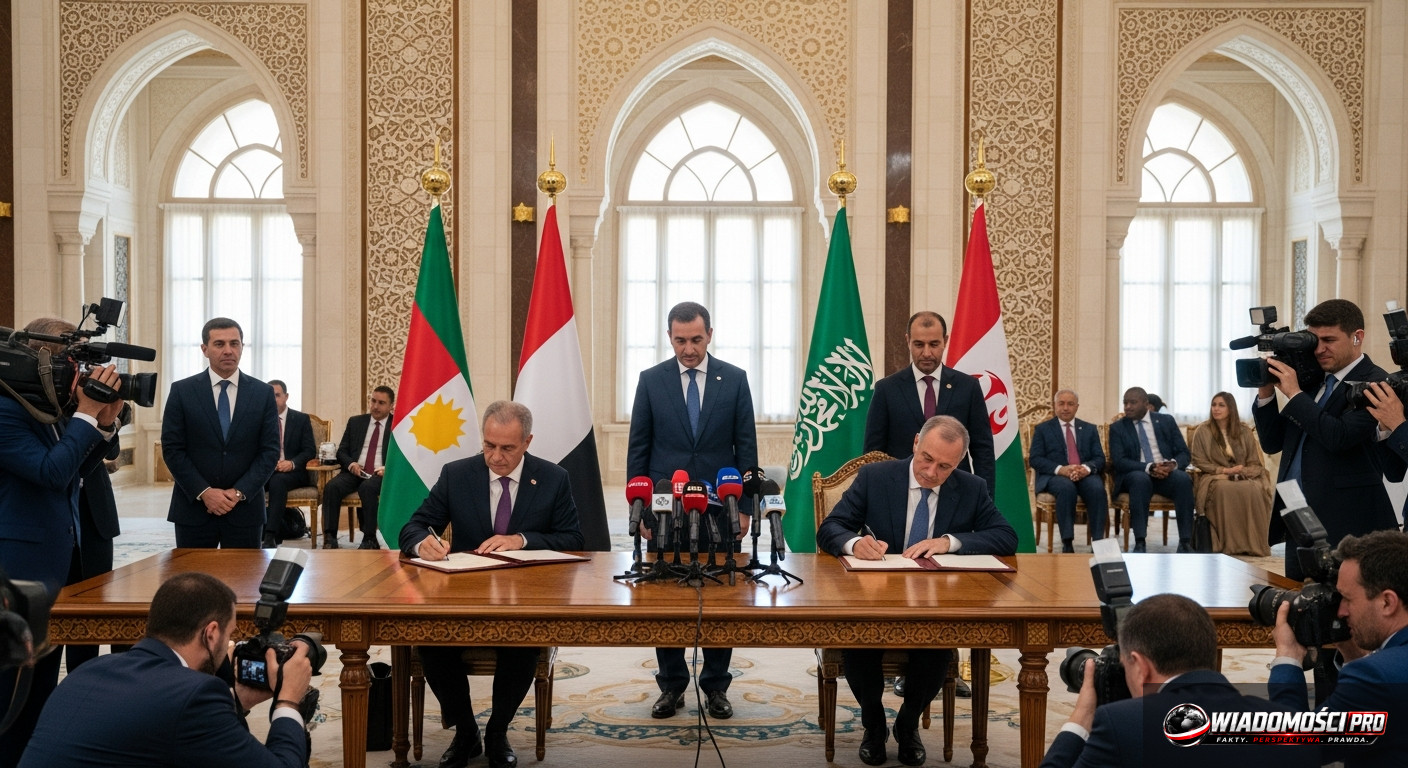
Yes, on August 7, 2026, in Mecca, Saudi Arabia, Turkey, and Pakistan formalized a defense pact which, due to the nature of its mutual security guarantees, is being referred to as an "Islamic NATO." This agreement combines the military potential of three key powers of the Muslim world, creating a new bloc in the region. The official name of the document has not yet been made public, which is why the agreement is known in diplomatic circles by the working title "Mecca Pact."
The choice of Mecca as the site for the alliance serves a legitimizing function. For Riyadh, Ankara, and Islamabad, it is a signal that the new security architecture does not stem from a Western root, but is embedded in the heart of the Muslim world. We are not dealing with a loose economic coalition. The document contains clauses on mutual assistance in the event of external aggression, which forces analysts from think tanks such as the International Institute for Strategic Studies (IISS) or the Carnegie Middle East Center to verify existing assumptions about regional stability.
The "Islamic NATO" mechanism: Facts and conjectures
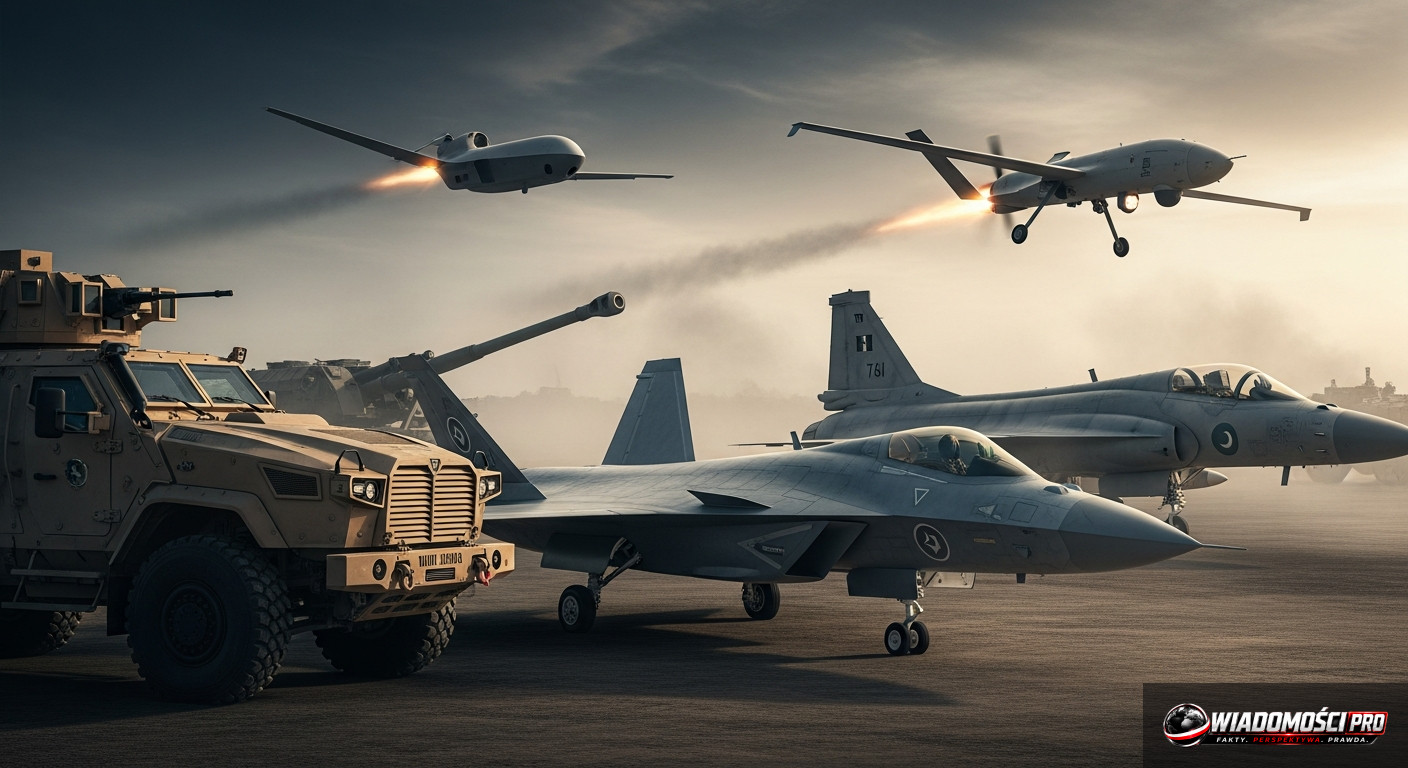
Unlike the structures of the North Atlantic Alliance, the Mecca Pact does not yet have an integrated command. Experts from the Atlantic Council point out that the lack of a joint military headquarters and standardized operational procedures is the agreement's greatest weakness. NATO functions based on decades of exercises, intelligence sharing, and equipment standardization. In the case of the signatories from Mecca, we are dealing with armies operating on vastly different systems. Turkey uses Western technology, while Pakistan bases its potential on Chinese technical thought and its own nuclear solutions.
The absence of provisions for a joint command suggests that the alliance is primarily political and deterrent in nature. The signatories have created a foundation intended to discourage external powers from interfering in their spheres of influence. From the perspective of Ankara, Riyadh, and Islamabad, mutual security guarantees are a shield under which they can pursue a more assertive policy. However, without the physical presence of combined forces, the "Islamic NATO" remains for now in the declaration phase, which must be filled with concrete technological cooperation.
Geopolitical triumvirate: Why these three states?
The joining of forces by Turkey, Saudi Arabia, and Pakistan is not accidental. Each of these countries brings a unique asset to the arrangement. Saudi Arabia possesses capital that, in the conditions of modern conflicts, allows for the financing of long-term campaigns and the purchase of state-of-the-art equipment. Turkey, despite tense relations with Washington, remains a regional leader in unmanned technology and an experienced player within NATO structures, which gives it unique insight into Western war doctrine.
Pakistan constitutes the third, and arguably most dangerous, pillar of this coalition. As the only Muslim state possessing nuclear weapons, Islamabad brings real nuclear deterrence potential to the pact. This changes the calculations of any adversary in the region. Analysts from the SIPRI think tank indicate that the inclusion of the Pakistani arsenal in the broader defense doctrine of the Mecca Pact makes this bloc a force that cannot be ignored in any global geopolitical puzzle.
This cooperation is an attempt to become independent of the political whims of Washington or Brussels. For years, the security of Muslim states was a hostage to relations with outside powers. Now, Ankara, Riyadh, and Islamabad have decided that they possess sufficient critical mass to define their security zones independently. Does this mean a complete turning away from the West? The answer to this question is much more complex.

Ankara's dilemma: Between NATO and Mecca
The most difficult situation concerns Turkey. As a full member of NATO, Ankara finds itself in a unique and dangerous position. On one hand, it is bound by Article 5 of the Washington Treaty; on the other, it has personally signed a defense pact with states that are not part of the Western security architecture. In the corridors of Brussels, questions are being raised about the loyalty of Turkish military officials. What will intelligence sharing look like if Turkish bases support operations under the Mecca Pact?
Experts from the European Council on Foreign Relations point to the risk of decision-making paralysis. If a conflict occurs where NATO interests conflict with the interests of the Mecca Pact, Turkey will face an existential choice. Currently, Ankara is trying to play on two fronts, which is a risky strategy. Turkey's ability to act as a bridge between two worlds is being tested by every step toward closer cooperation with Riyadh and Islamabad.
It is known that Washington is watching the flow of technology with concern. If Turkey decides to transfer NATO military knowledge to its allies from Mecca, relations with the USA could permanently deteriorate. This is not a cosmetic change. This is a hard, geopolitical game where the future of the entire North Atlantic Alliance is at stake.
Military potential in numbers and facts
The formalization of the arrangement in Mecca is based on summing up specific resources. Each of the signatories is responsible for a different security sector:
1. Saudi Arabia: The financial foundation and strategic location in the Persian Gulf. Riyadh is capable of financing the modernization of allied armies, which makes this pact a machine for arms procurement.
2. Turkey: The arms industry and experience in conducting hybrid warfare and the use of drones. Ankara provides the doctrine that Saudi and Pakistani units lacked.
3. Pakistan: Nuclear potential and huge reserves of manpower. It is the only partner that possesses the physical capability to stop a conventional attack through the threat of using weapons of mass destruction.
Analysts point out that this combination is asymmetric. None of these countries would be able to impose its own rules of the game in such a complex region on its own. Together, however, they form a bloc that possesses sufficient critical mass to force other powers to negotiate. The catch lies in cohesion. The question of how these three armies will react in a situation of real threat remains open. The lack of joint exercises suggests that for now, it is an alliance "on paper" that must first be tested by real challenges.
Reactions of global players: Washington, Moscow, Beijing
Washington's reaction to the events of August 7, 2026, was cold and full of ambiguity. The Pentagon issued a laconic statement about "monitoring the situation," which in diplomatic language means deep concern. American strategists fear that the Mecca Pact will become a "Trojan horse" for Russian or Chinese influence in the region. Moscow, meanwhile, although officially keeping its distance, will certainly try to exploit these frictions to weaken NATO's position on the southern flank.
Beijing, in turn, sees this alliance as an opportunity to secure its trade routes under the Belt and Road Initiative. For China, a stable Muslim defense bloc is a better partner than an unstable region full of proxy wars. There is a high probability that in the coming months we will see offers of technological support for the Mecca Pact from Beijing itself.
For local players such as Iran or Israel, the emergence of this bloc is a signal to revise their own defense strategies. Tehran views the pact as a challenge to its regional dominance, which could lead to increased tension in the Persian Gulf. Israel, in turn, is forced to tie itself even more closely to Washington, as the balance of power in the region has just ceased to be predictable.
Challenges to the pact's durability: Will it survive?
The history of alliances in the Middle East is a graveyard of agreements that fell apart at the first serious conflict of interest. The Mecca Pact faces several key tests. The first will be the need to develop a common policy toward Iran and India. Ankara, Riyadh, and Islamabad have different priorities on these issues. Turkey strives to stabilize the Caucasus, Saudi Arabia focuses on rivalry with Tehran, and Pakistan remains in a permanent state of tension with India.
Integrating such different political goals is a task that may overwhelm the signatories. The lack of a joint command, mentioned earlier, is crucial here. Without a structure resembling NATO's SHAPE, every military operation will require complex negotiations at the political level. This means that in a sudden crisis, these states may react too slowly.
Furthermore, one must ask about the costs. Maintaining such an extensive security system requires enormous financial outlays. Saudi Arabia, despite its resources, must reckon with oil price fluctuations. Turkey is struggling with internal economic problems, and Pakistan is in a state of permanent fiscal crisis. If any of these countries is unable to meet its financial obligations, the alliance could quickly become dead.

Editorial context: What does this mean for the reader?
From the perspective of an observer from Poland, the events in Mecca are proof that the Western world has lost its monopoly on being the sole arbiter in matters of global security. The Mecca Pact is not a "second NATO" in the full sense of the word, but it is a serious competitor for influence. The greatest threat to the durability of this alliance is not external forces, but the internal animosities that have divided these three capitals for decades.
Observing the development of the situation, one should focus on whether closer military cooperation will take place in the form of joint maneuvers. As long as there are none, the alliance remains a political tool. However, when we see Saudi planes training with Turkish drones under Pakistani supervision, we will have to admit that a new security architecture in the Middle East has become a fact that must be reckoned with at every level of international politics.
The game that began on August 7, 2026, in Mecca will not end quickly. It is a process that will redefine the map of alliances for the coming decades. Washington and Brussels can no longer assume that their dictates in the region will be accepted without opposition. Now, on the other side of the table sits a player who has their own vision of the world, their own resources, and—most importantly—their own determination to make that vision a reality.
Questions and answers
Is Turkey leaving NATO?
Officially, Turkey remains a member of the North Atlantic Alliance. The signing of the pact in Mecca on August 7, 2026, is interpreted as an attempt to pursue a policy of "dual loyalty" intended to increase Ankara's autonomy, rather than as a formal withdrawal from Western structures.
What exactly does the term 'Islamic NATO' mean?
It is a media and analytical term that describes the formation of a defense bloc of Muslim states. The term refers to the mechanism of mutual security guarantees, modeled on Article 5 of the Washington Treaty, but without possessing an integrated military command typical of the North Atlantic Alliance.
What are the main goals of this alliance?
The main goal of the pact is to strengthen regional security and increase the military independence of Saudi Arabia, Turkey, and Pakistan. These states want to make their strategic decisions independent of Western powers by creating an alternative decision-making center in the Muslim world.
Does the pact have a joint command?
At this moment, there is no confirmed information about the existence of a joint military command. Analyses indicate that the agreement is political in nature, and the lack of a unified command structure is one of the main weaknesses of the alliance, distinguishing it from NATO structures.
Who will gain and who will lose from this alliance?
The Middle East region will gain the most, as it acquires autonomy from Western structures. The existing unity of NATO loses, as Turkey begins to act as a player with dual loyalty. The catch lies in the consistency of the interests of these three states—the divergence of their political goals may be the greatest threat to the durability of this agreement.
What are the assets of the signatories?
Saudi Arabia brings capital and control over key energy routes, Turkey provides advanced defense technology and experience in NATO structures, while Pakistan brings nuclear potential and significant army size to the alliance, which constitutes the main element of deterrence.
Is this the end of US dominance in the region?
It is the beginning of a process in which Washington loses its monopoly on dictating security conditions. The United States must learn to coexist with a new bloc that possesses its own finances, its own weapons, and its own vision of the region, which significantly limits the room for maneuver for American diplomacy in the Middle East.
Sources
- Turn in the Middle East. Three states signed a defense pact - Money.pl
- Did Pakistan, Turkey, and Saudi Arabia just form an "Islamic NATO"? - Vietnam.vn
- A defense treaty modeled on NATO is being formed in the Middle East. - Vietnam.vn
Article prepared by the Wiadomości PRO editorial team with the support of artificial intelligence. Facts are derived from the sources listed above.

Komentarze (0)
Ładowanie komentarzy...