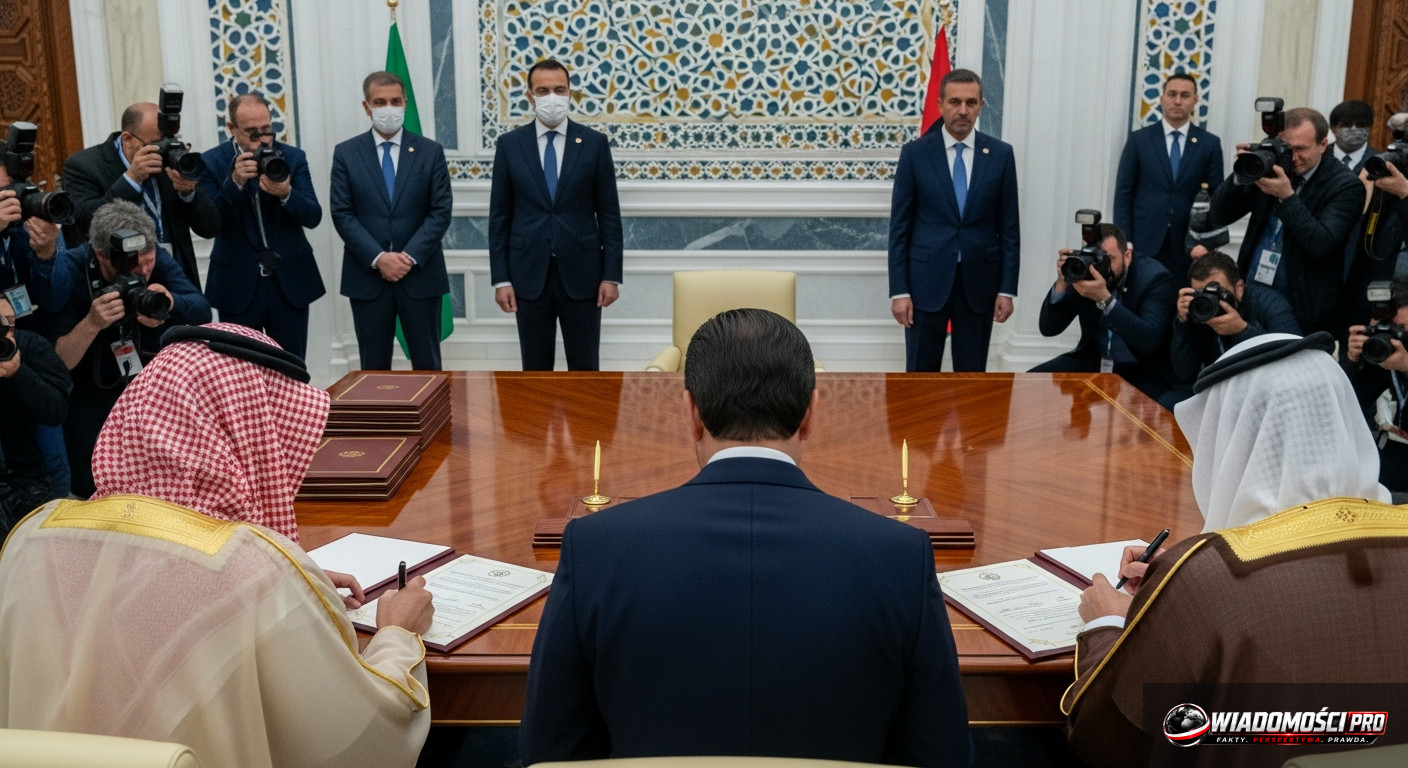
The defense pact signed on August 7, 2026, in Mecca creates a new military bloc consisting of Saudi Arabia, Turkey, and Pakistan, intended to serve as a counterweight to the influence of Israel and Iran. The document was signed by King Salman bin Abdulaziz Al Saud, President Recep Tayyip Erdoğan, and Prime Minister Shehbaz Sharif. This initiative definitively ends the era of fragmented alliances in the region, introducing a new security architecture based on firm guarantees of mutual military assistance.
The official agreement elevates cooperation between Riyadh, Ankara, and Islamabad to a level unseen in this part of the world. The foundation of the document is a strict principle of collective defense. The signatories have adopted a provision stating that an armed attack against one member state will be treated as direct aggression against the entire alliance. This is an automatic mechanism designed to eliminate hesitation in crisis situations.
The content of the agreement assumes deep operational integration. The states have committed to developing joint crisis response protocols and constant real-time intelligence sharing. The document specifies obligations regarding the provision of military aid, which in practice means the possibility of rapidly deploying allied contingents to the territory of an attacked partner. Such a provision is a clear signal sent to Tehran and Tel Aviv.
Questions remain regarding the command of the combined forces in the event of a conflict. The signatories have not disclosed who would oversee operations. The command structure in Ankara, based on NATO standards, must be synchronized with Pakistani defense doctrine and Saudi financial resources. A lack of clear procedures in this regard could render the pact ineffective in the face of a real threat if every decision requires a consensus from all three capitals.
This alliance is not merely a declaration of intent, but an attempt to create a counterweight to the growing influence of Israel and Iran. Saudi Arabia, Turkey, and Pakistan are betting on deterrence through a united front, but the real test will come with the first major incident in the region. For now, we are dealing with a new security architecture whose durability depends on the political stability within each of these countries.
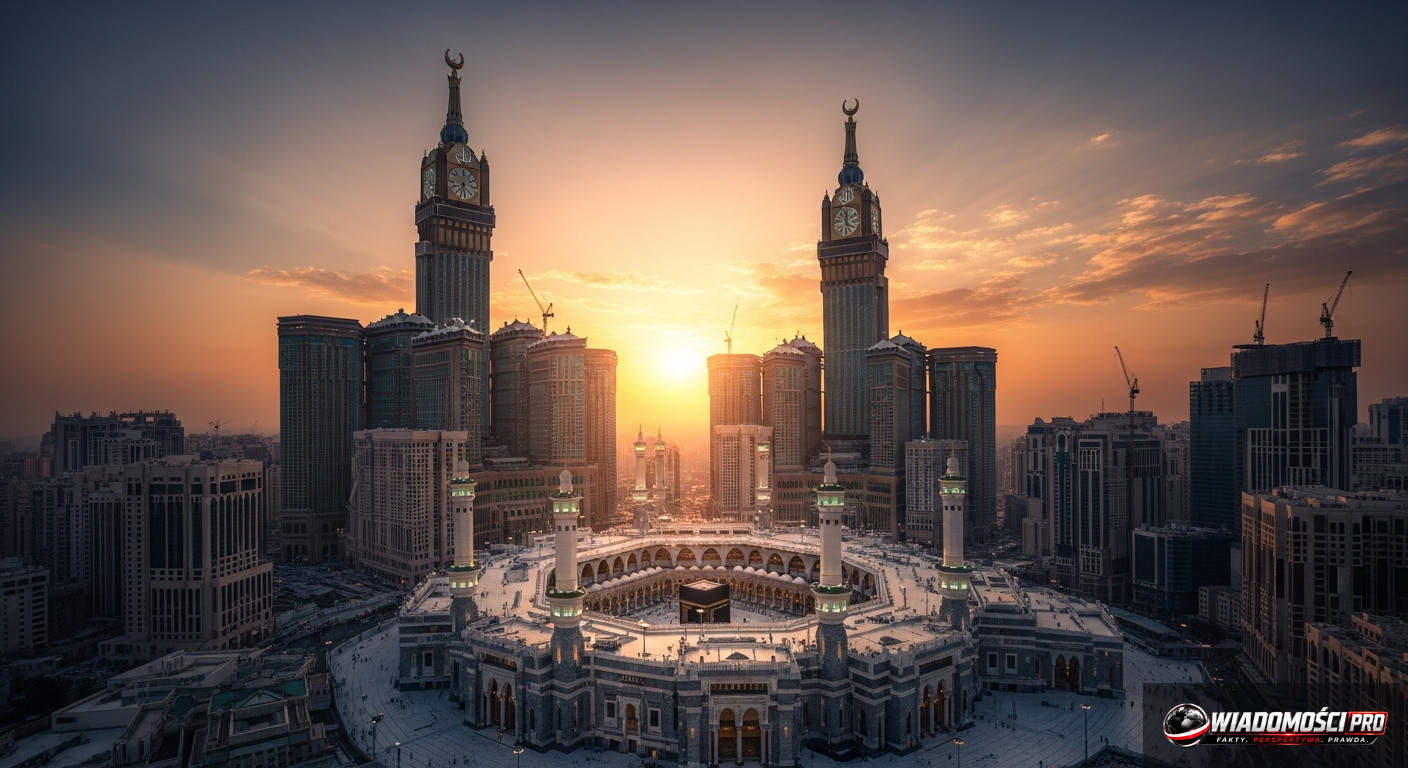
The choice of Mecca as the location for concluding the pact is not a random diplomatic gesture. It is a clear signal sent to the Muslim world: the alliance of Turkey, Saudi Arabia, and Pakistan claims the role of the primary guarantor of security in the region, legitimizing its actions in the holiest place of Islam. By signing the document in the shadow of Al-Masjid al-Haram, Riyadh, Ankara, and Islamabad are not only cementing military cooperation but, above all, building a new narrative of religious unity.
This location serves as a political fuse. For the Saudi authorities, who have positioned themselves for years as leaders of the Sunni world, the agreement of Turkey and Pakistan to sign the pact here confirms their leadership role. It is difficult to imagine a more suggestive setting for announcing a bloc intended to be a military response to regional escalation. Religious symbolism is meant to overshadow potential friction between the signatories, which in the past blocked the rapprochement between Ankara and Riyadh.
In practice, this choice is also an attempt to impose their own definition of regional defense. Since the agreement was concluded in the heart of Islam, any criticism of this pact from external players, whether Washington or Tel Aviv, can be presented by the signatories as an attack on religious foundations. This is a clever safeguard. These states know that in the current geopolitical situation, firepower alone is not enough. They need a moral and religious mandate to convince their own societies of a costly, long-term commitment to a new military structure. A signature on paper here carries the weight of a sacred obligation.

The defense pact signed in Mecca between Saudi Arabia, Turkey, and Pakistan is a firm response to the growing influence of Israel and Iran, which, in the eyes of the signatories, are destabilizing the region to an unprecedented degree. The three players decided on a formal alliance, seeing the current policies of Tehran and Tel Aviv as a direct threat to their national interests.
Analysts point to the obvious goal of this security architecture. Riyadh, Ankara, and Islamabad have decided that a counterweight to the duopoly that has dominated the Middle East is necessary. Until now, Iran has shifted its influence through a network of affiliated militias and aggressive rhetoric, while Israel has used its advanced military and technological capabilities to dictate the rules of the game. Now, this dynamic is being broken by a consortium that combines Saudi funds, Turkish military potential, and Pakistani nuclear resources.
This balance of power changes the rules of the game, although the question remains whether such an exotic alliance will survive its first real trial by fire. The common denominator of curbing destabilization sounds promising, but in practice, it means an attempt to forcibly slow down the ambitions of regional powers that have operated almost with impunity until now.
For Israel and Iran, the signal coming from Mecca is unambiguous. The axis that until now divided the region into supporters of Tehran and allies of Tel Aviv is losing its significance. A third player has emerged that does not intend to ask for a seat at the table, but is brutally elbowing its way in. This is not just a policy correction; it is an attempt to rewrite the history of the region. The effectiveness of this venture will be verified when the first joint military maneuvers cease to be just words on paper and become a real move on the map.
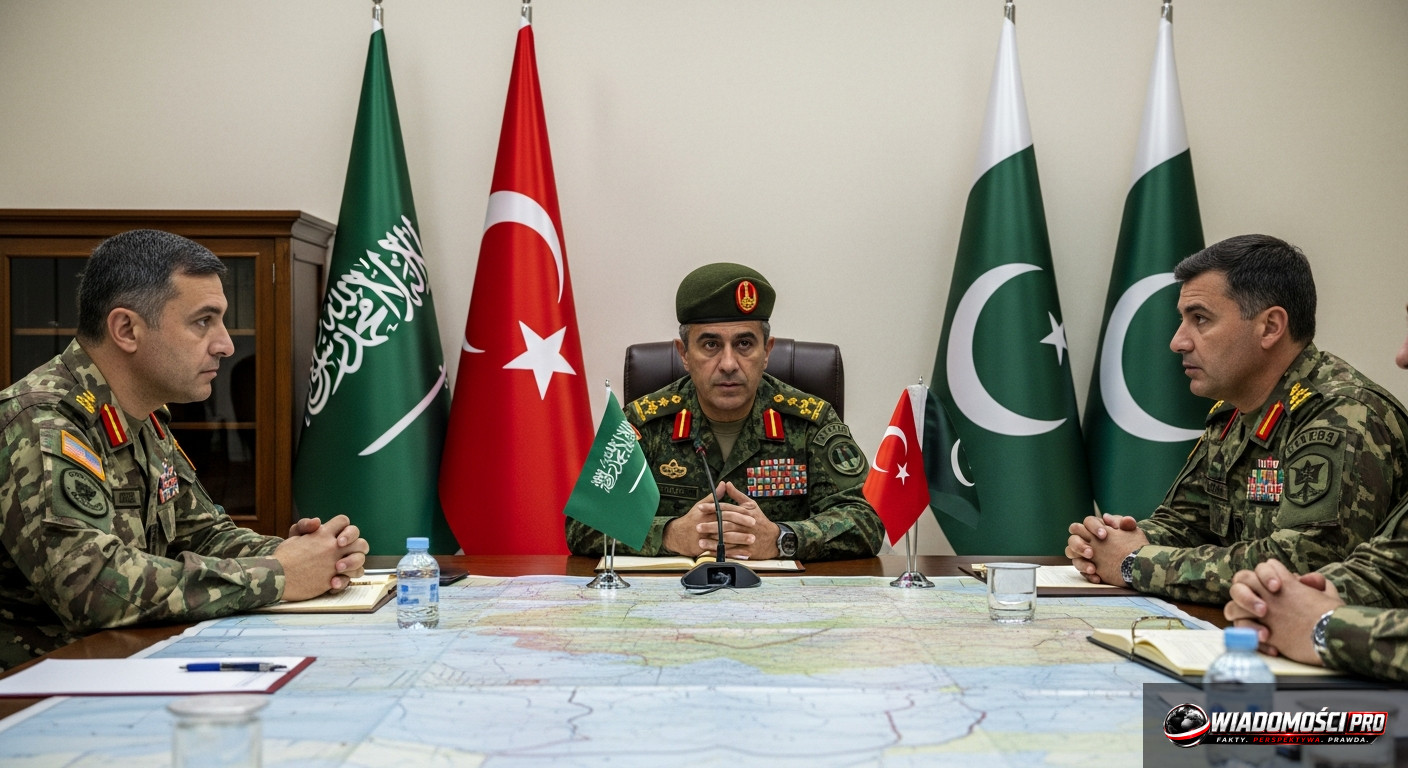
The Mecca agreement puts not only political declarations on the table, but above all, the real operational capabilities of the three armies. It is an alliance that combines extremely different military doctrines into one deterrence system. We are not dealing with a homogeneous structure, but an attempt to synchronize the potential of a NATO state with the regional forces of the Middle East and South Asia.
The effectiveness of this bloc is based on three pillars. Turkey brings to the pact experience in drone operations and a command structure integrated with NATO, which provides the technological backbone of the alliance. A key element of the Turkish contribution is the Bayraktar TB2 drones, which have repeatedly proven their effectiveness in destroying air defense systems. Saudi Arabia has vast financial resources and modern Western equipment, ready to quickly fund joint defense projects. Pakistan brings nuclear capabilities and a large army to the equation. In Islamabad's arsenal, particular attention is drawn to the Shaheen-III ballistic missiles, capable of carrying nuclear warheads over a distance exceeding 2,700 kilometers. This is a weapon that changes the rules of the game in any conventional conflict in the region.
The collective defense, enshrined in the documents, is primarily intended to create a tight barrier to the influence of Israel and Iran. This is a balance of power that forces both of these states to revise their operational plans. Ankara, Riyadh, and Islamabad are now playing on the same team. The interoperability of these forces, however, remains a great unknown. Historical experience indicates that combining Western equipment with Chinese weaponry, on which Pakistan partially relies, can be an insurmountable logistical challenge. The alliance must overcome the barrier of incompatible communication systems and procedures if it wants to be more than just a paper tiger. However, if they manage to create even the framework of a joint command, the perspective of regional security will be completely reshuffled. For many observers, it remains a mystery whether this military marriage will survive the first major crisis of interests.
The news of the defense pact signed in Mecca by Turkey, Saudi Arabia, and Pakistan has shaken the capitals of the region. It is the most important shift in the security architecture of the Middle East this year. The creation of such a strong military bloc, openly positioned as a counterweight to Israel and Iran, has triggered an immediate wave of commentary and analysis worldwide.
Mainstream media have no doubts about the importance of this event. From Euronews, through Money.pl and Interia, to PCH24 – news headlines have been dominated by one message: the balance of power in the volatile region has just undergone a permanent change. Editorial offices emphasize that the pact is not merely a diplomatic gesture, but a response to the rapid escalation of tensions that has been destabilizing the geopolitical situation for months.
The anxiety of the powers is palpable, although for now, it is expressed in the form of cautious diplomatic cables. Analysts point out that an alliance of three regional powers with such diverse military and nuclear potential changes the rules of the game in a region that has hitherto relied on less formal arrangements. The question of whether this bloc will stand the test of time remains open. Some experts point out that the divergent interests of Ankara, Riyadh, and Islamabad could become the Achilles' heel of the agreement.
Investors and market analysts, following the topic via Investing.com and others, are already looking for answers to the question of the pact's impact on the stability of raw material supplies. The signing of the document in the shadow of growing confrontation with Tehran and Jerusalem makes global markets look toward Mecca with concern. The enthusiasm of the signatories contrasts with the palpable reserve of Western capitals, which fear that instead of calming things down, the pact could become a catalyst for a new, more unpredictable phase of conflict.
The defense pact signed on August 7, 2026, in Mecca between Saudi Arabia, Turkey, and Pakistan is an official signal of the transition from diplomatic declarations to an operational phase. The alliance, which became a fact at an express pace, is intended to be a direct counterweight to the influence of Israel and Iran. For the region, this means a hard course correction. Instead of seeking a multilateral consensus, key Muslim players are betting on their own military bloc, which drastically changes the security dynamics in the Middle East.
The question of the stability of this arrangement remains open. On one hand, concluding the agreement at such a complicated time can be read as an attempt to stop further escalation by creating a new balance of power. On the other, the presence of Pakistan – a nuclear power – in an alliance with Saudi Arabia and Turkey automatically raises the stakes of any potential confrontation. This is not a local non-aggression pact. It is a declaration of readiness for a military response to political shifts in the region, which may only accelerate the arms race.
Analysts point to the catch: the coherence of goals. Turkey, Saudi Arabia, and Pakistan often have divergent national interests that have effectively paralyzed deeper cooperation until now. If the pact turns out to be only a superficial attempt to mark their presence, its real significance for security will be negligible. However, if the signatories actually move to joint operational actions, Israel and Iran will gain a new, powerful opponent that they will have to reckon with in every decision they make. A situation in which three states take on the role of regional arbiter guarantees tension, not peace.
For the average citizen, traveler, or investor, the formation of this pact means real changes in daily life in the region. First and foremost, higher volatility in oil prices should be expected. Saudi Arabia, as a key player in OPEC+, gains an additional tool of pressure on global markets by tightening cooperation with Ankara and Islamabad. In the event of an escalation of tensions with Iran, which controls the Strait of Hormuz, the raw materials market may react with sharp price spikes, which will directly translate into transport costs and fuel prices at stations in Europe and Asia.
For those traveling in the Middle East region, the situation is becoming more unpredictable. Flight safety over the territory of Saudi Arabia and Pakistan may be subject to new procedures resulting from the integration of air defense systems. The defense pact means that in the event of a conflict, the airspace over these states could be closed to civilian air traffic at any moment, forcing airlines to set long alternative routes and increasing ticket costs.
It is also worth paying attention to maritime logistics. The alliance of Turkey, Saudi Arabia, and Pakistan covers strategic points on the map, from the Mediterranean Sea to the Indian Ocean. Transport companies must reckon with tighter controls in the territorial waters of these states. For business, this means the need to update business continuity plans and include political risk in trade contracts. The region is ceasing to be a place where security is decided mainly by Western powers, which requires economic entities to take a completely new approach to risk assessment. The stability that investors have become accustomed to in recent years may be put to the test if regional players decide to use force in defense of their new security guarantees.
From the point of view of personal safety, traveling in this region is becoming a challenge. It is recommended to follow the announcements of the Ministry of Foreign Affairs, as the change in the balance of power may trigger social protests or sharpen rhetoric aimed at tourists from countries that take a critical stance toward the new pact. This is a new reality in which the politics of the great players becomes a daily problem for ordinary people.
When exactly was the pact signed?
The defense pact was signed on August 7, 2026, in Mecca.
Which states are part of the alliance?
The signatories of the pact are Saudi Arabia, Turkey, and Pakistan.
Why was this pact concluded?
The agreement is a direct response to the growing influence of Iran and Israel and is intended to ensure collective security in the region through a united military front.
Who signed this agreement?
The document was signed by King Salman bin Abdulaziz Al Saud, President Recep Tayyip Erdoğan, and Prime Minister Shehbaz Sharif.
What specific military capabilities does Pakistan bring?
Pakistan brings primarily its nuclear capabilities and Shaheen-III ballistic missiles, which are a key element of deterrence in the region.
What is Turkey's role in this alliance?
Turkey provides experience in drone operations, including the use of Bayraktar TB2 systems, and a command structure integrated with NATO.
Will the pact affect fuel prices?
Yes, the tightening of Saudi cooperation with partners may affect production policy and oil prices on global markets, which will translate into fuel costs.
Is traveling to the region safe?
The situation is becoming more unpredictable; it is recommended to monitor diplomatic announcements and avoid places of potential political protests.
Analyzing the recent events in Mecca, it must be clearly stated: this is not a cosmetic change. It is a brutal reminder that the Middle East has ceased to be a playground for external powers. Ankara, Riyadh, and Islamabad are playing for their own agency.
The success of this pact depends on one factor: whether these three countries, with a history full of mutual suspicion, will be able to swallow their own egos for the sake of a joint command. If not, the pact will share the fate of many other alliances that fell apart at the first major crisis. If it works, however, Tehran and Tel Aviv must prepare for a completely different kind of confrontation.
One cannot ignore the quiet voice of opposition from Washington or Brussels. The West has just lost control over one of the most important alliances in its sphere of influence. What is happening in Mecca is the beginning of a long-term process of the Muslim world asserting its military sovereignty. There is no room for sentiment here. Only hard equipment, money, and the ability to block the opponent matter.
We are witnessing the birth of a new power that does not ask for a seat at the table, but builds its own. Anyone planning business in this region must now recalculate their risk. This is no longer the same Middle East that we knew in the first half of the decade.
All eyes are now on the first joint military exercises. They will show whether the Bayraktar TB2, Saudi funds, and Pakistani Shaheen-III missiles can work together, or whether they will just be expensive toys that won't fire when needed. The future of energy security, and thus economic stability for a large part of the world, depends on this.
It is worth noting that these countries, despite their differences, are united by a common fear of isolation. Iran with its nuclear ambitions and Israel with its technological advantage have become the catalyst that forced these three states to act. It is an alliance of fear that could become an alliance of strength.
The signing of the pact on August 7, 2026, does not end the region's problems. On the contrary, it opens a new chapter in which the stakes become higher and the risk of error – fatal in its consequences for all parties involved. Will this solution satisfy the citizens of these countries? That is a completely different issue, which the decision-makers in Mecca would probably prefer not to discuss too loudly.
Finally, one must ask: what if the pact proves effective? Then everything will change. The region, which has been divided until now, will gain a strong decision-making center. This could bring paradoxical stabilization through deterrence, but it could also lead to an arms race like we haven't seen in years.
We will only know the final balance of gains and losses after the first months of the new structures' operation. For now, we have an arrangement that changed the geopolitical map of the world in one day. And that is the most important conclusion from the events in Mecca.
The uncertainty regarding the actual operability of the alliance is the greatest threat to its durability. Each of the signatories has its own goals, which often go beyond the framework of this agreement. Turkey looks at influence in the Mediterranean basin, Saudi Arabia at the rivalry with Iran for dominance in the Gulf, and Pakistan at its situation in South Asia. Synchronizing these interests is a daunting task.
However, if we look at it from a historical perspective, such alliances are formed in moments of great danger. There is no room for sentiment or long debates. What matters is the fact that on August 7, 2026, a decision was made that will resonate for decades to come.
We have to observe the development of the situation and react to every subsequent move of these three capitals. The world is not waiting, and the dynamics of change in the Middle East have accelerated to a level that is difficult to keep up with even for the most experienced analysts.
Each of the signatories has invested its political capital in this pact. King Salman, President Erdoğan, and Prime Minister Sharif have bet everything on one card. Their future, and perhaps the future of the entire region, depends on whether this alliance will be able to survive the most difficult test that is yet to come.
It should be remembered that in geopolitics, there is no room for a vacuum. If these three states do not fill it with their alliance, someone else will. The choice of Mecca was therefore not only a symbol but also a necessity. It was a preemptive move intended to prevent chaos. Was it the right one? We will find out when the first troops begin joint maneuvers.
This is a pact that will be analyzed in every military headquarters in the world. From Washington to Beijing, everyone is asking themselves the same question: is this a real force or just a facade? The answer to this question is hidden in the details that the signatories are not yet revealing. But the facts speak for themselves – a new force in the Middle East has become a fact.
In retrospect, August 7, 2026, will be recorded as the date when the old order began to give way to a new reality. Will it be a safer reality? That is a question to which no one knows the answer today. One thing is certain – the region will never be the same again.
This alliance is a signal to the world that the rules of the game have changed. Every subsequent decision made in Riyadh, Ankara, or Islamabad will now be scrutinized by all world intelligence agencies. This is the beginning of a new era in which the most important currency becomes the ability to react quickly and decisively.
For us, this means one thing: we must get used to the idea that what happens in the Middle East has a direct impact on what happens in our homes. From fuel prices to travel safety – everything is now connected. And that is the most important conclusion we must draw from these events.
There is no return to the times before August 7. The defense pact in Mecca has become the new reality. Now it only remains to observe how this new force will shape the fate of the world in the coming years. The time for analysis is over, the time for action is just beginning.
All these factors make the Mecca pact one of the most fascinating and at the same time terrifying events of recent years. Fascinating, because it shows how quickly the balance of power can change. Terrifying, because it shows how close we are to a new phase of regional disputes.
Regardless of the intentions of the signatories, one thing is certain: the world will have to reckon with them. Saudi Arabia, Turkey, and Pakistan are no longer just regional players. They are becoming a force that can dictate terms. This is the biggest change we have to face in the coming months and years.
Anyone who wants to understand today's world must understand what happened in Mecca. This is not the end of history, it is a new, much more complicated chapter. And we must be prepared for it.
That is why it is so important to follow every move of these three states. Every subsequent agreement, every new type of armament, every joint exercise – all of this will matter to all of us. There is no longer any doubt: the Middle East has once again become the center of the world.
Let this be a lesson for us that in geopolitics, there are no permanent alliances, only permanent interests. And the interests of these three states, at least for now, have converged in Mecca. What will come of this – time will tell, but we already know that it will be a process that will forever change our perception of global security.
It was a long process of preparation, which has now turned into concrete actions. The defense pact from Mecca is the best proof of this. There is no turning back, there is no return to the old order. A new game has begun, in which the stakes are higher than ever.
We must be aware that we live in times when stability is an increasingly fluid concept. The pact in Mecca only confirms this. We must be vigilant and ready for what tomorrow brings. Because tomorrow in the Middle East begins today.
Ultimately, the most important thing is how the citizens of these states will react to this. Will they support this alliance? Will they see it as an opportunity for security or a threat? This is a question to which the answer will come with time. But it is they who will ultimately judge the sense of this pact.
In summary, the pact from Mecca is an event whose effects we will feel for a long time. Regardless of how the fate of this alliance unfolds, it has already changed the way we think about security in the region. And that is the most important conclusion that flows from this analysis.
All these facts, numbers, and names fall into one coherent whole: the Middle East has become an arena for a new, powerful force that no one can ignore. The defense pact in Mecca is not just paper, it is a declaration of strength. And strength in the Middle East always speaks the loudest.
We are witnessing history that is happening before our eyes. And although it may terrify us, we must be aware of it. Because only awareness will allow us to understand what awaits us in the future. And the future in the Middle East is now more uncertain than ever.
Therefore, let us be vigilant. Let us observe, analyze, and draw conclusions. Because what is happening in Mecca matters to each of us. Regardless of where we live. The world after August 7, 2026, is a completely different place. And that is something we cannot ignore.
This is the end of the analysis, but the beginning of a new reality. A reality in which the pact from Mecca will play a key role. A reality that we must learn anew. And in which we must find our place.
Sources
- Saudi Arabia, Pakistan, and Turkey signed a joint defense pact - TVP Wilno
- Turkey, Saudi Arabia, and Pakistan have concluded a defense pact. It is a response to the actions of Israel and Iran - Kresy.pl
- Turkey, Saudi Arabia, and Pakistan conclude a defense pact in Mecca - Do Rzeczy
- Turkey, Saudi Arabia, and Pakistan will sign a defense pact today Via Investing.com - Investing.com Poland: Currencies, cryptocurrencies, stock quotes
- Saudi Arabia, Turkey, and Pakistan sign a defense pact in the face of escalation in the region - Euronews.com
- A turn in the Middle East. Three states signed a defense pact - Money.pl
- A powerful alliance in a volatile region. They signed a collective defense agreement - Interia News
- Defense pact of Turkey, Saudi Arabia, and Pakistan. It is a response to the growing influence of Israel and Iran - PCH24.pl
Article prepared by the Wiadomości PRO editorial team with the support of artificial intelligence. Facts are derived from the sources listed above.
Komentarze (0)
Ładowanie komentarzy...