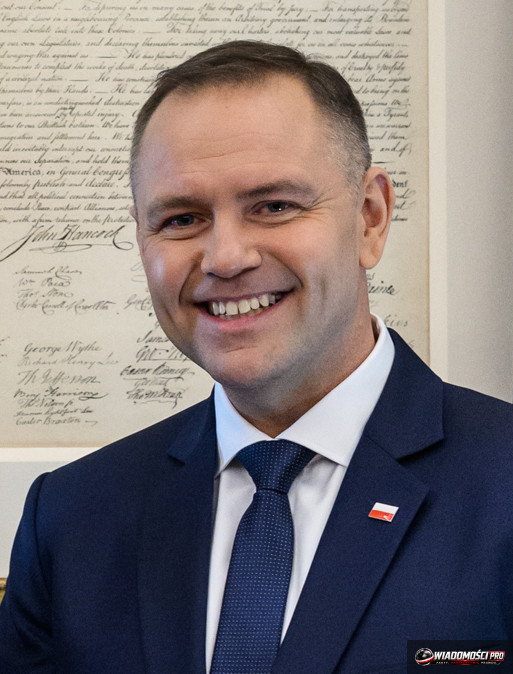
In brief
- The pardon covers three people: Piotr "Staruch" Staruchowicz, Adam Borowski, and a Pole wrongfully convicted in Germany.
- The decision is the aftermath of a direct phone call that "Staruch" requested with the president in December 2025.
- The pardon of the Legia fan leader means he can once again legally appear in the stadium stands.
Background of the decision: The phone call that changed the situation
Background of the decision: The phone call that changed the situation
The entire procedure began with a single phone call that sparked a political storm last December. On December 7, 2025, Piotr "Staruch" Staruchowicz, a well-known leader of Legia Warsaw fans, called President Karol Nawrocki directly. The conversation concerned a request for a pardon. This was not an official application sent through a law firm, but a direct contact that challenged the head of state's standard procedures.
President Nawrocki did not ignore this signal. Just one day later, on December 8, 2025, he publicly addressed the fan's request. This quick reaction caused consternation among political observers at the time, who wondered if the head of state intended to politicize the power of pardon toward circles associated with the fan movement. Today's decision to grant pardons, covering not only Staruchowicz but also Adam Borowski and a Polish citizen wrongfully convicted in Germany, is the finale of a process that began with that December phone call.
The question of the process's transparency remains open. Although Nawrocki's supporters point to the humanitarian dimension of the decision and the desire to rectify wrongs, critics note a dangerous precedent. Granting a pardon after a public appeal puts the president in the position of an arbiter who reacts to media pressure rather than just a cold analysis of court files. In Borowski's case, the matter was clear – the verdict concerned a conflict with Roman Giertych and had a long judicial history. However, "Staruch" is a politically charged case. The president's decision means that the stands may become a new place for political lobbying. Instead of a laborious legal path, all it takes is the right phone call and publicizing the matter. If this is to be the new definition of presidential grace, we are in for a term full of controversial resolutions.
The case of Adam Borowski and the verdict in the Giertych case
On August 3, 2026, President Karol Nawrocki decided to exercise his power of pardon, which directly affects circles associated with the former anti-communist opposition and contemporary political disputes. The pardon of Adam Borowski stirs the most emotion. As confirmed by the weekly Do Rzeczy, the verdict from which the president released the activist was closely related to Roman Giertych. This is a move that is difficult to read in isolation from the months-long debate about political settlements and the role of the judiciary in clashes between former allies and opponents.
The decision regarding Borowski is not an isolated act of presidential grace. On the same day, the list of pardoned individuals also included Piotr "Staruch" Staruchowicz, a leader of Legia Warsaw fans, and a Polish citizen wrongfully convicted in Germany. Listing these three names in a single communication from the Presidential Palace creates an unconventional mosaic. On one hand, we have a case with a strictly political and legal background concerning high-profile disputes from previous years. On the other – a nod to the fan community, with whom Nawrocki established contact as early as December 2025.
The pardon of Adam Borowski raises questions about the limits of presidential interference in final court rulings. If the president decides to take such a step in a case so strongly associated with Roman Giertych, it is a signal to both sides of the dispute. Nawrocki's supporters will see this as a gesture of justice toward someone they consider a victim of the system. Critics, however, will interpret it as an attempt at political management of verdicts. In this puzzle, every gesture has its purpose, and the August resolutions show that Nawrocki is not afraid to use his prerogatives in the most inflammatory points of the Polish public debate.
The third pardoned individual: The case of a wrongful conviction in Germany
The third pardoned individual: The case of a wrongful conviction in Germany
The least publicized, and perhaps the most pregnant with legal and international consequences, is the third decision by President Karol Nawrocki announced on August 3, 2026. In addition to Piotr "Staruch" Staruchowicz and Adam Borowski, the head of state decided to pardon a Polish citizen who was wrongfully convicted by the German justice system. This information was first reported by the editors of Niezależna.
This is a specific signal sent toward Berlin. The president is not only exercising his prerogatives within the country but is stepping into the role of an arbiter in cases where a Polish citizen felt defenseless in a clash with a foreign legal system. From a state perspective, this is a risky move. Pardoning a person convicted abroad opens the door to diplomatic tensions, especially if allegations of gross errors or even bias on the part of the German court appear in the background.
The Presidential Chancellery is not yet disclosing details regarding the process itself, the severity of the sentence, or the charges that formed the basis of the foreign verdict. Specifics are missing: what was the nature of the act, in which state (Land) the verdict was issued, and whether Polish diplomatic services were involved in this case before the pardon. The Palace's silence on this issue raises legitimate questions about whether we are dealing with a political gesture or a real intervention in a case of judicial error.
For the public, this matter remains a black box for now. While the names of Staruchowicz and Borowski ignite emotions related to domestic politics and the fan movement, the case of the nameless compatriot from Germany forces us to watch how Nawrocki defines the boundaries of presidential mercy. If the president has begun to challenge the verdicts of foreign courts, we are entering completely new territory. This is no longer just a matter of domestic penal policy. It is the beginning of a new doctrine of protecting citizens abroad.
Controversies surrounding the president's decision
President Karol Nawrocki's decision of August 3, 2026, sparked an immediate public reaction. The list of pardoned individuals included Piotr "Staruch" Staruchowicz, Adam Borowski, and a Polish citizen who was wrongfully convicted by the German justice system. This combination of names stirs emotions for completely different reasons.
The case of Piotr Staruchowicz, a leader of Legia Warsaw fans, is assessed by the portal Zero.pl as the head of state's most politically burdensome move. This is not a sudden impulse. As early as December 2025, the media reported on an unusual phone call from "Staruch" to the president requesting a pardon. Today's decision is the culmination of those efforts, which for many political observers is a signal of the state's readiness for dialogue with groups that were previously on the margins of official relations.
Next to the fan on the list is Adam Borowski. The case of his verdict, closely linked to the person of Roman Giertych, has been the subject of analysis by lawyers for years. Borowski's attorney confirmed his client's identity in an interview with the daily Fakt, which cuts off speculation regarding the scope of the act of grace. At least in this case, the president's intentions seem clear to conservative circles, which have supported Borowski in his legal battle for years.
However, the most doubt is raised by grouping these people in one act. From a legal point of view, a pardon is a presidential prerogative, but in a social dimension, Nawrocki has risked accusations of politicizing pardons. Mixing international cases, like the case of the wrongfully convicted Pole in Germany, with high-profile domestic cases dilutes the message. Critics will accuse the president of trying to "cover up" the controversial pardon of a fan with a patriotic-themed case. The effects of this maneuver will only be verified by future approval polls.
What this means for you
President Nawrocki's decision is a political signal that strengthens his image as a leader who listens to various social groups, but at the same time exposes him to criticism from political opponents, who accuse him of instrumentalizing the institution of pardon in cases with high emotional weight.
Questions and answers
Can Piotr Staruchowicz now legally return to matches?
Yes, the president's decision of August 3, 2026, clears the way for "Staruch" to return to the stands.
Why was Adam Borowski pardoned?
The pardon of Borowski was related to a verdict concerning Roman Giertych.
How was the process of Staruchowicz's pardon initiated?
The process began with a direct phone call from "Staruch" to President Nawrocki on December 7, 2025.
Sources
- The President has decided. Famous "Staruch" among those pardoned - Zero.pl
- Karol Nawrocki pardoned Legia fan leader. "Staruch" can return to the stands - PolsatNews.pl
- We learned the identity of one of the pardoned. Attorney confirms to "Fakt" - Fakt
- Karol Nawrocki pardoned Adam Borowski and "Staruch" - TVN24
- Surprising phone call to the president. Legia fan asks for a pardon, Nawrocki responds - Gazeta Prawna
- Pardoned Pole wrongfully convicted in Germany and "Staruch" - Niezależna
- "Staruch" called Nawrocki. He wants a pardon - WP Wiadomości
- President Nawrocki pardoned Adam Borowski. Verdict concerned Giertych - Do Rzeczy
Article prepared by the Wiadomości PRO editorial team with the support of artificial intelligence. Facts are derived from the sources provided above.
Komentarze (0)
Ładowanie komentarzy...