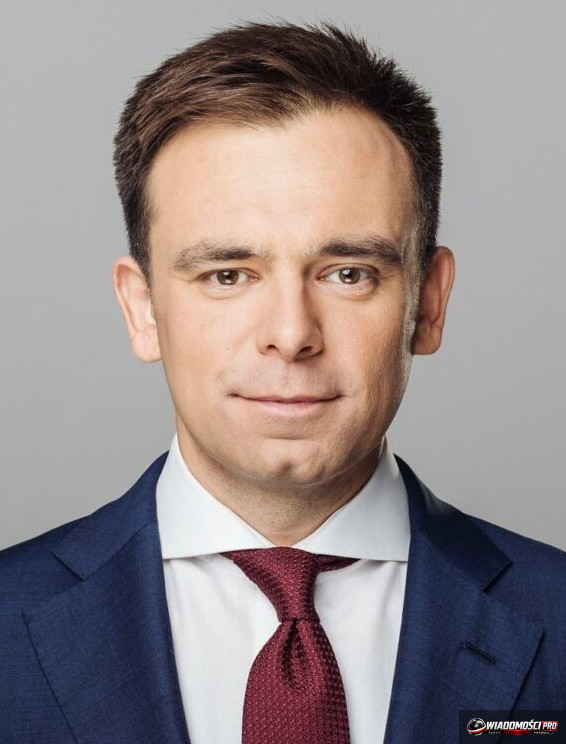
The President has not signed the act on the tax on extraordinary profits, which, according to Finance Minister Andrzej Domański, deprives the state budget of 5.2 billion PLN in revenue that was intended to curb fuel price increases for citizens. This decision, made on July 27, 2026, shifts the burden of financing protective shields from the energy sector to the budget deficit. The lack of the aforementioned levy means that the price stabilization mechanism at gas stations loses its main source of funding at a time when commodity markets are showing high volatility.
Referring the act to the Constitutional Tribunal by the head of state halts the entry into force of regulations that were supposed to impose additional burdens on fuel companies. The President justifies this step with legal doubts regarding the very structure of the tax and the rules for its assessment in relation to excess profits generated by energy companies. However, the Ministry of Finance maintains that the lack of these funds destabilizes the government's economic strategy. For Minister Domański, who had already signaled a threat to price stability on July 24, 2026, this situation is a signal to revise protective plans.
The political dispute over the shape of the windfall tax is entering a phase of legislative paralysis. Instead of a quick implementation of the levy, which was supposed to level the playing field between corporate profits and the cost of living for citizens, we are dealing with a months-long process before the Tribunal. The Presidential Palace emphasizes that examining compliance with the Constitution is necessary to avoid arbitrariness in taxation. The Ministry of Finance responds that every day of delay in publishing the act means real money that does not reach the state treasury and, therefore, cannot be used to cushion prices at Orlen stations and those of other operators.
In practice, this means that the government's protective mechanism has been stopped at a key point in the year. The Ministry of Finance was preparing to take over multi-billion surpluses, which, in the face of the energy crisis, were intended to be a safety buffer for consumers. Without these revenues, the budget is forced to look for savings in other ministries or accept a higher deficit. For the driver, this means the lack of a shield that, in recent months, allowed fuel prices to be kept at an acceptable level.
Referring the document to the Constitutional Tribunal is a classic political maneuver that freezes the matter indefinitely. It is difficult to predict when the judges will address the issue of the windfall tax and what the final verdict will be. Meanwhile, fuel companies are gaining time to renegotiate their market positions. The lack of clear fiscal rules during an economic downturn causes companies such as Orlen to hold off on investment plans that were to be co-financed from budget revenues.
From an economic perspective, every such blockade generates opportunity costs. If the state gives up on taxing extraordinary profits, this money remains on company balance sheets instead of feeding earmarked funds. The citizen feels this directly when, during every visit to a gas station, they see prices that are no longer subject to any intervention. The presidential veto in the form of a referral to the Tribunal is not just a dispute over law. It is a real change in the rules of the game, in which, once again, the consumer bears the costs of a political deadlock.
Minister Andrzej Domański, in his public statements on July 24, 2026, pointed out that the state budget is not elastic. The billions of zlotys that were to flow from the windfall tax were included in the expenditure plans for the second half of the year. Now, the ministry must decide which infrastructure projects will be limited to patch the hole caused by the presidential move. This, in turn, affects the long-term development strategy of the energy sector.
Blocking the act hits the foundations of the state's anti-crisis strategy. The fuel sector in Poland, dominated by large players, needs legislative stability. When the president questions the legal basis of the tax, the entire industry enters a period of uncertainty. Stock market investors are pricing in this risk, which can be seen in the valuations of energy companies. On one hand, investors are happy to avoid additional costs; on the other, they are worried about the country's political stability.
For the average Pole, this situation is incomprehensible. Citizens remember times when the government intervened at gas stations to prevent sharp price spikes. Today, this mechanism is blocked. The Ministry of Finance suggests that the president, through his actions, is de facto defending corporate interests at the expense of the individual client. The Presidential Palace retorts that it is defending the constitutional right to property and a fair tax system. In this dispute of political arguments, the economic facts are brutal: there is simply no money for fuel subsidies.
Will fuel companies use this time for investments or for paying out dividends? This question remains open. Without the windfall tax, companies have full freedom to dispose of capital. In the context of global oil prices, fuel companies can always argue that high prices at the pumps result from external factors over which they have no influence. The lack of state fiscal oversight over these margins means that drivers are left entirely at the mercy of the market.
It is worth watching how individual entities react to the situation. Orlen, as the largest player on the market, is at the center of this discussion. Every decision to raise prices at stations will now be analyzed from a political angle. If prices rise, the government will point to the president as the one to blame for blocking the shield. If they fall, it will be proof that the fuel market functions without extraordinary state intervention.
The situation is a stalemate. On one hand, we have presidential skepticism toward the form of the act; on the other, the real cost of this decision is shifted onto the citizens. In economics, there is no vacuum. If the state gives up on taking over a portion of extraordinary profits, these funds remain on company balance sheets, and prices on gas station pylons have no reason to fall. Drivers have been left alone in this game.
Operational risk analysis indicates that after July 24, 2026, the investment plans of the fuel sector became unpredictable. Modernization of the station network, development of hydrogen infrastructure, or securing raw material supplies – all of this requires stable funding. If companies do not know whether they will be taxed with an additional levy, they hold off on spending decisions. This, in turn, hinders the innovation of the Polish energy sector.
The Ministry of Finance must now show creativity. If the windfall tax does not enter into force, the government will have to look for billions elsewhere. Cuts in social programs or an increase in the budget deficit are possible. Both paths are politically costly. The President, by sending the act to the Tribunal, has in a way forced the government to choose between bad options.
Also key is the question of how long the Constitutional Tribunal will deliberate on this matter. If the process takes a year or longer, the windfall tax act will become outdated because market conditions will change fundamentally. Then, the entire debate about "extraordinary profits" will lose its meaning, because these profits will cease to be extraordinary and will become merely a memory of a period of high price volatility.
For citizens, the most important fact is that the state has lost a tool for direct influence on prices. Minister Domański emphasizes that without the windfall tax, the budget loses flexibility. This means that in the event of a sudden spike in fuel prices, the government will have no funds to finance subsidies. This is a systemic risk that affects every car owner in the country.
The state's energy policy needs consistency. Meanwhile, we are observing a rift between the Ministry of Finance and the Chancellery of the President. This inconsistency costs billions of zlotys that could have fed the budget. Instead, the money remains in the fuel sector, which does not necessarily translate into lower prices for consumers. This is a fundamental problem that the current administration must face.
Fuel market analysts point out that the windfall tax is not an ideal solution, but in the current geopolitical situation, it is a necessary instrument. Referring it to the Constitutional Tribunal is perceived by many experts as a decision motivated by politics, not law. The dispute over whether the state has the right to take a portion of profits from fuel companies is taking place all over Europe. Poland, through the president's decision, has joined this global trend of debates about tax justice.
It is worth noting that the lack of a signature on the act is not the end of the world, but the beginning of a difficult autumn. If fuel prices rise, social dissatisfaction will grow. The government will have to explain why it was unable to secure the budget against such a situation. The President, in turn, will have to defend his decision against accusations of acting to the detriment of citizens' interests.
The question remains: what will be the next steps of the Ministry of Finance? Will Minister Domański propose a new version of the tax that bypasses the legal doubts raised by the president? This seems to be the only way out of the impasse. However, the process of creating law from scratch means more months of work and uncertainty. Time, in this case, works against price stability.
The market does not like a vacuum. The lack of clear taxation rules during a crisis makes planning long-term investments difficult. If the state does not have tools for quick reaction, energy security ceases to be managed systemically and becomes a hostage to ad-hoc political decisions. The current situation is an example of a stalemate in which blocking the levy not only depletes public resources but, above all, limits the state's room for maneuver in emergency situations.
Will fuel companies use these funds for necessary infrastructure investments, or will this capital be frozen while waiting for further developments in the dispute between the Presidential Palace and the Ministry of Finance? The stability of the energy sector is hanging by a thread, and the costs of this uncertainty are ultimately always shifted onto the consumer. This is a lesson that the Polish market must learn very quickly if it wants to avoid the long-term effects of the fuel crisis.
Every week of delay is a higher risk that high fuel prices will become an autumn standard, and the state budget will lose real tools to counteract fuel inflation. The current situation is a stalemate in which the political caution of the head of state directly translates into the amount of bills at the pumps. Drivers must arm themselves with patience, although that is becoming more expensive every day.
Finance Minister Andrzej Domański leaves no illusions in his argumentation: the budget is losing billions in revenue that were intended to be a financial barrier against sharp spikes in fuel prices. Instead of the promised stabilization, we are entering a phase of market uncertainty. The mechanism that was supposed to protect drivers from price shock has been effectively turned off. The lack of a windfall tax means that fuel companies retain their generated margins without having to share profit, which, in the current geopolitical situation, is considered to result from external factors, not the efficiency of the enterprises.
For the consumer, this means the end of the protective shield. Here are the direct consequences that will have to be faced on a daily basis:
- The lack of billions in windfall tax revenue for the budget drastically limits the state's ability to intervene to moderate fuel prices, which directly destabilizes the market.
- Fuel companies, not burdened by the new tax, gain greater freedom in maintaining high margins, which in practice means no pressure for price reductions at the pumps for drivers.
- Blocking funds for protective purposes shifts the burden of potential high prices directly onto the retail client, eliminating the safety buffer that the government was counting on.
The situation is a stalemate. On one hand, we have presidential veto-skepticism toward the form of the act; on the other, the real cost of this decision is shifted onto the citizens. In economics, there is no vacuum. If the state gives up on taking over a portion of extraordinary profits, this money simply remains on company balance sheets, and prices on gas station pylons have no reason to fall. Drivers have been left alone in this game.
The president's decision to refuse to sign the act on the tax on extraordinary profits hit the fuel sector with a precision the market did not foresee. Blocking the funding of key companies in the fuel sector after July 24, 2026, calls into question the operational stability of market giants. Finance Minister Andrzej Domański is openly talking about multi-billion losses in the budget that were intended to directly cushion the rise in fuel prices at stations. Now, this money simply will not flow in, and the fuel landscape is becoming unpredictable.
For the largest fuel companies, the consequences are brutal. After July 24, the investment plans of companies, which were already stretched to the limit, lost their financial foundation. We are talking here about modernization projects and securing supplies that, without an inflow of fresh cash from the budget, become unrealistic. Boards of directors are facing a wall. Either they look for savings internally, which in practice means cuts in current infrastructure maintenance, or they will be forced to raise margins at stations to patch the budget hole that the presidential veto left open.
This is not just a political dispute in Warsaw. This is a real problem for drivers who will feel it at the pumps. The mechanism that was supposed to protect citizens from price spikes has been stopped halfway. In the corridors, there is talk of a paralysis of investment decisions because no one in the sector wants to make long-term commitments without knowing whether financial flows from the state windfall tax will ever reach company accounts. The presidential blockade has caused operational risk for fuel entities to rise from a manageable level to a critical one. If a quick agreement is not reached, the bill for this political veto will be issued directly to consumers.
The blockade of the act by Andrzej Duda shifts the burden of the decision from parliament to the Constitutional Tribunal. This is a key moment for the state budget because the president's decision not to sign the legal act means halting billions in revenue that were intended to directly cushion the rise in fuel prices for citizens. Finance Minister Andrzej Domański points to a real lack of funds to secure drivers' wallets. Currently, the only certain path is waiting for the Tribunal's ruling, which freezes any protective mechanisms against the autumn jump in costs at stations.
In the third quarter of 2026, drivers must prepare for variants dependent on the pace of the Tribunal's work. The optimistic scenario assumes a quick unblocking of funds, which would allow for price intervention even before the October wave of increases. The pessimistic variant means that the lack of a tax on extraordinary profits will force fuel companies to maintain margins at the current level without fiscal pressure, which will directly hit retail fuel prices. The costs of this political game will ultimately be diluted in the price of every liter of gasoline pumped at Polish stations.
Experts agree on one thing. Even if the Constitutional Tribunal recognizes the government's arguments, time works against price stability. Every week of delay is a higher risk that high fuel prices will become an autumn standard, and the state budget will lose real tools to counteract fuel inflation. The current situation is a stalemate in which the political caution of the head of state directly translates into the amount of bills at the pumps.
The conflict between the President and the Government regarding the tax on extraordinary profits is a fight over who should control fuel margins. Companies that avoid additional taxation gain from this; citizens who may feel the lack of a price buffer in their wallets lose. This is a clash of narratives about economic sovereignty with accusations of political lobbying.
Questions and answers:
Why did the president not sign the windfall tax act?
The President referred the act to the Constitutional Tribunal, questioning the provisions on taxing extraordinary profits of fuel companies, citing legal doubts regarding the structure of the levy.
How will the president's decision affect fuel prices?
Minister Domański warns that the lack of tax revenue limits the possibility of price stabilization, which may lead to their increase at gas stations for the average driver.
Is this the final decision regarding the financing of the fuel sector?
The president's decision halts the current financing mechanism until the legal dispute is resolved before the Constitutional Tribunal, which de facto freezes budget funds.
In summary, the dispute over the windfall tax is not just an accounting issue; it is a fundamental question about the role of the state in regulating the fuel market in times of crisis. The lack of agreement between key centers of power means that in the coming months, drivers will have to rely solely on market mechanisms, without support from a state price shield. This is a situation that no one predicted just a few weeks ago, and which is now becoming the reality of every citizen. It remains to wait for the Tribunal's verdict, which in this case will have significance not only legally, but above all for the household budgets of millions of Poles. The fuel market in Poland is entering a period of uncertainty, and its stability will be tested with every subsequent refueling. Will the state find another solution? For now, the answer to this question does not exist, and the lack of funds in the budget remains a fact that the government must face every day, looking for ways to mitigate the effects of fuel inflation without the support of the tax on extraordinary profits. Will fuel companies decide on a gesture toward drivers? This is unlikely in conditions of no fiscal coercion. Ultimately, it is not politicians, but the market and the law of supply and demand that will shape prices at stations in the coming months.
Sources
- Windfall tax in the CT. The President did not sign the new tax - Polish Industry
- The President's decision, the cost for Poland. Domański leaves no illusions - wiesci24.pl
Article prepared by the Wiadomości PRO editorial team with the support of artificial intelligence. Facts come from the sources listed above.
Komentarze (0)
Ładowanie komentarzy...