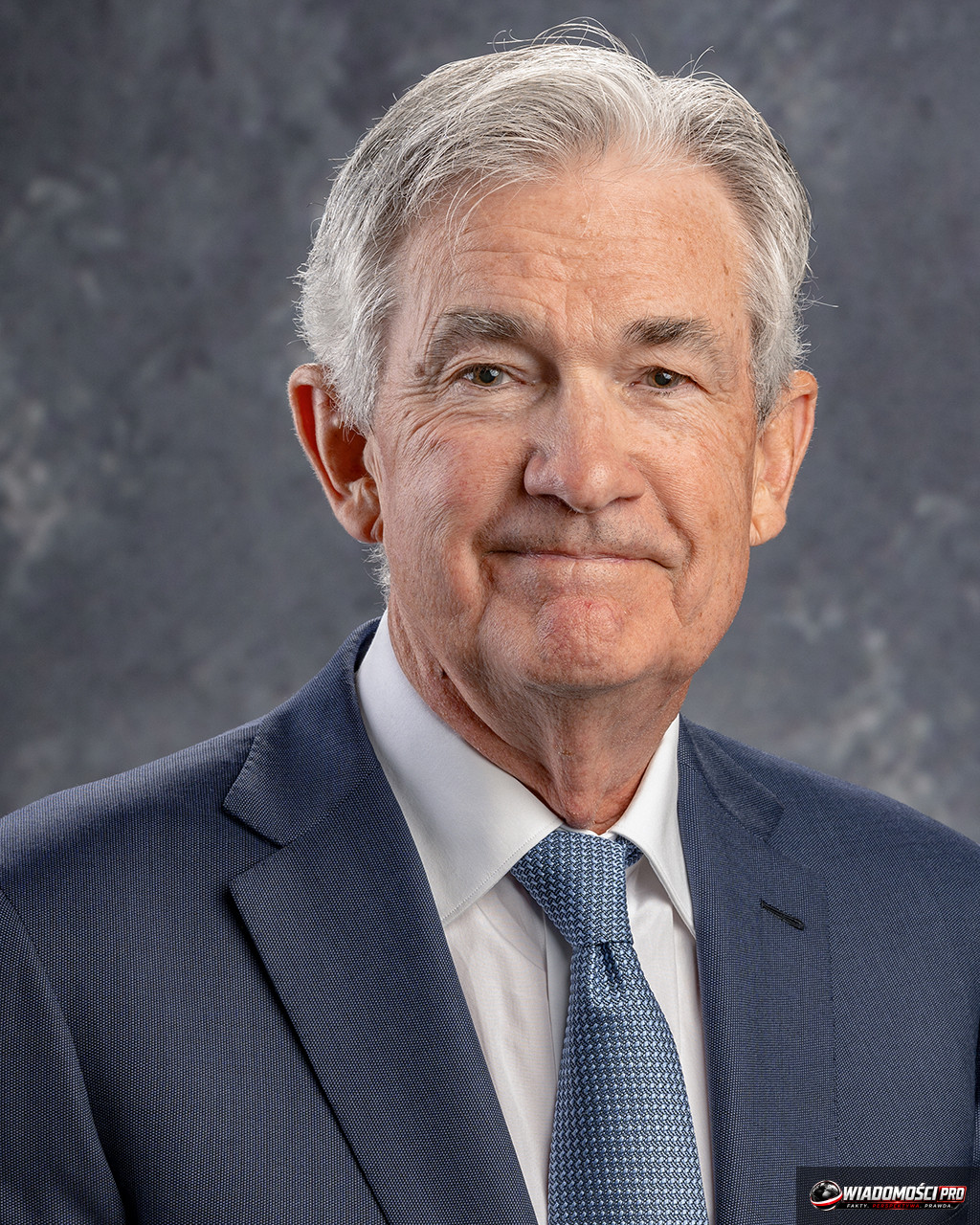
The Fed has raised rates by 75 bps, marking the most radical move since 1994, triggering violent volatility in the markets, including a 65% drop in Bitcoin. This decision is a direct response to inflation, which has reached its highest levels since 1981. Jerome Powell, facing the necessity of extinguishing price pressure, has abandoned previous half-measures in favor of brutal monetary tightening, which for global investors means the definitive end of the era of cheap capital.
Scale of the move: Why is 75 bps a shock to financial markets?
The financial market had been preparing for a tightening of course for months, but the scale of the July 2026 FOMC decision proved to be a blow that many participants were not ready for. When a central bank of such caliber as the Federal Reserve decides on a 75 basis point hike, it sends a clear signal: price stability is the priority, even if the price for it is a recession or a deep correction in stock valuations. In July 2026, the CPI in the United States stood at 8.7% year-on-year, which forced policymakers to react in a way markets had not seen in nearly three decades.
The reaction of the S&P 500 index was immediate. Investors, accustomed to the liquidity flowing from cheap currency, began selling off shares of technology companies whose valuations are based on future cash flows. Higher interest rates increase the discount rate, which mathematically lowers the present value of those earnings. US Treasury bonds, traditionally considered a safe haven, also came under pressure. The yield on ten-year bonds soared, which means a drop in their market prices. For investment funds holding massive debt portfolios, the Fed's move means the necessity of booking losses not seen in quarterly reports for years.
The modern economy, heavily leveraged and dependent on easy access to financing, reacted to this move like an organism withdrawn from stimulants. Investors who built their fortunes on the bull market in recent years must now learn to live in an environment where money has a price. This is not just a correction in tables – it is a paradigm shift in investment. Capital that previously flowed in a wide stream toward risky assets is now seeking protection in cash and short-term debt instruments. Every additional basis point is a higher cost of debt servicing for businesses, which in the long term must translate into lower margins and weaker financial results for S&P 500 companies.
Bitcoin in the face of tightening policy: 65% drops as a warning
Cryptocurrencies, including Bitcoin, became the first victims of the Fed's tightening policy. A 65% drop from peak prices is not just a technical correction, but above all, a flight of speculative capital toward safety. Many people treated Bitcoin as digital gold meant to protect against inflation, but in the face of the central bank's fight against prices, this asset is behaving like a high-risk instrument. When the cost of money rises, investors get rid of assets that do not generate cash flows and whose valuation is based solely on the belief in further growth.
The cryptocurrency market in 2026 is struggling with a lack of "fresh" cash inflow. As interest rates rise, the attractiveness of bank deposits and Treasury bonds increases, causing individual investors who fueled Bitcoin's growth to withdraw their funds. This is a brutal lesson for a sector that for years built its narrative on independence from the financial system. It turns out that in moments of crisis, Bitcoin's correlation with the tech stock market is almost complete. Both players react to the same macroeconomic variables, and decisions made in Washington have a direct impact on what happens on cryptocurrency exchanges in Tokyo or Warsaw.
For many investors who entered the market at the peak of euphoria, the current sell-off is devastating. There is no talk of calmly waiting out the bear market when the cost of living is rising and savings are melting away. Sentiment in the digital asset market has changed 180 degrees. Instead of discussions about "moon-shots," analyses regarding whether support at key price levels will withstand the selling pressure dominate. This is a situation where investor sentiment outpaces macro data, creating a self-fulfilling prophecy of declines. Every subsequent FOMC meeting is now watched with bated breath, as the market fears that the Fed has not yet said its last word on hikes.
Impact on the average citizen's wallet: What does this mean for your loan?
Global central bank decisions often seem distant, but in practice, they translate into our household budgets with clockwork precision. Let's look at a concrete calculation for a Polish borrower. Assume you have a mortgage of 100,000 PLN, with interest based on the 3M WIBOR rate plus a fixed bank margin. When global interest rates rise, pressure for rate hikes in Poland becomes a fact, because the Monetary Policy Council must protect the zloty exchange rate against capital flight to the dollar.
If your interest rate increases by 0.75 percentage points per year, with a debt of 100,000 PLN, the annual interest cost will increase by approximately 750 PLN. On a monthly scale, this means an additional 62.50 PLN in capital and interest installments. With a loan of 500,000 PLN, we are talking about over 300 PLN more per month, which for many households constitutes a noticeable gap in the home budget. These are not just numbers – this is money that could have been spent on consumption, vacations, or children's education, and now goes to the bank in the form of interest.
Furthermore, market interest rates also determine the interest on deposits. Although banks are more willing to raise earnings on savings, this phenomenon is usually delayed relative to the rise in credit costs. As a result, the average citizen is "doubly punished." Their debt becomes more expensive almost immediately, while the profit from deposits grows slowly and does not even cover half of the inflation, which remains at a high level in 2026. This disparity leads to the erosion of the real purchasing power of Polish families. Fed decisions, although made across the ocean, become an indirect dictator of the pace of life for millions of Poles.
FED's argumentation: Fighting the ghost of 1981 inflation
Jerome Powell and the rest of the Federal Reserve policymakers found themselves in a trap they had avoided for years. Inflation, which in 2026 reached levels unseen for over four decades, forced the FOMC to abandon the rhetoric of "transitory price growth." However, the minutes from the meeting, which leaked to the media, show that there is no full agreement within the institution regarding the future path. Some members believe that the current hikes are late and insufficient, while others fear that acting too aggressively will lead to a "hard landing" for the economy, i.e., a deep recession.
The disagreement within the FOMC is symptomatic of the state in which today's economy finds itself. On one hand, we have macroeconomic data screaming about the need to stifle demand, and on the other, we see the real effects on the labor market and corporate investments. The disclosed transcripts suggest that some policymakers were ready for even more drastic moves, arguing that only shock therapy would allow for the suppression of inflation expectations that have taken root in the mentality of consumers and companies.
The bond market, which is often wiser than politicians, is sending signals of distrust. Investors do not believe that the Fed will be able to maintain such a restrictive policy for a long time without triggering a financial crisis. Therefore, long-term bond yields are not rising as sharply as short-term rates, which creates a so-called yield curve inversion. Historically, this is one of the most reliable indicators of an upcoming recession. The Fed is therefore facing a dilemma: fight inflation to the end, risking an economic collapse, or retreat halfway, accepting higher inflation for the next few years?
For the moment, the "fight to the end" option prevails. The scale of the 75 bps hike is clear proof of this. The central bank has stopped trying to please the markets and has begun to fulfill its statutory duty to maintain price stability. For the average investor, this means that volatility will accompany us for many more quarters. Every inflation reading, every statement from Jerome Powell's office will be analyzed in terms of whether the Fed intends to continue this cycle or if it will begin to soften its stance.
What this means for you
As a market participant, you must understand that the time of free capital has definitively passed. Your investment strategy, which worked in the years 2020–2024, is today burdened with enormous risk. Cash holders, who were previously punished by negative real rates, can now count on a return to at least minimal deposit profitability, but at the cost of growing uncertainty in the global financial system. In turn, debtors should prepare for a scenario in which loan installments remain high for a longer time, and any potential rate cuts will be merely cosmetic until inflation falls permanently below the central bank's target.
Remember that in an environment of high interest rates, liquidity is king. Investments in low-liquidity assets, such as real estate or niche crypto projects, may prove to be a trap if you are forced to sell them quickly during a bear market. Instead of looking for opportunities to get rich quick, it is safer to focus on instruments that generate real, cash flow. The market is already pricing in not only fear but also the necessity of recalibrating the entire economic model in which we live. Your task is to adapt to this new reality before the market does it for you.
Questions and answers
Is this the end of Fed interest rate hikes?
In the face of inflation hovering around 8.7% in 2026, Fed minutes suggest that policymakers remain divided. Subsequent moves will depend on incoming data from the labor market and consumption, however, most analysts do not rule out the continuation of restrictive policy until price indicators begin to fall permanently.
Why does Bitcoin react so strongly to Fed decisions?
Bitcoin has become an asset with a high beta coefficient relative to the tech market. In an environment where capital becomes more expensive, investors withdraw from speculative assets, which was confirmed by the historic 65% drop in the current tightening cycle, forcing investors to rebalance portfolios toward safer havens.
Will hikes in the USA affect my Polish loans?
Yes, Fed decisions determine the global cost of money. A strong dollar forces local central banks, including the MPC, to maintain higher interest rates to counteract the weakening of the national currency. This directly translates into the amount of your loan installment, which becomes an increasing burden on the household budget with every 0.75 p.p. interest rate increase.
What is the main difference between 1994 and today's situation?
Although the scale of the hike is similar, the macroeconomic environment in 2026 is much more complicated due to the level of state and corporate debt. In 1994, the US economy was less dependent on monetary stimulus, which gave the Fed more room to maneuver while avoiding a recession. Today, any radical tightening is associated with a higher risk of systemic liquidity collapse.
Sources
- Fed minutes reveal divisions. Some policymakers wanted rate hikes - pb.pl
- Important decision for borrowers. First MPC decision of 2026 is in - Business Insider Poland
- Surprisingly calm Fed. Bonds don't believe it. And the kangaroos... - Subiektywnie o finansach
- Interest rates: how central bank decisions affect your loan, deposit, and store prices - PKB24.pl
- Bitcoin under pressure from Fed decisions? Market awaits key FOMC meeting - Comparic.pl
- Fed may raise interest rates again — Bitcoin lost 65% then - BeInCrypto
- Do interest rate hikes make sense at this moment? - forexclub.pl
- Fed raised rates by 75 bps. This is the first such hike in 28 years - Bankier.pl
Article prepared by the Wiadomości PRO editorial team with the support of artificial intelligence. Facts are derived from the sources listed above.


Komentarze (0)
Ładowanie komentarzy...