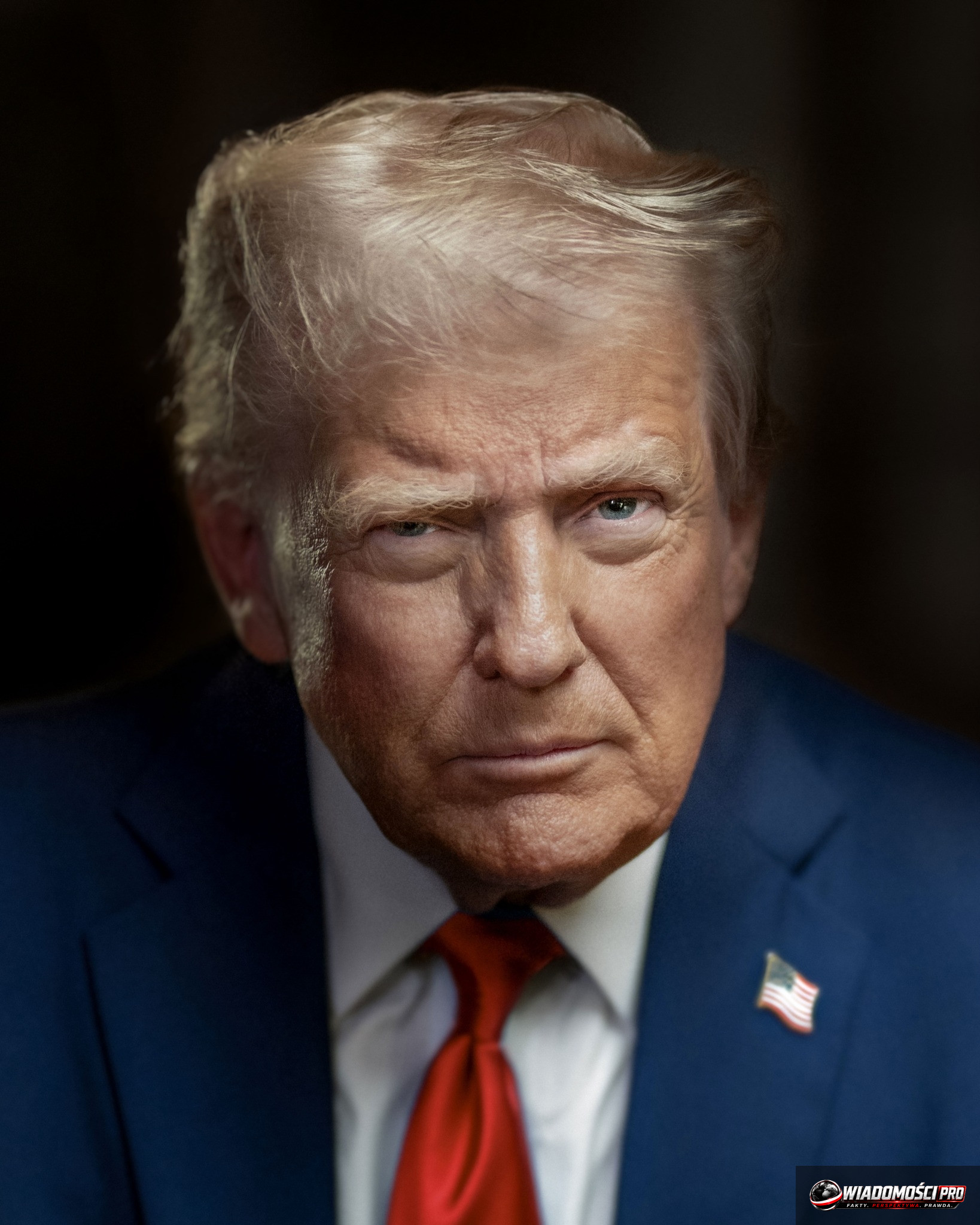
Trump has presented a three-year plan for the demilitarization of Hamas in exchange for the withdrawal of Israeli troops, giving the parties 14 days to establish the detailed terms of the agreement. This ultimatum, announced on July 31, 2026, represents an attempt to break the deadlock that has paralyzed Middle Eastern diplomacy for months. Washington is betting everything on one card, believing that time pressure will force the warring parties to make concessions they would never have agreed to under other circumstances.
Main assumptions of the three-year demilitarization plan
The structure of the agreement is based on a mechanism that is simple, at least in theory: the gradual surrender of weapons by Hamas militants is to be directly correlated with the withdrawal of Israel Defense Forces (IDF) units from specific sectors of the Gaza Strip. The schedule is spread over thirty-six months. It is a long process, calculated to slowly extinguish the military potential of an organization that has built its identity on armed resistance for decades.
The Trump administration has imposed a rigorous deadline. Fourteen days to refine the technical annexes is an extremely short amount of time. Behind the scenes, there is talk of the need to develop verification protocols to oversee the disarmament process. Without them, the plan will remain just a piece of paper. Each side must agree to the presence of external observers or develop a system of mutual control, which, in the face of mutual hatred, seems an almost impossible task.
The question of the technical aspects of demilitarization remains open. Will Hamas surrender only its heavy equipment over these three years, or is there talk of a full delegalization of paramilitary structures? The document does not specify what will happen to the tunnels, which constitute the organization's operational bloodstream. Israel fears that during the three-year transition period, Hamas will simply regroup its forces, using the time to recruit new supporters. In turn, Hamas, by agreeing to the plan, is playing for the survival of its political existence.
Verification of progress will be a flashpoint. If it turns out after the first few months that one side is cheating, the entire plan will collapse. Trump is risking his own political capital. If a binding document is not created within two weeks, the entire initiative will be scrapped, and the USA will be forced to admit a diplomatic failure. Currently, a race against time is underway, in which every day brings us closer to the moment of truth.
Hamas's condition: What must Israel do?
Hamas has confirmed its readiness to accept the disarmament plan, but it did so with a clear caveat. The organization makes its position clear: their consent is conditional. Representatives of the group are demanding specific concessions from Tel Aviv. Although the content of the demands has not yet been made public in the form of an official annex, observers suggest that it concerns the lifting of the naval blockade and guarantees of immunity for high-ranking members of Hamas structures who would transition to civilian activities.
The entire agreement is balancing on the edge. Hamas does not intend to lay down its arms without obtaining hard political benefits in return. For them, disarmament is not just the loss of military advantage; it is also the end of an era. Agreeing to Trump's plan is therefore a desperate move aimed at ensuring the organization's survival in a new political reality. Jerusalem faces a dilemma. Meeting Hamas's demands could be perceived by the Israeli public as a capitulation.
Over the next fourteen days, a behind-the-scenes game is being played over what exactly "withdrawal of troops" means. Will Israel withdraw completely, or will it maintain security corridors? Will Hamas be able to maintain control over its radical factions, which may oppose disarmament? These are questions for which there are no answers yet. The ball is in Israel's court, and the pressure from Washington is growing stronger.
The situation resembles a chessboard where every piece has an assigned value. Hamas is trying to bid high, counting on the fact that Trump cares more about success than about the details. In turn, Israel, taught by bitter experience, is looking for ways to secure its borders. Two weeks is a time during which political alliances can evaporate, and declarations made over the phone can be questioned at the first meeting of negotiators. We are waiting for Tel Aviv's move, which will determine the further fate of this precarious plan.
Israel's skepticism toward American proposals
Jerusalem does not hide its restraint toward the proposals coming from Washington. For Israeli politicians, a three-year demilitarization process is an eternity, during which many things can go wrong. Security concerns after the withdrawal of troops dominate every analysis prepared by the Israeli staff. The Israelis remember how every previous attempt to stabilize the region ended in an escalation of violence. There is no trust. There is only a cold calculation of profits and losses.
Tel Aviv fears, above all, a security vacuum. If the army withdraws and Hamas is not fully disarmed, then within these three years, the rebuilding of combat potential on an unprecedented scale could occur. The Israeli authorities are demanding not just assurances, but hard, international guarantees that no threat will emerge from Gaza after the IDF leaves. The American plan seems too general regarding the oversight of these guarantees.
Local reality diverges from the optimistic messages from Washington. In Jerusalem, there is a conviction that Trump wants a "historic agreement" at any cost, regardless of the real risk to Israel. This breeds distrust. Will the USA be ready to intervene if Hamas breaks the terms of the agreement in the second year of the process? The document does not specify this. The lack of clear consequences for the party breaking the agreement is the greatest weakness of the presented proposal.
With each day since the announcement of the plan, skepticism is growing. Israeli military officials warn that withdrawing without full demilitarization is a mistake that could cost the lives of many civilians. Diplomacy is one thing, and a hard defense strategy is another. At this moment, both these spheres have fallen into deep conflict. The government in Tel Aviv must balance the pressure from its US ally with the real sense of threat felt by its citizens. Two weeks to determine the details is a time during which Israel will have to make decisions of historical significance.
International reactions to Trump's plan
The world is watching Trump's initiative with a mixture of hope and disbelief. Media around the world are calling the agreement "historic," but voices full of reservation can be heard in European and Asian capitals. Middle East experts point out that the paradigm shift the American administration is talking about is, in reality, a huge risk. If Trump's plan fails, the region could plunge into even greater chaos.
Vietnamese media were among the first to raise the topic of Hamas's consent, which triggered a wave of commentary. The fact that the organization confirmed its readiness for talks is seen as a signal that US pressure is effective. Nevertheless, there is silence at the UN. Diplomats are waiting for the concrete provisions that are to be worked out within fourteen days. No one wants to celebrate prematurely. Everyone remembers how many times similar initiatives collapsed in the final phase of negotiations.
It is clear to observers that this initiative is an attempt to impose a new pace. Trump wants to be the one who solves the "unsolvable." If he succeeds, his position on the international stage will be strengthened in an unprecedented way. However, if the plan falls apart within the next two weeks, it will be a failure that will cast a long shadow over American foreign policy. Every word spoken by the negotiators during this time will be worth its weight in gold.
The international community is waiting for signals from Tel Aviv. That is where the decision will be made as to whether Trump's plan has a chance of implementation. If Israel rejects the proposal, Washington will find itself in a difficult position. On one hand, it must support its ally; on the other, it wants to prove the effectiveness of its new strategy. This ambiguity of the situation makes the eyes of the whole world now turned toward a small strip of land on the eastern coast of the Mediterranean Sea.
What's next for the Gaza Strip? Perspectives for 2026
The Gaza Strip is at a turning point. If Trump's plan comes into effect, July 31, 2026, will be remembered as the day the slow road to peace began. However, without the full demilitarization of Hamas, any reconstruction will remain merely a pipe dream. For the next three years, the region will be under enormous pressure, and any armed incident could destroy the established arrangements.
The biggest challenge will be the verification process. Who is to ensure that Hamas is actually surrendering its weapons? Will it be international forces, or perhaps a technological monitoring system? Without answers to these questions, Trump's plan is exposed to sabotage by radical factions on both sides of the conflict. Both Hamas and the Israeli right have their reasons for wanting this agreement to fail.
The success of this operation depends on the determination of both sides to acknowledge that war is no longer profitable. This is a difficult conclusion for an organization that has lived off conflict for decades. It is equally difficult for the government in Tel Aviv, which has built its credibility on a hard stance against terrorism. Nevertheless, 14 days to work out the technical details is a time during which emotions must give way to pragmatism.
If the parties do not reach an agreement within the specified time, the status quo will return with redoubled force. The USA will lose face as a guarantor of peace, and the Gaza Strip will plunge into an even greater crisis. For this reason, the coming days are so important. This is not just a matter of diplomacy; it is a matter of survival for thousands of people living in this region. Every move, every proposal, and every word spoken in the near future will decide whether 2026 will be a year of hope or another escalation.
What this means for you
As observers of this process, we must understand that this plan is a giant gamble. Donald Trump has put his authority on the line, counting on forcing peace through time pressure. If this strategy works, it could mean the long-awaited stabilization. However, if Israel rejects the terms or Hamas proves insincere, the USA will find itself in a political trap. For the average person, this means that the situation in the Middle East remains extremely unstable, and every report from the region over the next two weeks will be crucial for global security. This is not a time for optimism; it is a time for careful observation of the actions of the negotiators, on whom the fate of thousands of people depends.
Questions and answers
How much time do the parties have to determine the details?
The parties have been given 14 days to work out the technical details of the agreement under US supervision.
Has Hamas agreed to disarmament?
Yes, Hamas has confirmed its agreement to the plan, but has made its implementation conditional on Israel meeting specific requirements.
What is the main time assumption of the plan?
The plan provides for a three-year process of demilitarizing the Gaza Strip in exchange for the withdrawal of Israeli troops.
What is the biggest obstacle to the success of the plan?
Mutual distrust, the lack of credible verification mechanisms, and Israel's security concerns after the withdrawal of troops.
What is the role of the USA in this agreement?
The Trump administration is acting as the initiator and guarantor of the process, imposing time frames and overseeing technical negotiations.
What will happen if the agreement is not finalized within 14 days?
All signs point to the initiative being abandoned, which will likely lead to further escalation of the conflict.
Why is three years such an important period in this plan?
This is the time needed for gradual demilitarization, which is intended to allow for the dismantling of Hamas structures without a sudden collapse of social order in the Gaza Strip.
Has Israel officially supported Trump's plan?
Israel has expressed skepticism and is approaching the proposal with great reservation, emphasizing the need to obtain hard security guarantees before any withdrawal of forces.
What does "demilitarization of Hamas" mean in practice?
It means surrendering weapons, dissolving armed structures, and the likely transformation of the organization into a political entity, which is an extremely complicated process that is difficult to carry out under wartime conditions.
Are there guarantees for Israel?
At this moment, there is no official information about specific guarantees, which is the main point of contention between Tel Aviv and Washington.
Sources
- Trump announces disarmament of Hamas in Gaza. Israel does not hide its skepticism - Business Insider Polska
- Media: Hamas has agreed to the plan to disarm the Gaza Strip. However, it has set a condition for Israel - Kresy.pl
- Trump announces "historic agreement" regarding Gaza - Euronews.com
- End of the war in the Gaza Strip? Trump announces a plan that could change the entire Middle East - CrypS.pl
- Trump has announced an agreement on the disarmament of Hamas. Its representatives claim they are ready to accept it if Israel also meets the conditions - xyz.pl
- Trump has announced a historic agreement regarding Hamas and the Gaza Strip - Polskie Radio 24
- Trump has announced a "historic agreement". Hamas is to disappear from the Gaza Strip - Do Rzeczy
- Hamas confirms agreement to the disarmament plan. - Vietnam.vn
Article prepared by the Wiadomości PRO editorial team with the support of artificial intelligence. Facts are derived from the sources listed above.



Komentarze (0)
Ładowanie komentarzy...