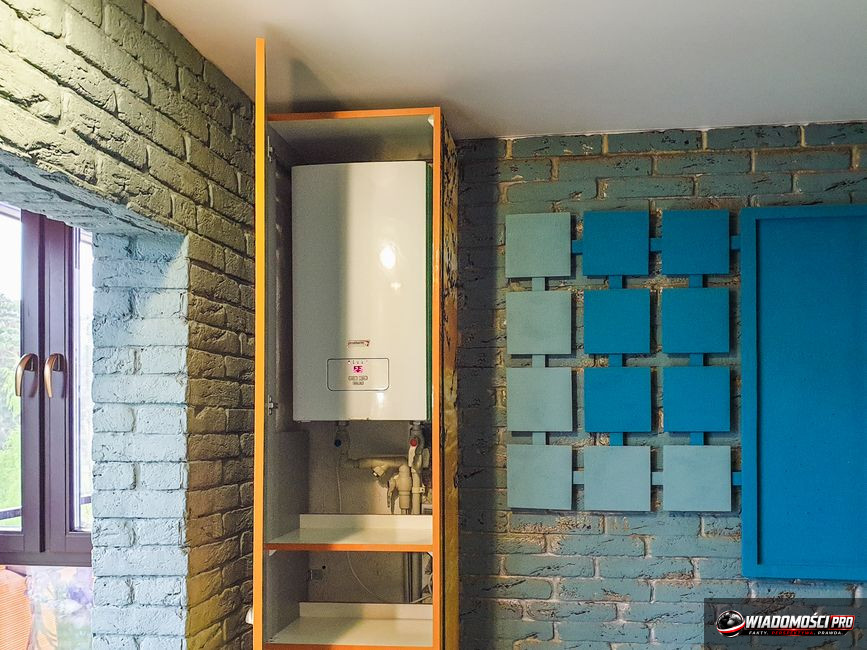
After 2026, the use of the oldest boilers will become illegal, and owners must replace them with modern heat sources, while being eligible to apply for a heating voucher of up to 3,500 PLN. This change results from the tightening of anti-smog regulations, which definitively eliminate obsolete solid fuel furnaces, including coal, eco-pea coal, and pellets. Those qualifying for support should submit voucher applications directly to the municipal office relevant to their place of residence or via a dedicated electronic form on the gov.pl portal.
Legal basis and timeframe
The introduction of new regulations marks the culmination of a multi-year process of phasing out so-called "smog-belchers," the schedule for which was tightened in 2026. Below is a summary of the key sources regulating the heating device replacement process in Poland:
- The Environmental Protection Act and implementing acts regarding exhaust emissions: the central basis.
- Anti-smog resolutions of provincial assemblies: regional regulations (e.g., Lesser Poland, as of March 19, 2019).
- Regulations of the Ministry of Climate and Environment regarding the heating voucher (2025/2026 season).
- Municipal announcements regarding the August 31, 2024 deadline (applies to selected municipalities, e.g., Gdynia).
For property owners, the most important fact is that national law after 2026 imposes strict emission standards, which effectively exclude non-class furnaces from use. The interpretation of the regulations, as reported by wnp.pl and Interia Biznes, leaves no room for maneuver: after the specified date, an old boiler ceases to be a legal heating device.
Replacement schedule: The end of the solid fuel era
July 28, 2026, marks the final deadline for users of coal, eco-pea coal, and pellet boilers that do not meet emission standards. Homeowners find themselves in a situation where the continued operation of obsolete installations is no longer a matter of choice, but a violation of the law. Interia Biznes, in a report from January 31, 2026, clearly indicated that after this date, inspection authorities have full grounds to impose financial penalties on property owners who have not modernized their boiler rooms.
This process is not sudden. As early as November 23, 2023, Newseria BIZNES warned about the consequences of delaying device replacement. Many municipalities, including those in the Lesser Poland province, were ahead of central requirements, introducing local restrictions several years earlier. An example is Gdynia, which closed the grace period for the oldest boilers with an announcement on August 31, 2024. Currently, however, we are seeing a nationwide standardization of regulations.
Any boiler that does not have a certificate confirming it meets the requirements for modern heat sources is added to the list of prohibited devices. This means that even installations with a relatively short service life, if they do not meet current dust and pollutant emission standards, must be dismantled. Homeowners who have not yet conducted a technical audit of their installation risk having to replace the device suddenly during the heating season, which involves higher installation costs and limited availability of professionals.
Heating voucher: Support mechanism and income thresholds
Financial support of up to 3,500 PLN is intended to act as a bridge between the old heating system and new emission requirements. According to INFOR.PL guidelines from October 7, 2025, this voucher is not a universal benefit. The legislator has introduced income thresholds intended to limit the flow of aid only to the most needy households.
Income criteria are based on the average monthly income per household member. In a single-person household, this threshold is 2,100 PLN net, while for multi-person households, the limit is 1,500 PLN net per person. This means that every family applying for 3,500 PLN in support must submit relevant income certificates for the year preceding the application. Verification of applications is conducted by social welfare centers or municipal offices.
It is worth noting the disparity between the support amount and real market costs. In 2026, purchasing a heat pump with installation is an expense of around 25,000 – 45,000 PLN. The heating voucher therefore covers 8 to 14 percent of the investment costs. For many families owning homes with low energy standards, the remaining amount is an insurmountable barrier. The state is shifting the burden of energy transformation onto citizens, offering temporary aid that in many cases does not eliminate the risk of energy poverty.
How to apply? Step-by-step instructions
The procedure for applying for funds requires the applicant to prepare documentation confirming the technical condition of the existing heat source and a declaration of its permanent decommissioning. The application must be submitted within the timeframe specified in the recruitment announcement published by the commune head, mayor, or city president.
1. Verification: Check at the municipal office whether your current boiler is on the list of devices subject to replacement.
2. Audit: Obtain a heating system inspection report that confirms the age and class of the device.
3. Application: Download the form from the gov.pl website or pick it up at the municipal office.
4. Documentation: Attach income certificates and a bank account number for the benefit payment.
5. Submission: Documents can be submitted in person at the customer service office or electronically using a trusted profile (profil zaufany).
After submitting the application, officials have a statutory time to verify income criteria. In the case of a positive decision, funds are transferred to the indicated account. It should be remembered that the voucher is granted once per household. Multiple applications by different household members living in the same building will result in the rejection of the application.
Regional differentiation of regulations: The case of Lesser Poland
Lesser Poland is an excellent example of a region where the fight for clean air preceded nationwide regulations. The anti-smog resolution adopted on March 19, 2019, created a legal framework that for years forced residents to invest in modern heating. Regional regulations are often more stringent than those coming into force after 2026 nationwide.
Residents of regions with strong anti-smog resolutions often ask whether nationwide regulations override local ones. The answer is no. In a situation where local law imposes stricter requirements – e.g., a ban on using a specific type of fuel that is still permissible in other provinces – the assembly resolution takes precedence. For a resident of Lesser Poland, this means that even if general regulations allow for some flexibility after 2026, regional standards may completely exclude it.
This legal dualism creates information chaos. Officials are often unable to directly answer questions about the superiority of one legal act over another, which causes homeowners to delay investment decisions in uncertainty. The "waiting for clear guidelines" strategy is, however, risky. Inspections conducted by the municipal police and environmental protection inspectors are based on the most restrictive provisions in force in a given area.
Modernization costs: A realistic analysis of expenses
The clash of regulations with the market realities of 2026 leads to the conclusion that modernizing the heating system is a high-risk financial investment. The costs of purchasing the device are just the tip of the iceberg. The owner must count on the necessity of modernizing the receiving installation, replacing radiators with low-temperature ones, or installing underfloor heating.
Wnp.pl, in a publication from July 28, 2026, points out that a lack of modernization means not only penalties but also problems with property insurance. Insurance companies are increasingly including clauses regarding the technical condition of boiler rooms in their contracts. In the event of a fire caused by an illegal installation, the payout of compensation may be drastically limited or completely withheld.
Below is a summary of estimated expenses for a single-family house with an area of 120 m²:
- Dismantling the old furnace and waste disposal: 1,500 – 2,500 PLN.
- Purchase of a modern heat pump (with installation): 30,000 – 50,000 PLN.
- Modernization of the hydraulic installation: 5,000 – 10,000 PLN.
- Energy audit after modernization: 800 – 1,500 PLN.
The total cost of modernization in many cases exceeds the annual income of a household qualifying for the heating voucher. The subsidy system, despite its noble idea, does not constitute a real alternative to financing the investment. A citizen forced to replace a furnace is left with the necessity of taking on bank obligations, which in current high-interest-rate conditions is an additional burden.
Legal consequences and inspections after 2026
After July 28, 2026, the enforcement of the ban on using old boilers enters an intensive phase. Inspections will no longer be limited to random visits but will become an element of a systematic review of the technical condition of buildings. Owners who ignore the replacement obligation must prepare for fines imposed by the municipal police and environmental protection authorities.
Sanctions for failing to comply with regulations can be severe. According to the Code of Petty Offenses, the case may be referred to court, where the fine can reach amounts counted in thousands of zlotys. Moreover, in the case of recidivism, it is possible to use coercive measures, including an order for the immediate decommissioning of the device, which in the middle of winter means the de facto exclusion of the property from use.
The state emphasizes in its communications that the goal of these actions is to improve air quality, but for the citizen, it is a forced change in lifestyle. The lack of flexibility in the regulations means that the elderly, often living alone in old houses, are most exposed to the effects of these regulations. The support system in the form of a 3,500 PLN voucher is addressed to the poorest, but the procedure for obtaining it is so complicated that many eligible people give up on applying for funds.
Perspective for the owner: What to do now?
For a homeowner, the situation is clear: an audit of one's own boiler room must be conducted. Regardless of whether the boiler seems to be working, its emission class is key. Legal requirements in force after 2026 focus on modernity and ecology, eliminating all devices that do not have the appropriate certificates.
Those who invest in building thermal modernization before replacing the heat source will benefit. Reducing energy demand allows for the installation of a lower-power device, which directly translates into lower investment costs. Those who delay, hoping for further transition periods, will lose. There will be no more of those after 2026.
The catch lies in the rigorous income thresholds. Many homeowners whose incomes slightly exceed the statutory limits are excluded from financial aid, even though their household budget does not allow for easy modernization. This is the group that will feel the effects of the new regulations the most, finding themselves in a "dead end" between legal obligation and a lack of financial support.
Questions and answers
Do I have to replace a pellet boiler if I bought it two years ago?
Not every pellet device meets the requirements after 2026. You must check the device documentation and the ecodesign certificate. If the boiler does not meet current dust emission standards, it will have to be replaced according to the schedule.
How much exactly is the heating voucher and is it paid in cash?
The maximum amount is 3,500 PLN. Funds are paid directly to the applicant's bank account after positive verification of the application by the municipal office. This is not a reimbursement of costs, but a one-time assistance benefit.
Where can I find information about the local anti-smog resolution for my county?
This information is available at the municipal or city office. It is also worth checking the website of the relevant marshal's office, where full texts of anti-smog resolutions are published along with attachments specifying boiler replacement deadlines in a given region.
What if I do not meet the income criteria and cannot afford to replace the furnace?
In such a situation, one should look for grant programs offered by the Provincial Funds for Environmental Protection and Water Management. There are also preferential thermal modernization loans offered by commercial banks in cooperation with government programs. It is worth consulting an energy advisor in the municipality.
Will inspections be conducted in every house after 2026?
Inspections will be conducted on a random but systematic basis. Services have the right to enter the property and check the type of fuel used and the technical documentation of the boiler. In the event of irregularities, the owner receives an inspection report and a deadline for removing the violations.
Sources
- Ban on heating with coal, eco-pea coal, and pellets is coming. The regulations are ruthless - wnp.pl
- The end of heating with coal, eco-pea coal, and pellets. New regulations are coming - wnp.pl
- Heating voucher 2025/2026: Who is entitled to 3,500 PLN? See income thresholds and support amounts. [Final rules] - INFOR.PL
- By when are you obliged to replace your old home heating furnace in 2024? - Farmer.pl
- Attention, requirement to replace "smog-belcher" by August 31, 2024 - www.gdynia.pl
- Where in Poland will it be impossible to burn with "smog-belchers" from January? - Environmental Protection - Newseria BIZNES
- Homeowners have little time. These furnaces will be illegal after 2026 - Interia Biznes
- Anti-smog resolution for Lesser Poland - Lesser Poland in a healthy atmosphere
Article prepared by the Wiadomości PRO editorial team with the support of artificial intelligence. Facts come from the sources provided above.

Komentarze (0)
Ładowanie komentarzy...