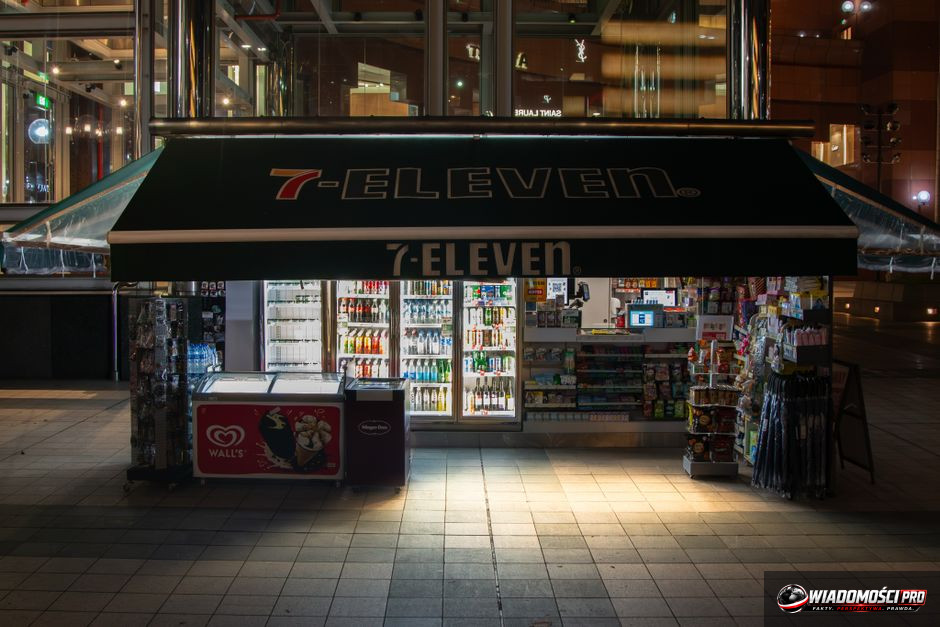
Seven & i Holdings has withdrawn from the acquisition of Żabka because the owners of both entities failed to reach an agreement on the final valuation of the transaction. The lack of a price consensus definitively ended the negotiations, which triggered volatility in the company's share price on the WSE. This information, officially confirmed on July 25, 2026, put an end to months of speculation about the Japanese giant's entry into the Polish market.
The fiasco of the great merger: How the talks broke down
The negotiation process between Seven & i Holdings and Żabka lasted for months, but the talks concluded on July 25, 2026. On the Japanese side, financial analysts and advisors from the mergers and acquisitions sector were involved, analyzing every aspect of the Polish chain's operations. Żabka, a leader in the convenience segment in Poland, had positioned itself from the start as a company with high operating margin growth potential. The discrepancy in valuation did not stem from a mismatch in strategy, but from a fundamental difference in the assessment of future cash flows.
The value of the transaction was estimated in stock market circles at billions of zlotys. For Żabka's owners, the valuation was intended to reflect not only current financial results but also the unique logistics network and the technology supporting franchisees. The Japanese investor approached the valuation more conservatively, taking into account the costs of integrating IT systems and the risks associated with the saturation of the Polish market. The lack of a common position led to the suspension of talks without any contingency plan.
This situation shows how complicated it is to combine the operational structures of two large players from such different cultural and business circles. Żabka's owners did not agree to lower their price expectations, which in their view would have been an undervaluation of a brand built over many years. In turn, the management of Seven & i Holdings, operating within strict financial discipline frameworks, decided that further raising the bid would violate internal requirements regarding return on investment. The negotiations were definitively broken off.
The market reacted violently to this news. Investors on the Warsaw Stock Exchange, who had discounted an acquisition premium into the share prices, had to instantly correct their valuation models. The volatility in trading was a direct result of the evaporation of hopes for the appearance of a new strategic investor with a global background. The company's stock market valuation, in the face of the failed talks, had to be confronted with operational reality, devoid of the support of Asian capital.
Price barrier: The main point of contention
The issue of valuation was the only, yet completely paralyzing, point of contention. In transactions on the scale of billions of zlotys, every small adjustment to the EBITDA valuation multiple changes the final result by hundreds of millions. Seven & i Holdings had its own analyses conducted by audit teams, which were intended to point out potential risks in Żabka's business model, including rising labor costs in Poland and pressure on retail margins.
For the sellers, Żabka is not just a chain of stores, but an advanced technological platform. Investors expected a valuation that would take into account its leadership in digital innovation. The Japanese, on the other hand, were looking for a stable asset that would allow them to profitably enter Central and Eastern Europe without taking on excessive financial risk. When the math stopped adding up and the parties could not find common ground, the decision to withdraw became a matter of time.
Information published in industry media, such as Wiadomości Handlowe or Business Insider Polska, pointed to growing tension in the final days of negotiations. The lack of consensus was not the result of a single error, but a combination of different approaches to assessing credit and operational risk. Stock market investors, following these reports, sensed the impasse, which translated into increased trading volume for Żabka shares even before the official announcement that talks had broken down.
This failure is proof that even with capital and the desire for expansion, the limit of profitability is insurmountable. Żabka's owners, aware of their company's position on the Polish market, did not intend to yield on price, considering the Japanese offer insufficient. From a business perspective, the lack of agreement is an expression of respect for one's own assets. From a stock market perspective, however, it is a moment of painful verification of expectations, which forced investors to return to valuations based solely on the company's fundamentals.
Market reaction: WSE in the face of uncertainty
The session on the WSE that followed the announcement of the failed negotiations was a time of high volatility. Żabka shares recorded declines, which resulted from the withdrawal of short-term investors who had been counting on a quick profit resulting from a tender offer by Seven & i Holdings. A drop in valuation of several percentage points on a daily basis was a direct reaction to the correction of stock market expectations.
Institutional investors holding blocks of Żabka shares in their portfolios were faced with the necessity of a quick strategy revision. Many of them had built profit forecasts based on cost and revenue synergies that were supposed to result from integration with 7-Eleven. When these plans were buried, the market had to revalue the company. Uncertainty regarding the future actions of Żabka's management – whether the company will look for another partner or focus on organic growth – further fueled the nervous atmosphere on the trading floor.
It is worth recalling the date of July 20, 2026, when stock analysts were scrutinizing Żabka in the context of the upcoming session. Even then, there was speculation about a know-how exchange, which heated up the mood. However, when it became clear that the Japanese were leaving the table, optimism was replaced by cold calculation. The lack of a strategic partner is a signal to the market that Żabka must face challenges, such as competition from discounters or growing regulatory requirements in retail, on its own.
The variable dynamics of the share price in the days following July 25, 2026, show how much the Polish capital market reacts to information about M&A (mergers and acquisitions) transactions. Investors who believed too quickly in the certainty of the transaction's conclusion incurred costs related to the necessity of exiting positions at an unfavorable moment. The financial market brutally verified the assumptions of a "sure" profit, reminding investors of the investment risk that always accompanies large mergers.
Strategic plans of Seven & i Holdings on the international stage
Seven & i Holdings is pursuing a global expansion strategy, but its withdrawal from the Polish transaction shows that the concern does not intend to carry out acquisitions at any cost. Japan, being the home market, has fostered a corporate culture in the company where every yen must bring a measurable return. Poland, despite the attractiveness of the convenience segment, turned out to be a demanding market, and the price barrier set by Żabka's owners proved too high.
The Japanese were looking in Poland not only for points of sale but, above all, for a franchise management model that, in the case of Żabka, had reached an unprecedented scale of efficiency. The exchange of experience in "last mile" logistics and inventory management automation systems could have been a value-add for Seven & i Holdings. However, after conducting due diligence, the management in Tokyo decided that the costs of integration and the purchase price would not allow for the achievement of the assumed financial goals in the short and medium term.
The failure of the talks does not mean that Seven & i Holdings is giving up on its presence in Europe. The concern will, however, have to look for other acquisition targets or change its approach to the valuation of European retail chains. The lack of agreement with Żabka is a lesson for the entire retail sector. It shows that global players are not always able to reach an agreement with local leaders if the difference in the assessment of business value exceeds a certain threshold of acceptance.
For investors watching the actions of Seven & i Holdings, the decision to break off negotiations may be a signal of conscious capital management. Instead of overpaying for an asset that would require huge outlays to adapt to corporate standards, the company prefers to maintain financial liquidity. This approach is typical of conservative risk management, which, in the face of uncertain macroeconomic conditions, becomes key to the stability of the entire holding.
What's next for Żabka? The future without Japanese support
After July 25, 2026, Żabka finds itself in a new operational situation. Remaining an independent player, the chain must prove to shareholders that it is capable of growing without strategic support from Japan. The company's management faces the challenge of maintaining the growth dynamics in the number of outlets and improving profitability in conditions of strong market competition.
The lack of support in technology and logistics, which was supposed to flow from 7-Eleven, means that Żabka must rely solely on its own development resources. Investments in digitalization and supply chain optimization will have to be financed from current cash flows or debt, which is a challenge in the face of high interest rates. Stock market investors will now closely watch quarterly reports, looking for confirmation that the company's business model is resistant to external shocks.
The future of Żabka without a Japanese partner is a test of the credibility of its growth strategy. Will the chain be able to maintain margins with rising operating costs? How will it react to changes in consumer behavior, as they look for increasingly cheaper shopping solutions? The management will have to answer these questions with financial results, not just expansion plans. The market has stopped rewarding the company for merger potential, starting to value it solely on the basis of generated cash.
For shareholders who were counting on a quick return on investment after the acquisition, the current situation requires patience. Independent development is a riskier path, but in the case of success, it builds value much better for long-term investors. Żabka has a strong market position and a recognizable brand, which provides a solid foundation. Now, however, it must prove that it can manage this capital without outside help, which for many analysts will be a true test of management competence.
Expert analysis: Why was this a difficult transaction?
Mergers and acquisitions experts emphasize that combining two such large retail chains always involves high operational risk. Seven & i Holdings, as a global giant, has rigid corporate procedures, which, in a clash with Żabka's flexible, albeit extensive, franchise model, could have generated conflicts at the management level. The difference in business philosophy was visible even at the preliminary analysis stage.
Wiadomości Handlowe and other industry sources indicated that the key problem was the scale of logistical integration. Żabka has a unique delivery system that is adapted to Polish realities. An attempt to impose Japanese standards on this system could have led to temporary operational problems that neither side wanted to risk. The valuation, which in the eyes of the seller was a reflection of potential, in the eyes of the buyer had to take into account the costs of possible disruptions in the supply chain.
The end of the talks is also a signal to the market that Polish assets in the retail segment are valued at a level that is ceasing to be attractive to international players. If a Polish company expects a valuation that exceeds the expectations of a global giant, it means that the local market has reached a certain level of maturity. Stock market investors must now get used to the idea that the company will be valued in accordance with the pace of growth of Polish GDP and consumption, and not through the prism of global consolidation.
The lack of agreement is not a failure of one side, but the result of a rational assessment of the situation by both business groups. Żabka's owners valued their business highly, and Seven & i Holdings decided that capital could be invested more effectively in other regions of the world. This decision definitively closes the stage of speculation and opens a period of stabilization, in which Żabka will have to prove its value as an independent listed entity, regardless of the ambitions of international players.
What this means for you
For the individual investor, this means that Żabka shares are returning to a valuation based on financial results, not on rumors of an acquisition. The value of a portfolio based on this company will now depend on the operational efficiency of the chain in Polish market conditions. For Seven & i Holdings, it is a decision to preserve capital and avoid risky expansion in a region that would require too much expenditure to adapt the business model.
Questions and answers
Why won't 7-Eleven buy Żabka?
The negotiations ended in a fiasco because the parties did not reach an agreement on the final transaction price, which made it impossible to work out a financial compromise satisfactory to both sides.
How did the stock market react to this news?
The information triggered volatility in Żabka's share price, and investors reacted with a sell-off, correcting the company's valuation after the news of the withdrawal of the strategic investor from Japan.
Is Żabka planning other acquisitions?
Currently, the company is not communicating other acquisition plans and is focusing on independently implementing its growth strategy, after talks with Seven & i Holdings were definitively concluded.
What does the lack of a "Japanese umbrella" mean for Żabka?
It means a return to independently achieving business goals, without technological and logistical support from a global giant, which forces the management to exercise greater discipline in managing costs and investments.
Is the matter definitively closed?
Yes, all parties confirmed the conclusion of negotiations on July 25, 2026, and official communications indicate there are no further plans to resume talks in this regard.
Sources
- Japanese 7-Eleven abandons investment in Żabka - Strefa Inwestorów
- Sudden turn. Japanese giant gives up on Żabka. We learned the details - Business Insider Polska
- Japanese giant gives up on Polish Żabka. Final of talks without fireworks - INNPoland.pl
- 7-Eleven will not enter Żabka. Japanese retail giant ends negotiations - Wiadomości Handlowe
- There was supposed to be a big acquisition. Japanese giant didn't reach an agreement with Żabka - Do Rzeczy
- 7-Eleven withdraws from Żabka. Owners didn't agree on price, what about the share price? Analysis - BitHub.pl
- ATAL, PZU, Żabka, and Creotech shares under the microscope. What will Monday's session on the WSE bring? - FXMAG
- Exchange of master know-how. What can Żabka and 7-Eleven give each other? - Wiadomości Handlowe
Article prepared by the Wiadomości PRO editorial team with the support of artificial intelligence. Facts come from the sources listed above.


Komentarze (0)
Ładowanie komentarzy...